

Camponotus clarior
- Scientific Name
- Camponotus clarior
- Subgenus
- Tanaemyrmex
- Tribe
- Camponotini
- Subfamily
- Formicinae
- Author
- Forel, 1902
- Distribution
- Found in 1 countries
Camponotus clarior Overview
Camponotus clarior is an ant species of the genus Camponotus. It is primarily documented in 1 countries , including Australia. Detailed taxonomic data and occurrence records can be further explored via authoritative databases such as AntWeb or the Global Biodiversity Information Facility (GBIF).
Camponotus clarior
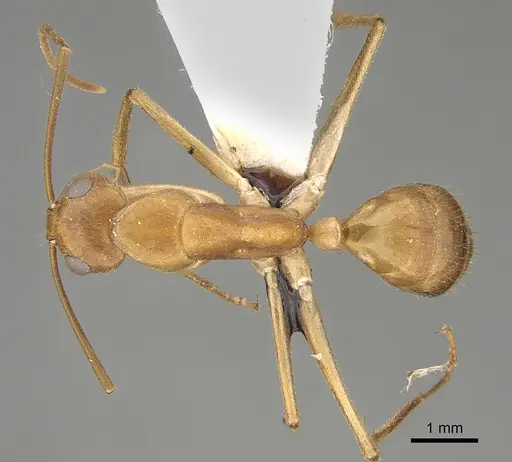
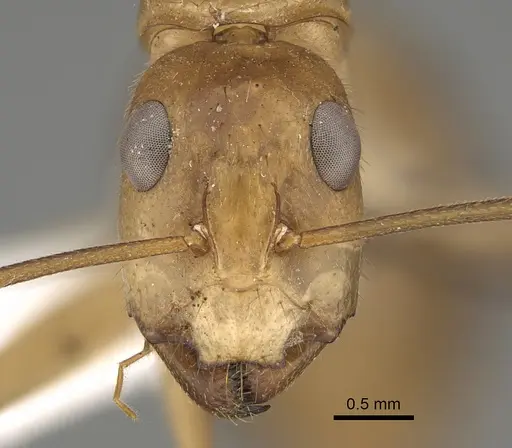
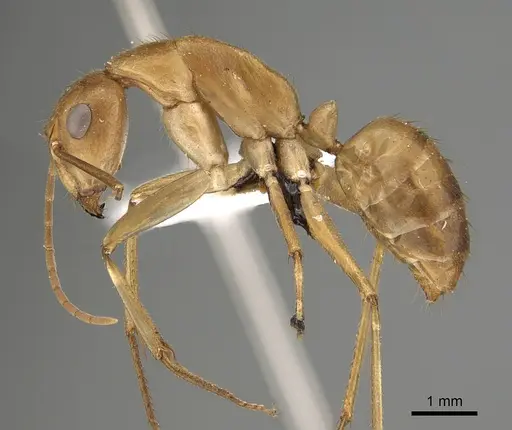
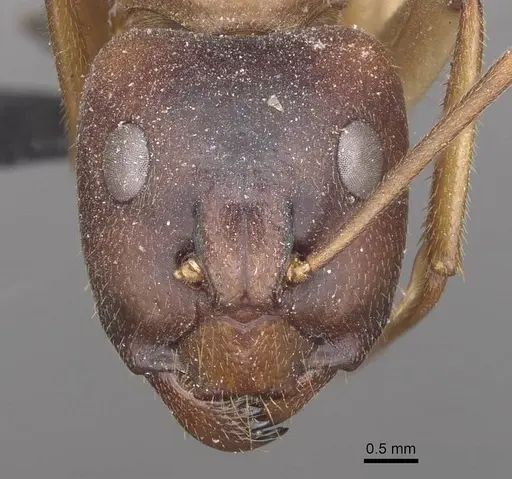
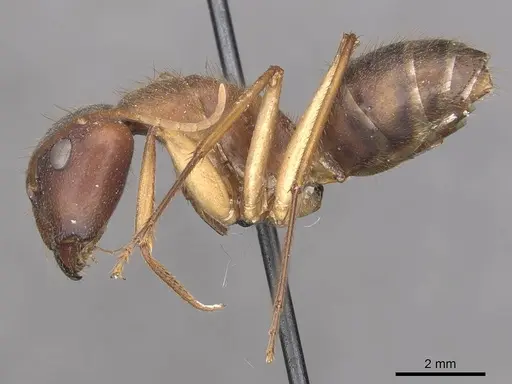
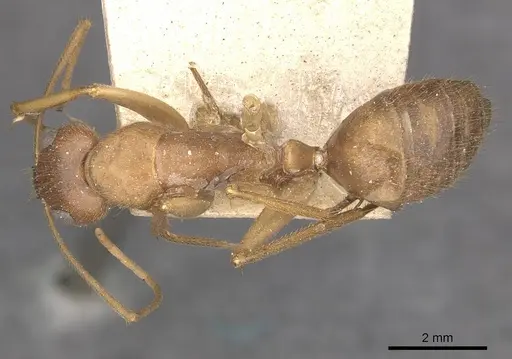
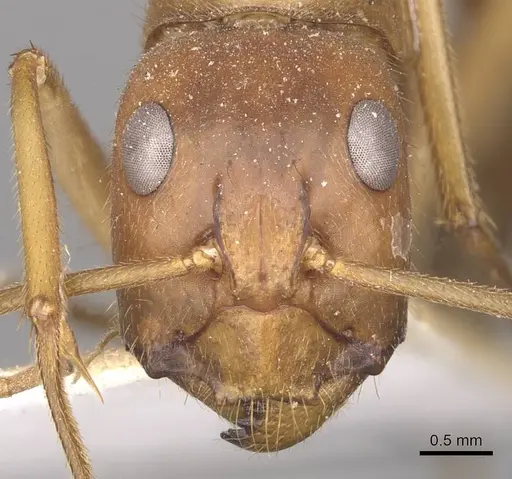
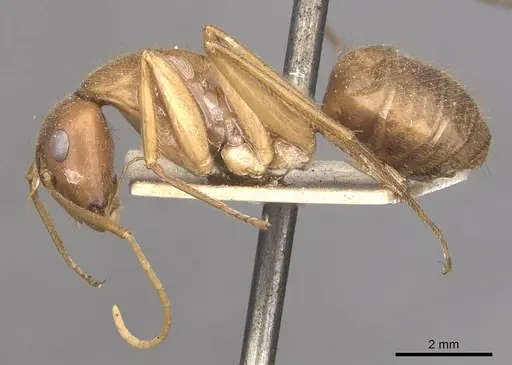
Camponotus clarior is a medium-sized Australian ant belonging to the Camponotus nigriceps species group. Workers measure 2.7-3.5mm in total length, with major workers reaching HW around 3mm. The species is instantly recognizable by its strikingly uniform yellow to honey-coloured body, the head and mesosoma are the same light colour, which is how it got its name (clarior means 'bright' or 'shining' in Latin). This pale coloration contrasts with the darker ants it often lives alongside in mallee habitats. The species is found throughout central southern Australia, particularly in mallee regions of South Australia and Western Australia.
These ants nest in hollow branches, typically positioning their nest entrance about 2 meters above ground. One of their most distinctive behaviors is the conspicuous cone of excavated soil refuse, sometimes reaching 30cm in height, that accumulates directly beneath the nest entrance. This makes their nests easy to locate in the Australian bush. As with other Camponotus species, they are generalist foragers that tend honeydew-producing insects and hunt small invertebrates.
Quick Summary
- Difficulty: Easy
- Origin & Habitat: Mallee areas of central southern Australia. This is an arid to semi-arid (eremaean) species found in the Australian interior, particularly in mallee eucalyptus habitats. They nest in hollow branches, typically 2 meters above ground, overhanging a distinctive conical mound of excavated soil [1][2].
- Colony Type: Single-queen (monogyne) colonies. Camponotus species are typically claustral founders, with queens sealing themselves in to raise the first workers alone.
- Colony: Monogyne
- Founding: Claustral
- Size & Growth:
- Queen: Not specifically documented for this species, but likely 12-15mm based on typical Camponotus queen size [2]
- Worker: 2.7-3.5mm total length, HW 1.70-3.30mm [2]
- Colony: Not specifically documented, but likely several hundred workers based on typical Camponotus colony development [2]
- Growth: Moderate, typical for Camponotus genus
- Development: 6-10 weeks at optimal temperature (estimated based on genus patterns for Camponotus species) (Development time is temperature-dependent. Warmer conditions within safe range accelerate development.)
- Antkeeping:
- Temperature: Keep at room temperature around 20-24°C. As an Australian arid-habitat species, they can tolerate warmer conditions but avoid overheating. A gentle heat gradient allows workers to choose their preferred temperature.
- Humidity: Low to moderate. These are arid-habitat ants that prefer drier conditions. Keep nest substrate moderately dry, with a small water tube for drinking access. Avoid excessive moisture that could cause mold.
- Diapause: Likely. As an Australian temperate/arid species, they probably benefit from a cooler winter period (around 10-15°C for 2-3 months), though this is not definitively documented for this specific species.
- Nesting: Y-tong (AAC) nests work well for this species. Their natural nesting in hollow branches suggests they prefer enclosed spaces with some humidity control. Plaster nests are also suitable. Avoid overly humid conditions.
- Behavior: Generally calm and non-aggressive for a Camponotus species. Workers are moderate foragers that will collect honeydew and hunt small insects. They are not particularly aggressive defenders but will bite if their nest is threatened. Escape risk is moderate, use standard Camponotus escape prevention (fluon on edges). Their yellow coloration makes them easy to identify in the outworld.
- Common Issues: colonies can stall if kept too cold, maintain warm conditions during growth periods, overwatering can cause mold problems in the nest, keep substrate drier than tropical species, slow initial founding phase is normal, claustral queens seal themselves in and may not move for weeks, wild-caught colonies may have parasites, quarantine and observe new colonies
Housing and Nest Setup
Camponotus clarior does well in standard ant-keeping setups. A Y-tong (acrylic) nest works excellently, the enclosed chambers mimic their natural hollow-branch nesting. You can also use plaster nests, which help regulate the moderate humidity they prefer. For the outworld, a simple plastic container with a secure lid works fine. Add a test tube with water (plugged with cotton) for drinking water, these ants will drink from the meniscus. Since they nest in branches in the wild, consider adding small sticks or bark pieces in the outworld for enrichment. Escape prevention is straightforward, a barrier of fluon around the rim of the outworld is sufficient for this medium-sized species. [1][2]
Feeding and Diet
Like other Camponotus ants, C. clarior is a generalist feeder. Offer sugar water or honey as a constant energy source, they'll readily accept both. For protein, provide small insects like fruit flies, small crickets, or mealworms. In the wild, they forage for honeydew from sap-sucking insects and hunt small invertebrates, so their diet should include both sugar and protein sources. Feed protein 2-3 times per week, and always have sugar water available. Remove any uneaten prey after 24 hours to prevent mold. Fresh water should always be accessible. [2]
Temperature and Seasonal Care
These ants come from arid central Australia, so they prefer warmer conditions. Keep the nest area around 20-24°C during the active season. They can tolerate higher temperatures (up to around 30°C) but avoid placing them in direct hot sunlight or near heat sources that could cause overheating. During winter, a cooler period around 10-15°C for 2-3 months mimics their natural seasonal cycle. This winter rest helps trigger reproductive behavior in spring. If your room temperature stays above 18°C year-round, they may remain active but will likely benefit from a slight cooling period. [1][2]
Colony Development and Founding
Like all Camponotus species, C. clarior is claustral, the queen seals herself into a chamber and raises her first brood without leaving to forage. She lives entirely on her stored fat reserves and the nutrients from her own metabolic processes. This means you don't need to feed a founding queen, she will lay eggs and tend them alone. The founding phase can take 6-10 weeks or longer, depending on temperature. Be patient, the queen will not move or forage during this time. Once the first workers (nanitics) emerge, they will begin foraging for food. The colony will grow gradually over the first year, then accelerate in subsequent seasons. [2]
Behavior and Observation
One of the most interesting aspects of keeping C. clarior is observing their distinctive nesting behavior. In the wild, they build a conspicuous cone of excavated soil refuse, sometimes 30cm tall, directly beneath their nest entrance in a hollow branch. While you won't replicate this exactly in captivity, you might notice similar debris collection behavior in the outworld. Workers are moderately active foragers, neither hyperactive nor particularly sluggish. They are not aggressive and will typically ignore threats by retreating rather than attacking. Their pale yellow coloration makes them easy to spot and track in the outworld, which is helpful for observing their foraging patterns. [1][2]
Frequently Asked Questions
How long does it take for Camponotus clarior to raise first workers?
Expect 6-10 weeks from egg to first worker at room temperature (around 20-24°C). This is typical for Camponotus species. The queen is claustral, she seals herself in and raises the first brood alone without needing food.
What do Camponotus clarior ants eat?
They are generalists. Offer sugar water or honey constantly for energy, and protein sources like small insects (fruit flies, small crickets, mealworms) 2-3 times per week. They will also collect honeydew if you have plants with sap-sucking insects.
Do Camponotus clarior ants need hibernation?
Likely yes. As an Australian arid-habitat species, they probably benefit from a cooler winter period (10-15°C for 2-3 months). This helps trigger reproductive cycles in spring.
What size colony do Camponotus clarior reach?
Not specifically documented, but based on typical Camponotus development, they likely reach several hundred workers over 2-3 years. Major workers develop over time and can be significantly larger than early minors.
Are Camponotus clarior good for beginners?
Yes, they are considered easy to keep. They are forgiving of minor care mistakes, not overly aggressive, and don't require extreme humidity like tropical species. Their claustral founding makes them relatively straightforward to establish.
Why is my Camponotus clarior queen not moving?
This is normal during claustral founding. The queen seals herself in a chamber and stays motionless while raising her first brood. She may not move for weeks or months. Do not disturb her, this is essential for successful founding. Once workers emerge, she will become more active.
Can I keep multiple Camponotus clarior queens together?
No. This species is monogyne, single-queen colonies. Multiple unrelated queens will fight. Only keep one queen per colony.
What makes Camponotus clarior different from other Camponotus?
Their striking uniform yellow coloration sets them apart from most other Camponotus, which are typically darker. They also have distinctive nesting behavior, building conspicuous refuse cones beneath their nest entrances. They are one of the lighter-coloured Australian Camponotus species.
References

This caresheet is licensed under CC BY-SA 4.0 .
Literature
Loading...Loading products...