

Camponotus christophei
- Scientific Name
- Camponotus christophei
- Subgenus
- Myrmeurynota
- Tribe
- Camponotini
- Subfamily
- Formicinae
- Author
- Wheeler & Mann, 1914
- Common Name
- Christophe's Carpenter Ant
- Distribution
- Found in 2 countries
Camponotus christophei Overview
Camponotus christophei (commonly known as the Christophe's Carpenter Ant) is an ant species of the genus Camponotus. It is primarily documented in 2 countries , including Dominican Republic, Haiti. Detailed taxonomic data and occurrence records can be further explored via authoritative databases such as AntWeb or the Global Biodiversity Information Facility (GBIF).
Camponotus christophei - "Christophe's Carpenter Ant"
Camponotus christophei is a medium-sized carpenter ant endemic to the island of Hispaniola (Haiti and Dominican Republic). Major workers measure 5-6mm and have a distinctive appearance: their body is mostly black with light red antennae and dark red mandibles and tarsal joints. The body is opaque with very dense punctures, and they sport coarse white hairs that are most abundant on the head, thorax, and petiole. This species was first discovered near Milot, Haiti, running on grass blades outside the citadel of King Henri Christophe, hence the species name. Most specimens have been collected from elevations above 800m in pine forest or mixed-forest habitats [1][2].
What makes this species particularly interesting is its restricted geographic range and the mystery surrounding its biology. As one of numerous Camponotus species endemic to Hispaniola, it represents a unique opportunity for antkeepers interested in rare Caribbean species. However, because it's poorly studied in the wild and has never been kept in captivity that we know of, much of its care requirements must be inferred from related Caribbean Camponotus species and its natural habitat preferences.
Quick Summary
- Difficulty: Medium
- Origin & Habitat: Endemic to Hispaniola, found in Haiti (Ar, GA, No, Ou, Sud) and Dominican Republic (Du, LV, Ped, PP, San). Most collections occur above 800m elevation in pine forest or mixed-forest habitats that include pine [1][2].
- Colony Type: Likely monogyne (single-queen colonies) based on typical Camponotus patterns. Colony structure has not been directly documented for this species.
- Colony: Monogyne
- Founding: Claustral
- Size & Growth:
- Queen: Unknown, no documented queen measurements for this species. Based on related Caribbean Camponotus, likely 12-16mm.
- Worker: Major workers: 5-6mm [3]
- Colony: Unknown, no colony size data exists. Related Caribbean Camponotus species typically reach several hundred workers.
- Growth: Unknown, likely moderate based on typical Camponotus development patterns.
- Development: Estimated 6-10 weeks based on typical Camponotus development at warm temperatures. This has not been directly documented for this species. (Development time is inferred from genus-level data, not species-specific research.)
- Antkeeping:
- Temperature: Based on their high-elevation pine forest habitat (61-1,910m), they likely prefer cooler conditions than typical tropical ants. Aim for 20-24°C, with a slight gradient if possible. They may tolerate temperatures as low as 15°C given their mountain habitat.
- Humidity: Their pine forest habitat suggests moderate to high humidity needs. Keep the nest substrate consistently moist but not waterlogged, with some drier areas available for the ants to regulate their own conditions.
- Diapause: Likely yes, high-elevation Caribbean species from pine habitats often have seasonal dormancy. However, this has not been directly studied. Consider providing a cool period (15-18°C) during winter months.
- Nesting: In the wild, they have been found running on grass blades and stonework, suggesting they may nest in soil or under debris rather than in wood. A naturalistic setup with soil substrate or a Y-tong/plaster nest with moisture retention would likely work well. Avoid completely dry conditions.
- Behavior: This species has not been documented in captivity, so behavioral observations are limited. Based on related Camponotus species, expect moderate activity levels and a tendency to forage for honeydew and small insects. Major workers at 5-6mm are not particularly large, so standard escape prevention measures should suffice, though fine mesh is still recommended. They are likely less aggressive than some Camponotus species given their more temperate habitat.
- Common Issues: this species has never been documented in the antkeeping hobby, so all care recommendations are estimates based on related species, monitor colony response and adjust accordingly, high-elevation origin means they may be sensitive to overheating, keep temperatures on the cooler side, wild-caught colonies may carry parasites or pathogens from their native range that could affect survival in captivity, their specific humidity needs are unknown, start with moderate moisture and observe worker behavior, lack of documented captive breeding means establishing a sustained colony may be challenging
Natural History and Distribution
Camponotus christophei is a true Caribbean endemic, found only on the island of Hispaniola in both Haiti and the Dominican Republic. The species was first described in 1914 by Wheeler and Mann, who discovered it near Milot, Haiti, running on grass blades outside the historic citadel of King Henri Christophe, after whom the species is named. The original specimens were collected running on stonework inside the fortification itself [1][2].
This species has a broad elevation range from 61m to 1,910m, though most specimens have been collected above 800m. Their preferred habitats are pine forests or mixed forests that include pine, suggesting they favor cooler, more open forest environments rather than dense tropical jungle. This high-elevation, pine-associated lifestyle is unusual among Caribbean ants and suggests their care requirements may differ from typical tropical species [1].
Appearance and Identification
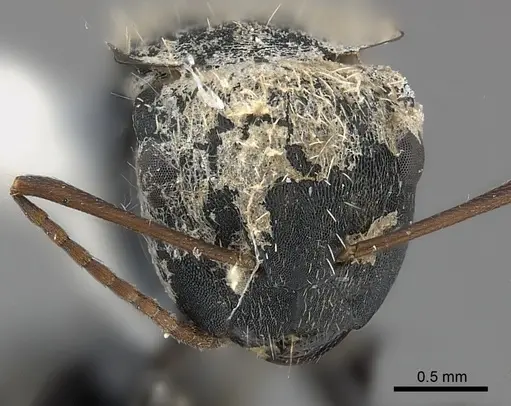
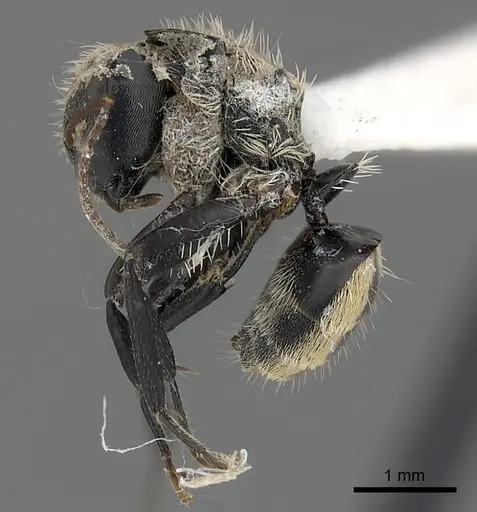
Major workers of Camponotus christophei measure 5-6mm and have a distinctive appearance that helps distinguish them from other Hispaniola Camponotus. Their body is predominantly black, but the antennae are light red, and the mandibles and last tarsal joints are dark red. The pronotum angles are brownish and somewhat translucent.
The head is rather large and subtrapezoidal, broadest behind with a straight posterior border and sharp ridges running to the eyes. The body is opaque with very dense and uniform punctation, and the sides of the head and thorax have fine longitudinal rugulae. Most distinctive is the coarse white hair, blunt and suberect, most abundant on the upper surface of the head, pro-and mesonotum, base of epinotum, and petiole border. The gaster has a velvety texture from extremely fine shagreening [3].
Housing and Nest Preferences
Since this species has never been documented in captivity, housing recommendations are estimates based on their natural habitat. Their discovery on grass blades and stonework suggests they may nest in soil or under debris rather than in rotting wood, though related Camponotus species do use wood cavities.
A naturalistic setup with a soil substrate would be a good starting point, allowing you to maintain higher humidity. Alternatively, a Y-tong (acrylic) nest or plaster nest with moisture chambers can work well for Camponotus species. The key is providing a moisture gradient so the ants can choose their preferred conditions. Given their high-elevation origin, avoid overheating, room temperature (20-24°C) should be ideal, and they may not tolerate sustained temperatures above 28°C.
For the outworld, provide standard foraging space with a water source and protein prey. Escape prevention is important but not extreme, at 5-6mm, they're not among the smallest ants, so standard barriers should suffice.
Feeding and Nutrition
Like most Camponotus species, C. christophei likely has an omnivorous diet typical of carpenter ants: honeydew from aphids and scale insects, small insects and arthropods, and occasionally sugar sources. In captivity, offer a varied diet including sugar water or honey as a constant energy source, and protein-rich foods like mealworms, crickets, or other small insects twice weekly.
Given their origin from a relatively pristine Caribbean environment, they may have more specialized dietary needs than common pest ant species. Consider offering small live prey items to simulate their natural foraging. Sugar acceptance is likely given typical Camponotus behavior, but start with small amounts and observe.
Temperature and Seasonal Care
This is perhaps the most important aspect of keeping Camponotus christophei successfully. Their high-elevation pine forest habitat (most collections above 800m) indicates they prefer cooler conditions than most tropical ant species. Aim for a nest temperature of 20-24°C, and avoid temperatures above 28°C.
During winter months, consider providing a cooler period (15-18°C) to simulate their natural seasonal cycle. This may trigger a period of reduced activity similar to diapause, though the exact requirements are unknown. Monitor colony behavior, if workers become sluggish and cluster together, they're likely too cold, if they avoid the heated areas of the nest, it's too warm.
A heating cable on one side of the nest can create a useful temperature gradient, but ensure the cool end stays below 24°C.
Colony Establishment and Growth
Establishing Camponotus christophei colonies will likely follow typical Camponotus patterns. A claustral queen seals herself in a chamber and raises her first workers alone on stored fat reserves, she will not leave to forage during founding. Provide a founding chamber with moderate humidity and stable temperatures around 22°C.
First workers (nanitics) will be smaller than mature majors and may take 6-10 weeks to emerge, depending on temperature. After the first workers arrive, the colony can be transitioned to normal feeding schedules. Growth rate is estimated as moderate, expect several months to reach 20-30 workers, and potentially a year or more to reach 100+ workers.
Because this species has never been documented in the antkeeping hobby, finding a queen or colony may be challenging. If you do obtain wild-caught specimens, quarantine and observe carefully for parasites or disease.
Frequently Asked Questions
How long does it take for Camponotus christophei to produce first workers?
The egg-to-worker timeline has not been directly documented for this species. Based on typical Camponotus development, expect approximately 6-10 weeks from egg to first worker at optimal temperatures (22-24°C). The exact timing depends on temperature and colony health.
What temperature do Camponotus christophei ants need?
Based on their high-elevation pine forest habitat, keep them cooler than typical tropical ants. Aim for 20-24°C in the nest area, and avoid temperatures above 28°C. A temperature gradient allows the ants to regulate their own conditions.
Are Camponotus christophei good for beginners?
This species is not recommended for beginners. It has never been documented in the antkeeping hobby, so all care recommendations are estimates based on related species. Additionally, obtaining wild-caught colonies may be difficult since they're endemic to Haiti and the Dominican Republic.
What do Camponotus christophei eat?
Like most carpenter ants, they're omnivorous. Offer sugar water or honey as a constant energy source, and protein foods like small insects (mealworms, crickets) twice weekly. They may also tend aphids for honeydew.
How big do Camponotus christophei colonies get?
Colony size has not been documented for this species. Based on related Caribbean Camponotus species, colonies likely reach several hundred workers at maximum. Growth is estimated as moderate.
Do Camponotus christophei need hibernation?
Likely yes, given their high-elevation origin. Provide a cooler period (15-18°C) during winter months, though the exact requirements are unconfirmed. This simulates their natural seasonal cycle in the mountain forests of Hispaniola.
Can I keep multiple Camponotus christophei queens together?
This species is likely monogyne (single-queen colonies) based on typical Camponotus patterns. Combining unrelated queens has not been documented and is not recommended. If you find multiple queens, house them separately.
What is the best nest type for Camponotus christophei?
A naturalistic setup with soil substrate or a Y-tong/plaster nest with moisture retention would likely work well. Their discovery on grass blades suggests they may nest in soil. Provide a moisture gradient so ants can choose their preferred humidity.
Where is Camponotus christophei found in the wild?
This species is endemic to Hispaniola, found only in Haiti and the Dominican Republic. Most specimens have been collected above 800m elevation in pine forest or mixed-forest habitats. The type locality is near Milot, Haiti, outside the citadel of Henri Christophe.
References

This caresheet is licensed under CC BY-SA 4.0 .
CASENT0217625
View on AntWeb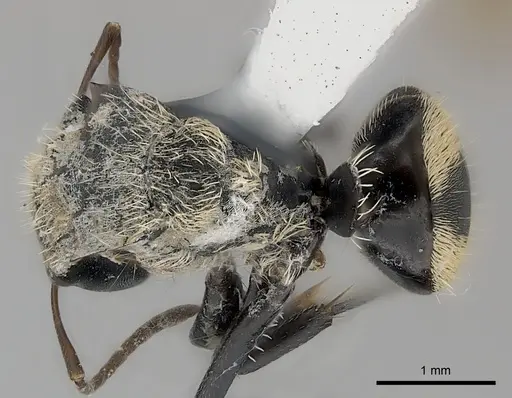
Literature
Loading...Loading products...