

Camponotus chalceus
- Scientific Name
- Camponotus chalceus
- Subgenus
- Myrmophyma
- Tribe
- Camponotini
- Subfamily
- Formicinae
- Author
- Crawley, 1915
- Distribution
- Found in 1 countries
Camponotus chalceus Overview
Camponotus chalceus is an ant species of the genus Camponotus. It is primarily documented in 1 countries , including Australia. Detailed taxonomic data and occurrence records can be further explored via authoritative databases such as AntWeb or the Global Biodiversity Information Facility (GBIF).
Camponotus chalceus
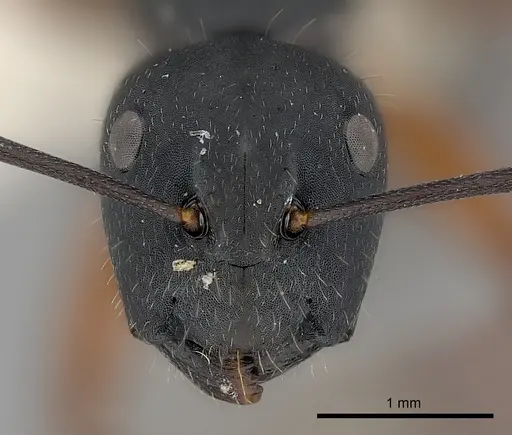
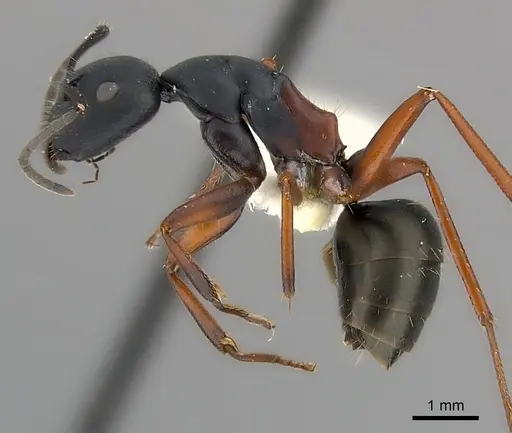
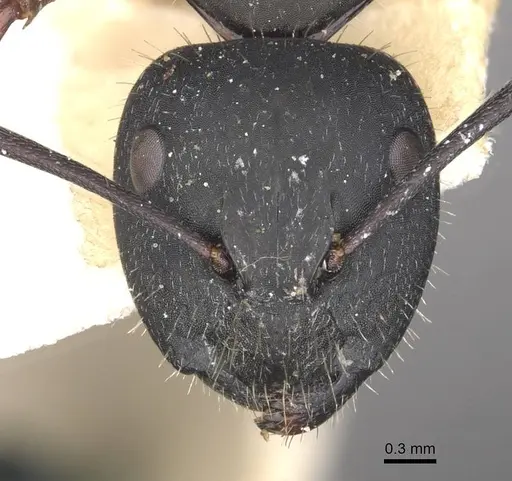
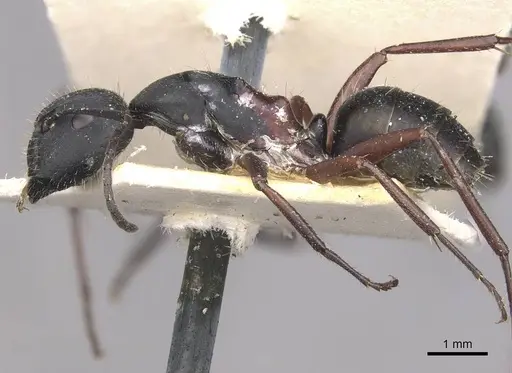
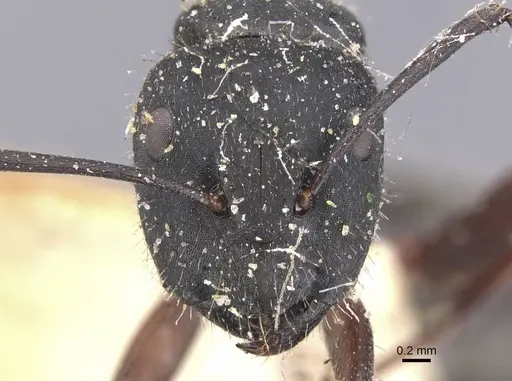
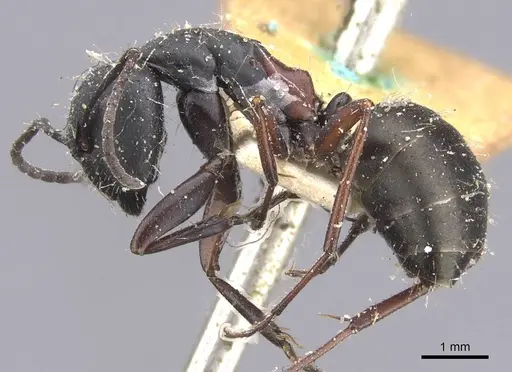
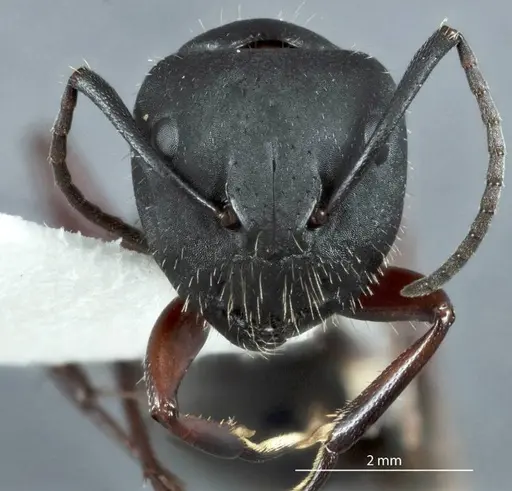
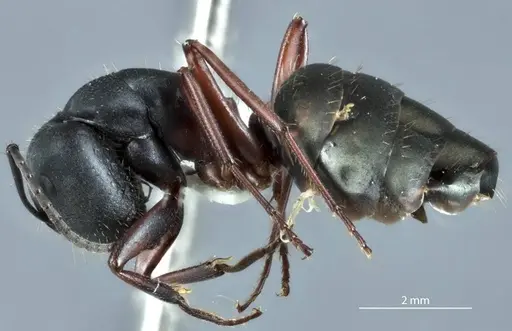
Camponotus chalceus is a striking Australian carpenter ant known for its distinctive coloring. Workers are mostly black with a prominent red patch between the propodeum and petiole, and a golden to bronze or metallic gaster that can shift between green and purple. The head and thorax have a subtle greenish tint in life. Major workers reach 9-9.5mm while minors are around 7mm, queens are a substantial 11.5mm [1].
This species is quite common in southern South Australia and Western Australia, including the wooded suburbs around Perth. They are noctidiurnal, meaning they're active both day and night, and they nest in open forests and woodland areas. Unlike many carpenter ants that stick to one location, C. chalceus builds monodomous nests (single colonies) both in the ground layer and up in trees, including Banksia plants. They are considered inoffensive, not aggressive biters like some related species. These ants are omnivorous and will forage for various food sources [2][1].
Quick Summary
- Difficulty: Medium
- Origin & Habitat: Southern South Australia and Western Australia, including the Perth region. Found in open forests and woodland areas [2][1].
- Colony Type: Monodomous colonies (single nest per colony). Likely single-queen (monogyne) based on typical Camponotus patterns, though this hasn't been specifically documented for this species.
- Colony: Monogyne
- Founding: Claustral
- Size & Growth:
- Queen: 11.5mm [1]
- Worker: Major workers 9-9.5mm, minor workers 7mm [1]
- Colony: Unknown for this species, but typical Camponotus colonies reach several thousand workers
- Growth: Moderate, typical for Camponotus genus
- Development: 6-10 weeks at optimal temperature based on genus-level Camponotus data (Development time is inferred from related Camponotus species, specific timing for C. chalceus has not been documented)
- Antkeeping:
- Temperature: Keep around 22-26°C. Australian species from temperate to subtropical regions, so room temperature is typically suitable. A gentle gradient with a heating cable on one side of the nest allows workers to self-regulate.
- Humidity: Moderate humidity around 50-60%. These ants nest both in trees and ground, so they tolerate a range. Keep the nest substrate slightly moist but allow some drying areas.
- Diapause: Likely requires a mild winter rest period (diapause). Southern Australian winters are cool but not extreme. Reduce temperature to around 15-18°C for 2-3 months during winter.
- Nesting: Accepts most nest types. Y-tong (AAC), plaster, or acrylic nests work well. Provide chambers scaled to their medium-large size. They naturally nest in rotting wood and tree hollows, so wood-based or naturalistic setups are appropriate.
- Behavior: Noctidiurnal, active both day and night. Generally inoffensive and not aggressive toward keepers. Workers are moderate foragers and will collect sugar sources and protein. Escape prevention should be moderate, these are medium-large ants (7-11mm) so standard barriers are usually sufficient, but they are strong climbers.
- Common Issues: colonies may be slow to establish initially, patience is needed during the founding phase, winter die-offs can occur if temperature isn't reduced properly during diapause, wild-caught colonies may carry parasites that affect captive survival, queen loss during founding is common, ensure stable conditions and minimal disturbance, moderate growth rate means colonies take time to reach impressive sizes
Nest Preferences and Housing
Camponotus chalceus naturally nests in rotting wood, tree stumps (particularly Xanthorhoea/grass trees), and in trees including Banksia. They also nest in the ground layer. For captivity, Y-tong (AAC) nests work excellently as they provide the dark, enclosed spaces these ants prefer. Plaster nests or acrylic setups are also suitable. The chambers should be appropriately sized for medium-large ants, avoid chambers that are too tight or too spacious. Because they nest in trees in the wild, adding some vertical elements or cork bark can mimic their natural arboreal tendencies. Keep the nest area dark and quiet, with the outworld accessible for foraging. [2][1]
Feeding and Diet
As omnivorous ants, C. chalceus accepts a wide variety of foods. Offer sugar water, honey, or diluted maple syrup as a constant carbohydrate source. For protein, provide insects like mealworms, small crickets, or other appropriately sized prey. They are nocturnal foragers, so place food in the outworld during evening hours when they are most active. Remove uneaten prey after 24-48 hours to prevent mold. Their diet in the wild includes honeydew from aphids and scale insects, so they may also accept aphid honeydew if available. Feed protein 2-3 times per week depending on colony size, and keep sugar sources available constantly. [2][1]
Temperature and Seasonal Care
These ants come from southern Australia where temperatures are moderate. Keep the nest area at 22-26°C during the active season. Room temperature is often suitable for this species. You can use a heating cable on one side of the nest to create a gentle gradient if needed, place it on top of the nest, not underneath, to avoid excessive drying. During the Australian winter (roughly June-August in the southern hemisphere), reduce temperatures to around 15-18°C to simulate their natural seasonal cycle. This winter rest period helps maintain colony health and may trigger reproductive behavior in spring. Do not let temperatures drop below 10°C. [2][1]
Colony Founding and Early Development
Like other Camponotus species, C. chalceus queens are claustral, they seal themselves in a chamber and raise the first brood without leaving to forage. The queen uses stored fat reserves to produce eggs and feed the developing larvae. After the first workers (nanitics) emerge, they are smaller than normal workers but will begin foraging to support the growing colony. Founding colonies need complete darkness and minimal disturbance. Do not check on the queen frequently during the sealed founding phase, this is a common cause of queen abandonment. Expect 6-10 weeks from egg to first worker under optimal conditions.
Behavior and Temperament
This species is described as inoffensive, they are not aggressive and rarely bite even when handled. Workers are active foragers and will explore their outworld thoroughly. Being noctidiurnal, they show activity peaks during evening and night hours but will also forage during the day. They are moderate climbers and can scale smooth surfaces, so standard escape prevention works well. Colonies establish well and grow steadily once the founding phase is complete. The distinctive red patch and metallic gaster make these ants visually striking in any setup. [2][1]
Frequently Asked Questions
How long does it take for Camponotus chalceus to produce first workers?
Expect 6-10 weeks from egg to first worker at optimal temperature (22-26°C). This is typical for Camponotus species. The exact timing depends on temperature and how well the queen is established.
What do Camponotus chalceus ants eat?
They are omnivorous. Offer sugar water, honey, or maple syrup constantly for carbohydrates. Feed protein sources like mealworms, small crickets, or other insects 2-3 times per week. Remove uneaten prey after 24-48 hours.
Do Camponotus chalceus ants need hibernation?
They benefit from a mild winter rest period. Reduce temperatures to 15-18°C for 2-3 months during winter. This mimics their natural seasonal cycle in southern Australia and helps maintain colony health.
Are Camponotus chalceus good for beginners?
They are a medium-difficulty species. The main challenges are their slower establishment compared to some faster-growing species and their need for proper winter conditions. They are not aggressive, which makes handling easier.
How big do Camponotus chalceus colonies get?
Colony size is not specifically documented, but typical Camponotus colonies reach several thousand workers. Growth is moderate, expect several years to reach maximum size.
Can I keep multiple Camponotus chalceus queens together?
This species is likely monogyne (single queen per colony). Combining unrelated queens is not recommended as they would likely fight. Only keep one queen per colony.
When should I move Camponotus chalceus to a formicarium?
Wait until the colony has at least 20-30 workers before moving from a founding setup. The colony should be actively foraging in the outworld before you consider transferring to a larger nest.
Why is my Camponotus chalceus colony not growing?
Common causes include: temperatures too low or too high, insufficient feeding (especially protein), disturbing the queen during founding, or parasites. Check that temperatures are stable at 22-26°C and that you're offering adequate protein. Ensure the founding chamber has remained dark and undisturbed.
References

This caresheet is licensed under CC BY-SA 4.0 .
CASENT0217623
View on AntWeb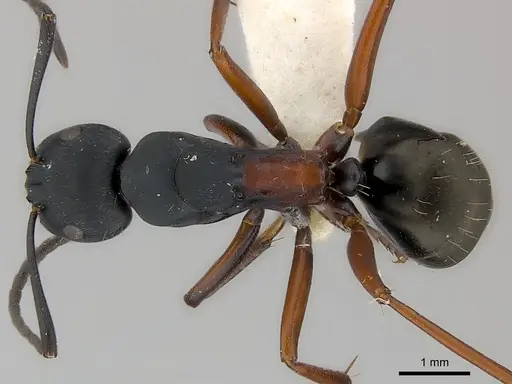
CASENT0887655
View on AntWeb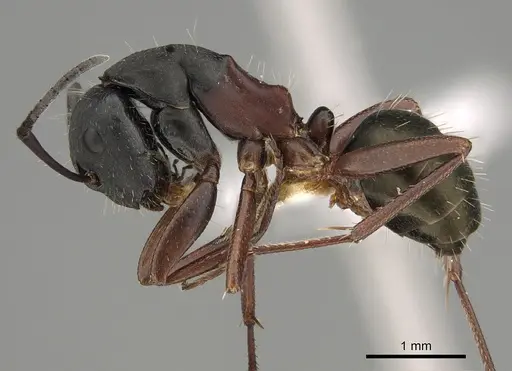
CASENT0910366
View on AntWeb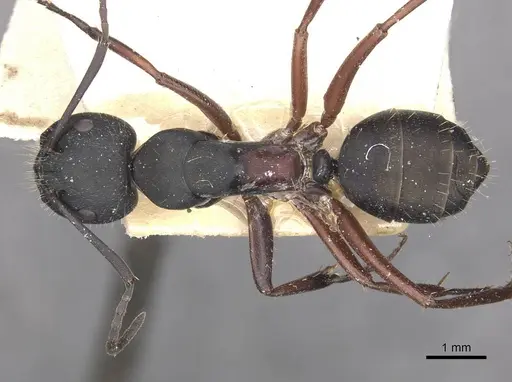
CASENT0911753
View on AntWeb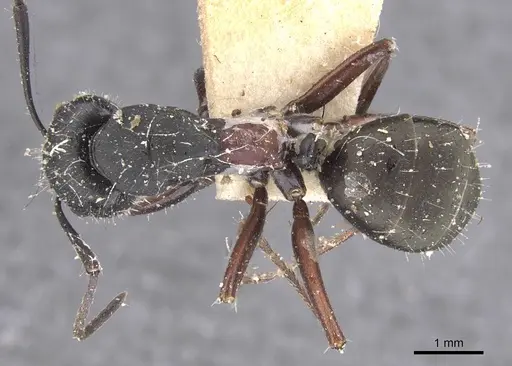
JDM32-000957
View on AntWeb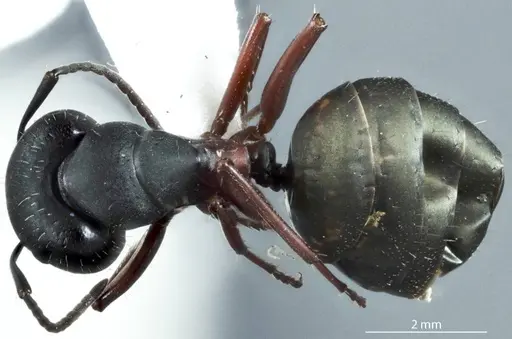
Literature
Loading...Loading products...