

Camponotus candiotes
- Scientific Name
- Camponotus candiotes
- Subgenus
- Myrmentoma
- Tribe
- Camponotini
- Subfamily
- Formicinae
- Author
- Emery, 1894
- Distribution
- Found in 2 countries
Camponotus candiotes Overview
Camponotus candiotes is an ant species of the genus Camponotus. It is primarily documented in 2 countries , including Greece, Türkiye. Detailed taxonomic data and occurrence records can be further explored via authoritative databases such as AntWeb or the Global Biodiversity Information Facility (GBIF).
Camponotus candiotes
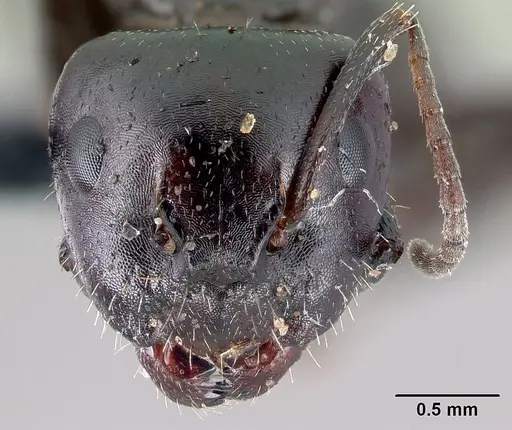
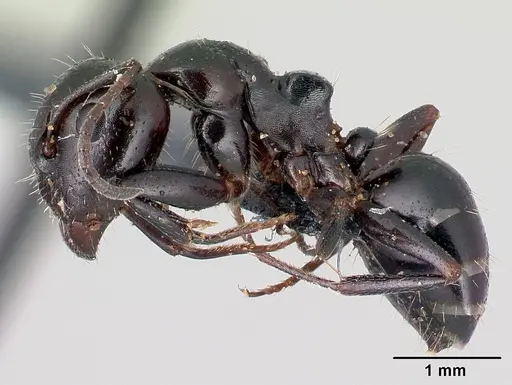
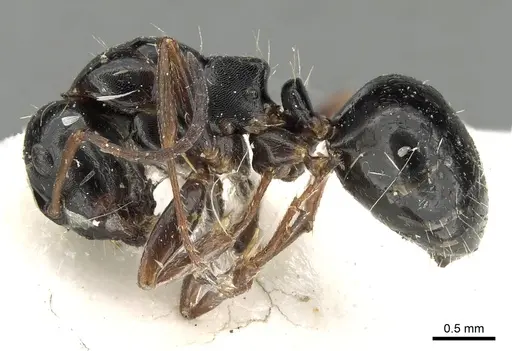
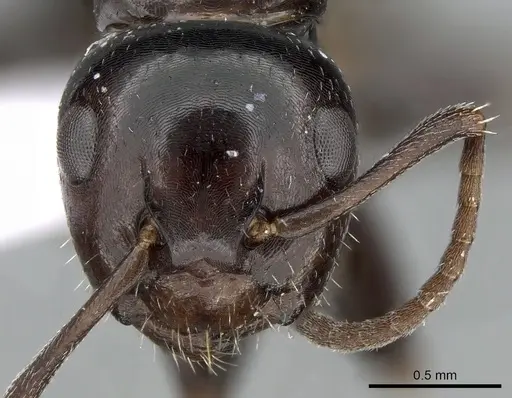
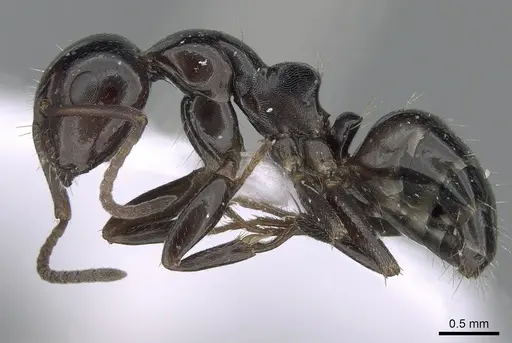
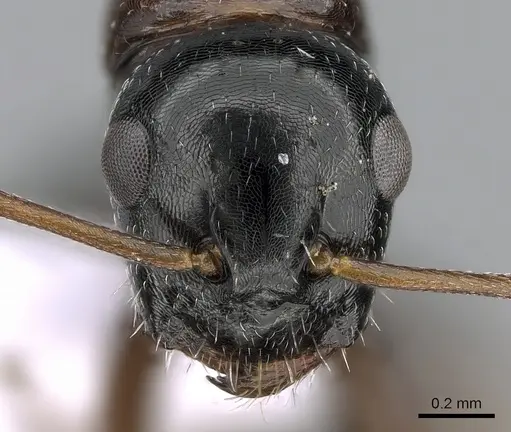
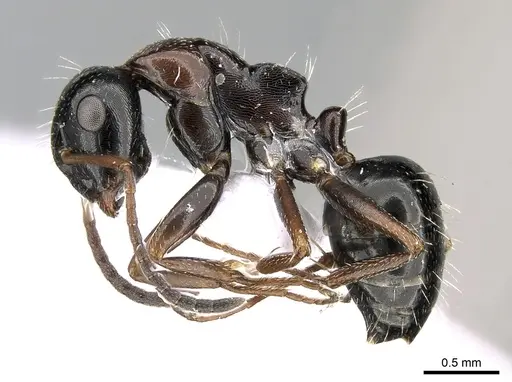
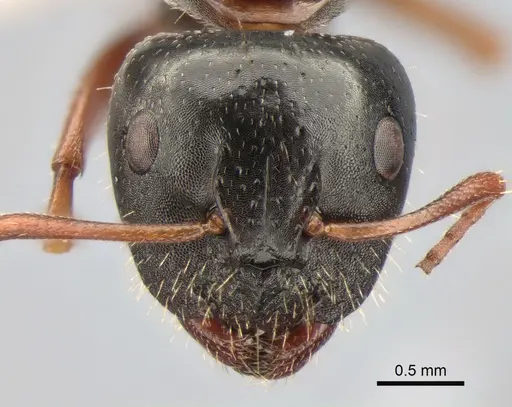
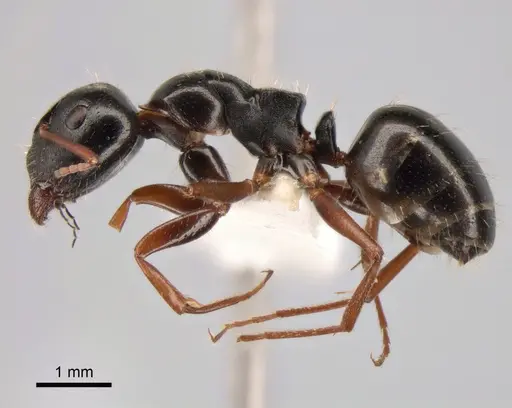
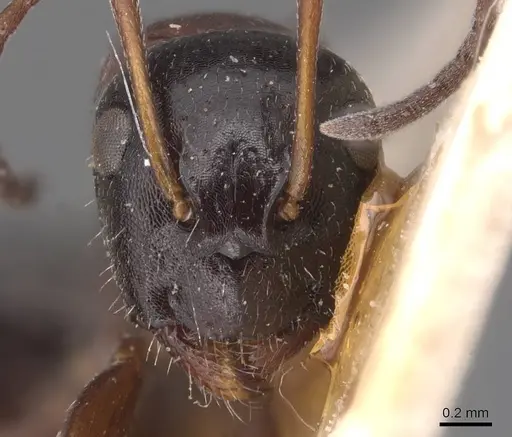
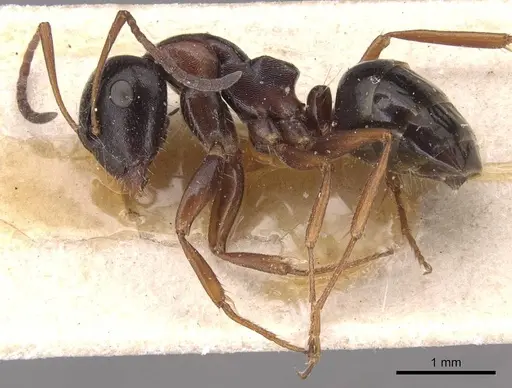
Camponotus candiotes is a moderately large, polymorphic ant belonging to the Camponotus lateralis species group. Workers come in two sizes: minor workers measure 0.97-1.02mm head length, while major workers are larger at 1.4mm head length. The species has a distinctive appearance with a mostly black head, often showing small reddish spots on the face, and a reddish-brown to black mesosoma. The gaster is black with a yellowish-white posterior margin, and the antennae have yellow scapes. This ant is native to the eastern Mediterranean, with its strongest populations on Crete and the Dodecanese Islands of Greece, extending into Turkey and Azerbaijan. It inhabits warm, humid areas like stream valleys with deciduous forests, fig trees in olive plantations, and pine forest edges, typically nesting under stones or inside dead branches [1][2].
What makes C. candiotes interesting is its association with tree-dwelling foraging, workers are regularly spotted climbing pine tree trunks and fig leaves, particularly those infested with honeydew-producing insects. This differs from many Camponotus species that forage primarily on the ground. The species is monogyne (single-queen colonies) and represents an eastern parapatric sibling species of C. piceus, with populations outside Crete showing slight morphological differences [3][4].
Quick Summary
- Difficulty: Medium
- Origin & Habitat: Eastern Mediterranean region, primarily Greece (Crete, Aegean Islands, Dodecanese), Turkey, and Azerbaijan. This thermophilous species prefers warm, humid areas with trees or bushes, including stream valleys with deciduous forests (especially plane trees), fig trees inside olive plantations, and seashore areas with frygana and pine trees. Most records come from altitudes below 800m, though they've been found up to 1650m in Crete's Psiloritis Mountains [1][2].
- Colony Type: Monogyne, colonies have a single queen. This has been confirmed through field studies showing monogynous colony structure [3].
- Colony: Monogyne
- Founding: Claustral
- Size & Growth:
- Queen: 7.9-9.3mm (mean 8.6mm) [5]
- Worker: Minor workers: 0.97-1.02mm head length, Major workers: 1.4mm head length [1][5]
- Colony: Estimated several hundred workers based on typical Camponotus colony growth patterns
- Growth: Moderate, typical for Camponotus species
- Development: 6-8 weeks at optimal temperature (estimated based on genus-level Camponotus data) (Development time inferred from typical Camponotus patterns. Warmer temperatures within acceptable range may speed development slightly.)
- Antkeeping:
- Temperature: Keep at 22-26°C. This is a thermophilous (warmth-loving) species from the Mediterranean, so provide warm conditions. A heating cable on one side of the nest creates a temperature gradient allowing ants to regulate their own temperature [1].
- Humidity: Moderate to high, this species is associated with humid, shadowy areas overgrown by trees or bushes. Keep the nest substrate consistently moist but not waterlogged, with some drier areas available. The natural nesting sites under stones maintain stable moisture [3][1].
- Diapause: Yes, as a species from temperate regions with seasonal variation, colonies will benefit from a winter rest period. Reduce temperature to around 10-15°C for 2-3 months during winter. This mimics natural conditions and supports colony health long-term.
- Nesting: Nests under stones and inside dry pine branches in the wild. For captivity, a Y-tong (AAC) nest or test tube setup works well. Provide a chambered design that allows for humidity control. Naturalistic setups with flat stones over moist substrate also mimic their natural nesting sites. The nest should have narrow passages scaled to their size [5][1].
- Behavior: Workers are active foragers, regularly observed climbing tree trunks and leaves in search of honeydew and small prey. They are not particularly aggressive and typically avoid confrontation. The species shows standard Camponotus escape behavior, moderate climbers but capable of escaping through small gaps. Use standard barrier methods like Fluon on container edges. Workers are moderately active and will establish foraging trails to food sources. Their tree-dwelling foraging preference means they may explore vertically in captivity [1].
- Common Issues: humidity management is critical, too dry and brood desiccates, too wet and mold becomes a problem, colonies may struggle if kept too cold, maintain warmth year-round except during hibernation, slow founding phase, claustral queens need patience during the first few months before workers emerge, escape prevention needed, workers can climb smooth surfaces and find small gaps, wild-caught colonies may carry parasites that can devastate captive colonies
Nest Preferences and Setup
In the wild, Camponotus candiotes nests under stones and inside dry pine branches, typically in humid areas with tree cover like stream valleys and olive plantations [5][1]. For captive colonies, provide a nest that maintains stable humidity while allowing some drying. Y-tong (AAC) nests work well because they hold humidity without becoming waterlogged. Test tube setups are also suitable, use a water reservoir with a cotton plug to maintain humidity, but ensure the wet portion doesn't extend too far into the foraging area. The nest chambers should be appropriately sized: narrow passages for minor workers, with some larger chambers for major workers if your colony develops them. A naturalistic setup with flat stones over moist soil or plaster can also work, mimicking their natural under-stone nesting behavior. Provide an outworld (foraging area) connected to the nest where you can offer food.
Feeding and Diet
In nature, workers forage on tree trunks and leaves, particularly on fig trees infested with Homopteran insects that produce honeydew [1]. They also likely hunt small insects and arthropods. In captivity, offer a varied diet: sugar water or honey as a constant energy source, and protein sources like fruit flies, small crickets, mealworms, or other small insects. Since they naturally forage for honeydew, they should readily accept sugar water or honey. Feed protein 2-3 times per week, adjusting based on colony size. Remove uneaten prey after 24-48 hours to prevent mold. A varied diet helps ensure healthy brood development. Young colonies (founding queens and early-stage colonies) need regular protein feeding once workers emerge to support rapid growth.
Temperature and Seasonal Care
As a thermophilous species from the Mediterranean, C. candiotes prefers warm conditions, aim for 22-26°C in the nest area. This supports optimal brood development and worker activity. Use a heating cable or heating mat on one side of the nest to create a temperature gradient, allowing ants to move between warmer and cooler areas. Place the heating element on top of the nest, not underneath, to avoid evaporating moisture too quickly. During winter, provide a diapause (hibernation) period of 2-3 months at reduced temperatures around 10-15°C. This mimics their natural seasonal cycle and supports long-term colony health. Reduce feeding during hibernation and keep the nest slightly cooler but not cold. After hibernation, gradually warm the colony back to normal temperatures to trigger spring activity. [1][4]
Colony Founding
Like other Camponotus species, C. candiotes is likely claustral, the queen seals herself in a chamber and lives off stored fat reserves until her first workers (nanitics) emerge. After mating, a newly mated queen will dig a small chamber under a stone or in soil and seal herself in. She lays eggs and tends to them without leaving to forage. The founding phase can take 6-10 weeks depending on temperature, warmer conditions within the acceptable range speed development. The first workers are typically smaller (nanitics) and the colony grows as subsequent broods develop. During this vulnerable phase, keep the queen undisturbed, maintain humidity, and wait patiently. Do not attempt to feed the founding queen, claustral Camponotus queens do not forage during founding. Once nanitics emerge, you can begin offering tiny amounts of sugar water and small protein items. [5][1]
Behavior and Foraging
This species shows interesting tree-dwelling foraging behavior, workers regularly climb tree trunks and explore leaves in search of honeydew and small prey [1]. In captivity, they will establish foraging trails and explore the outworld systematically. They are not particularly aggressive toward keepers and typically retreat rather than attack. Workers are moderately active and will discover food sources quickly. The species is not known for unusual defensive behaviors. Their moderate size means they can climb smooth surfaces, so use Fluon or similar barriers on container edges to prevent escapes. Major workers (larger workers) may develop in mature colonies, these are larger and have more robust mandibles, though the species is not considered dangerous.
Frequently Asked Questions
How long does it take for the first workers to emerge?
First workers (nanitics) typically emerge after 6-8 weeks at optimal temperature (22-26°C). This is based on typical Camponotus development patterns. Warmer temperatures within range may speed development slightly, while cooler temperatures delay it.
Can I keep multiple queens together?
No. Camponotus candiotes is monogyne, colonies have a single queen. Multiple unrelated queens will fight. If you capture a founding queen, keep her alone in a founding setup until she establishes her colony.
What temperature do they need?
Keep nest temperatures between 22-26°C. This thermophilous species prefers warm conditions. Use a heating cable on one side of the nest to create a gradient, allowing workers to self-regulate by moving between warmer and cooler areas.
Do they need hibernation?
Yes. Provide a winter rest period (diapause) of 2-3 months at 10-15°C during winter. This mimics their natural seasonal cycle in the Mediterranean region and supports long-term colony health. Reduce feeding during this period.
What do they eat?
Offer sugar water or honey as a constant energy source, and protein sources like small insects (fruit flies, pinhead crickets, mealworms) 2-3 times per week. In the wild, they forage for honeydew from Homopteran insects, so sugar sources are readily accepted.
Are they good for beginners?
This is a medium-difficulty species. They are more demanding than beginner species like Lasius because they need warmer temperatures, careful humidity management, and longer founding periods. However, they are not as challenging as some exotic species. Expect a longer wait during founding compared to faster-growing ants.
When should I move them to a formicarium?
Move to a formicarium once the colony reaches 20-30 workers and the test tube is becoming cramped. This is typically several months after first workers emerge. Make sure the formicarium has appropriately sized chambers and maintains humidity well.
How big do colonies get?
Colony size is estimated at several hundred workers based on typical Camponotus growth patterns. The species is polymorphic, colonies develop major workers (larger soldiers) as they grow. Maximum colony size in captivity is not well documented.
Why are my ants dying during founding?
Common causes include: too dry conditions (queen needs humid substrate), disturbance (founding queens are sensitive to vibration and light), temperature extremes (too cold slows development, too hot dries them out), and fungal infection from mold. Keep founding setups in a dark, quiet location with stable humidity.
References

This caresheet is licensed under CC BY-SA 4.0 .
CASENT0179876
View on AntWeb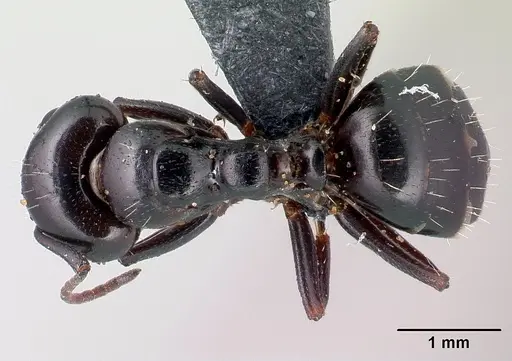
CASENT0179877
View on AntWeb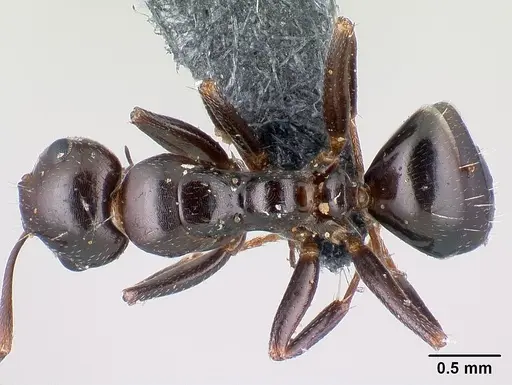
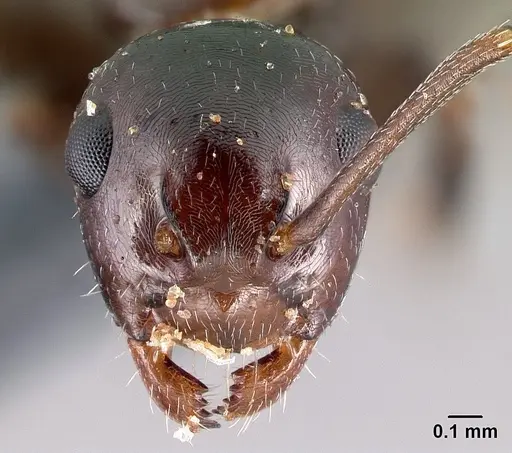
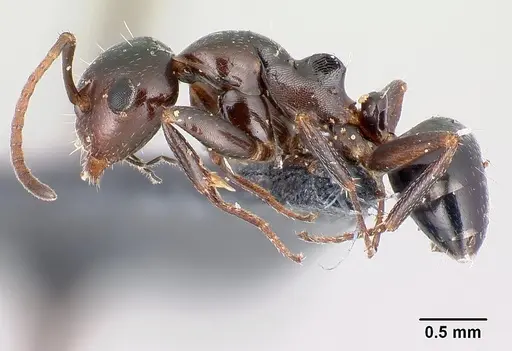
CASENT0280610
View on AntWeb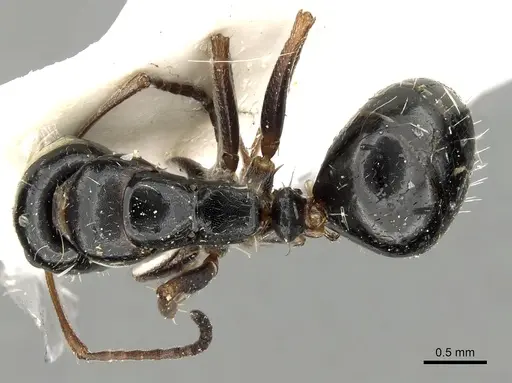
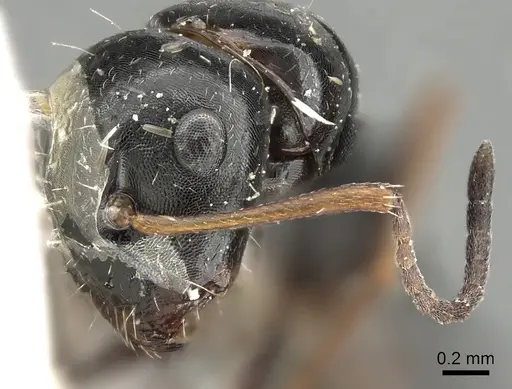
CASENT0281578
View on AntWeb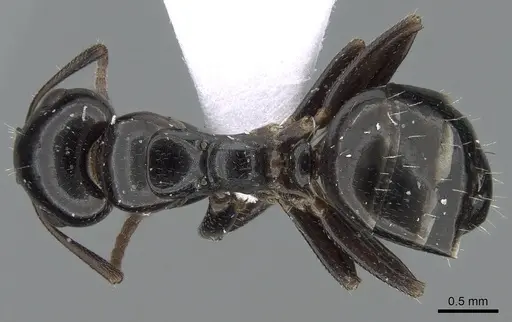
CASENT0281579
View on AntWeb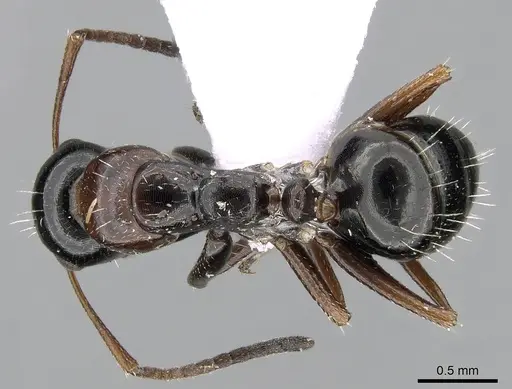
CASENT0882038
View on AntWeb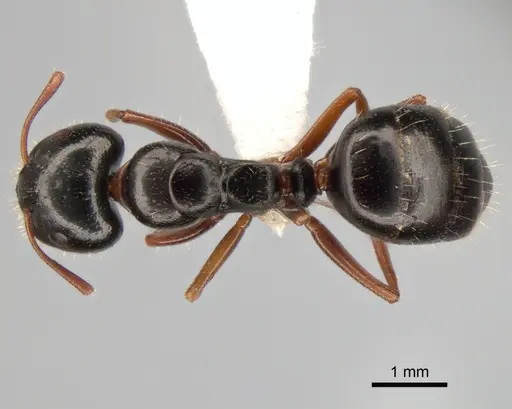
CASENT0905389
View on AntWeb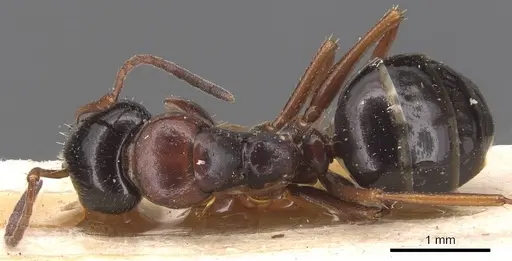
Literature
Loading...Loading products...