

Camponotus brettesi
- Scientific Name
- Camponotus brettesi
- Subgenus
- Myrmobrachys
- Tribe
- Camponotini
- Subfamily
- Formicinae
- Author
- Forel, 1899
- Distribution
- Found in 7 countries
Camponotus brettesi Overview
Camponotus brettesi is an ant species of the genus Camponotus. It is primarily documented in 7 countries , including Belize, Colombia, Costa Rica. Detailed taxonomic data and occurrence records can be further explored via authoritative databases such as AntWeb or the Global Biodiversity Information Facility (GBIF).
Camponotus brettesi
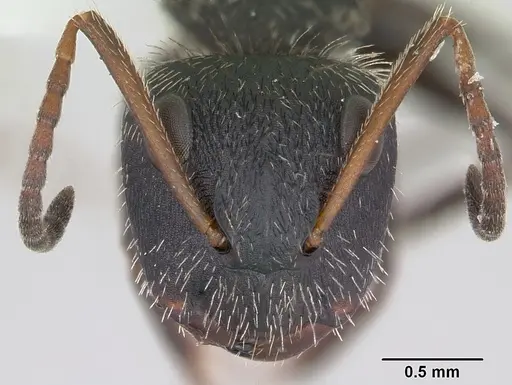
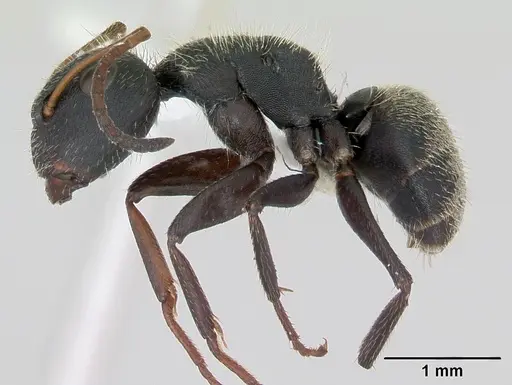
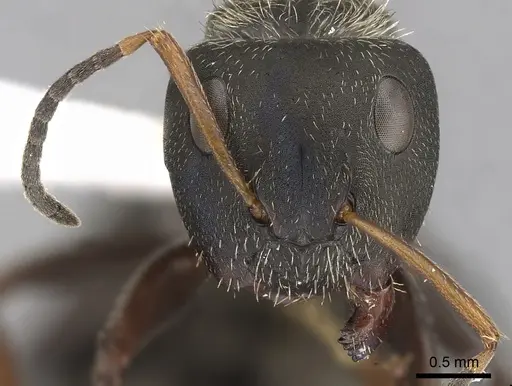
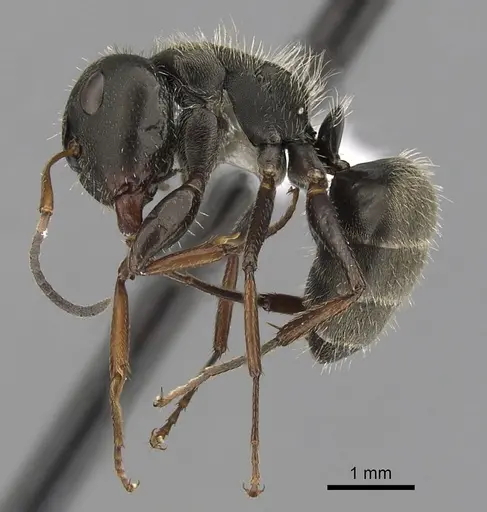
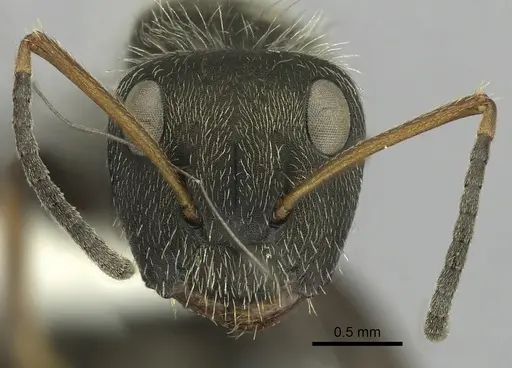
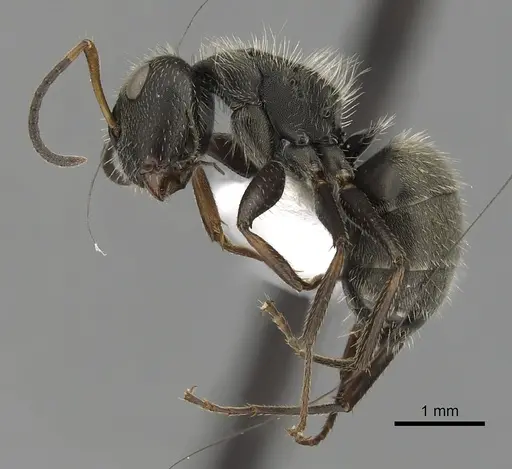
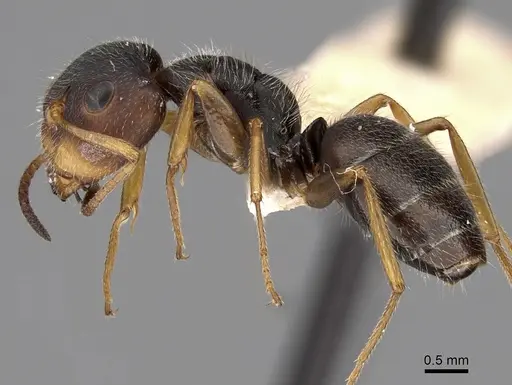
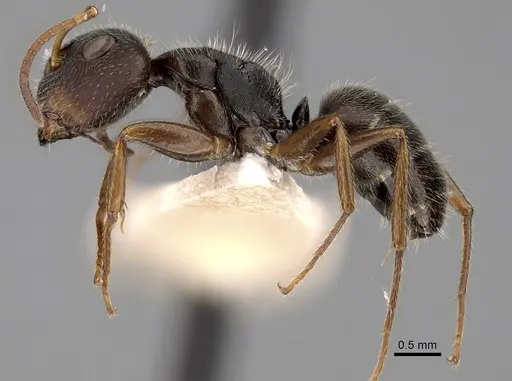
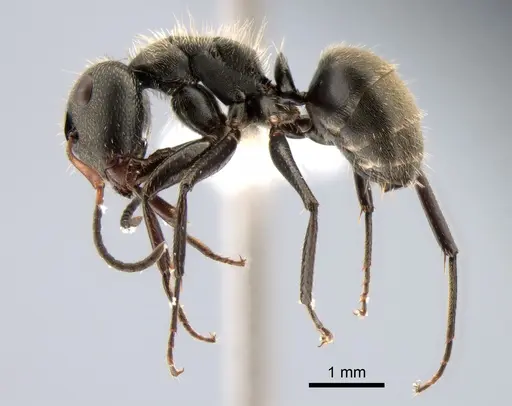
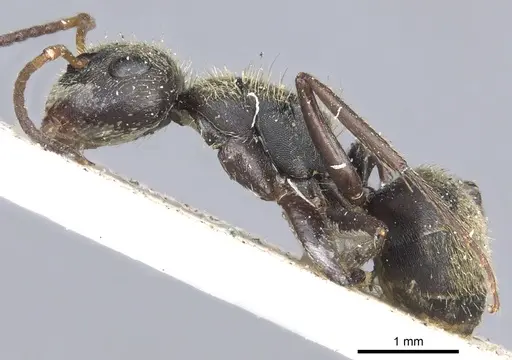
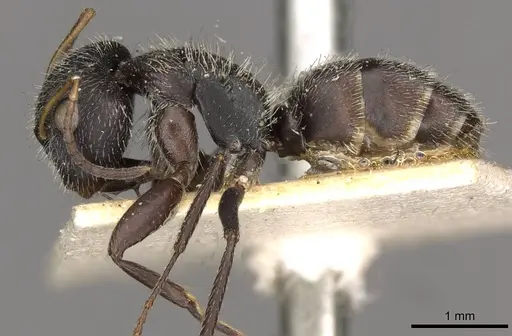
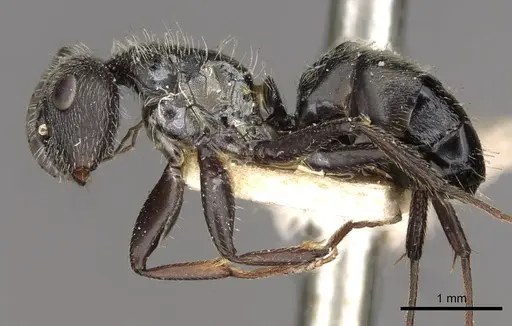
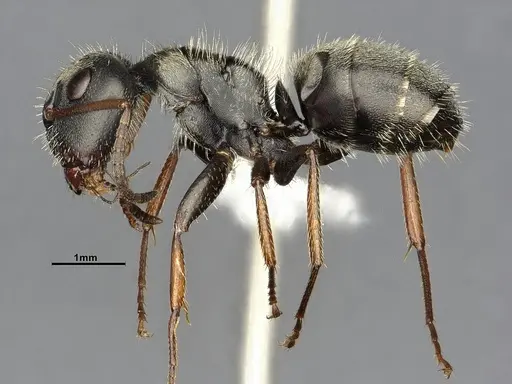
Camponotus brettesi is a small, entirely black arboreal ant native to the Neotropical region, ranging from Guatemala down through Costa Rica to Colombia. Workers measure 3.7-5.7mm and feature distinctive reddish mandibles, lower scapes, and first funicular segments, with the rest of the antennae and tarsi brown [1]. These ants belong to the subgenus Myrmobrachys and are closely related to C. planatus and C. senex, though they differ in color and pubescence patterns. Their most notable trait is their arboreal lifestyle, they nest exclusively in hollow, dry stems and twigs, including coffee plants, making them a twig-nesting species [1][2]. This arboreal nesting habit makes them quite different from most commonly kept Camponotus species, which are ground-nesting.
Quick Summary
- Difficulty: Medium
- Origin & Habitat: Neotropical region, found in Guatemala (type locality), Costa Rica, Colombia, Mexico (Quintana Roo), Honduras, Panama, and Trinidad and Tobago. They inhabit tropical forests and agricultural areas, nesting in hollow twigs and stems in coffee plants at elevations around 750m [1][3][4].
- Colony Type: Colony structure is unconfirmed. As a Camponotus species, they are likely single-queen colonies, but polygyny has not been documented.
- Size & Growth:
- Queen: Unknown, not directly measured in available literature
- Worker: 3.7-5.7mm [1]
- Colony: Unknown, no colony size data available
- Growth: Unknown, no development data available
- Development: Estimated 6-8 weeks based on typical Camponotus patterns at optimal temperature (No direct development data exists for this species. Estimates based on genus-level patterns for small tropical Camponotus.)
- Antkeeping:
- Temperature: Keep at 24-28°C. As a tropical species from Central America, they need warm conditions year-round. A gentle heat gradient allows them to regulate their temperature.
- Humidity: Moderate to high. They naturally nest in hollow twigs which maintain some moisture but stay relatively dry inside. Provide a humid outworld but ensure the nest area has good ventilation to prevent mold.
- Diapause: No, being a tropical species, they do not require hibernation. Keep temperatures stable year-round.
- Nesting: Arboreal twig-nesters. In captivity, they do well in test tube setups or small acrylic nests with narrow chambers. You can also provide artificial twig setups. Avoid large, open spaces, they prefer tight, enclosed spaces that mimic their natural hollow stem habitat.
- Behavior: These are relatively calm, non-aggressive ants. As arboreal foragers, they will actively search for food in the outworld. Workers are small (3.7-5.7mm) so escape prevention should focus on their ability to squeeze through small gaps. They are likely generalist foragers, accepting both sugar and protein sources. Their small size means they can escape through standard test tube cotton if it becomes loose, use fine mesh barriers.
- Common Issues: small size means escapes are likely without fine mesh barriers, arboreal nature means they may struggle in ground-nesting setups with large open spaces, no documented colony size or growth rate makes it hard to predict development timelines, tropical species may decline if temperatures drop below 22°C for extended periods, wild-caught colonies may have parasites that affect survival in captivity
Natural History and Distribution
Camponotus brettesi is a Neotropical arboreal ant found across Central America and into northern South America. The type locality is Guatemala, with documented populations in Costa Rica, Colombia (Sierra Nevada de Santa Marta), Mexico (Quintana Roo state), Honduras, Panama, and Trinidad and Tobago [1][4][3]. They inhabit tropical forests and agricultural landscapes, particularly coffee plantations where they nest in hollow twigs and stems within the coffee plants. A 2015 study in Chiapas, Mexico found them nesting in coffee plants at 750m elevation. Their arboreal lifestyle is well-documented, they nest in dry, hollow stems rather than in the ground.
Appearance and Identification
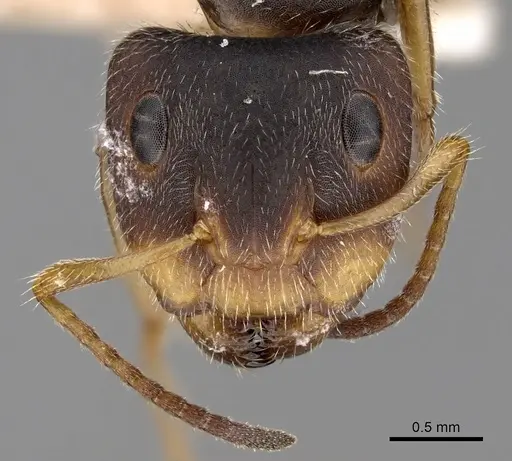
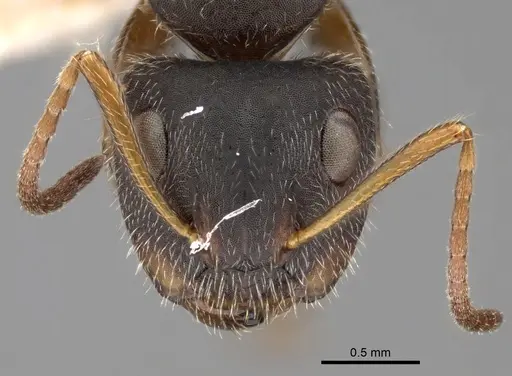
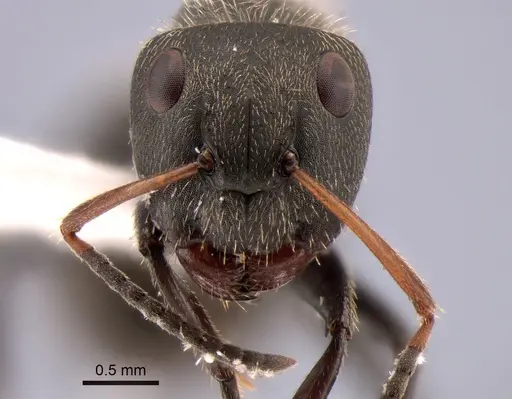
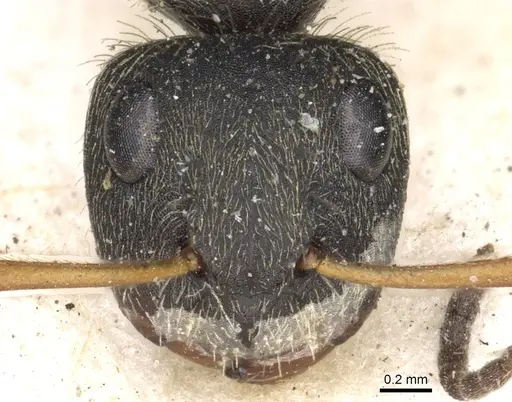
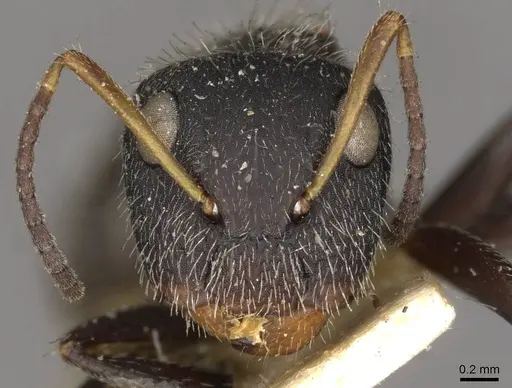
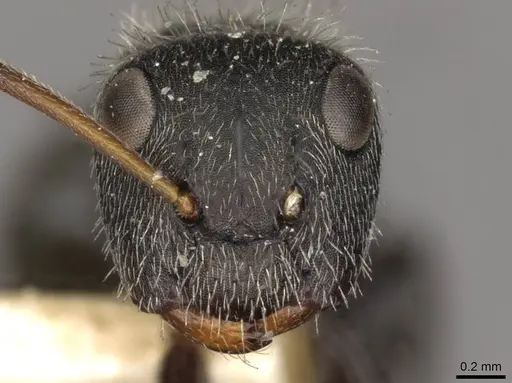
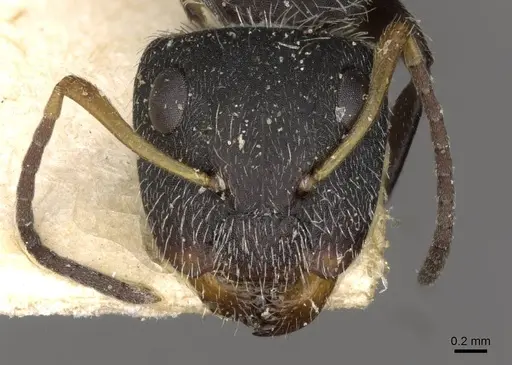
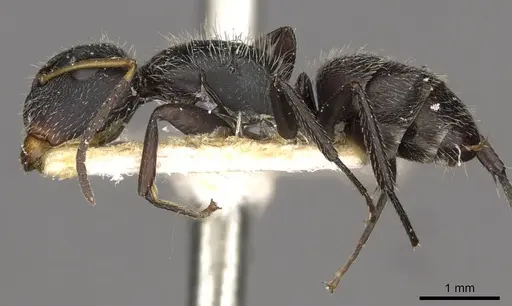
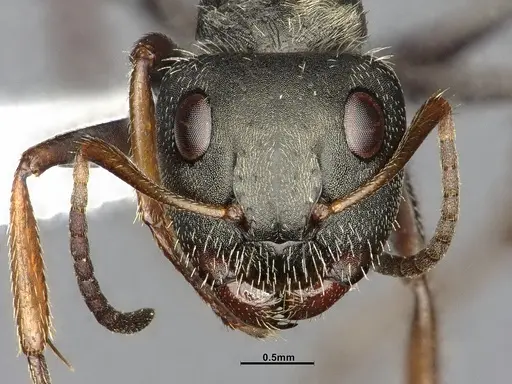
Workers measure 3.7-5.7mm, making them a small Camponotus species [1]. They are entirely black with distinctive reddish coloration on the mandibles, lower scapes, and first funicular segment. The tarsi and remaining antennae are brown. Their eyes are positioned very far back, located behind the posterior third of the head, a distinctive feature. The head is barely notched behind, appearing almost square in media workers and more narrowed in front in major and minor workers. The pubescence is quite abundant, forming a slight golden pelage that is less white-gray than related species like C. planatus but less golden than C. auricomus. They are closely related to C. planatus and C. senex but can be distinguished by their color and pubescence patterns.
Nesting and Housing
This is an arboreal species that naturally nests in hollow, dry twigs and stems. In the wild, they have been found nesting inside coffee plant stems and similar vegetation [1][2]. For captive care, provide setups that mimic this twig-nesting preference. Test tube setups work well for founding colonies, while small acrylic nests with narrow chambers suit established colonies. Avoid large, open formicaria, these ants prefer tight, enclosed spaces. You can also create artificial twig setups using hollow bamboo or similar materials. Ensure good ventilation while maintaining humidity, as their natural nests in dry stems suggest they tolerate (and prefer) drier conditions than ground-nesting ants.
Feeding and Diet
As a Camponotus species, they are likely generalist feeders accepting both sugar sources and protein. In the wild, they foraged in guava orchards where they were collected using CeraTrap fruit fly lure bait, suggesting they are attracted to sweet substances [2]. Offer sugar water, honey, or diluted syrup as a constant sugar source. For protein, provide small insects like fruit flies, small crickets, or mealworm pieces. Feed protein 2-3 times per week, adjusting based on colony size and consumption. Remove uneaten prey after 24-48 hours to prevent mold issues.
Temperature and Seasonal Care
Being a tropical species from Central America, Camponotus brettesi requires warm temperatures year-round. Keep the nest area at 24-28°C, with a slight gradient allowing workers to choose their preferred temperature. They do not require hibernation or diapause, maintaining stable tropical conditions is essential for their health and brood development. Avoid temperatures below 22°C for extended periods, as this could stress or kill the colony. Room temperature within this range is suitable, but you may need a small heating cable or mat in cooler climates. Monitor colony activity, workers clustering near heat sources indicates they need more warmth.
Behavior and Temperament
Camponotus brettesi is a relatively calm, non-aggressive species. Workers are small but active foragers that will search for food throughout the outworld. Their arboreal nature means they are comfortable climbing and will readily traverse vertical surfaces. While not documented as particularly aggressive or defensive, they will defend their nest if threatened. The main keeper concern is their small size, workers at 3.7-5.7mm can squeeze through small gaps that larger ants cannot. Use fine mesh on any ventilation holes and ensure all connections are secure. They are not known to be escape artists on the level of tiny species like Pheidole, but their small size still requires attention to escape prevention. [1]
Colony Establishment and Growth
Colony founding behavior has not been directly documented for this species. Based on typical Camponotus patterns, the queen likely seals herself in a small chamber (claustral founding) and raises the first brood alone using stored fat reserves. The first workers (nanitics) will be smaller than mature workers. Since colony size data is not available, expect moderate growth, small Camponotus species typically reach a few hundred workers over several years. Be patient with founding colonies, as they grow slower than many ground-nesting species. Do not disturb the queen during the founding phase, stress can cause her to abandon or eat her brood.
Frequently Asked Questions
How long does it take for Camponotus brettesi to produce first workers?
The exact timeline is unknown for this species. Based on typical Camponotus development patterns, expect 6-8 weeks from egg to first worker at optimal temperature (24-28°C). Founding colonies require patience, do not disturb the queen during this critical period.
What size colony does Camponotus brettesi reach?
Colony size data is not available for this species. Based on their small worker size (3.7-5.7mm), colonies likely reach a few hundred workers rather than the thousands seen in larger Camponotus species.
What temperature do Camponotus brettesi need?
Keep them at 24-28°C year-round. As a tropical species from Central America, they need warm conditions and do not tolerate cold temperatures. A small heating cable on one side of the nest creates a temperature gradient they can regulate themselves.
Can I keep Camponotus brettesi in a test tube?
Yes, test tubes work well for this species, especially for founding colonies. Their small size and preference for tight, enclosed spaces make test tube setups ideal. Ensure the cotton is packed firmly and use fine mesh on any air holes to prevent escapes.
Do Camponotus brettesi need hibernation?
No, they do not require hibernation. Being a tropical species, they need stable warm temperatures year-round. Do not expose them to temperatures below 22°C for extended periods.
What do Camponotus brettesi eat?
They are generalist feeders. Provide a constant sugar source (sugar water, honey, or diluted syrup) and protein (small insects like fruit flies, crickets, or mealworm pieces) 2-3 times per week.
Are Camponotus brettesi good for beginners?
This species is rated as medium difficulty. While relatively calm and manageable, their arboreal nature and specific nesting preferences require some experience. Their small size also demands attention to escape prevention. Beginners should ensure they can maintain warm temperatures year-round before attempting this species.
When should I move Camponotus brettesi to a formicarium?
Move them when the test tube becomes crowded with workers (typically 20-30+ workers) or when the water reservoir is running low. For this small species, a small acrylic nest with narrow chambers works well. They prefer tight spaces, so avoid large, open formicaria.
Why are my Camponotus brettesi dying?
Common causes include: temperatures below 22°C, excessive humidity causing mold, poor escape prevention allowing escapes, or stress to the queen during founding. Ensure warm, stable temperatures and adequate but not excessive humidity. Check for tiny gaps in your setup.
References

This caresheet is licensed under CC BY-SA 4.0 .
CASENT0173241
View on AntWeb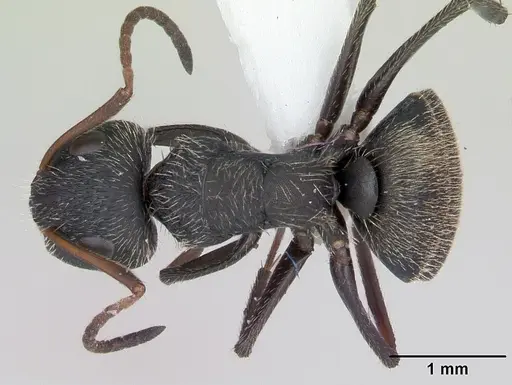
CASENT0280107
View on AntWeb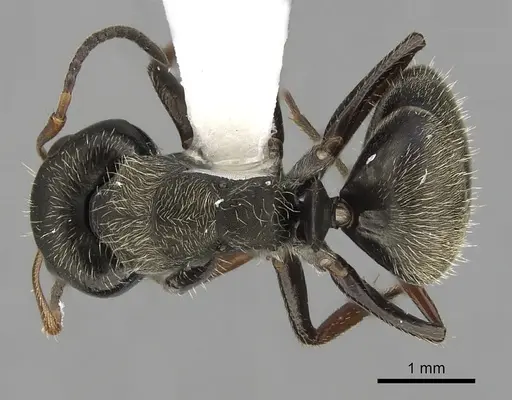
CASENT0280108
View on AntWeb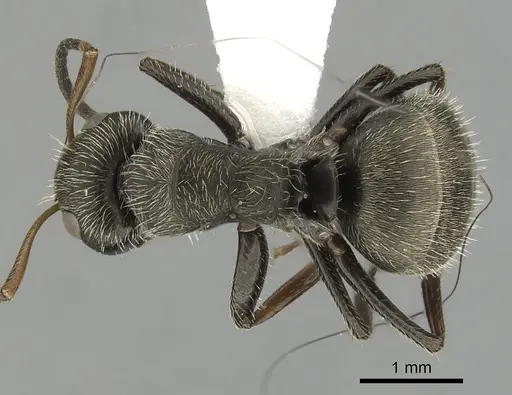
CASENT0280109
View on AntWeb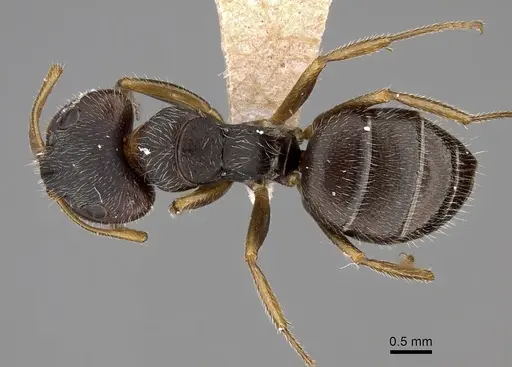
CASENT0280110
View on AntWeb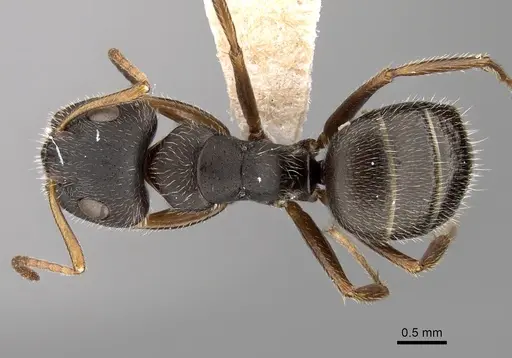
CASENT0882119
View on AntWeb
CASENT0903621
View on AntWeb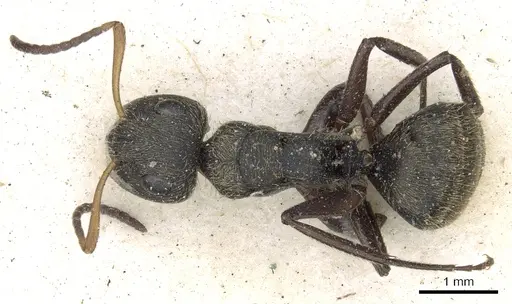
CASENT0910686
View on AntWeb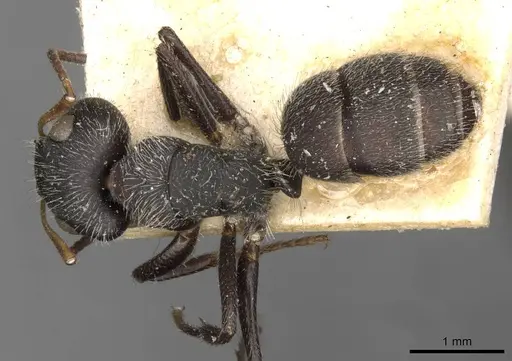
CASENT0910687
View on AntWeb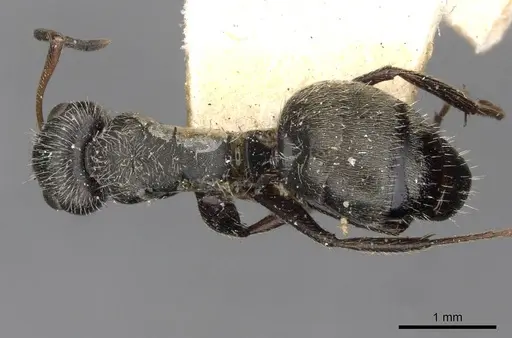
CASENT0910688
View on AntWeb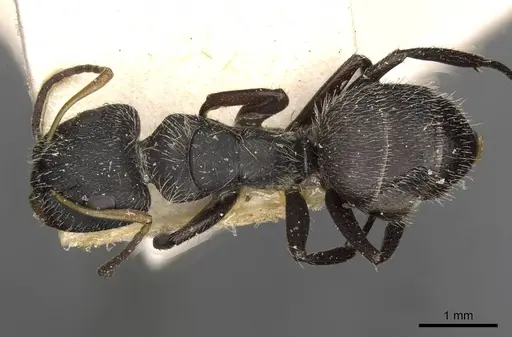
CASENT4032227
View on AntWeb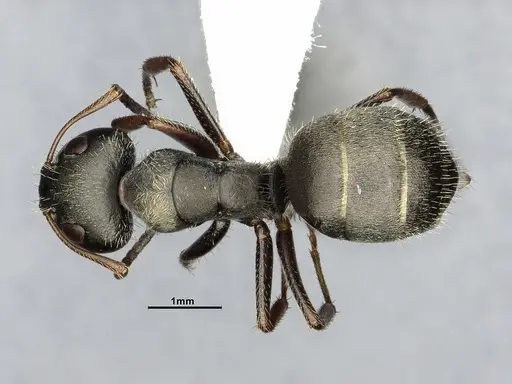
Literature
Loading...Loading products...