

Camponotus bispinosus
- Scientific Name
- Camponotus bispinosus
- Subgenus
- Myrmocladoecus
- Tribe
- Camponotini
- Subfamily
- Formicinae
- Author
- Mayr, 1870
- Distribution
- Found in 2 countries
Camponotus bispinosus Overview
Camponotus bispinosus is an ant species of the genus Camponotus. It is primarily documented in 2 countries , including Colombia, Peru. Detailed taxonomic data and occurrence records can be further explored via authoritative databases such as AntWeb or the Global Biodiversity Information Facility (GBIF).
Camponotus bispinosus
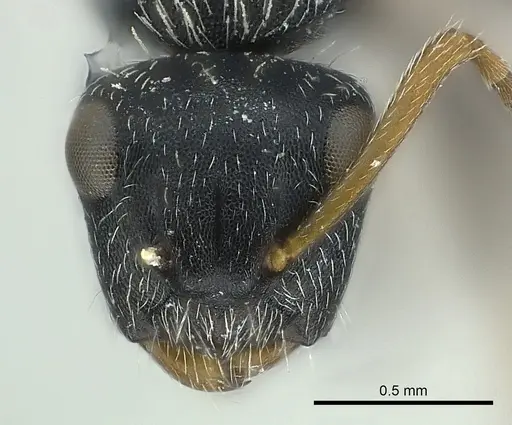
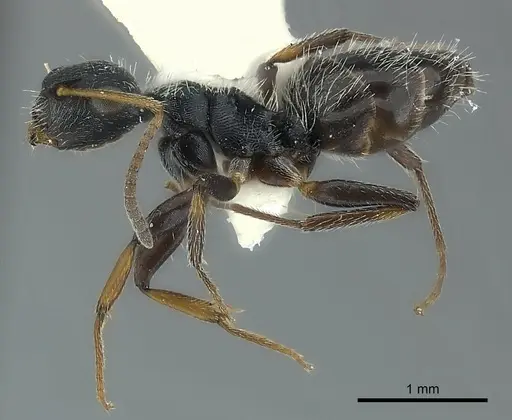
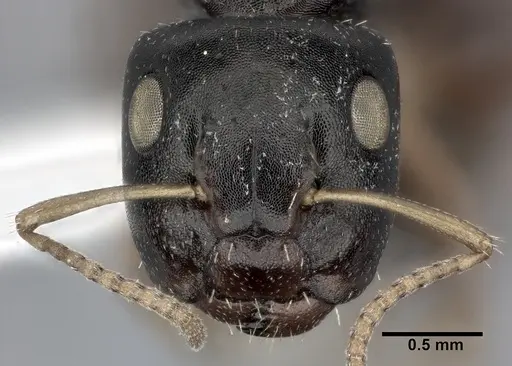
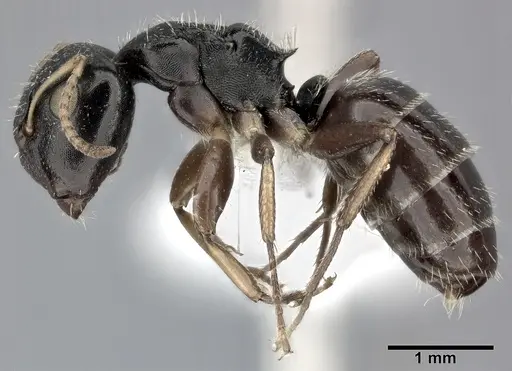
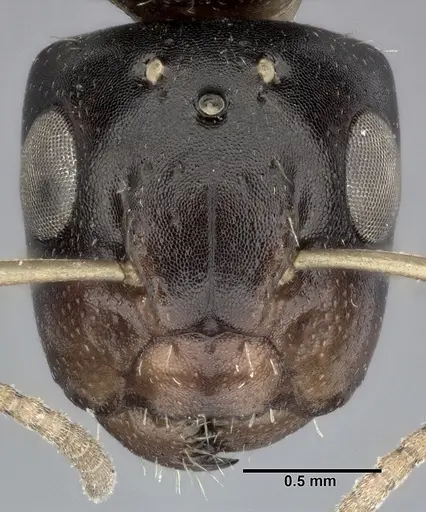
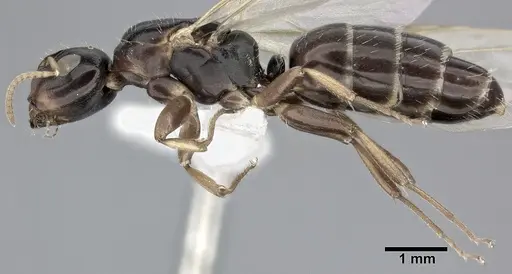
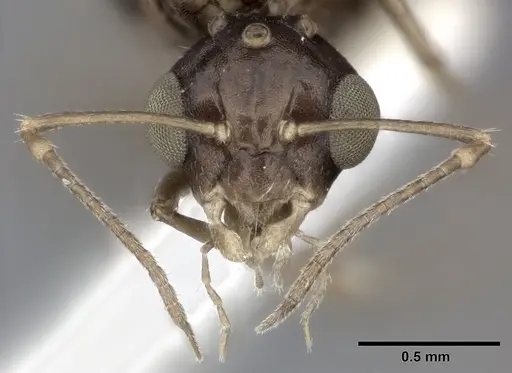
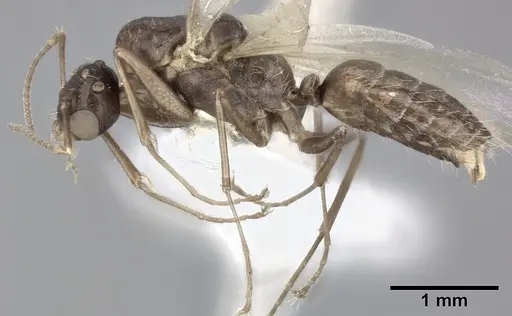
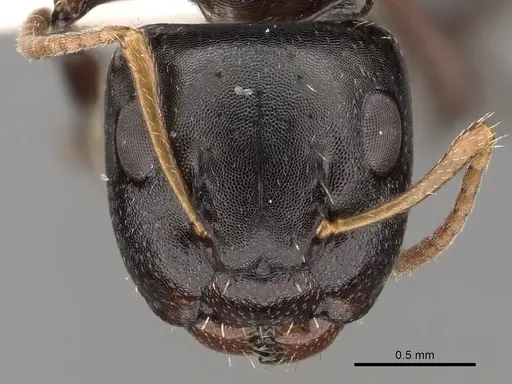
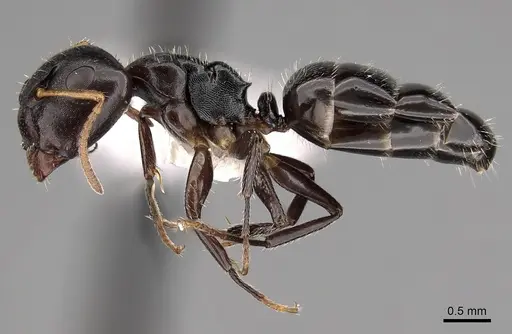
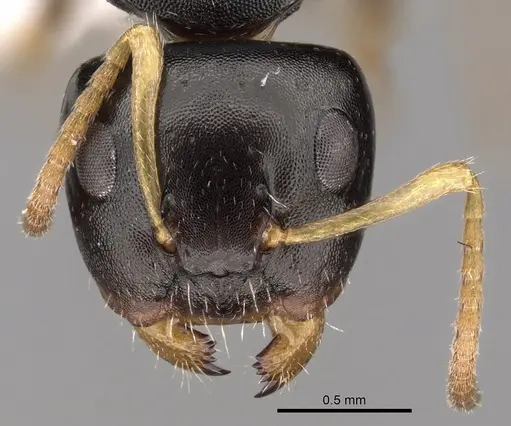
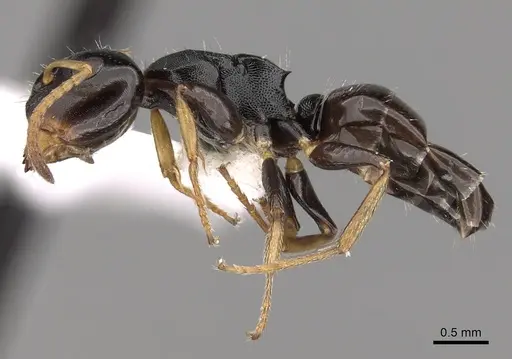
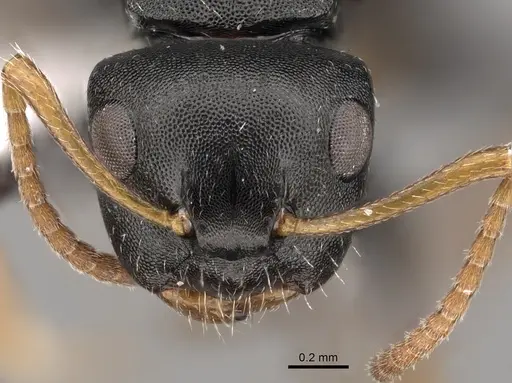
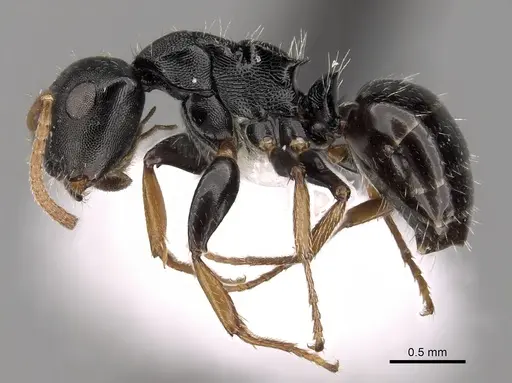
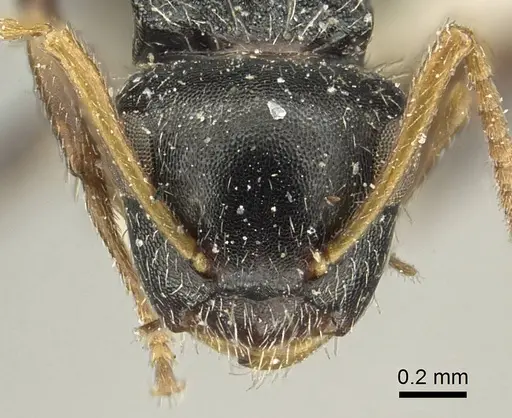
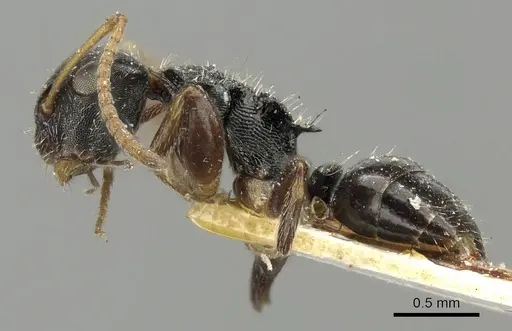
Camponotus bispinosus is a small Neotropical ant species measuring around 3.3mm in worker length [1]. Workers are primarily black with reddish-testaceous (reddish-brown) mandibles and antennae, brown legs, and a moderately shiny body covered with fine hairs [1]. This species is nearly identical to the closely related Camponotus bidens and is considered a member of the subgenus Myrmobrachys [2]. Found across the tropical forests of Central and South America from Honduras to Brazil, including much of Colombia, these ants are very common in their range and often found nesting in trees [2][3]. They form large colonies in the canopy and create extensive foraging trails that can cover areas of approximately 10 square meters and persist for long periods [4].
One of the most fascinating aspects of this species is its relationship with the zombie-ant fungus Ophiocordyceps camponoti-bispinosi. Infected ants exhibit manipulated behavior, leaving their colonies at night to bite onto palm tree thorns before dying, with the fungus then growing from the ant's head [5][6]. This parasitic relationship is so prevalent that 17.9% of ants in some study populations were infected, with abundance ten times higher during humid months [5][6].
Quick Summary
- Difficulty: Medium
- Origin & Habitat: Tropical forests of Central and South America, from Honduras through Colombia (Guajira, Magdalena, Cundinamarca, Valle del Cauca, Tolima, Meta, Huila) to Brazil [2][3]. Found in trees in tropical forests and often collected in pitfall traps [2].
- Colony Type: Single-queen colonies (monogyne). Forms large colonies in the canopy with extensive foraging trail systems [4].
- Colony: Monogyne
- Founding: Claustral
- Size & Growth:
- Queen: Not directly measured in available literature, estimated 9-12mm based on typical Camponotus queen size for this region. Signal if estimated.
- Worker: 3.3mm [1]
- Colony: Large colonies, exact maximum unknown but forms extensive foraging trails covering ~10m² [4]
- Growth: Moderate, typical for tropical Camponotus
- Development: Estimated 6-8 weeks at optimal tropical temperatures (25-28°C) based on genus-level Camponotus development patterns. Signal if estimated. (Development likely faster than temperate Camponotus due to tropical origin. Nanitics typically appear within 4-6 weeks under warm conditions.)
- Antkeeping:
- Temperature: Keep at 24-28°C. These are tropical ants requiring warm, stable temperatures year-round. A heating cable on one side of the nest creates a suitable gradient [2].
- Humidity: High humidity required, think damp tropical forest. Keep nest substrate consistently moist but not waterlogged. The species shows strong positive correlation with air humidity in the wild, with abundance ten times higher during humid periods [5][6]. Provide a water tube for drinking access.
- Diapause: No, these are tropical ants that do not hibernate. Maintain warm conditions year-round [4].
- Nesting: Arboreal nesting preferences. In captivity, they do well in Y-tong (AAC) nests or plaster nests that retain humidity. Provide vertical space and climbing structures since they naturally nest in trees [2]. A naturalistic setup with cork bark or branches works well.
- Behavior: Nocturnal foragers, they leave the nest at night to search for food [4]. Workers are not particularly aggressive but will defend their colony if threatened. They form well-organized foraging trails that persist over time. Escape risk is moderate, use standard Camponotus escape prevention (fluon on edges). Small size means they can squeeze through small gaps, so ensure tight-fitting lids. They are generalist foragers typical of the genus.
- Common Issues: fungal infection risk is high, these ants are naturally parasitized by Ophiocordyceps fungus, keep enclosures clean and dry to prevent mold and fungal growth, humidity management is critical, too dry and colonies struggle, too wet and mold becomes a problem, nocturnal activity means you'll see most movement in evening hours, don't assume they're inactive during the day, large colony size requires significant space, plan for expansion as colonies grow, tropical species cannot tolerate cool temperatures, keep away from air conditioning and cold drafts
Housing and Nest Setup
Camponotus bispinosus does well in Y-tong (AAC) nests or plaster formicaria that hold humidity well. Since they're an arboreal species naturally found in trees, provide some vertical climbing space and structures like cork bark or fake plants [2]. These ants are nocturnal, so their activity peaks in evening and night hours, place their enclosure where you can observe them during these times. A test tube setup works for founding colonies, but be prepared to move them to a larger setup once the colony reaches 15-20 workers. The key is maintaining humidity while avoiding stagnant air, use adequate ventilation with small holes or mesh that allows airflow without drying the nest too quickly.
Feeding and Diet
Like most Camponotus species, these ants are generalist foragers. They accept sugar sources (honey water, sugar water) and protein foods (mealworms, crickets, other small insects). In the wild, they forage extensively at night across their trail networks [4]. Feed them a few drops of sugar water twice weekly and offer protein (small insects) 2-3 times per week. Remove uneaten protein after 24-48 hours to prevent mold. Since they form large colonies, food requirements increase significantly as the colony grows. Always ensure fresh water is available.
Temperature and Humidity
These are tropical ants requiring temperatures between 24-28°C year-round [2]. They do not tolerate cool conditions and lack any diapause requirement, maintain warm temperatures consistently. Humidity is particularly important: research shows their abundance in the wild is ten times higher during humid periods compared to dry periods [5][6]. Keep the nest substrate consistently moist but not waterlogged. A water tube attached to the nest provides drinking access. Avoid placing the enclosure near air conditioning or cold drafts. A small digital thermometer/hygrometer helps monitor conditions.
Colony Development
Camponotus bispinosus is a claustral founder, the queen seals herself in a chamber and raises her first workers entirely on stored body fat reserves without foraging [1]. Expect the first nanitic (first) workers to emerge in 4-6 weeks under warm conditions (25-28°C), with full development to worker taking approximately 6-8 weeks. Colonies grow moderately, not as fast as some tropical species but faster than temperate Camponotus. The key challenge is the transition from founding colony to established colony, as the fungus that attacks them in the wild can also affect captive colonies if conditions become too humid or moldy. Once established with 50+ workers, colonies grow more steadily.
The Zombie Fungus Relationship
This species has a remarkable and somewhat eerie relationship with the specialized parasitic fungus Ophiocordyceps camponoti-bispinosi. Infected ants leave their colonies at night (their normal foraging time) and climb up to bite onto palm tree thorns [5][6]. The fungus then kills the ant and grows a stalk from its head to release spores. In some wild populations, nearly 18% of ants are infected [5][6]. For antkeepers, this means: keep enclosures clean and dry, remove any dead ants promptly, and avoid introducing materials from tropical forests that might carry the fungus. This is one of the few ant species where disease prevention is a genuine daily concern.
Behavior and Activity Patterns
These ants are strictly nocturnal, workers emerge at night to forage along established trails that can cover approximately 10 square meters and persist for long periods [4]. They form large colonies in the canopy of tropical trees. Workers are not particularly aggressive toward keepers but will defend the nest if disturbed. Their small size (3.3mm) means they can escape through very small gaps, use fluon on enclosure edges and ensure lids fit tightly. The extensive foraging trail behavior suggests they need more space than typical ground-nesting Camponotus as colonies grow. They're generalists that will explore and exploit various food sources.
Frequently Asked Questions
How long does it take for Camponotus bispinosus to produce first workers?
Expect first workers (nanitics) in 4-6 weeks and a fully developed worker in 6-8 weeks when kept at optimal temperatures of 25-28°C. This is faster than temperate Camponotus species due to their tropical origin.
Do Camponotus bispinosus ants need hibernation?
No. These are tropical ants that do not hibernate. Keep them warm year-round at 24-28°C. They are active throughout the year in their native range.
What do Camponotus bispinosus eat?
They are generalist foragers. Feed them sugar water or honey water twice weekly and protein sources (small insects like mealworms, fruit flies, or crickets) 2-3 times per week. Remove uneaten food promptly to prevent mold.
Are Camponotus bispinosus good for beginners?
They are rated Medium difficulty. The main challenges are maintaining proper tropical humidity, preventing fungal issues (they're susceptible to the Ophiocordyceps fungus in the wild), and providing enough space for their large colonies. Not the best choice for a first ant but manageable for those with some experience.
How big do Camponotus bispinosus colonies get?
They form large colonies in the wild, exact maximum is unknown but they create extensive foraging trail networks covering about 10 square meters [4]. In captivity, expect colonies to reach several hundred workers with proper care.
When should I move Camponotus bispinosus to a formicarium?
Move from a test tube setup to a larger nest (Y-tong or plaster formicarium) once the colony reaches 15-20 workers. They need humidity-retaining nests and some vertical climbing space since they're arboreal by nature.
Why are my Camponotus bispinosus dying?
The most likely issues are: 1) fungal infection (these ants are naturally parasitized by Ophiocordyceps fungus, keep enclosures clean and dry),2) temperature too cool (they need 24-28°C),3) humidity wrong (too dry or too wet causing mold). Check these parameters first.
Can I keep multiple Camponotus bispinosus queens together?
No. This species is monogyne, colonies have a single queen. Combining unrelated queens is not recommended and would likely result in fighting.
Are Camponotus bispinosus escape artists?
Yes. At 3.3mm, they can squeeze through very small gaps. Use fluon on all edges and ensure lids fit tightly. Check for any tiny gaps regularly.
References

This caresheet is licensed under CC BY-SA 4.0 .
CASENT0217614
View on AntWeb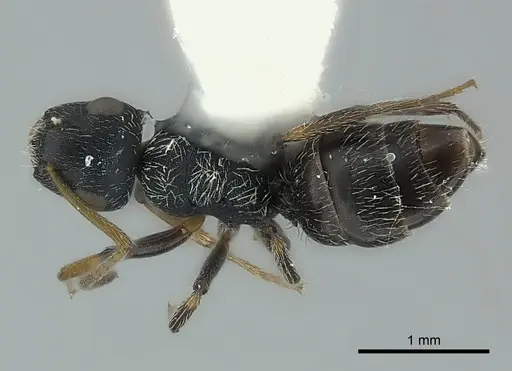
CASENT0246656
View on AntWeb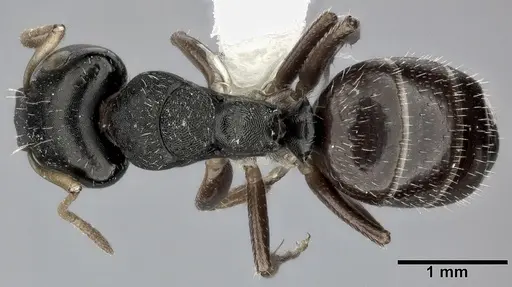
CASENT0246657
View on AntWeb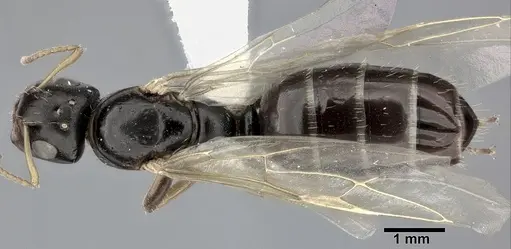
CASENT0246658
View on AntWeb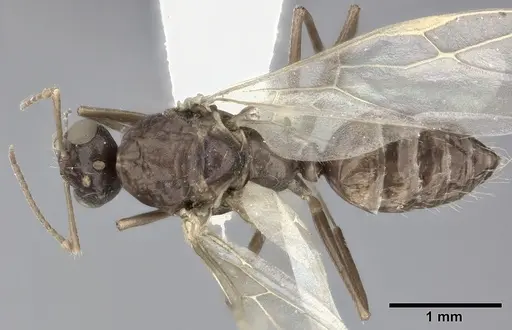
CASENT0280146
View on AntWeb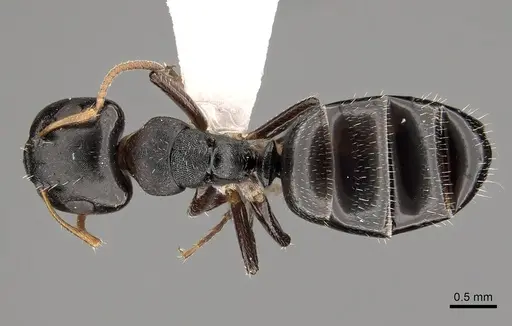
CASENT0280147
View on AntWeb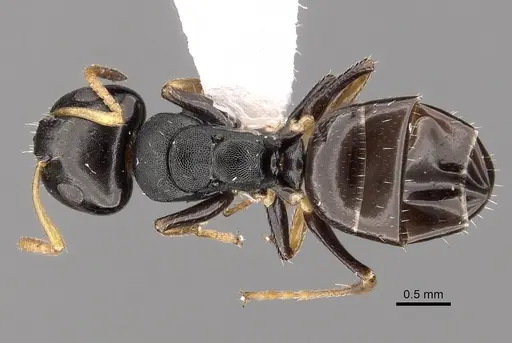
CASENT0280148
View on AntWeb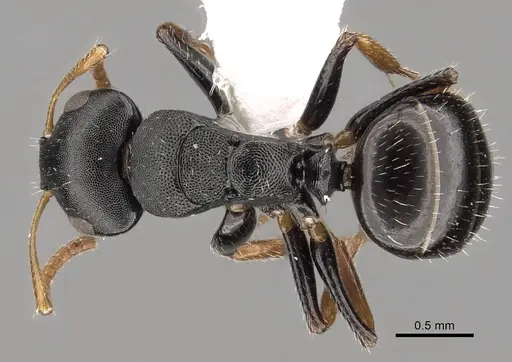
CASENT0915781
View on AntWeb
Literature
Loading...Loading products...