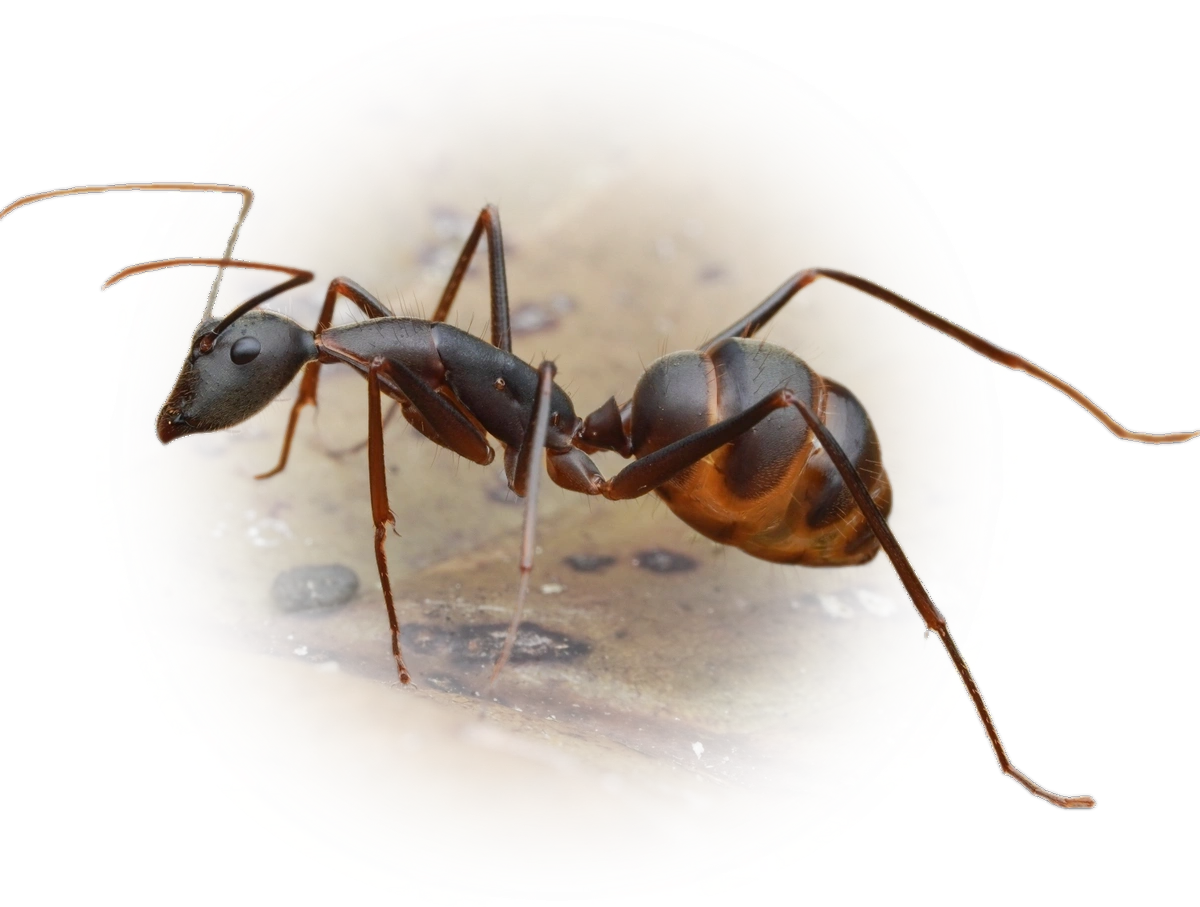

Camponotus angusticollis
- Scientific Name
- Camponotus angusticollis
- Subgenus
- Tanaemyrmex
- Tribe
- Camponotini
- Subfamily
- Formicinae
- Author
- Jerdon, 1851
- Distribution
- Found in 3 countries
Camponotus angusticollis Overview
Camponotus angusticollis is an ant species of the genus Camponotus. It is primarily documented in 3 countries , including China, India, Sri Lanka. Detailed taxonomic data and occurrence records can be further explored via authoritative databases such as AntWeb or the Global Biodiversity Information Facility (GBIF).
Camponotus angusticollis
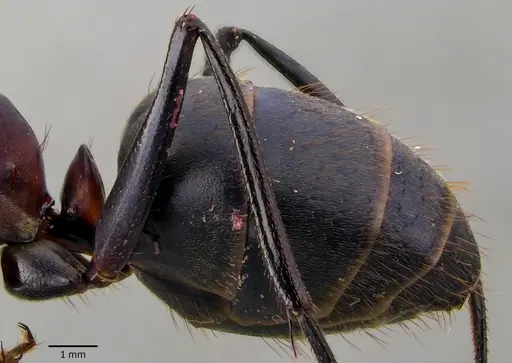
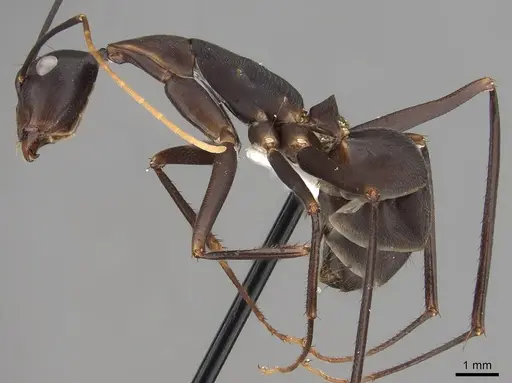
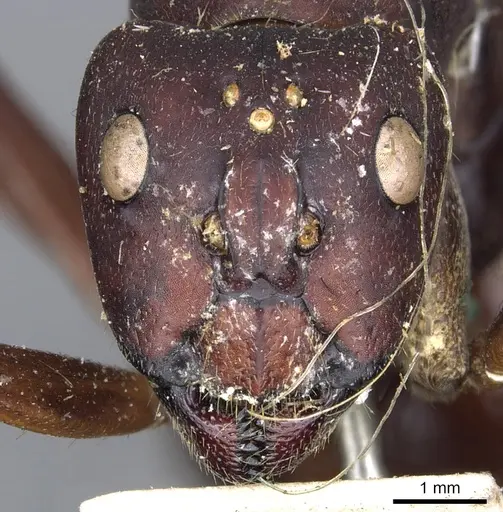
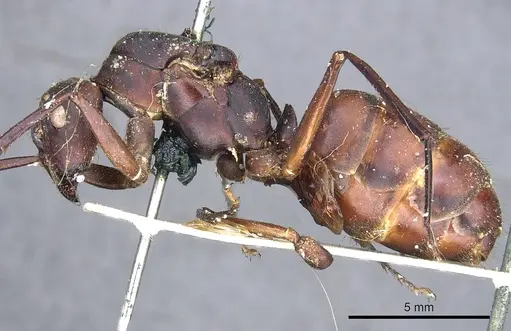
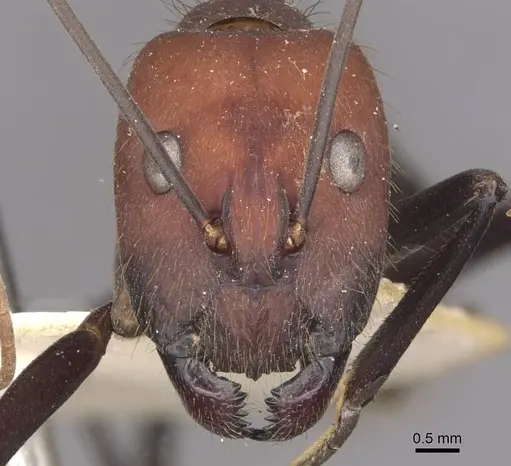
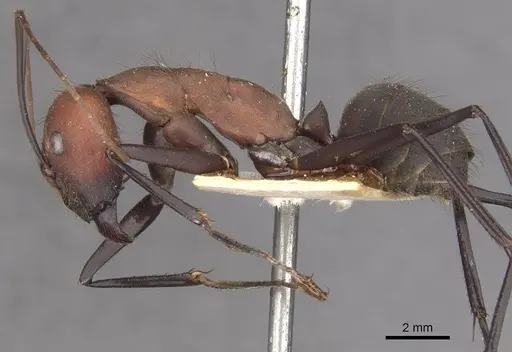
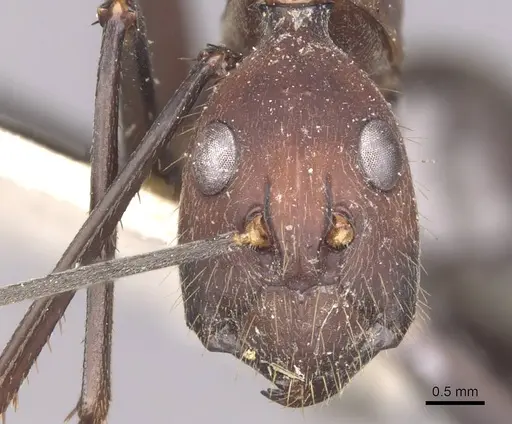
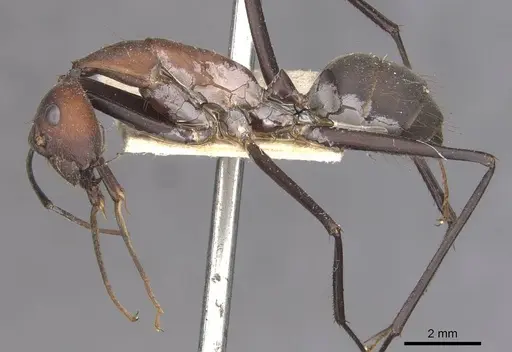
Camponotus angusticollis is a large, striking ant species native to the Indomalayan region, including India, Sri Lanka, Malaysia, Indonesia, Nepal, and Bangladesh. Workers are jet black and opaque, measuring 17-21mm, with an elongated, narrow thorax that gives them their 'long-necked' common name. Their head is subtriangular with prominent occipital angles, and they have a massive abdomen. This species is a member of the subfamily Formicinae and the genus Camponotus, which includes some of the world's largest ants [1].
What makes C. angusticollis particularly interesting is its unusual ecological flexibility. Unlike many ant species that are restricted to specific habitats, this ant has been recorded across diverse environments, from agricultural land and grasslands to forests and human settlements [2]. However, research shows it thrives particularly well in disturbed areas like rubber plantations and agroforestry zones, making it a successful 'suburban landscape' ant that often encounters human habitats [3][4].
Quick Summary
- Difficulty: Easy
- Origin & Habitat: Native to the Indomalayan region, found across India (Karnataka, Kerala, Maharashtra, Tamil Nadu, West Bengal, Assam, Meghalaya, Gujarat, Goa, Orissa, Rajasthan, Delhi), Sri Lanka, Malaysia, Indonesia (Borneo), Bangladesh, and Nepal. This is a habitat generalist found in forests, agricultural areas, grasslands, and human settlements across tropical and subtropical zones [5][6].
- Colony Type: Single-queen colonies (monogyne). Original collection notes indicate these ants were always found 'singly' in forests, suggesting solitary queen founding rather than colony groups [7].
- Colony: Monogyne
- Founding: Claustral
- Size & Growth:
- Queen: Estimated 20-25mm based on genus Camponotus patterns, queens are typically larger than workers
- Worker: 17-21mm [1]
- Colony: Estimated several hundred workers based on typical Camponotus colony sizes
- Growth: Moderate, typical Camponotus growth pattern
- Development: 6-10 weeks estimated based on typical Camponotus development at tropical temperatures [7] (Development time varies with temperature, warmer conditions within safe range accelerate development)
- Antkeeping:
- Temperature: Keep at 24-28°C. As a tropical/subtropical species from the Indomalayan region, they prefer warm conditions. A heating cable on one side of the nest creates a useful gradient [7].
- Humidity: Moderate humidity around 50-70%. Provide a water tube for drinking and occasional misting of the outworld. These ants are adaptable to varying conditions given their wide distribution [7].
- Diapause: No, being a tropical/subtropical species, they do not require hibernation. However, they may show reduced activity during cooler periods [7].
- Nesting: Large formicarium or naturalistic setup with spacious chambers. In captivity, they do well in large acrylic nests, Y-tong nests, or naturalistic setups with soil and nesting media. They prefer dark, secure spaces for their brood. Given their large worker size (17-21mm), they need appropriately scaled housing [7].
- Behavior: Generally calm and non-aggressive for a large ant species. They are foragers that search for sugar sources (hence 'sugar ant') and protein prey. Workers are black and quite conspicuous when foraging. They are not known for stinging, their main defense is formic acid spray. Escape risk is moderate given their size, but standard barrier methods work well. They are primarily nocturnal or crepuscular foragers in the wild [7].
- Common Issues: colonies may struggle if temperatures drop below 20°C for extended periods, large size requires spacious formicarium, cramped quarters can stress colonies, wild-caught colonies may carry parasites that affect captive survival, queens can be difficult to locate and catch due to their solitary nesting habits, they prefer sugar sources, protein-only diets may slow colony growth
Housing and Nest Setup
Camponotus angusticollis requires spacious housing given their large worker size of 17-21mm. A large acrylic formicarium, Y-tong nest, or a naturalistic setup with soil and decorative elements works well. They prefer dark, secure areas for their nest chambers and will readily accept test tube setups for founding colonies. For established colonies, ensure the formicarium has adequate chamber size, these are not small ants that can be housed in compact nests. Provide a water tube connected to the nest for humidity and drinking access. The outworld should be large enough for foragers to move around and should include a sugar feeding station. Escape prevention is important, use fluon on container edges and ensure any connections between nest and outworld are secure. Given their tropical origin, avoid cold drafts and keep the entire setup away from windows or air conditioning vents. [1][7]
Feeding and Diet
As their common name 'sugar ant' suggests, these ants have a strong preference for sugary liquids. Offer sugar water, honey, or diluted maple syrup as a constant food source. For protein, they accept most standard ant prey items including mealworms, crickets, roaches, and other insects. In the wild, they forage for honeydew from aphids and scale insects, so they are well-adapted to carbohydrate-rich diets. Feed protein prey 2-3 times per week depending on colony size, and keep sugar water available at all times. Remove uneaten prey after 24-48 hours to prevent mold. Young colonies (with just a queen and nanitics) should be given small, easy-to-manage prey items. As the colony grows, prey size can increase proportionally. These ants are not specialized predators, they are generalist foragers that will accept most offered foods. [7]
Temperature and Seasonal Care
Being native to the tropical and subtropical Indomalayan region, Camponotus angusticollis thrives at warm temperatures between 24-28°C. This matches their natural range across India, Sri Lanka, Malaysia, and surrounding areas where temperatures remain consistently warm year-round [5]. A heating cable placed on one end of the nest creates a temperature gradient that allows ants to self-regulate their exposure to warmth. Unlike temperate species, they do not require a winter diapause or hibernation period. However, they may show slightly reduced activity during cooler periods or in air-conditioned environments. Room temperature within the 24-28°C range is ideal, if your room is cooler, use a small heat mat or heating cable. Avoid temperatures above 32°C as this can stress the colony. The species has been found at elevations up to 2000m in Nepal, suggesting they can tolerate some temperature variation [6].
Behavior and Colony Dynamics
Camponotus angusticollis forms single-queen colonies where the founding queen seals herself in a chamber and raises her first workers (nanitics) entirely on her own. This is typical claustral founding behavior for the genus Camponotus. Workers are large (17-21mm), jet black, and relatively calm compared to some more aggressive ant species. They are primarily foragers, searching for sugar sources and small prey. Their activity pattern tends to be crepuscular or nocturnal in the wild, though they will adjust to your feeding schedules in captivity. The species is considered a 'suburban landscape' ant, commonly found in human-modified habitats like rubber plantations and agricultural areas [4][3]. This adaptability suggests they are relatively forgiving of varying conditions, making them suitable for intermediate antkeepers. Colonies grow moderately, expect the first workers (nanitics) to emerge 6-10 weeks after founding, with the colony expanding gradually over subsequent months.
Frequently Asked Questions
How long does it take for Camponotus angusticollis to raise first workers?
Expect 6-10 weeks from egg to first worker (nanitics) at optimal temperature (24-28°C). This is typical for Camponotus species. The queen will seal herself in and not emerge until her first workers hatch.
What do Camponotus angusticollis ants eat?
They are sugar-loving ants, offer sugar water, honey, or maple syrup constantly. For protein, feed insects like mealworms, crickets, or roaches 2-3 times per week. They are not picky eaters and will accept most standard ant foods.
What temperature do Camponotus angusticollis need?
Keep them warm at 24-28°C. As a tropical species from India and Southeast Asia, they do not tolerate cold well. A small heat mat or heating cable helps maintain optimal temperatures.
Are Camponotus angusticollis good for beginners?
They are rated Easy difficulty. Their large size makes them easy to observe, and they are relatively forgiving of minor care mistakes. However, their specific warmth requirements and larger housing needs make them better suited for keepers who have kept smaller ants first.
How big do Camponotus angusticollis colonies get?
Colonies typically reach several hundred workers. They are not among the largest Camponotus species but can still grow substantial with proper care over 1-2 years.
Do Camponotus angusticollis need hibernation?
No, as a tropical/subtropical species from the Indomalayan region, they do not require hibernation. They remain active year-round at warm temperatures.
When should I move my colony to a formicarium?
Move from a test tube setup to a formicarium once the colony reaches 30-50 workers or outgrows the test tube. Given their large size, they need more space sooner than small ant species.
Where is Camponotus angusticollis found in the wild?
They range across the Indomalayan region: India, Sri Lanka, Bangladesh, Malaysia, Indonesia (Borneo), and Nepal. They are habitat generalists found in forests, agricultural areas, grasslands, and human settlements.
Can I keep multiple Camponotus angusticollis queens together?
No, this is a monogyne (single-queen) species. Multiple unrelated queens will fight. Only keep one queen per colony.
References

This caresheet is licensed under CC BY-SA 4.0 .
ANTWEB1041877
View on AntWeb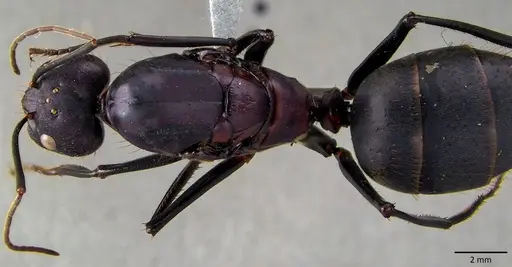
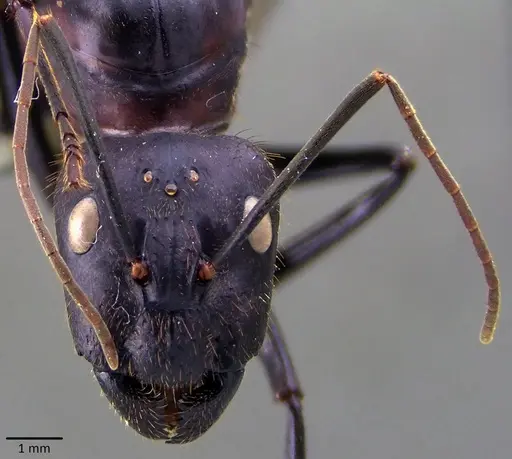
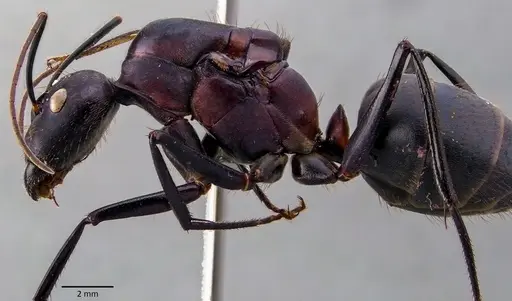
CASENT0280272
View on AntWeb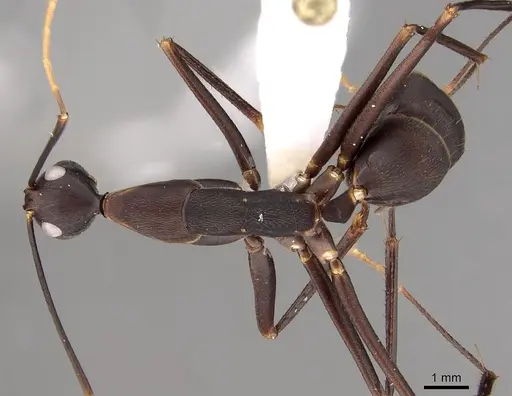
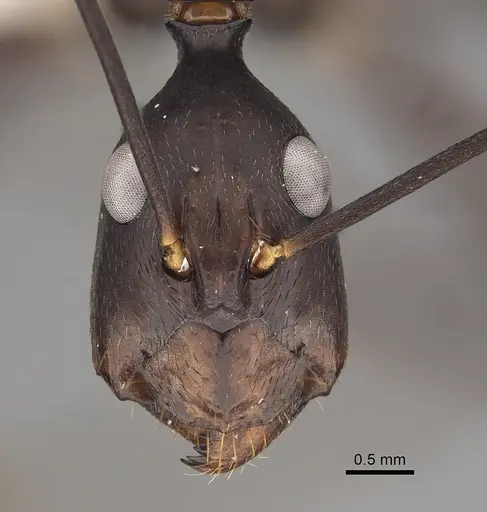
CASENT0903557
View on AntWeb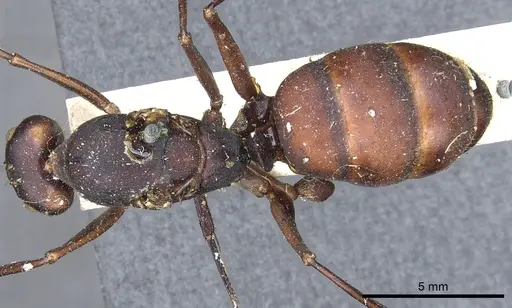
CASENT0910082
View on AntWeb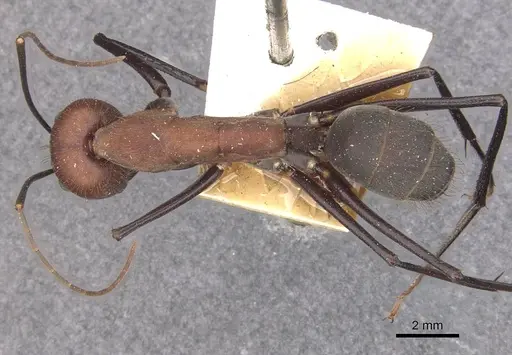
CASENT0910083
View on AntWeb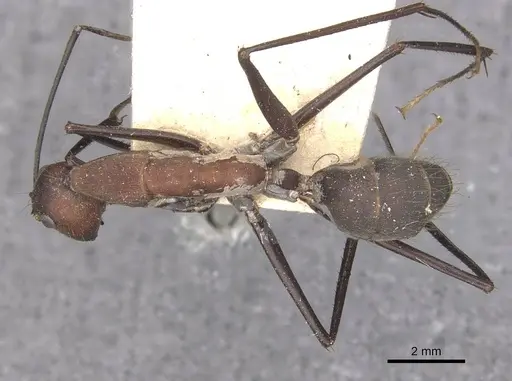
Literature
Loading...Loading products...