

Brachymyrmex myops
- Scientific Name
- Brachymyrmex myops
- Tribe
- Myrmelachistini
- Subfamily
- Formicinae
- Author
- Emery, 1906
- Distribution
- Found in 2 countries
Brachymyrmex myops Overview
Brachymyrmex myops is an ant species of the genus Brachymyrmex. It is primarily documented in 2 countries , including Brazil, Peru. Detailed taxonomic data and occurrence records can be further explored via authoritative databases such as AntWeb or the Global Biodiversity Information Facility (GBIF).
Brachymyrmex myops
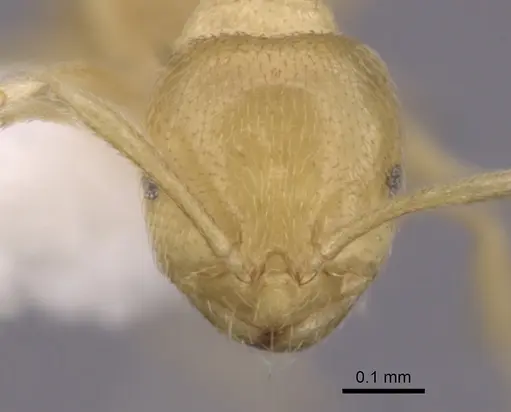
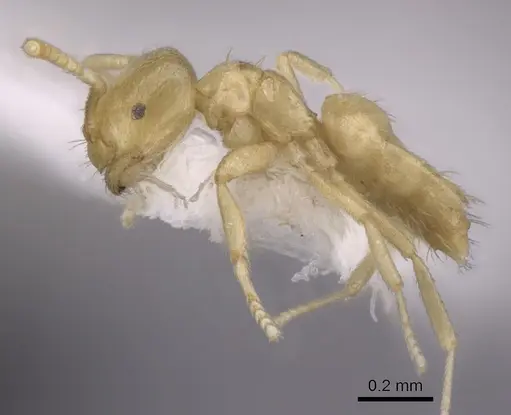
Brachymyrmex myops is a tiny yellowish ant native to the Neotropical region of South America, found in Bolivia, Brazil, and Colombia [1][2]. Workers are exceptionally small at around 0.36-0.41mm in body length, making them one of the smaller ant species you'll encounter [1]. They have a uniformly yellowish body with dense fine hairs on the gaster, and their eyes are positioned unusually low on the head, below the cephalic midline, with only 3-4 lens units per eye [1][2]. The scapes (the antennae segments closest to the head) extend past the back of the head by roughly the same length as the eye's diameter [1]. This species was originally discovered living in the nest of the termite Anoplotermes ater, making it one of the few ant species with a documented association with termites [1][2].
Quick Summary
- Difficulty: Medium
- Origin & Habitat: Native to the Neotropical region, specifically Bolivia, Brazil (Santa Catarina), and Colombia (Cauca, Isla Gorgona) [1][2][3]. The original specimens were collected from within a termite nest (Anoplotermes ater) in Joinville, Santa Catarina, Brazil [1]. This suggests they prefer warm, humid, shaded microhabitats typical of tropical forest floors.
- Colony Type: Colony structure is unconfirmed. No data exists on whether they are single-queen (monogyne) or multi-queen (polygyne) colonies.
- Size & Growth:
- Queen: Unknown, queen caste has not been described in scientific literature
- Worker: 0.36-0.41mm body length (WL), head width 0.33-0.37mm [1][2]
- Colony: Unknown, no colony size data available
- Growth: Unknown, no development data exists for this species
- Development: Unknown, no direct measurements exist. Based on typical Brachymyrmex patterns and their small size, expect 4-8 weeks at tropical temperatures, but this is an estimate. (No published data on development timeline. Brachymyrmex genus members are typically fast-developing due to small colony sizes.)
- Antkeeping:
- Temperature: Aim for 24-28°C, these are Neotropical ants requiring warm conditions. Provide a gentle temperature gradient so ants can self-regulate.
- Humidity: Keep substrate moderately humid. Their natural habitat in termite nests suggests they prefer damp, stable conditions. Allow some drying between waterings but don't let them dry out completely.
- Diapause: Unknown, no research on overwintering requirements. As a Neotropical species, they likely do not require hibernation, but may slow down during cooler periods.
- Nesting: Natural nesting: Originally found inside termite nests. In captivity, they likely prefer moist substrate like soil or small chambers in plaster/AAC nests. Their tiny size means they need very small tunnels and chambers.
- Behavior: These ants are very small and likely not aggressive. They probably forage individually or in small groups for honeydew and tiny prey. Their tiny size means excellent escape prevention is critical, they can squeeze through standard mesh. They are likely nocturnal or crepuscular given their small eyes with few ommatidia. Expect modest activity levels typical of cryptic ant species.
- Common Issues: tiny size makes escape likely without fine mesh barriers, no published care information means trial-and-error is required, humidity balance is critical, too dry causes colony failure, slow colony growth due to small colony sizes typical of genus, no available data on queen founding behavior makes colony establishment uncertain
Appearance and Identification
Brachymyrmex myops workers are among the smaller ants you'll keep, measuring just 0.36-0.41mm in total body length [1]. Their most distinctive feature is their unusually small eyes, positioned below the midline of the head with only 3-4 lens units, which is remarkably few for an ant [1][2]. The body is typically a uniform yellowish color, though some specimens show a slightly darker gaster [1]. Their antennae scapes extend past the back of the head by roughly the length of their eye diameter, and the gaster (the rear body segment) has dense fine hairs giving it a slightly fuzzy appearance [1][2]. These morphological traits help distinguish them from similar Brachymyrmex species like B. donisthorpei and B. modestus.
Natural History and Distribution
This species has a limited known distribution in northern South America, recorded from Bolivia, Brazil (specifically Santa Catarina state), and Colombia's Cauca region including Isla Gorgona [1][2][3]. The most remarkable aspect of their natural history is the original discovery: Emery described this species in 1906 from specimens collected inside the nest of the termite Anoplotermes ater [1][2]. This ant-termite association is unusual, while some ants occasionally nest near or in termite structures, B. myops appears to have a more direct relationship with these termites. The type locality in Joinville, Santa Catarina is a humid, subtropical region of Brazil, suggesting they prefer warm, moist conditions.
Housing and Nest Setup
Because this is a very small ant species with no published care information, you'll need to adapt standard setups. Use test tubes with small water reservoirs or mini formicariums with very fine tunnels, standard ant farm spacing is likely too large for them. Their tiny size means they can escape through standard mesh, so use fine mesh barriers or fluon on edges. Provide a moist substrate (soil or plaster) to maintain humidity, as their natural habitat in termite nests suggests they need stable moisture. A small outworld connected to the nest allows for feeding. Since they're cryptic ants, provide dark covering over the nest to reduce stress.
Feeding and Diet
No specific feeding data exists for this species, but Brachymyrmex genus members typically feed on honeydew from aphids and scale insects, plus small insects and protein sources. Offer sugar water or honey diluted with water in a cotton wick or small container. For protein, provide tiny prey like fruit flies, pinhead crickets, or small mealworm pieces. Given their association with termites in the wild, they may accept soft-bodied prey. Feed small amounts initially and observe what they accept. Remove uneaten food after 24-48 hours to prevent mold.
Temperature and Humidity Requirements
As a Neotropical species from Brazil, Bolivia, and Colombia, Brachymyrmex myops requires warm conditions, aim for 24-28°C in the nest area. Room temperature (around 22-24°C) may suffice, but a small heating cable on one side of the nest can help maintain optimal warmth. For humidity, keep the substrate moderately moist but not waterlogged. Their origin in termite nests suggests they prefer stable, humid conditions. Use a moisture gradient so ants can choose their preferred spot. Monitor for condensation, some is good, but excessive moisture leads to mold.
Colony Establishment Challenges
The biggest challenge with Brachymyrmex myops is the complete lack of published husbandry information. No one has documented their queen founding behavior, colony size potential, or specific care requirements. You may need to experiment with different setups and observe your colony's behavior. Queens may not have been described scientifically, which means finding a mated queen for sale is unlikely. If you obtain a colony, expect slow growth typical of small, cryptic ant species. Monitor carefully for stress signs and adjust conditions gradually.
Frequently Asked Questions
How big do Brachymyrmex myops ants get?
Workers are tiny at just 0.36-0.41mm body length, among the smallest ants you'll encounter [1]. Queen size is unknown as the queen caste has not been scientifically described.
What do Brachymyrmex myops eat?
No specific diet data exists, but Brachymyrmex species typically accept sugar sources (honey water, sugar water) and small protein prey like fruit flies or tiny insects. Offer both and remove uneaten food after 24 hours.
Can I keep Brachymyrmex myops in a test tube setup?
Yes, test tubes work well for small ants. Use a small water reservoir and keep the tube humid. However, their tiny size means escape prevention must be excellent, use fine mesh and fluon barriers.
What temperature do Brachymyrmex myops need?
Keep them warm at 24-28°C. As Neotropical ants from Brazil and Colombia, they require tropical temperatures. A small heating cable on part of the nest can help maintain warmth.
Are Brachymyrmex myops good for beginners?
This species is not recommended for beginners. No published care information exists, and their tiny size makes them challenging to house and feed properly. Start with more established species first.
How fast do Brachymyrmex myops colonies grow?
Growth rate is unknown, no development data exists for this species. Based on their small size and typical Brachymyrmex patterns, expect slow to moderate growth over months.
Where is Brachymyrmex myops found in the wild?
They live in the Neotropical region of South America: Bolivia, Brazil (Santa Catarina), and Colombia (Cauca, Isla Gorgona) [1][2]. Originally discovered in a termite nest in Brazil.
Do Brachymyrmex myops need hibernation?
Unknown, no research exists on overwintering. As a Neotropical species, they likely do not require hibernation, but may slow down during cooler periods.
Why are my Brachymyrmex myops dying?
Common causes include: escape (their tiny size allows them through standard barriers), too dry conditions (they need humidity), temperature stress (too cold or too hot), or mold from overwatering. Check all parameters and adjust gradually.
References

This caresheet is licensed under CC BY-SA 4.0 .
CASENT0249948
View on AntWeb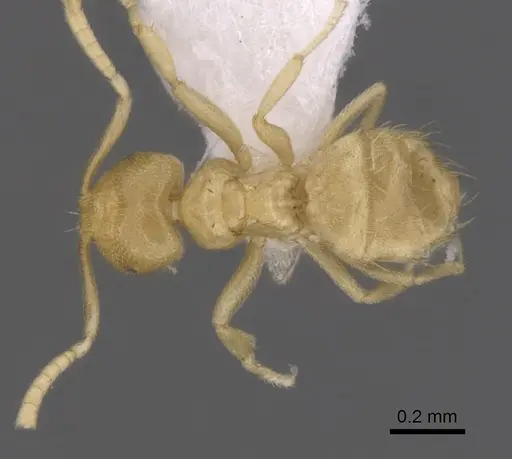
Literature
Loading...Loading products...