

Brachymyrmex micromegas
- Scientific Name
- Brachymyrmex micromegas
- Tribe
- Myrmelachistini
- Subfamily
- Formicinae
- Author
- Emery, 1923
- Distribution
- Found in 1 countries
Brachymyrmex micromegas Overview
Brachymyrmex micromegas is an ant species of the genus Brachymyrmex. It is primarily documented in 1 countries , including Brazil. Detailed taxonomic data and occurrence records can be further explored via authoritative databases such as AntWeb or the Global Biodiversity Information Facility (GBIF).
Brachymyrmex micromegas
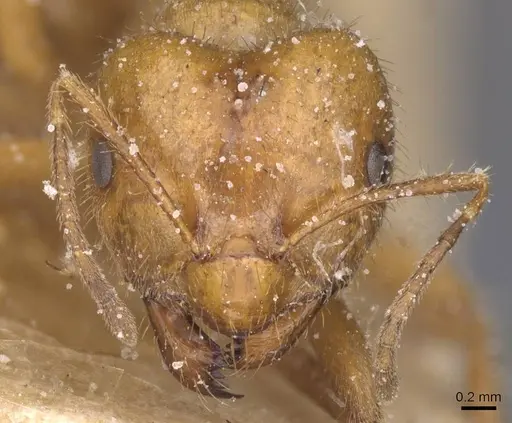
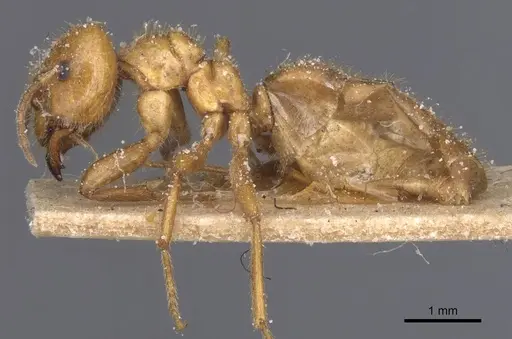
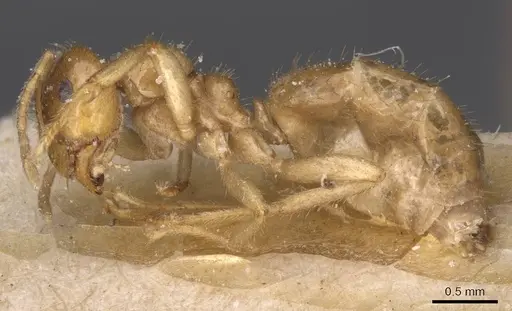
Brachymyrmex micromegas is a tiny Neotropical ant species native to Brazil, specifically São Paulo State. These ants are distinctive for having dimorphic workers, both major (soldier-like) and minor workers, which is unusual for the genus Brachymyrmex. Minor workers measure just 0.70-0.86mm in head width, while major workers are substantially larger at 1.66-1.83mm. The body is smooth and shiny with a light brown coloration, and they possess unique tumuliform metathoracic spiracles that appear as raised bumps on the back. The species was originally described in 1923 and remains poorly studied, the queen and male castes have never been documented. This is a rare species in the antkeeping hobby due to its limited distribution and the lack of captive breeding information.
Quick Summary
- Difficulty: Expert
- Origin & Habitat: Brachymyrmex micromegas is found only in Brazil, specifically São Paulo State in the Atlantic Forest region. The type locality is Ipiranga in São Paulo city, with additional records from Agudos and Anhembi. They inhabit secondary Atlantic Forest environments and have been found in soil samples from coffee plantations [1][2][3].
- Colony Type: Colony structure is unconfirmed. Only worker castes have been documented, both major and minor workers exist, but queens and males remain unknown. The species is dimorphic with major and minor workers, a rare trait in Brachymyrmex [1][4].
- Size & Growth:
- Queen: Unknown, queen has never been described [1][4]
- Worker: Minor workers: 0.70-0.86mm HW,0.74-0.80mm SL. Major workers: 1.66-1.83mm HW,1.12-1.23mm SL [1][2]
- Colony: Unknown, no colony size data exists
- Growth: Unknown
- Development: Unknown, queen has never been documented, so development timeline is unconfirmed (This is one of the least studied ant species in the hobby. No information exists on founding behavior, development times, or colony growth rates.)
- Antkeeping:
- Temperature: As a Brazilian Atlantic Forest species, keep them warm at roughly 22-28°C. This is an estimate based on similar Neotropical Brachymyrmex species, no specific thermal data exists for this species.
- Humidity: Likely requires moderate to high humidity given their Atlantic Forest origin. Keep the nest substrate consistently moist but not waterlogged, with some drier areas available.
- Diapause: Unknown, as a tropical species from São Paulo State, they likely do not require true hibernation but may show reduced activity in cooler months.
- Nesting: In nature they nest in soil, including agricultural settings. For captivity, a small test tube setup or acrylic nest with moist substrate would be appropriate. Given their tiny size, they need tight chambers and fine escape prevention.
- Behavior: Behavior is largely unstudied. Based on genus typical patterns, they are likely relatively docile and not aggressive. They are very small ants (minor workers around 2-3mm total length, majors around 4-5mm), so escape prevention is critical, they can squeeze through tiny gaps. Foraging style is unknown but likely involves ground-level activity. The presence of major workers suggests they may have some defensive or storage role, similar to other dimorphic species.
- Common Issues: queen unknown, this species has never been documented with a queen, making captive establishment nearly impossible, escape risk is extremely high due to their very small size, use fine mesh and tight-fitting lids, no captive breeding information exists, wild-caught colonies may not establish in captivity, extremely rare in the hobby with virtually no established husbandry protocols, slow growth and lack of documented development means colonies often fail without clear cause
Species Identification and Morphology
Brachymyrmex micromegas is one of the most distinctive species in its genus due to its worker dimorphism. Unlike most Brachymyrmex species which have monomorphic workers, this species produces both major and minor workers. Minor workers measure approximately 0.70-0.86mm in head width with scapes reaching 0.74-0.80mm, while major workers are substantially larger at 1.66-1.83mm head width. The body is smooth and shiny with very fine longitudinal striations restricted to the metapleura. They are typically light brown in color, with the gaster often appearing darker. The species can be identified by its tumuliform (raised, bump-like) metathoracic spiracles, a row of thick hairs on the clypeus, and the distinctive arrangement of toruli touching but not surpassing the posterior clypeal margin. This combination of traits separates it from similar species like B. pilipes, which has a more textured body surface. [1][2][4]
Distribution and Habitat
This species has an extremely limited distribution known only from São Paulo State, Brazil. The type locality is Ipiranga in São Paulo city, where the species was originally collected in the early 1900s. Despite recent field trips to the locality, no specimens have been collected there in recent decades, suggesting either local extinction or extreme rarity. Additional records exist from Agudos and Anhembi in São Paulo State. They have been found in secondary Atlantic Forest remnants and in soil samples from organic coffee plantations, indicating some tolerance for disturbed habitats. The species appears to be associated with forest floor environments and soil nesting. This extremely restricted distribution makes B. micromegas a significant conservation concern, and the species has not been found in many biodiversity surveys of Brazilian ants. [1][2][3]
Current State of Knowledge
Brachymyrmex micromegas remains one of the most poorly known ant species in the world. The queen caste has never been described, the male caste remains unknown, and no information exists on colony structure, founding behavior, or development. This represents a major gap in ant taxonomy, most ant species have at least some information on their basic biology after being described nearly a century ago. The worker caste was redescribed in 2014 by Ortiz and Fernández, providing detailed morphological measurements, but fundamental biological questions remain unanswered. This lack of basic biological data makes captive husbandry extremely challenging. Potential antkeepers should understand that this species is essentially unavailable in the hobby precisely because no one has successfully established a colony. The few specimens that exist are in museum collections, and no established breeding stock is known to exist in captivity. [1][4]
Challenges for Antkeepers
Keeping Brachymyrmex micromegas in captivity presents extraordinary challenges that place this species firmly in the 'expert only' category, and realistically it should be considered 'not recommended for captivity' by any keeper. The primary obstacle is that no one has documented a queen of this species, they have never been found or described. Without a queen, establishing a colony from wild-caught founding queens is impossible. Even if a queen were to be found, no information exists on founding behavior, development times, temperature preferences, humidity requirements, or diet. The species has never been kept in captivity, so there is no husbandry knowledge to draw upon. Additionally, their extremely small size (minor workers are among the smallest ants in the genus) creates significant escape prevention challenges. For these reasons, antkeepers interested in Brachymyrmex species would be far better served by exploring other species in the genus that have established captive populations and documented care requirements. [1]
Related Species and Alternatives
For antkeepers interested in the genus Brachymyrmex, several other species have more established care information and may be more suitable for captivity. Brachymyrmex species are small, generally docile ants that typically form moderate colonies. Many Brachymyrmex species are found throughout the Neotropics and some have been kept in captivity with varying degrees of success. The genus is part of the Formicinae subfamily and the Myrmelachistini tribe. Unlike B. micromegas, most Brachymyrmex species have documented queen castes and basic biological information. Keepers interested in tiny South American ants might also explore other genera like Pseudomyrmex or some Solenopsis species that have more accessible biology. The study of B. micromegas remains an important task for myrmecologists, but until basic biological information is gathered through field work and taxonomic study, captive husbandry will not be possible. [4][1]
Frequently Asked Questions
Can I keep Brachymyrmex micromegas in captivity?
No. This species cannot be kept in captivity because no one has ever documented a queen. Without a known queen, establishing a colony is impossible. This is one of the least studied ant species in the world with virtually no biological information available.
Where does Brachymyrmex micromegas live?
Only in São Paulo State, Brazil. The species is known from Ipiranga (São Paulo city), Agudos, and Anhembi. It lives in Atlantic Forest environments and has been found in secondary forest and agricultural areas.
How big are Brachymyrmex micromegas workers?
They are tiny ants. Minor workers have a head width of 0.70-0.86mm, while major workers are larger at 1.66-1.83mm head width. The major workers are unusual for the genus, most Brachymyrmex species have only one worker size.
Why is Brachymyrmex micromegas so rare?
The species has an extremely limited distribution in São Paulo State, Brazil, and has rarely been collected since its original description in 1923. It was never commonly found even in early surveys, and recent field trips to the type locality have failed to locate any specimens.
What do Brachymyrmex micromegas eat?
Unknown. No feeding observations or diet studies exist for this species. Based on genus typical behavior, they likely consume honeydew and small insects, but this is entirely speculative.
Are Brachymyrmex micromegas good for beginners?
No. This species is completely unsuitable for any antkeeper, including experts. No information exists on their care, and no queen has ever been found to establish a colony. This is not a species that can be kept in captivity.
How long do Brachymyrmex micromegas live?
Unknown. No lifespan data exists for this species or any aspect of its biology. Even basic information like queen lifespan and colony longevity has never been studied.
Do Brachymyrmex micromegas need hibernation?
Unknown. As a tropical species from São Paulo State, they likely do not require true hibernation but may reduce activity during cooler months. No specific seasonal behavior has been documented.
Can I find Brachymyrmex micromegas in the wild?
Extremely unlikely. The species has only been collected a handful of times since 1923,and recent surveys in the type locality have failed to find any specimens. It may be locally extinct in its known range or simply extremely rare.
References

This caresheet is licensed under CC BY-SA 4.0 .
CASENT0911608
View on AntWeb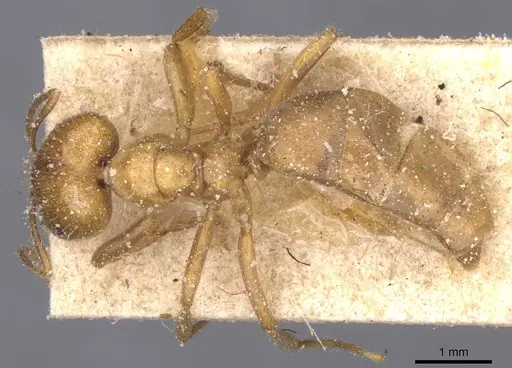
CASENT0911609
View on AntWeb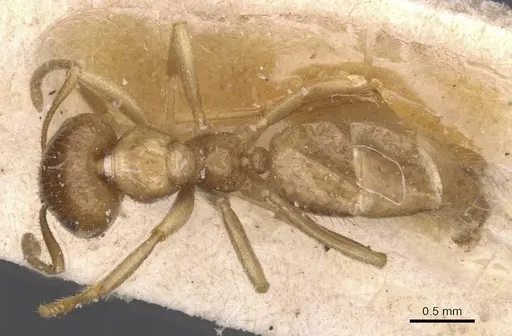
Literature
Loading...Loading products...