

Brachymyrmex bicolor
- Scientific Name
- Brachymyrmex bicolor
- Tribe
- Myrmelachistini
- Subfamily
- Formicinae
- Author
- Ortiz-Sepúlveda <i>et al.</i>, 2019
- Distribution
- Found in 1 countries
Brachymyrmex bicolor Overview
Brachymyrmex bicolor is an ant species of the genus Brachymyrmex. It is primarily documented in 1 countries , including Honduras. Detailed taxonomic data and occurrence records can be further explored via authoritative databases such as AntWeb or the Global Biodiversity Information Facility (GBIF).
Brachymyrmex bicolor
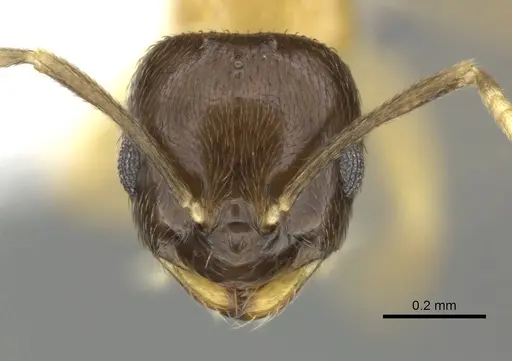
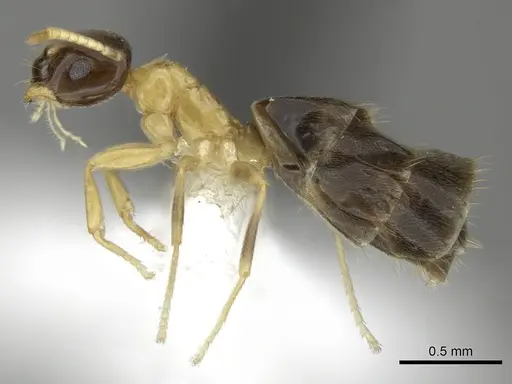
Brachymyrmex bicolor is a recently described species (2019) native to the cloud forests of Honduras. These tiny ants measure just 2mm as workers, making them one of the smaller ant species you'll encounter. They get their name from their striking two-tone coloration, the head and rear body (gaster) are blackish while the middle section (mesosoma) and legs are yellowish, with yellow antennae and mandibles creating a memorable contrast [1][2]. This color pattern makes them easily distinguishable from other Brachymyrmex species. Found only in the cloud forests of Honduras at around 1120m elevation, they live in leaf litter on the forest floor [1][2].
This species is one of the few in the genus Brachymyrmex known to have intercastes, individuals that are intermediate between workers and queens in appearance. The genus is known for its small size and tendency to form moderate-sized colonies. Since this species was only described in 2019,captive breeding information is extremely limited, and most care guidelines are inferred from related species and their natural habitat.
Quick Summary
- Difficulty: Medium
- Origin & Habitat: Honduras cloud forests at 1120m elevation. They live in leaf litter on the forest floor in humid, shaded conditions [1][2].
- Colony Type: Colony structure is unconfirmed. The genus Brachymyrmex typically forms single-queen colonies, but this specific species has not been studied in detail. One of the few Brachymyrmex species with documented worker-queen intercastes [1][2].
- Size & Growth:
- Queen: Unconfirmed, no wild queen measurements published. Based on related Brachymyrmex species, queens likely measure 3-4mm [3].
- Worker: 2mm approximately (HL1 0.43mm, HW 0.38-0.41mm) [2].
- Colony: Unknown, no colony size data exists for this species. Related Brachymyrmex species typically reach a few hundred workers [3].
- Growth: Unknown, estimated as moderate based on genus patterns.
- Development: Unconfirmed, estimated 6-8 weeks based on related tropical Brachymyrmex species. (No direct development data exists. Estimates based on genus-level patterns for small tropical ants.)
- Antkeeping:
- Temperature: Keep at 22-26°C. Inferred from cloud forest habitat, they prefer warm but not hot conditions with stable temperatures. Avoid temperatures above 30°C [1].
- Humidity: High humidity required, cloud forest ants need 70-85% humidity. Keep the nest substrate consistently moist but not waterlogged. Provide a water tube and mist occasionally [1].
- Diapause: Unknown, likely minimal or no true diapause given their tropical origin. Some reduced activity during winter months may occur if kept at room temperature.
- Nesting: Likely prefers naturalistic setups with leaf litter material or tight-fitting test tubes. Their tiny size means they can escape through standard test tube setups, use fine mesh barriers. Y-tong nests with small chambers also work well for their size.
- Behavior: These are small, relatively docile ants that typically avoid confrontation. They are not aggressive and rarely sting. Their tiny size makes them excellent escape artists, you must use fine mesh and tight-fitting lids. They are likely nocturnal or crepuscular based on genus patterns. Workers forage individually rather than in groups. They probably feed on honeydew, small insects, and nectar like other Brachymyrmex species.
- Common Issues: tiny size makes escape likely without fine mesh barriers, high humidity needs can lead to mold if ventilation is poor, no species-specific care data exists, some trial and error expected, cloud forest origin means they may struggle in dry environments, newly described species, wild colonies may have unknown parasites
Housing and Escape Prevention
Because Brachymyrmex bicolor workers are only about 2mm long, escape prevention is critical. Standard test tube setups often have gaps that these tiny ants can squeeze through. Use test tubes with cotton plugs that are packed tightly, or better yet, use fine mesh barriers (nylon mesh with holes smaller than 0.5mm) on any container opening. A Y-tong (acrylic) nest with very small chambers works well for their size. If using a naturalistic setup, ensure all seams and gaps are sealed. These ants are not strong climbers on smooth surfaces, but they will find any gap. Check your setup daily, especially during the first few weeks.
For nesting material, they do well with slightly damp substrate. A mixture of soil and sand works, or you can use pre-made formicarium materials. Since they come from leaf litter in cloud forests, adding some decaying leaves or organic material to the outworld can help them feel at home. Keep the nest area humid but ensure some dry areas exist so they can regulate their moisture exposure. [1][2][3]
Feeding and Diet
Like other Brachymyrmex species, these ants are likely omnivorous with a preference for sweet liquids and small protein sources. Offer sugar water or honey water as a constant food source, they will readily accept these. For protein, small prey items like fruit flies, pinhead crickets, or tiny mealworms work well. Since they are so small, the prey needs to be appropriately sized, anything larger than their head will likely be ignored.
Feed them small amounts every 2-3 days, removing any uneaten prey after 24 hours to prevent mold. A drop of honey water on a small piece of foil or in a test tube cap works well. Since they are tiny, even a small droplet is plenty. Watch to see if they are consuming the food, and adjust quantities based on colony size and activity. A well-fed colony will have workers with slightly distended abdomens. [3]
Temperature and Humidity
Brachymyrmex bicolor comes from cloud forests in Honduras, so they need warm and humid conditions. Keep the nest area at 22-26°C, this is warmer than room temperature for most homes, so you may need a small heating cable or heat mat on one side of the nest. Create a temperature gradient so they can choose their preferred spot. Avoid temperatures above 30°C or below 18°C.
Humidity is crucial. These ants need 70-85% relative humidity to thrive. Keep the nest substrate consistently moist but not soaking wet. You can achieve this by connecting a water tube to the nest or misting the setup regularly. However, balance humidity with adequate ventilation to prevent mold growth. A small ventilation hole covered with fine mesh works well. If you see condensation constantly forming on the nest walls, the humidity is too high. If the ants are clustering near the water source, it's too dry. [1][2]
Colony Development
Since Brachymyrmex bicolor was only described in 2019,there is no published data on their colony development in captivity. Based on related Brachymyrmex species and the genus patterns, expect the following timeline: after a nuptial flight, a newly mated queen will seal herself into a small chamber and lay eggs. She will likely remain sealed for several weeks while raising the first brood on stored fat reserves. The first workers (nanitics) will be smaller than mature workers and may take 6-10 weeks to emerge.
Once the first workers arrive, the colony will begin growing more steadily. The queen will continue laying eggs, and worker numbers should increase over the following months. This is a slow process, don't expect rapid growth. Colonies may take a year or more to reach 50 workers. Be patient and maintain consistent care conditions. Avoid disturbing the nest during the founding stage as this can cause the queen to abandon or eat her brood. [1]
Handling and Temperament
These tiny ants are not aggressive and pose no danger to keepers. They may bite if provoked, but their mandibles are too small to break human skin. They are not known to sting. Their primary defense is escaping, they will scatter and hide when disturbed rather than attack.
When observing your colony, avoid tapping or shaking the nest. Move slowly and gently around their setup. If you need to transfer them, gently coax them into a container rather than shaking them out. They are best observed through the nest walls rather than handled directly. Their small size and docile nature make them interesting observation subjects, especially when foraging. [3]
Frequently Asked Questions
How long does it take for Brachymyrmex bicolor to produce first workers?
The exact timeline is unconfirmed for this species. Based on related Brachymyrmex species, expect 6-10 weeks from egg to first worker at optimal temperature (around 24°C). The queen seals herself in during founding and relies on stored fat reserves until the first nanitics emerge.
Can I keep Brachymyrmex bicolor in a test tube?
Yes, but with caution. Their tiny 2mm size means they can escape through standard cotton plugs. Use tightly packed cotton or add a fine mesh barrier. A test tube with a water reservoir works well for humidity. Monitor daily for escapes, especially initially.
What do Brachymyrmex bicolor ants eat?
They likely accept sugar sources (honey water, sugar water) and small protein prey (fruit flies, tiny mealworms, pinhead crickets). Feed small amounts every 2-3 days. Remove uneaten prey after 24 hours to prevent mold.
Are Brachymyrmex bicolor good for beginners?
They are rated as medium difficulty. While small and docile, their high humidity needs and escape risk make them slightly challenging. Beginners should ensure they can maintain proper humidity before getting this species.
What temperature do Brachymyrmex bicolor need?
Keep them at 22-26°C. This is warmer than typical room temperature. A small heating cable on one side of the nest can help maintain these temperatures. Avoid temperatures above 30°C or below 18°C.
How big do Brachymyrmex bicolor colonies get?
Colony size is unconfirmed for this species. Based on related Brachymyrmex species, colonies likely reach a few hundred workers over several years. They are not large colony formers.
Do Brachymyrmex bicolor need hibernation?
Unlikely, given their tropical cloud forest origin. They probably do not need a true diapause. Some reduced activity in cooler winter months may occur, but they can be kept at consistent temperatures year-round.
Why are my Brachymyrmex bicolor escaping?
Their tiny 2mm size allows them to squeeze through the smallest gaps. Use fine mesh (less than 0.5mm holes) on all openings. Check seams, lid edges, and ventilation holes. Tight-fitting lids are essential.
Where is Brachymyrmex bicolor found in the wild?
Only in Honduras, specifically in cloud forests at around 1120m elevation. They live in leaf litter on the forest floor. This is a recently described species (2019) with a very limited natural range.
References

This caresheet is licensed under CC BY-SA 4.0 .
CASENT0615273
View on AntWeb
CASENT0615275
View on AntWeb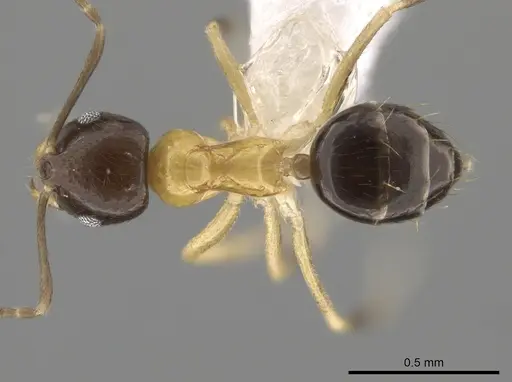


CASENT0615276
View on AntWeb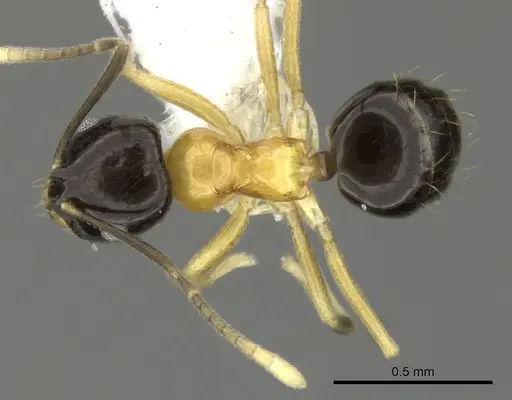
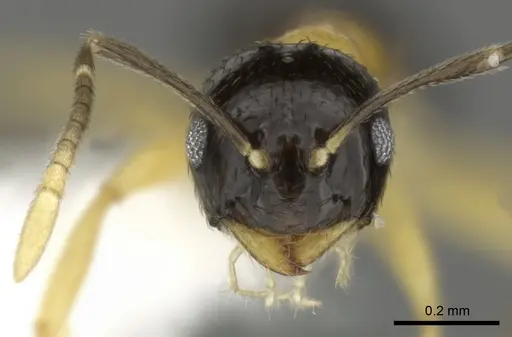

CASENT0615292
View on AntWeb
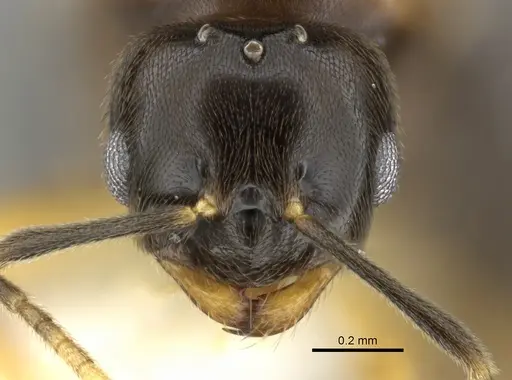

Literature
Loading...Loading products...