

Basiceros singularis
- Scientific Name
- Basiceros singularis
- Tribe
- Attini
- Subfamily
- Myrmicinae
- Author
- Smith, 1858
- Distribution
- Found in 8 countries
Basiceros singularis Overview
Basiceros singularis is an ant species of the genus Basiceros. It is primarily documented in 8 countries , including Brazil, Colombia, Costa Rica. Detailed taxonomic data and occurrence records can be further explored via authoritative databases such as AntWeb or the Global Biodiversity Information Facility (GBIF).
Basiceros singularis
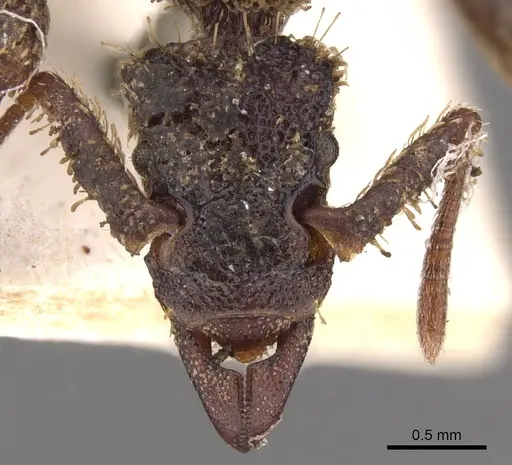
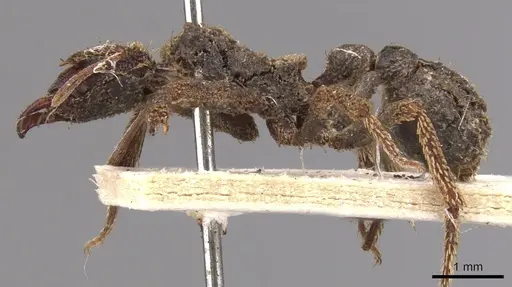
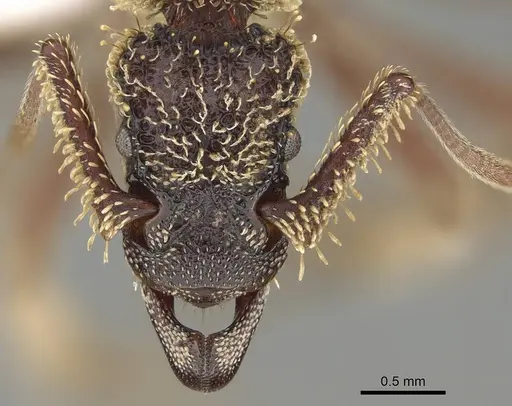
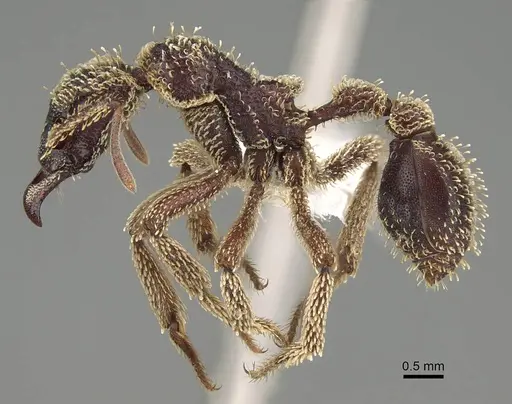
Basiceros singularis is a large, distinctive ant species native to the rainforests of northern South America. Workers reach 7.65-8.40 mm and are easily recognized by their remarkable camouflage, they deliberately cover themselves with soil and leaf litter particles held in place by specialized feathery hairs, earning them the nickname 'dirt ants' [1]. Their coloration ranges from light brown to brown, and they have a double layer of specialized pilosity: a basal layer of subdecumbent plumose hairs and a layer of fine erect and clavate hairs [1]. These ants are remarkably slow-moving, which makes sense given their unique diet of snails and other gastropods, they don't need to be fast to catch prey that can't escape quickly [2][3].
What makes this species particularly unusual is its colony structure. B. singularis displays intercastes, a morphological mosaic ranging from worker-like specimens with slightly larger eyes and minute ocelli to gyne-like individuals with wing buds and fully-developed wing fossae. True gynes and intercastes co-occur in the same colony [1]. Additionally, when disturbed, adults perform thanatosis, they play dead for extended periods, making them hard to detect [4].
Quick Summary
- Difficulty: Medium
- Origin & Habitat: Northern South America (Brazil, Colombia, Ecuador, Guyana, French Guiana, Peru, Trinidad and Tobago, Venezuela). Found in wet tropical and subtropical forests, nesting in rotting trunks in shade, leaf litter, and soil cavities in decaying logs [1][4].
- Colony Type: Likely monogyne (single queen) based on typical Basiceros patterns, with intercastes present in established colonies. Small colony size with typically only a dozen or so workers plus queen [3].
- Colony: Monogyne
- Size & Growth:
- Queen: 7.93-8.00 mm [5]
- Worker: 7.65-8.40 mm [1][5]
- Colony: Small colonies, typically under 100 workers [3][6]
- Growth: Slow, based on limited data and specialized predatory lifestyle
- Development: Unknown, no specific development data available for this species. Based on typical Myrmicinae patterns and their tropical origin, estimate 6-10 weeks at optimal temperature. (Development is likely slow given their specialized diet and small colony size. No direct measurements available.)
- Antkeeping:
- Temperature: Keep at 24-28°C. As a tropical rainforest species from the Amazon region, they need warm, stable temperatures [4]. A heating cable on one side of the nest creates a gradient. Avoid temperatures below 22°C.
- Humidity: High humidity required, these are leaf litter ants from wet tropical forests. Keep nest substrate consistently moist but not waterlogged. Aim for 70-85% humidity. Mist occasionally and provide a water tube for drinking.
- Diapause: No, as a tropical species, they do not require hibernation. Maintain warm conditions year-round.
- Nesting: Use a naturalistic setup with damp substrate (soil/peat mix) or a Y-tong/plaster nest with moisture chambers. They don't excavate nests, they occupy pre-existing cavities in rotting wood or leaf litter. Provide a thick layer of substrate they can cover themselves in.
- Behavior: Very slow-moving and docile. Workers forage solitarily during the day and show no aggressive recruitment behavior [5]. They perform thanatosis (play dead) when disturbed, making them appear inactive [4]. Escape risk is low, while large, their sluggish movement makes them easy to contain. They are not aggressive and unlikely to sting. Their slow pace and cryptic appearance make them fascinating to observe.
- Common Issues: slow growth means colonies develop gradually and beginners may lose patience, specialized diet can be challenging, they prefer live gastropods which may be difficult to source consistently, high humidity requirements can lead to mold if ventilation is poor, small colony size means colonies remain fragile for longer, difficulty distinguishing from B. manni when not fully grown or when covered with particles
Housing and Nest Setup
Basiceros singularis requires a setup that mimics their natural leaf litter habitat. A naturalistic terrarium-style setup works best, use a deep layer of damp substrate (a mix of soil, peat, and rotting wood fragments) that allows the ants to burrow into pre-existing cavities. Alternatively, a Y-tong or plaster nest with moisture chambers can work, but ensure the chambers are not too large for their small colony size. The key requirement is providing material they can cover themselves with, add small soil particles, leaf litter fragments, or fine sand to the substrate. This allows them to practice their natural camouflage behavior. Use a test tube setup for the founding queen, then transfer to a naturalistic setup once the colony reaches 15-20 workers. Escape prevention is straightforward, their large size and slow movement make them easy to contain, but use standard barriers anyway. [1][6][5]
Feeding and Diet
This is the most challenging aspect of keeping B. singularis. They are specialized predators on terrestrial gastropods (snails and slugs), this is their unique and fascinating feeding behavior documented in the wild [2][1]. In captivity, offering live garden snails (small, juvenile specimens) is ideal. The ants will slowly approach and subdue the snail, then drag it back to the nest. Larvae have been observed feeding on gastropods inside the nest [1].
Beyond snails, they may accept other small live prey. In lab tests, workers showed no interest in Tribolium larvae or termite workers but did feed on crushed housefly pupae [4]. Based on this, offer small insects (fruit flies, pinhead crickets, small mealworms) as alternatives. Sugar sources are unlikely to be accepted, they are predatory ants, not sugar-feeding species. Feed every 2-3 days, removing uneaten prey after 24 hours to prevent mold.
Temperature and Humidity
As a tropical rainforest species from the Amazon basin, B. singularis requires warm and humid conditions. Keep temperatures in the range of 24-28°C. A heating cable placed on one side of the nest creates a temperature gradient allowing the ants to self-regulate. Avoid temperatures below 22°C for extended periods.
Humidity should be high, aim for 70-85% relative humidity. Keep the substrate consistently moist but not waterlogged. These are leaf litter ants accustomed to the damp forest floor. Provide a water tube as a drinking source. Good ventilation is essential to prevent mold while maintaining humidity, small holes or mesh on one side of the enclosure work well. [4]
Behavior and Observation
One of the most fascinating aspects of B. singularis is their slow, deliberate movement. Workers forage solitarily during the day, moving at what has been described as 'a snail's pace' [3]. This makes them exceptionally easy to observe, you can watch their entire hunting process without missing any action.
When disturbed, adults perform thanatosis, they freeze and play dead for extended periods [4]. This is a defense mechanism that makes them hard to detect in the wild. Don't mistake this for death or inactivity, they will resume normal activity once the disturbance passes.
Their camouflage behavior is also remarkable. Workers deliberately accumulate soil and leaf litter particles on their bodies using specialized setae [2]. In captivity, provide fine substrate material so they can exhibit this natural behavior. Watching a worker slowly cover itself with dirt particles is a unique and entertaining behavior specific to dirt ants.
Colony Structure and Intercastes
B. singularis displays an unusual colony structure with intercastes, morphological intermediates between workers and queens. These intercastes range from worker-like specimens with slightly larger compound eyes and minute ocelli to gyne-like individuals with wing buds and fully-developed wing fossae [1]. Some intercastes even have brachypterous (reduced wing) structures that cannot be used for flight.
True gynes and intercastes co-occur in the same colony, creating a morphological mosaic [1]. This is different from most ant species where castes are more clearly defined. For keepers, this means your colony may contain individuals that appear intermediate between workers and queens, this is normal for this species.
Colonies remain small, typically with only a dozen or so workers plus the queen [3]. Growth is slow, so patience is required.
Growth and Development
Specific development timelines are not documented for B. singularis. Based on their tropical origin and typical Myrmicinae development patterns, expect 6-10 weeks from egg to first worker at optimal temperature (around 26°C). Growth is slow, these are not fast-growing ants.
Colonies remain small throughout their life, typically under 100 workers [3]. This is consistent with theircryptobiotic lifestyle in leaf litter. The slow growth and small colony size mean that founding colonies require patience, don't expect rapid expansion. Focus on maintaining proper humidity and providing appropriate prey (especially gastropods when possible) rather than expecting quick growth.
Frequently Asked Questions
What do Basiceros singularis ants eat?
They are specialized snail predators. In the wild, they hunt terrestrial gastropods (snails and slugs) [2][1]. In captivity, offer small live garden snails when possible. They may also accept small insects like fruit flies, pinhead crickets, and small mealworms. They are unlikely to accept sugar water or honey, stick to protein prey [4].
How long does it take for Basiceros singularis to develop from egg to worker?
The exact timeline is unknown, no specific development data exists for this species. Based on typical Myrmicinae patterns and their tropical origin, estimate 6-10 weeks at optimal temperature (around 26°C). Growth is slow, so patience is essential.
Are Basiceros singularis good for beginners?
They are rated as medium difficulty. While their slow movement and docile nature make them easy to observe, their specialized diet (requiring snails) and high humidity needs can be challenging. They are better suited for antkeepers with some experience who can provide live gastropods and maintain proper humidity.
What size colony do Basiceros singularis reach?
Small colonies, typically under 100 workers [3]. They are cryptobiotic leaf litter ants that maintain small colony sizes. Don't expect large colonies like some Myrmicinae species.
Do they need hibernation or diapause?
No. As a tropical species from the Amazon region, they do not require hibernation. Maintain warm (24-28°C), humid conditions year-round.
Why are they called dirt ants?
Because they deliberately cover themselves with soil and leaf litter particles! Specialized feathery hairs on their bodies hold these particles in place, providing camouflage [2][3]. This is one of their most fascinating behaviors, provide fine substrate material so they can exhibit this in captivity.
Can I keep multiple queens together?
Not recommended. While colony structure is not extensively studied, Basiceros species typically form single-queen colonies. Combining unrelated foundresses has not been documented and is not recommended.
What temperature and humidity do they need?
Temperature: 24-28°C. Humidity: high,70-85%. They are tropical rainforest ants requiring warm, damp conditions. Keep substrate consistently moist but not waterlogged.
When should I move them to a formicarium?
Keep founding colonies in test tubes until you have 15-20 workers. Then transfer to a naturalistic setup with damp substrate. They don't excavate, they occupy pre-existing cavities, so provide a thick substrate layer they can burrow into.
Why does my ant cover itself with dirt?
This is completely normal and natural! Basiceros singularis are 'dirt ants' that deliberately accumulate soil and litter particles on their bodies using specialized hairs for camouflage [2]. This is one of their defining behaviors, provide fine substrate material so they can practice it.
Why is my ant playing dead?
This is thanatosis, a defense behavior where they freeze and remain motionless when threatened [4]. It's normal for this species. They will resume activity once they feel safe. Don't mistake this for death.
References

This caresheet is licensed under CC BY-SA 4.0 .
CASENT0900940
View on AntWeb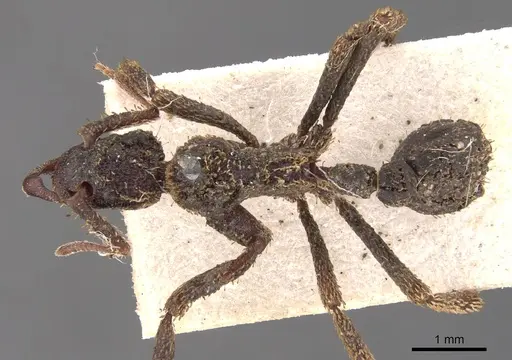
CASENT0914890
View on AntWeb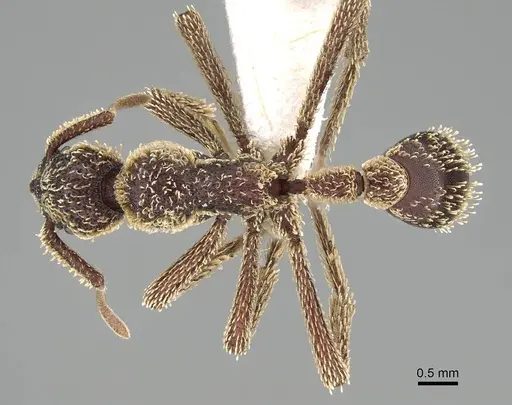
Literature
Loading...Loading products...