

Basiceros manni
- Scientific Name
- Basiceros manni
- Tribe
- Attini
- Subfamily
- Myrmicinae
- Author
- Brown & Kempf, 1960
- Distribution
- Found in 4 countries
Basiceros manni Overview
Basiceros manni is an ant species of the genus Basiceros. It is primarily documented in 4 countries , including Costa Rica, Ecuador, Nicaragua. Detailed taxonomic data and occurrence records can be further explored via authoritative databases such as AntWeb or the Global Biodiversity Information Facility (GBIF).
Basiceros manni
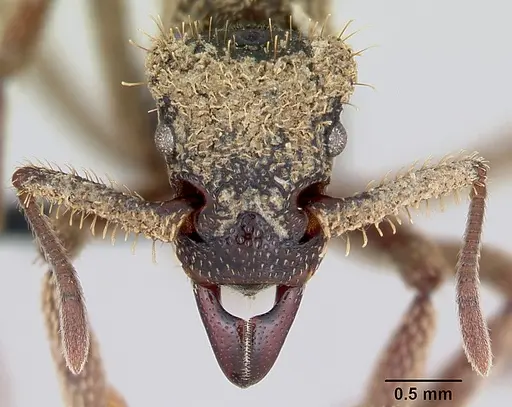
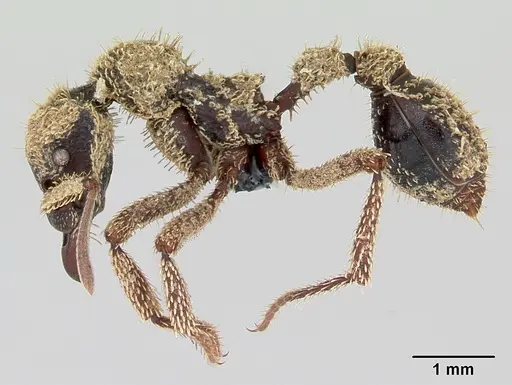
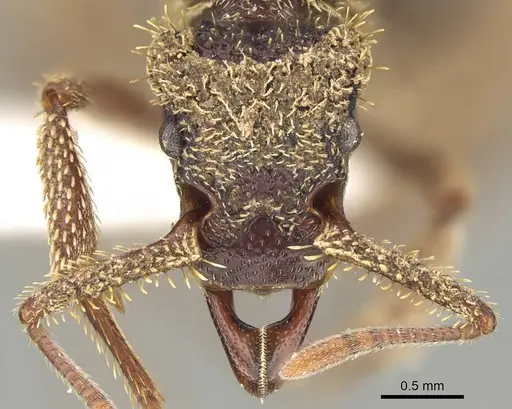
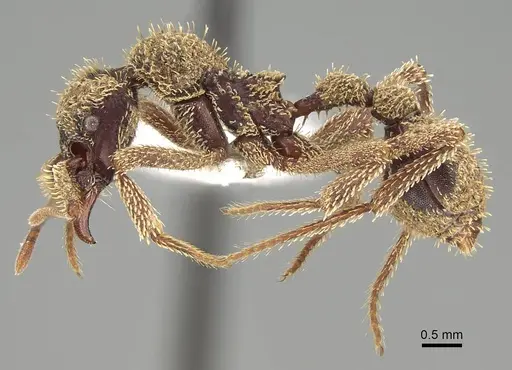
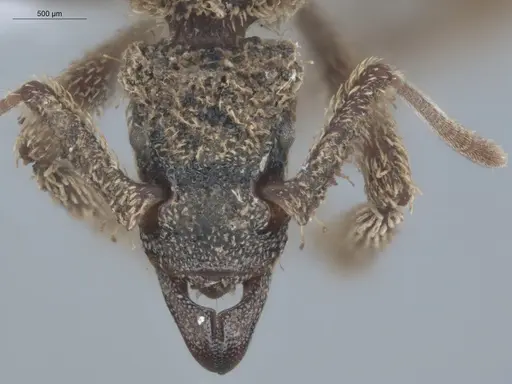
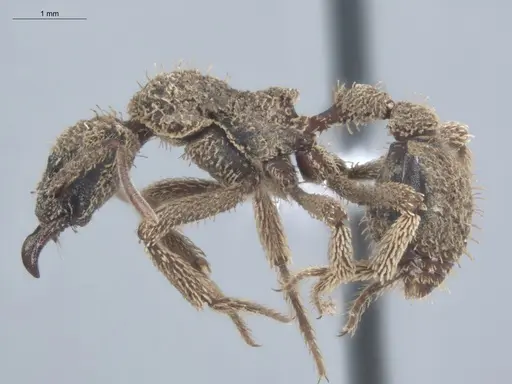
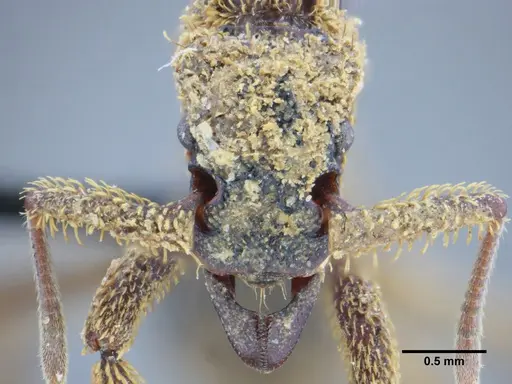
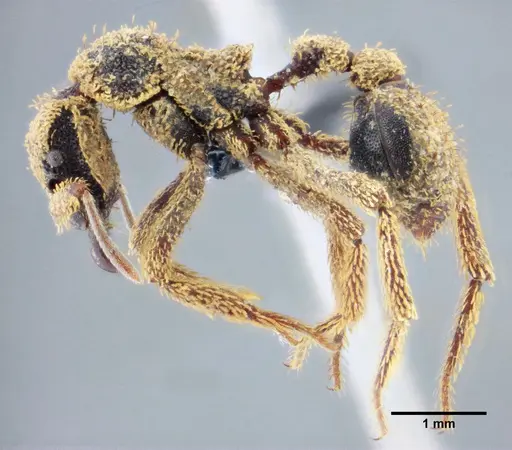
Basiceros manni is a large, cryptobiotic ant native to the Neotropical forests of Costa Rica, Honduras, and Nicaragua. Workers reach an impressive 8.43-8.68mm, making them one of the largest species in the genus [1]. Their most striking feature is their remarkable camouflage system, specialized double-layer hairs on their body collect and hold soil particles and leaf litter, making them nearly invisible against the forest floor [2]. When disturbed, they freeze and play dead (thanatosis), remaining motionless for minutes [1]. Colonies are small and nest in decaying wood, leaf litter, or even abandoned bee nests in the wild [1]. This species shows a temporal division of labor where young workers stay in the nest as nurses while older workers venture out to hunt [1].
Quick Summary
- Difficulty: Medium
- Origin & Habitat: Lowland tropical rainforests of Costa Rica, Honduras, and Nicaragua. Found in primary forests and lightly disturbed areas at low elevations [1].
- Colony Type: Likely monogyne (single queen). Colonies are small, maximum colony size around 50 workers based on typical Basiceros patterns [3][4].
- Colony: Monogyne
- Size & Growth:
- Queen: 8.75-9.08 mm [1]
- Worker: 8.43-8.68 mm [1]
- Colony: Small colonies, likely under 100 workers [3]
- Growth: Slow, based on small colony sizes and predatory lifestyle
- Development: Estimated 8-12 weeks at tropical temperatures (25-27°C) based on typical Myrmicinae development [1] (Development is likely slow given their cryptic, slow-moving lifestyle and small colony sizes)
- Antkeeping:
- Temperature: Keep at 24-27°C, they are a lowland tropical species requiring warm, stable conditions [1]
- Humidity: High humidity (70-85%), their natural habitat is humid rainforest floor. Keep substrate consistently moist but not waterlogged [1]
- Diapause: No, being a tropical species, they do not require hibernation. Maintain warm conditions year-round [1]
- Nesting: Prefers naturalistic setups with moist substrate. They nest in decaying wood and leaf litter in the wild, so a naturalistic or plaster nest with damp soil works well. Provide pieces of decaying wood or cork for them to nest in [1]
- Behavior: Very docile and non-aggressive. Workers are among the slowest-moving ants and spend long periods perfectly still [2]. When disturbed, they freeze in thanatosis for several minutes. They forage alone at night (nocturnal) and do not recruit nestmates to food sources [1]. Escape risk is moderate, their large size makes them easy to contain, but they can climb smooth surfaces. Handle with care as they are fragile and rely on camouflage rather than defense. Their venom glands are well-developed for predation [1].
- Common Issues: slow growth can frustrate keepers expecting rapid colony development, small colony sizes mean colonies remain modest throughout their life, nocturnal foraging means you may rarely see activity, check at night, predatory diet requires live prey, they may not accept dead food readily, humidity control is critical, too dry causes desaturation of their soil layer and stress
Housing and Nest Setup
Basiceros manni requires a naturalistic setup that mimics their forest floor habitat. Use a terrarium-style enclosure with moist substrate (a mix of soil and rotting wood fragments works well). Provide pieces of decaying wood, cork, or leaf litter as nesting material, they naturally nest in these materials in the wild [1]. A Y-tong or plaster nest can also work if kept consistently moist. Because they forage at night, place the nest in a location where you can observe evening activity. Ensure excellent escape prevention, while they are large, they can climb smooth surfaces. Use a barrier like fluon on terrarium edges.
Feeding and Diet
Basiceros manni is predatory, with strong evidence they specialize in hunting land snails. Wild colonies have been found with empty gastropod shells in their nests [1][5]. In captivity, they accept beetle larvae, centipedes, termites, and Drosophila in laboratory feeding trials [1]. Feed small live prey appropriate to their size, small crickets, mealworm larvae, and other soft-bodied insects are good options. They forage alone and do not recruit, so place prey where foragers can find it. They may not accept sugar water or honey since they are predatory, but you can experiment with small amounts. Feed every 2-3 days, removing uneaten prey after 24 hours.
Temperature and Humidity
As a lowland tropical species, Basiceros manni needs warm, humid conditions. Maintain temperatures between 24-27°C, avoid temperatures below 22°C or above 30°C. Use a heating mat on one side of the enclosure to create a gentle gradient if room temperature is below optimal. Humidity should be high (70-85%), mist the enclosure regularly and keep the substrate consistently moist but not waterlogged. A water reservoir or damp cotton in the nest area helps maintain humidity. Because they come from rainforest environments, drying out is a serious risk, monitor substrate moisture closely. [1]
Behavior and Observation
This is one of the most fascinating ants to observe due to their unique behaviors. Workers are extremely slow-moving and often stand perfectly still for minutes at a time [2]. When you disturb them, they freeze in thanatosis, playing dead for up to several minutes [1]. They forage alone at night, so you may see most activity after dark. Workers accumulate soil particles on their specialized double-layer hairs, creating a camouflage layer that makes them nearly invisible against the forest floor [2]. In captivity, they will accumulate particles from their substrate, so provide fine soil or sand for them to collect. Despite being predatory with well-developed venom glands [1], they are docile and pose no threat to keepers.
Colony Development
Colony growth is slow compared to many common ant species. Colonies remain small throughout their life, typically under 100 workers [3]. The temporal division of labor means young workers stay in the nest as nurses while older workers become foragers [1]. This system, combined with their nocturnal solitary foraging, means you won't see the rapid recruitment and large colony sizes typical of many Myrmicinae. Be patient, a healthy colony may take over a year to reach 30-50 workers. Queens are large (8.75-9.08mm) and should be housed appropriately during founding [1].
Frequently Asked Questions
How long does it take for Basiceros manni to produce first workers?
Expect 8-12 weeks from egg to first worker at optimal temperatures (25-27°C). Development is slower than many common ants due to their cryptic lifestyle and small colony sizes [1].
Can I keep Basiceros manni in a test tube?
Test tubes work for founding queens, but you'll need to move them to a naturalistic setup quickly. They require moist substrate and decaying wood for nesting, which test tubes cannot provide adequately [1].
What do Basiceros manni eat?
They are predatory ants that accept small live prey. In captivity they will eat beetle larvae, small crickets, mealworms, and other soft-bodied insects. There is strong evidence they specialize in hunting land snails in the wild [1][5].
Are Basiceros manni good for beginners?
They are moderate difficulty, not the best choice for complete beginners, but not expert-only either. Their slow growth, specific humidity needs, and predatory diet require more attention than species like Lasius or Tetramorium. Experienced antkeepers will enjoy their unique behaviors.
Do Basiceros manni need hibernation?
No. As a tropical species from lowland rainforests, they do not require hibernation. Keep them warm year-round at 24-27°C [1].
Why is my Basiceros manni covered in dirt?
This is completely normal and actually essential to their welfare. Their specialized double-layer hairs are designed to collect and hold soil particles from their environment for camouflage [2]. In captivity, they will accumulate material from their substrate.
How big do Basiceros manni colonies get?
Colonies remain small, typically under 100 workers even at maturity. This is typical for the genus and part of their cryptobiotic lifestyle [3].
Are Basiceros manni aggressive?
No, they are very docile and rely on camouflage rather than aggression. They have well-developed venom glands for predation [1], but they freeze when threatened rather than attack. They pose no danger to keepers.
When will I see activity from my colony?
They are nocturnal and forage alone at night [1]. Check on your colony in the evening or use a red light to observe nighttime activity. During the day, they may be nearly motionless.
Can I keep multiple queens together?
This has not been documented for this species. Based on typical Basiceros behavior, single-queen colonies are likely. Do not attempt combining unrelated queens, there is no research on pleometrosis for this species.
References

This caresheet is licensed under CC BY-SA 4.0 .
CASENT0052769
View on AntWeb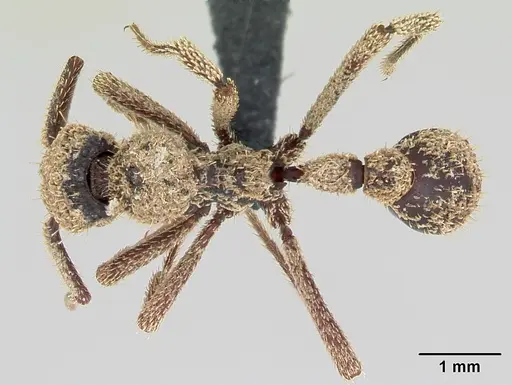
CASENT0914888
View on AntWeb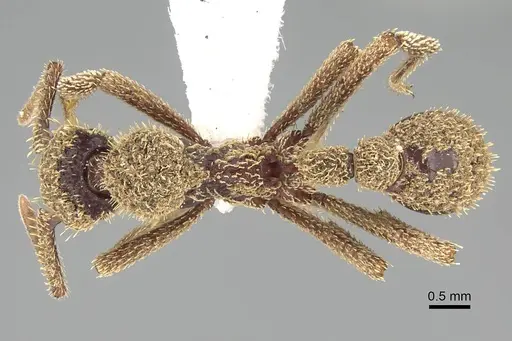
ECOFOG-IT14-0106-61
View on AntWeb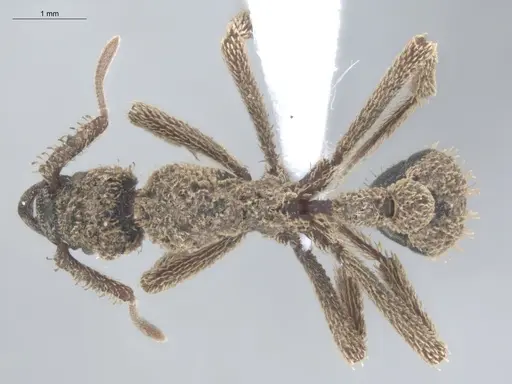
UFV-LABECOL-000063
View on AntWeb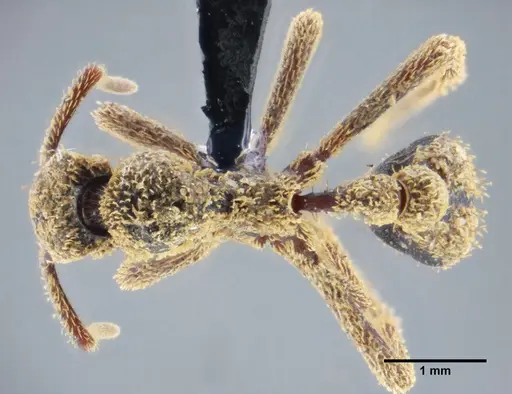
Literature
Loading...Loading products...