

Basiceros disciger
- Scientific Name
- Basiceros disciger
- Tribe
- Attini
- Subfamily
- Myrmicinae
- Author
- Mayr, 1887
- Distribution
- Found in 6 countries
Basiceros disciger Overview
Basiceros disciger is an ant species of the genus Basiceros. It is primarily documented in 6 countries , including Bolivia, Plurinational State of, Brazil. Detailed taxonomic data and occurrence records can be further explored via authoritative databases such as AntWeb or the Global Biodiversity Information Facility (GBIF).
Basiceros disciger
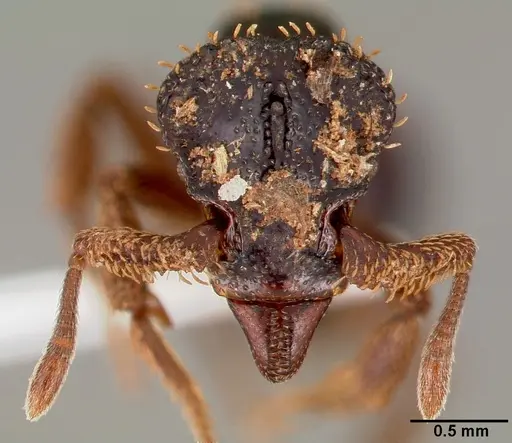
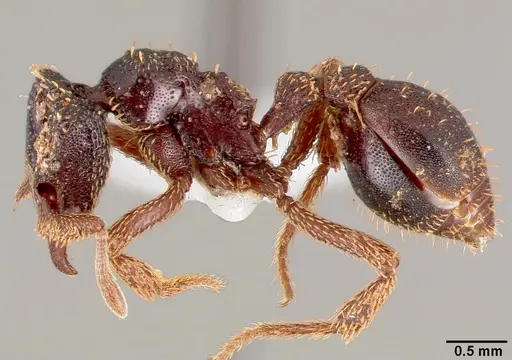
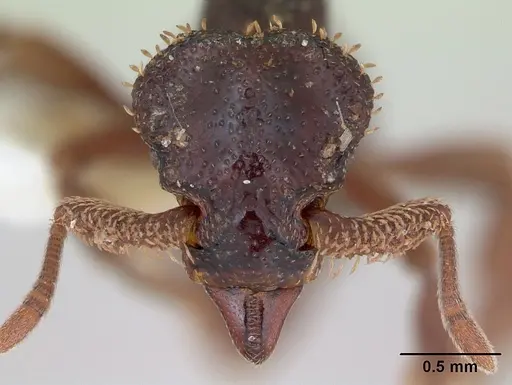
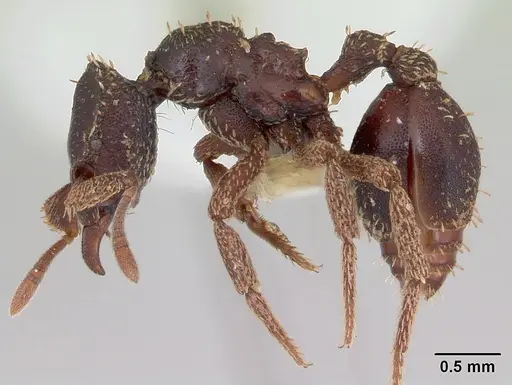
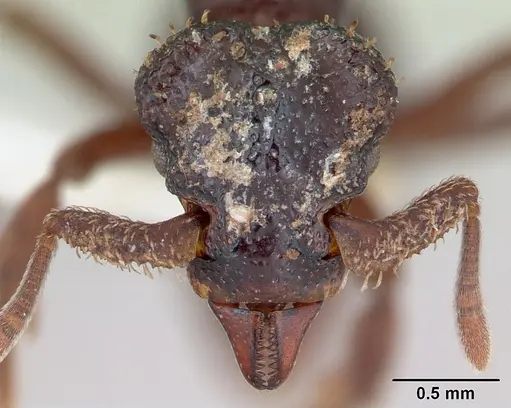
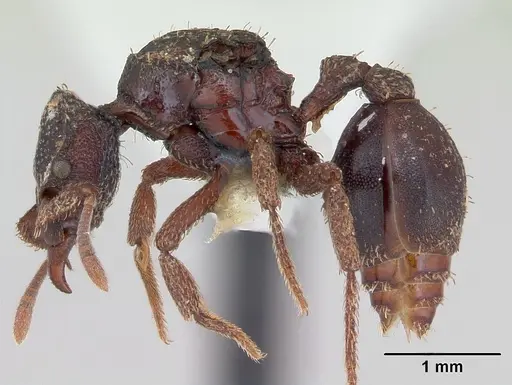
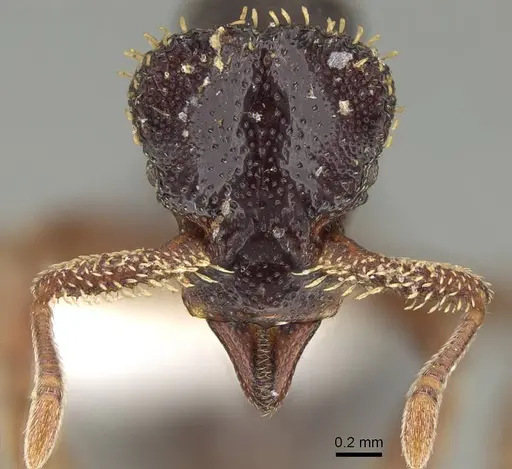
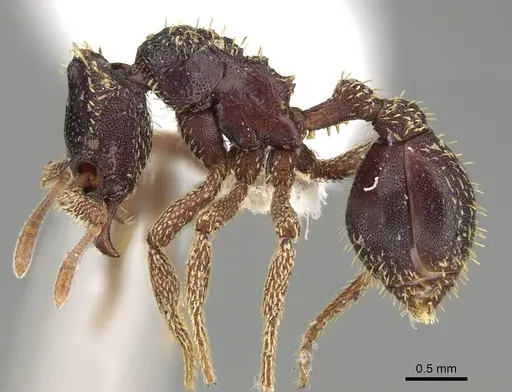
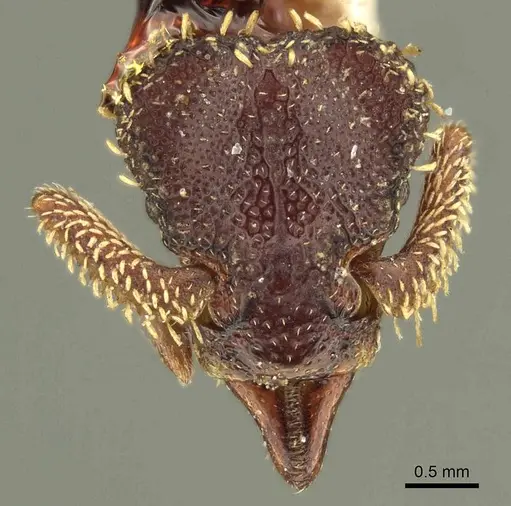
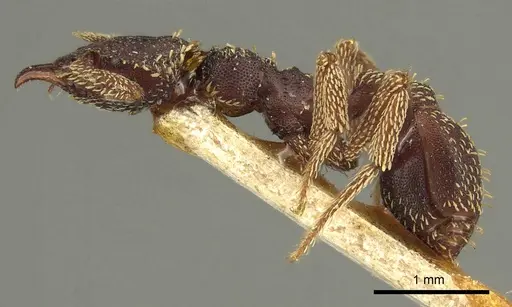
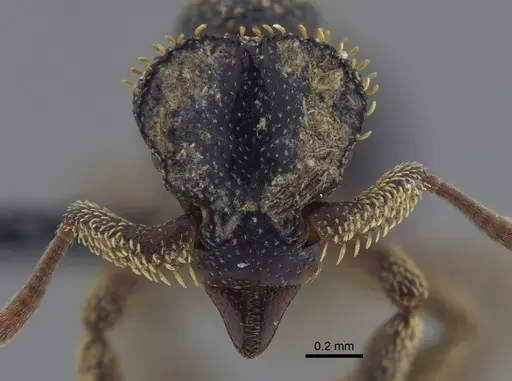
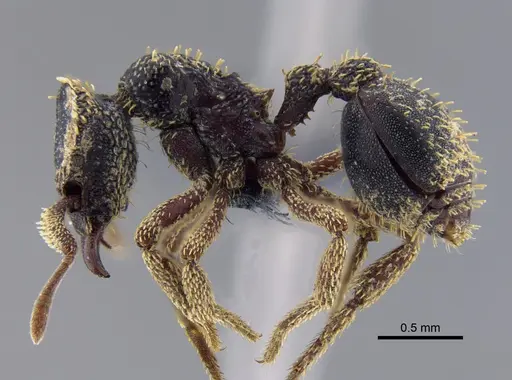
Basiceros disciger is a small to medium-sized ant belonging to the tribe Attini, native to forests across northern South America. Workers measure 5.2-6.3mm with a distinctive disc-shaped head featuring a crested vertex margin that is medially emarginate (notched in the middle). Their body coloration ranges from yellowish-brown to dark brown, and they are famous for their cryptobiotic appearance, specialized hairs on their body collect soil particles and leaf litter debris, making them remarkably camouflaged against the forest floor [1]. This species has the widest distribution of any Basiceros, found from Venezuela down through Colombia, Ecuador, Peru, Bolivia, Paraguay, and along Brazil's Atlantic Forest from Rio Grande do Sul to Alagoas [1].
What makes Basiceros disciger particularly interesting is its status as the smallest extant species in the genus, with colonies being relatively small in size [2]. They are considered cryptobiotic, meaning they hide among debris on the forest floor rather than building obvious nests. Research suggests they have a potentially predatory ecology, hunting small invertebrates in the leaf litter layer [2]. This species shows significant morphological variation across its range, leading some researchers to suspect it may actually be a complex of cryptic species [1].
Quick Summary
- Difficulty: Medium
- Origin & Habitat: Tropical and subtropical forests of northern South America (Argentina to Venezuela), primarily in leaf litter and topsoil layers of Atlantic Forest and Amazon regions. Found in both primary forest and disturbed areas, but shows strong preference for shaded, humid forest floor microhabitats [1][3].
- Colony Type: Likely polygynous based on series with multiple wingless queens documented, small colony sizes typical for the species [4].
- Colony: Polygyne
- Size & Growth:
- Queen: 6.38-7.33 mm [1]
- Worker: 5.20-6.34 mm [1]
- Colony: Small colonies, likely under 200 workers based on related Basiceros species [2]
- Growth: Moderate, inferred from small colony sizes and tropical distribution
- Development: Estimated 6-10 weeks at tropical temperatures (25-28°C), based on typical Attini development patterns (Direct development data unavailable, estimate based on genus-level patterns for small Myrmicinae in warm climates)
- Antkeeping:
- Temperature: Keep at 24-28°C. Being a tropical forest species, they need warm, stable temperatures. Use a heating cable on one side of the nest to create a gentle gradient if room temperature is below 24°C [2].
- Humidity: High humidity required, these are leaf litter ants from humid forests. Keep the nest substrate consistently moist but not waterlogged. The substrate should feel damp to the touch with some drier areas available. Mist occasionally and ensure water availability through a test tube water reservoir [1].
- Diapause: No true diapause, as a tropical species, they do not require hibernation. However, they may show reduced activity during cooler periods.
- Nesting: Do not excavate nests, colonies live in leaf litter, soil cavities, hollow or decaying logs. In captivity, use a naturalistic setup with moist substrate (coco fiber, soil mix) or a Y-tong/plaster nest with tight chambers scaled to their medium-small size. Provide plenty of debris and small hiding spots [2].
- Behavior: These ants are cryptic and relatively docile. They are not aggressive and rely on camouflage rather than defense. Workers forage slowly through leaf litter, likely hunting small invertebrates. They are not escape artists but being small (5-6mm), standard barrier precautions are still recommended. Their specialized hairs that collect debris make them excellent at remaining undetected, this is their primary defense strategy [1][2].
- Common Issues: high humidity needs make mold a constant risk, ensure adequate ventilation while maintaining moisture, small colony size means slow growth, beginners may lose patience and overfeed, causing pest problems, cryptobiotic nature means they hide well, don't assume the colony has died if you don't see them often, tropical species sensitive to temperature drops below 20°C, keep away from cold drafts or air conditioning, wild-caught colonies may have parasites that can decimate small captive populations
Natural History and Distribution
Basiceros disciger holds the distinction of being the most widespread species in the genus Basiceros, with a distribution spanning from Venezuela through Colombia, Ecuador, Peru, Bolivia, Paraguay, and down the Atlantic Forest of Brazil from Rio Grande do Sul to Alagoas [1]. This 'V-shaped' distribution pattern likely reflects ancient connections between the Atlantic and Amazon forests through corridors of seasonally dry forests that existed during the Miocene period [1].
These ants are among the most common inhabitants of leaf litter and topsoil layers in their range. A study in the Picinguaba region of Serra do Mar State Park found B. disciger in 14 out of 20 litter samples at 400m elevation and 12 out of 20 samples at 600m [1]. They occur in both natural forested areas and disturbed sites, though they show a strong preference for primary forest habitats, one study found them occupying 19 regions in primary forest but not in secondary forest or rubber plantations [3]. Their cryptobiotic lifestyle, where specialized hairs adhere soil and litter particles to their body, makes them incredibly difficult to spot on the forest floor [2].
Housing and Nest Preferences
In the wild, Basiceros disciger does not excavate proper nests. Instead, colonies are found in leaf litter, soil cavities, and within hollow or decaying logs [2]. This means they prefer enclosed, humid microhabitats with plenty of debris cover.
For captive care, a naturalistic setup works best, use a container filled with a moist substrate mixture (coco fiber and soil works well) with lots of leaf litter, small pieces of wood, and debris on top. This provides the humidity they need while giving them hiding spots that mimic their natural environment. Alternatively, a Y-tong (acrylic) nest with narrow chambers and a moisture reservoir can work, but ensure the chambers are appropriately sized for their 5-6mm worker size.
Whatever setup you choose, maintain high humidity (think damp forest floor) and provide a constant water source. Avoid letting the substrate dry out completely. These ants are not aggressive and don't need much space, a small formicarium or naturalistic setup is sufficient for starting colonies.
Feeding and Diet
Based on their placement in the tribe Attini and research noting potential predatory ecology, Basiceros disciger likely feeds on small invertebrates found in leaf litter, such as springtails, mites, and other micro-arthropods [2]. They are probably opportunistic feeders that will scavenge on dead insects as well.
In captivity, offer small live prey appropriate to their size: springtails, fruit flies, small crickets, and other tiny insects. You can also provide protein gels or crushed insects. Sugar sources may be accepted occasionally, but these ants are primarily predatory/scavenging rather than sugar-feeding. Feed small amounts every few days and remove any uneaten prey after 24-48 hours to prevent mold issues in their humid setup.
Temperature and Seasonal Care
As a tropical forest species from northern South America, Basiceros disciger requires warm temperatures. Keep the nest area between 24-28°C for optimal activity and brood development [2]. They are sensitive to cold and should be kept away from air conditioning vents, cold windows, or any area where temperatures might drop below 20°C.
Unlike temperate ants, they do not require a true diapause or hibernation period. However, they may show reduced activity during cooler periods in your home. If you keep your colony in a room that stays below 24°C, use a small heating cable on one side of the nest to create a gentle temperature gradient. Always ensure the heating element is placed on top of the nest, not underneath, to avoid drying out the substrate through excessive heat.
Their natural habitat in Atlantic Forest and Amazon regions experiences high year-round humidity, so maintaining consistent moisture is more important than temperature fluctuations.
Colony Structure and Behavior
Basiceros disciger appears to form small colonies with multiple queens (polygynous), based on series of specimens containing more than one wingless queen collected together [4]. This is unusual among ants and suggests the species may have cooperative colony founding or queen retention.
Their behavior is cryptic and non-aggressive. Workers move slowly through leaf litter, using their camouflage rather than confrontation for defense. They are not known to sting, and their small size means any sting would be negligible to humans. The specialized hairs covering their body that collect debris are their primary defense mechanism, making them nearly invisible to predators [1][2].
Colony growth is likely moderate but slow. As a small species with small colony sizes, don't expect rapid population explosions. A healthy established colony might eventually reach 100-200 workers, but this will take time.
Frequently Asked Questions
How long does it take for Basiceros disciger to produce first workers?
Direct data is not available, but based on typical Attini development patterns at tropical temperatures (24-28°C), expect approximately 6-10 weeks from egg to first worker. Growth will be slower than larger ant species due to their small colony size [2].
What do Basiceros disciger ants eat?
They are likely predatory, feeding on small invertebrates like springtails, mites, and other micro-arthropods found in leaf litter. In captivity, offer small live prey such as springtails, fruit flies, and tiny crickets. They may also scavenge on dead insects. Sugar sources may be occasionally accepted but should not be their primary food [2].
Are Basiceros disciger ants good for beginners?
They are rated as medium difficulty. While not aggressive and relatively easy to house, their high humidity requirements and need for small live prey make them better suited for keepers with some experience maintaining humid setups. Their slow growth and small colony size also require patience.
How big do Basiceros disciger colonies get?
Colony sizes remain relatively small. Based on related species, established colonies likely reach 100-200 workers. They are among the smallest Basiceros species, and large supercolonies are not typical for this species [2].
What temperature do Basiceros disciger ants need?
Keep them warm at 24-28°C. As tropical forest ants, they are sensitive to cold and should be kept away from temperatures below 20°C. A gentle heat gradient can be created with a heating cable if needed.
Do Basiceros disciger ants need hibernation?
No, they do not require hibernation. Being a tropical species, they remain active year-round when kept at appropriate temperatures. They may show reduced activity during cooler periods but do not enter true diapause.
What type of nest is best for Basiceros disciger?
A naturalistic setup with moist substrate (coco fiber/soil mix) and leaf litter debris works best, mimicking their natural habitat in decaying wood and leaf litter. Alternatively, a Y-tong or plaster nest with tight chambers and moisture reservoir can work. They do not excavate and prefer enclosed spaces [2].
Can I keep multiple Basiceros disciger queens together?
Based on evidence of polygyny (multiple queens) in wild colonies, they may tolerate multiple queens better than single-queen species [4]. However, introducing unrelated queens to an established colony should be done with caution and only after researching colony introduction techniques.
Why can't I see my Basiceros disciger ants often?
This is normal, they are cryptobiotic ants that hide in leaf litter and debris. Their specialized hairs collect soil particles, making them incredibly well-camouflaged. Don't assume the colony has died if you don't see them frequently. Check carefully in the debris and substrate surface.
References

This caresheet is licensed under CC BY-SA 4.0 .
CASENT0006143
View on AntWeb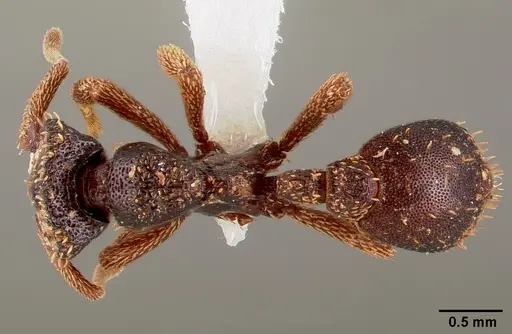
CASENT0173734
View on AntWeb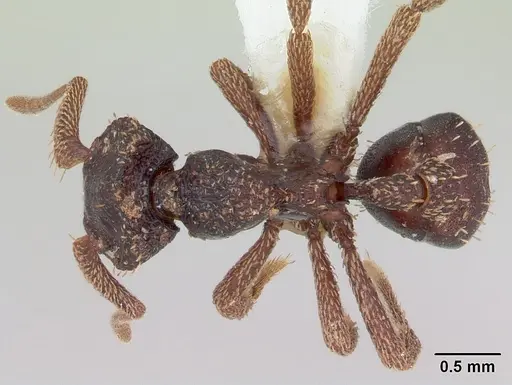
CASENT0173735
View on AntWeb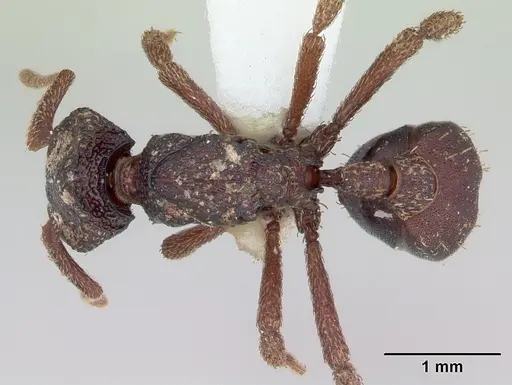
CASENT0914887
View on AntWeb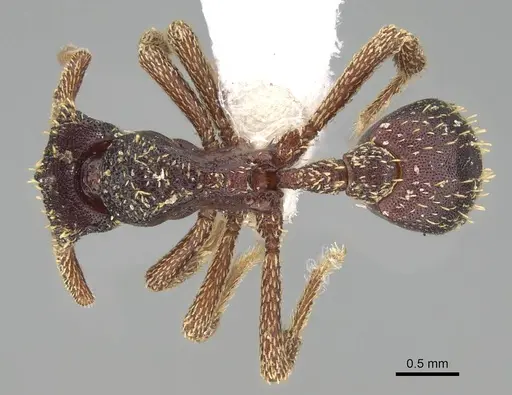
CASENT0915696
View on AntWeb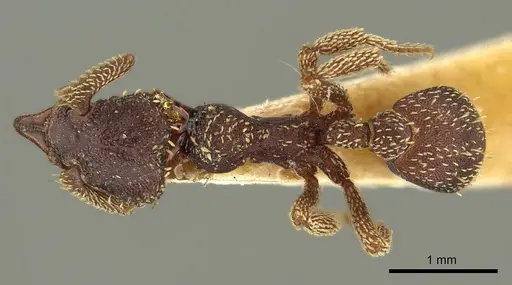
CBUMAGENT41722
View on AntWeb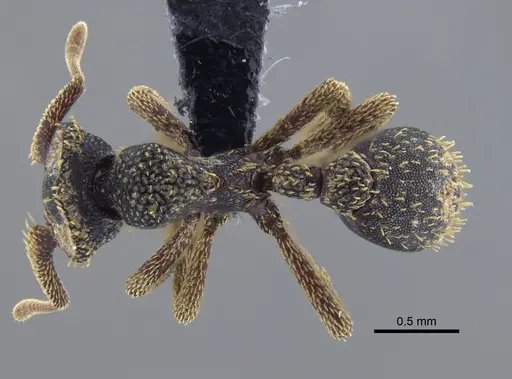
Literature
Loading...Loading products...