

Basiceros conjugans
- Scientific Name
- Basiceros conjugans
- Tribe
- Attini
- Subfamily
- Myrmicinae
- Author
- Brown, 1974
- Distribution
- Found in 6 countries
Basiceros conjugans Overview
Basiceros conjugans is an ant species of the genus Basiceros. It is primarily documented in 6 countries , including Bolivia, Plurinational State of, Brazil. Detailed taxonomic data and occurrence records can be further explored via authoritative databases such as AntWeb or the Global Biodiversity Information Facility (GBIF).
Basiceros conjugans
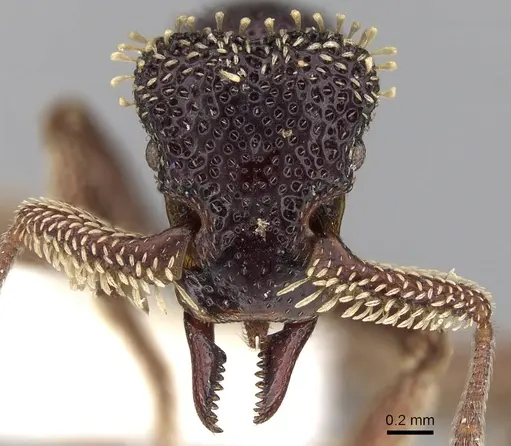
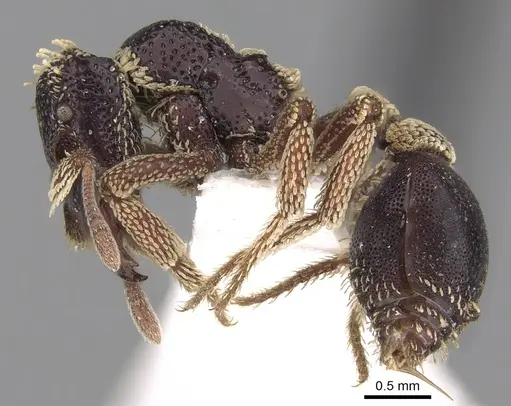
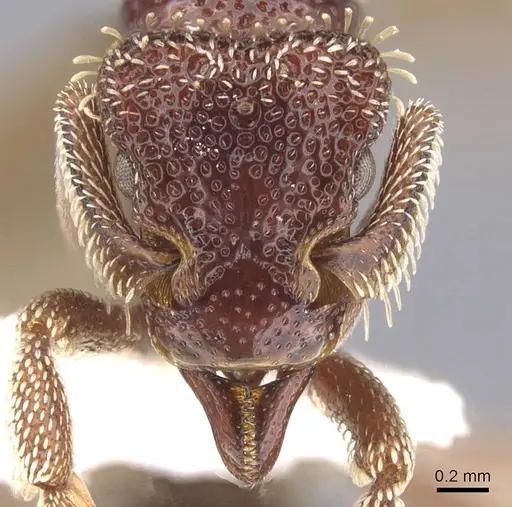
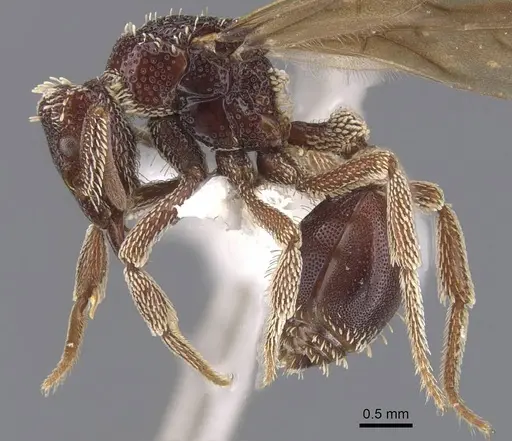
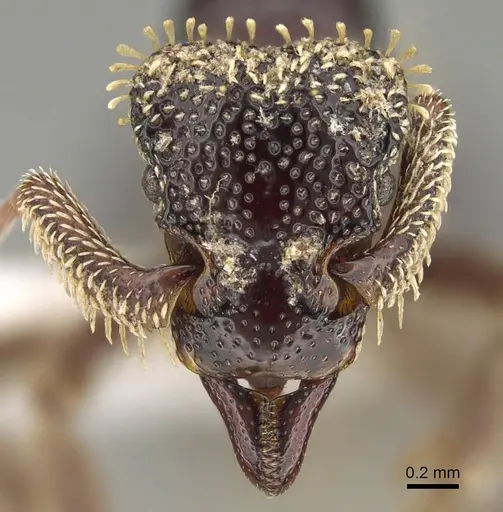
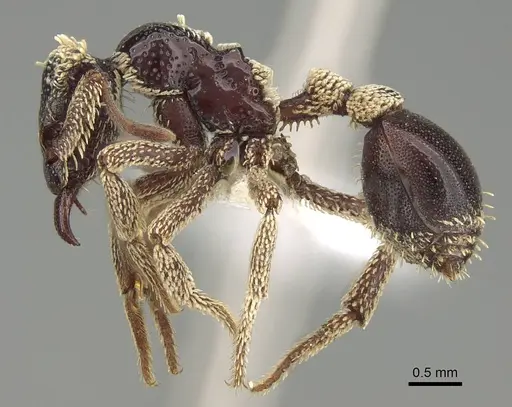
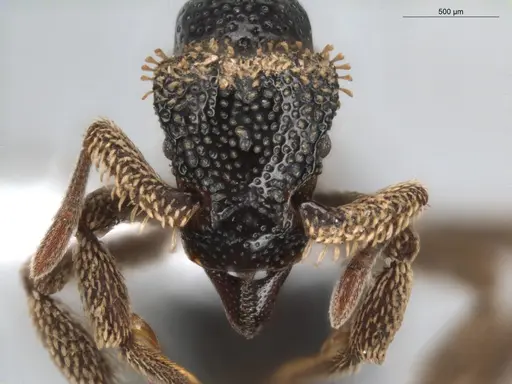
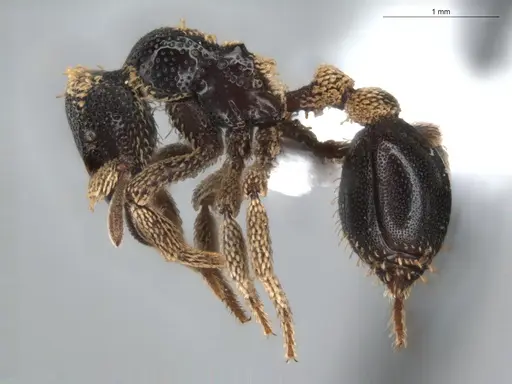
Basiceros conjugans is a small to medium-sized ant from the Amazon basin, measuring 6.5-6.6mm for workers. They have a distinctive appearance with dark amber to black coloring and a unique sculptured integument covered in specialized hairs that collect soil particles, giving them a cryptic 'dirt-covered' appearance, hence the common name. Their petiolar and postpetiolar nodes are densely covered in squamiform (scale-like) hairs, and they have a narrow clypeomandibular space. This species occupies an interesting evolutionary position, showing intermediate morphology between B. disciger and B. militaris [1]. They are found throughout the eastern Amazonian rainforests of South America, from Brazil and Peru to Colombia, Ecuador, Guyana, and Trinidad [1][2].
Quick Summary
- Difficulty: Medium
- Origin & Habitat: Eastern Amazonian rainforests in South America, Brazil, Peru, Colombia, Ecuador, Guyana, and Trinidad. They live in wet tropical forest habitats, typically nesting in rotten logs or leaf litter in soil cavities [3][1].
- Colony Type: Unknown colony structure, colony size appears small based on collected specimens [4]. No data on whether they are single-queen or multi-queen colonies.
- Size & Growth:
- Queen: 6.91-7.30 mm [1]
- Worker: 6.58-6.61 mm [1]
- Colony: Small colonies, only a few workers found in collected colonies [1]
- Growth: Unknown, likely moderate based on typical Attini development
- Development: Unknown, estimate 6-10 weeks based on related Basiceros species and typical Attini development patterns (Development timeline has not been directly studied. Related Basiceros species suggest moderate growth rates typical of leaf-litter ants.)
- Antkeeping:
- Temperature: Keep at 24-26°C, these are tropical Amazon ants requiring warm, stable temperatures [5]. A gentle gradient allows them to regulate their exposure to heat.
- Humidity: High humidity required, they naturally live in damp forest floor environments. Keep substrate consistently moist but not waterlogged. Provide a water tube and mist occasionally to maintain humidity around 70-80%.
- Diapause: No, Amazon species does not require hibernation. Maintain warm conditions year-round.
- Nesting: Natural nesting occurs in rotten logs, leaf litter, and soil cavities. In captivity, they do not excavate nests, provide pre-made cavities in plaster, acrylic, or Y-tong nests. The nest should have tight chambers since they are small ants that prefer confined spaces [4].
- Behavior: These are cryptic, slow-moving ants that spend most of their time in leaf litter and rotting wood. They have specialized hairs that collect soil particles, making them blend in with their environment, this is called cryptobiosis. They appear to be scavengers and may prey on small arthropods including termites, based on nest contents found in the wild (termite capsules, ant remains, gastropod shells) [5][1]. They have a functional sting that can reach nearly 0.6mm in length [3]. Escape risk is moderate, they are not particularly fast or agile, but standard barrier precautions should still be used.
- Common Issues: small colony size means they are sensitive to disturbance, handle gently during transfers, high humidity needs can lead to mold if ventilation is poor, limited natural history data means their exact dietary needs are uncertain, cryptobiotic appearance makes them hard to spot, ensure secure enclosures, tropical species will decline if temperatures drop below 22°C
Appearance and Identification
Basiceros conjugans workers measure 6.58-6.61mm in total length [1]. Their coloration ranges from yellowish-amber to dark brown, with slightly lighter appendages. The integument has a distinctive punctuate-foveate (pitted) sculpture. One of their most recognizable features is the dense covering of squamiform (scale-like) hairs on the petiolar and postpetiolar nodes. They have a narrow clypeomandibular space (the gap between the clypeus and mandibles) and a characteristic groove on the vertex (back of the head) that separates the posterofrontal tumosity. Queens are slightly larger at 6.91-7.30mm, while males are smaller at 5.01-5.41mm [1]. The specialized hairs that collect soil particles give them a dirt-covered appearance, which is where the common name 'dirt ant' comes from [4].
Natural History and Distribution
This species is endemic to the Amazon basin, with records from Brazil, Peru, Colombia, Ecuador, Guyana, and Trinidad [1][2]. They inhabit eastern Amazonian rainforests and have also been found in secondary forests in Trinidad (Arena Forest Reserve). Most specimens have been collected from leaf litter using Winkler extractors, which is a standard method for extracting tiny arthropods from soil samples. A partial colony was discovered nesting in a rotten trunk in Madre de Dios, Peru in 2012,containing larvae, pupae, and a few workers [1]. The nest contents are revealing, adjacent to the nest were a gastropod shell, the remains of a turtle ant (Cephalotes sp.), and cephalic capsules from a trap-jaw ant (Odontomachus sp.) and a termite (Uncitermes teevani). This suggests B. conjugans feeds on arthropod carcasses and may actively prey on termites, which has been observed in other Basiceros species [1].
Nest Preferences and Housing
In the wild, Basiceros conjugans does not excavate its own nests. Instead, colonies occupy pre-existing cavities in leaf litter, rotting logs, or soil [4]. This is important for captive care, they need ready-made chambers rather than diggable substrate. In captivity, provide a nest with tight chambers scaled to their small size. Plaster nests, acrylic nests, or Y-tong (AAC) nests all work well. The nest should have chambers that are snug but not cramped, these ants prefer confined spaces. Keep the nest humid but ensure some ventilation to prevent mold. A water tube attached to the outworld maintains humidity. Since they are cryptobiotic and blend with their surroundings, use a light-colored background in the outworld so you can spot them easily.
Feeding and Diet
Based on nest contents found in the wild, Basiceros conjugans appears to be a scavenger and potential predator. The nest contained remains of other ants (Cephalotes, Odontomachus), termites, and gastropod shells, suggesting they scavenge on dead arthropods and may actively hunt termites [1]. Related Basiceros species are known to prey on termites. In captivity, offer small live prey such as fruit flies, small crickets, and micro-arthropods. They likely accept protein sources and may scavenge on dead insects. Sugar acceptance is uncertain, offer occasional honey or sugar water but do not rely on it as a primary food source. Feed small amounts of protein 2-3 times per week and remove uneaten prey within 24 hours to prevent mold.
Temperature and Seasonal Care
As Amazon rainforest ants, Basiceros conjugans requires warm conditions year-round. Keep the nest area at 24-26°C. A heating cable on one side of the nest creates a gentle gradient, allowing ants to move to warmer or cooler areas as needed. Place the heating element on top of the nest rather than underneath to avoid drying out the substrate. Since they come from a tropical environment with no distinct winter, they do not require diapause (hibernation). Maintaining stable, warm temperatures is more important than seasonal adjustments. Avoid temperatures below 22°C, as prolonged cold exposure can be fatal. Room temperature within this range is acceptable, but monitor during winter months if your home is heated. [5]
Behavior and Temperament
These are cryptic, slow-moving ants that spend much of their time hidden in leaf litter and rotting wood. Their specialized hairs that collect soil particles make them excellent at camouflage, this cryptobiotic behavior helps them avoid predators and ambush prey. They are not aggressive and prefer to hide rather than confront threats. However, they do possess a functional sting that can reach nearly 0.6mm in length [3], though they are unlikely to use it unless directly handled or threatened. In captivity, they are not escape artists in the traditional sense (they don't climb smooth surfaces aggressively), but their small size means they can slip through small gaps. Use standard barrier precautions. Their slow movement and cryptic appearance make them fascinating to observe, but they may be harder to spot than more active species.
Frequently Asked Questions
How long does it take for Basiceros conjugans to develop from egg to worker?
The exact development timeline has not been scientifically documented for this species. Based on related Basiceros species and typical Attini ant development, estimate 6-10 weeks from egg to first worker at optimal temperature (24-26°C). This is an educated guess, actual development time may vary.
What do Basiceros conjugans ants eat?
Based on nest contents found in the wild, they appear to be scavengers that feed on dead arthropods and may prey on termites. In captivity, offer small live prey like fruit flies, small crickets, and micro-arthropods. They may accept dead insects as scavenged food. Sugar acceptance is uncertain, offer occasional honey or sugar water but do not rely on it as a primary food source.
Are Basiceros conjugans good for beginners?
This species is rated as medium difficulty. While not the most challenging ant to keep, there is limited scientific data on their specific care requirements. They require high humidity and warm temperatures year-round. Their small colony sizes and cryptic behavior may make them less rewarding for beginners who want to observe active, visible colonies. If you're experienced with tropical ants and comfortable with uncertainty in care, they can be a rewarding species.
What size nest do Basiceros conjugans need?
They do not excavate their own nests in captivity. Provide pre-made chambers in a plaster, acrylic, or Y-tong nest. Use tight chambers scaled to their small size, they prefer confined spaces. The nest should have areas for brood, food storage, and waste. Since they are small ants, avoid tall, open spaces in the outworld.
Do Basiceros conjugans need hibernation?
No, they do not require hibernation. As Amazon rainforest ants, they need warm conditions year-round. Maintain temperatures of 24-26°C consistently. Do not expose them to temperatures below 22°C for extended periods.
How big do Basiceros conjugans colonies get?
Based on collected specimens, colonies appear to be small, only a few workers have been found in wild colonies [1]. The maximum colony size is not well documented, but they are not known for reaching the large colony sizes seen in some other ant species. Expect a modest colony size even in established captive colonies.
Can I keep multiple queens together?
The colony structure (monogyne vs polygyne) has not been documented for this species. Without scientific data on their colony founding behavior, it is not recommended to combine unrelated queens. If you obtain a colony, keep the queen separate unless you observe clear evidence of multi-queen tolerance.
Why are my Basiceros conjugans disappearing into the background?
This is normal behavior, they are cryptobiotic ants with specialized hairs that collect soil particles, making them blend in with their environment [4]. This is a survival strategy, not a problem. Use a light-colored outworld background and watch carefully to spot them. Their cryptic appearance is one of their most interesting features.
What temperature should I keep Basiceros conjugans at?
Keep nest temperatures at 24-26°C. These are tropical Amazon ants that require warm, stable conditions. A heating cable on one side of the nest creates a gradient. Place heating on top of the nest to avoid drying it out. Room temperature within this range is acceptable, but monitor during winter.
References

This caresheet is licensed under CC BY-SA 4.0 .
CASENT0280779
View on AntWeb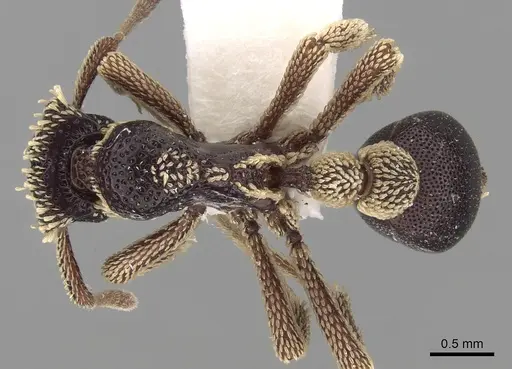
CASENT0912535
View on AntWeb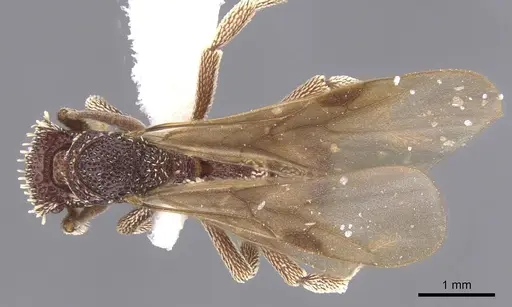
CASENT0914886
View on AntWeb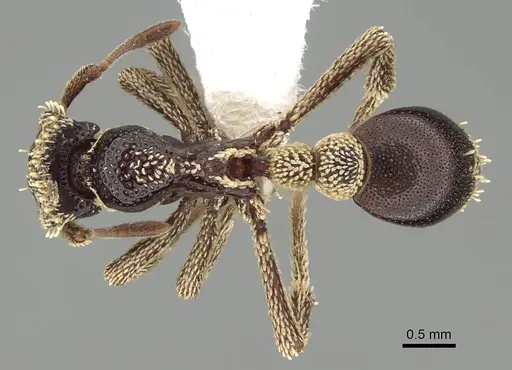
ECOFOG-GRS21-0187-02
View on AntWeb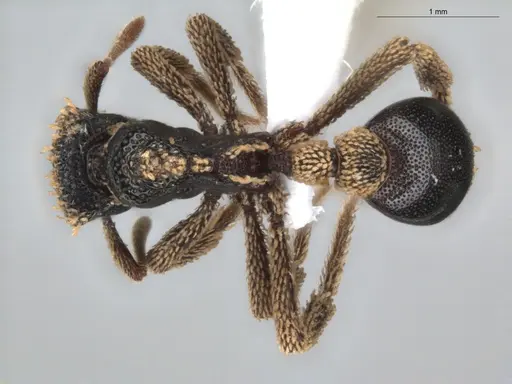
Literature
Loading...Loading products...