

Bariamyrma hispidula
- Scientific Name
- Bariamyrma hispidula
- Tribe
- Solenopsidini
- Subfamily
- Myrmicinae
- Author
- Lattke, 1990
- Distribution
- Found in 1 countries
Bariamyrma hispidula Overview
Bariamyrma hispidula is an ant species of the genus Bariamyrma. It is primarily documented in 1 countries , including Costa Rica. Detailed taxonomic data and occurrence records can be further explored via authoritative databases such as AntWeb or the Global Biodiversity Information Facility (GBIF).
Bariamyrma hispidula
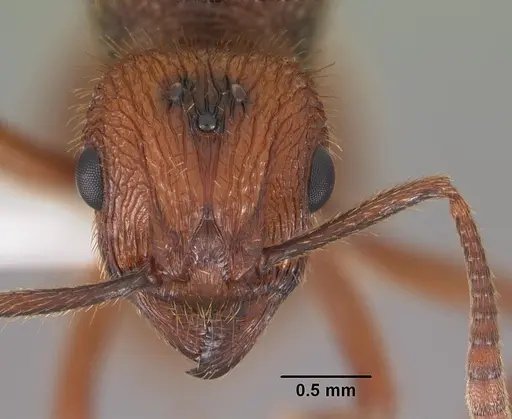
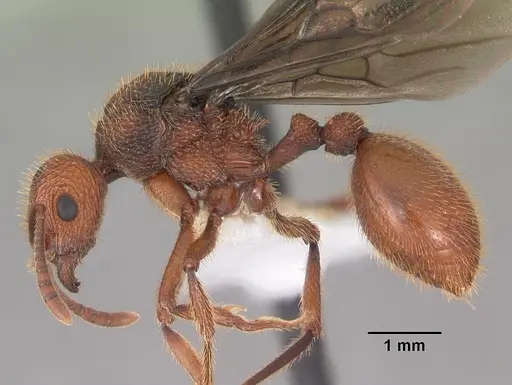
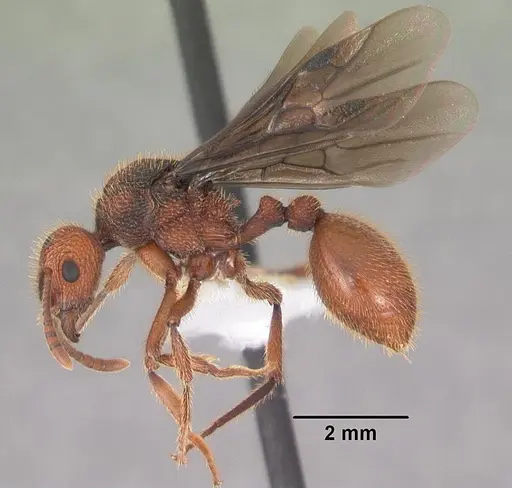
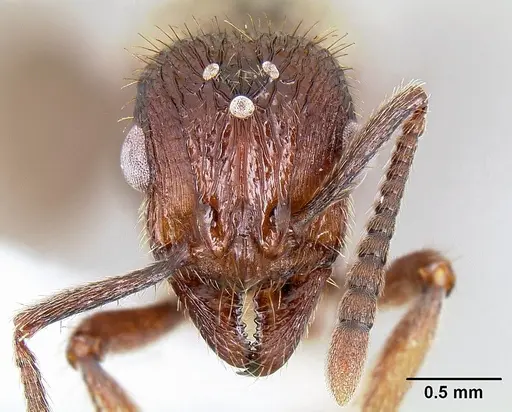
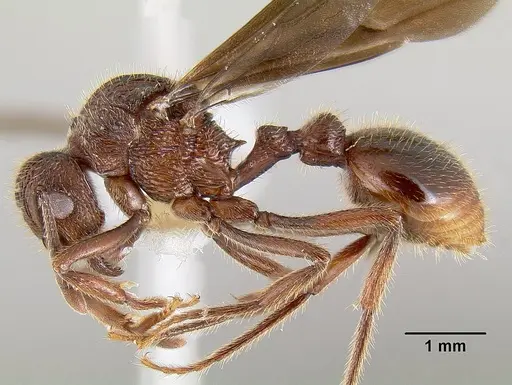
Bariamyrma hispidula is one of the rarest and most mysterious ants in the world, it's the only known species in its entire genus, and has only ever been collected as single queens caught in flight intercept traps in South American rainforests. The queens are small at around 5-6mm total length, with a distinctive blackish-brown body covered in abundant stiff bristle-like hairs. What makes this species extraordinary is that NO WORKERS have ever been found or described, we literally know nothing about what the mature colony looks like, what these ants eat, or how they behave. The genus is related to Lordomyrma and other obscure Myrmicinae ants, but its exact placement in the ant tree of life remains unclear. These queens have been collected from lowland rainforest in Venezuela, Costa Rica, and Paraguay, typically at elevations below 200 meters. [1]
Quick Summary
- Difficulty: Expert
- Origin & Habitat: Neotropical rainforests of Venezuela, Costa Rica, and Paraguay at low elevations (around 140m). Collected in flight intercept pan traps, suggesting they are ground-nesting ants rather than canopy dwellers.[1]
- Colony Type: Unknown, only the queen caste has ever been collected. The colony structure (single queen vs multiple queens) is completely unconfirmed. No workers have ever been described, making captive keeping impossible at this time.
- Size & Growth:
- Queen: Queens measure approximately 5-6mm total length (HL 1.34,HW 1.17,WL 2.03mm)
- Worker: Unknown, workers have never been described or collected
- Colony: Unknown, no mature colonies have ever been observed
- Growth: Unknown
- Development: Unknown (No worker caste has ever been described, so development timeline cannot be estimated. This is one of the most poorly known ant species in the world.)
- Antkeeping:
- Temperature: Unknown, no captive observations exist. Based on Neotropical lowland rainforest habitat, likely prefer warm conditions (24-28°C) but this is entirely speculative.
- Humidity: Unknown, collected from rainforest environments suggesting high humidity needs, but no specific data exists.
- Diapause: Unknown, no seasonal data available for this species.
- Nesting: Likely ground-nesting based on flight intercept trap collections. No specific nesting observations exist.
- Behavior: Completely unknown, no behavioral observations of any kind have been documented. Workers have never been collected, so we cannot assess temperament, foraging behavior, or any other behavioral traits.
- Common Issues: This species cannot be kept in captivity, workers have never been described and no one knows what they eat or how to raise them., Only a handful of queens have ever been collected worldwide, making wild collection extremely unlikely., No information exists on founding behavior, we don't know if queens seal themselves in like claustral species or need to forage., We don't know if this species stings or has any defense mechanisms., Without workers, there is no established husbandry method for this species.
Why This Ant Cannot Be Kept
Bariamyrma hispidula is one of the most enigmatic ants in the world, and it cannot be kept in captivity, not because it's difficult, but because we know almost nothing about it. Only the queen caste has ever been collected, and these queens were caught in flight intercept traps (devices that catch flying insects). No workers, no males, and no actual colonies have ever been found or described in the scientific literature. This means we have zero information about what these ants eat, how they build their nests, how many workers a colony has, or any aspect of their basic biology. Without workers, there's no established method for keeping them, and no way to know if a queen would successfully found a colony in captivity. This species represents a frontier of ant taxonomy, it's a scientific mystery that even professional myrmecologists don't fully understand. [1]
What We Know About the Queen
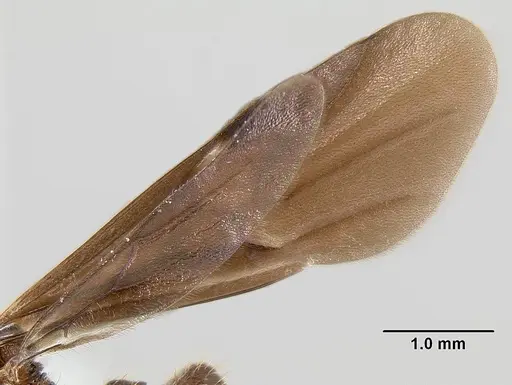
The queens that have been collected give us some basic morphological information. They are small ants, measuring about 5-6mm in total length, with a distinctive blackish-brown coloration. The most striking feature is the abundant stiff, erect bristle-like hairs covering most of the body, this is where the species name 'hispidula' (meaning 'bristly' in Latin) comes from. The queens have large prominent eyes positioned at mid-length of the head, and three well-developed ocelli (simple eyes) on the vertex. The mandibles have a distinctive structure with rugulose (wrinkled) surfaces. The wings are brown in color, suggesting these are alates (reproductive queens with wings) that were caught while dispersing from their natal nests. The queens were collected at low elevations (around 140 meters) in rainforest environments in Venezuela, Costa Rica, and Paraguay. [1]
Taxonomic Uncertainty
This genus has puzzled taxonomists since its discovery. It doesn't fit neatly into any established tribe or genus group within the Myrmicinae subfamily. It shares some characteristics with Lordomyrma (mandibular structure, clypeus shape, antennae), but also has unique features that set it apart. The lack of a clearly defined antennal club and presence of well-developed frontal carinae distinguish it from many related genera. Some researchers consider it a 'somewhat primitive member' of a group that includes Lordomyrma, Lachnomyrmex, Cyphoidris, and Dacetinops, all relatively obscure ants. The fact that only queens have ever been found makes it extremely difficult to determine its true evolutionary relationships. This taxonomic uncertainty also means we cannot reliably infer its care requirements from related species. [1]
Distribution and Collection
Bariamyrma hispidula is known from a handful of widely scattered records across the Neotropical region: Venezuela (the type locality in Amazonas state at Cerro de la Neblina), Costa Rica, and Paraguay. All specimens have been collected in flight intercept traps or Malaise traps, these are passive devices that catch flying insects, not nest excavation. This suggests the species is not canopy-dwelling (which would require specialized collecting methods) but rather ground-nesting, since the traps were set at ground level. The collections span different times and locations, indicating the species is rare but not extinct, it's simply very difficult to find because we don't know where its nests are or what the workers look like. The fact that only queens show up in these traps while workers never do remains one of the great mysteries of Neotropical ant biology.[1]
Frequently Asked Questions
Can I keep Bariamyrma hispidula in captivity?
No. This species cannot be kept because workers have never been described, we have no idea what they look like, what they eat, or how to care for them. Without workers, there's no established husbandry method. This is one of the most poorly known ant species in the world.
What do Bariamyrma hispidula ants eat?
Unknown, no one has ever observed the workers of this species feeding. We don't know their diet, foraging behavior, or any nutritional requirements.
How big do Bariamyrma hispidula colonies get?
Unknown, no colonies have ever been found or described. We don't know if they have 50 workers or 5,000.
Where does Bariamyrma hispidula live?
They are known from lowland rainforests in Venezuela, Costa Rica, and Paraguay in the Neotropical region. The few queens collected were found at elevations around 140 meters.[1]
How long does it take for Bariamyrma hispidula to develop from egg to worker?
Unknown, no eggs, larvae, or workers have ever been described. The entire brood development is completely unstudied.
What temperature do Bariamyrma hispidula ants need?
Unknown, no captive observations exist. Based on their lowland rainforest habitat in Venezuela, Costa Rica, and Paraguay, they likely prefer warm tropical conditions, but this is entirely speculative.
Are Bariamyrma hispidula good for beginners?
No, this species cannot be kept at all. It is entirely unsuitable for antkeeping because we know nothing about its biology. Even professional antkeepers and researchers cannot keep this species.
Can I catch a queen of Bariamyrma hispidula from the wild?
Extremely unlikely. Only a handful of queens have ever been collected worldwide, and all were caught in specialized flight intercept traps by researchers. No one knows where their nests are located.
Do Bariamyrma hispidula queens found colonies alone?
Unknown, founding behavior has never been observed. We don't know if they are claustral (seal themselves in and live off stored fat) or semi-claustral (must leave to forage).
References

This caresheet is licensed under CC BY-SA 4.0 .
CASENT0102363
View on AntWeb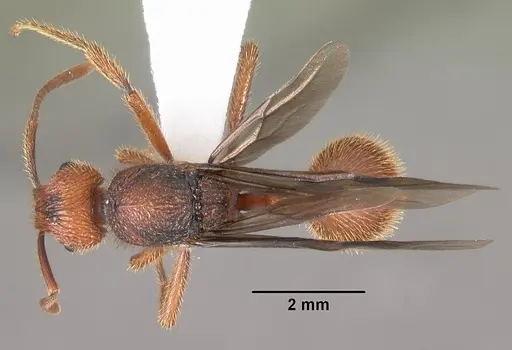
INB0003662387
View on AntWeb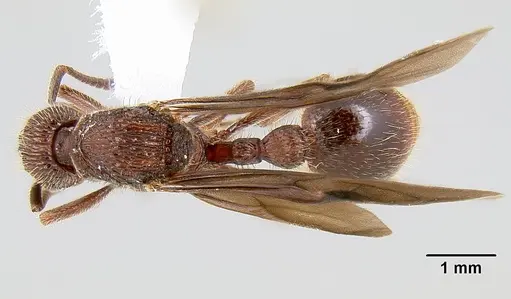
Literature
Loading...Loading products...