

Baracidris sitra
- Scientific Name
- Baracidris sitra
- Tribe
- Solenopsidini
- Subfamily
- Myrmicinae
- Author
- Bolton, 1981
- Distribution
- Found in 3 countries
Baracidris sitra Overview
Baracidris sitra is an ant species of the genus Baracidris. It is primarily documented in 3 countries , including Congo, Democratic Republic of the, Gabon. Detailed taxonomic data and occurrence records can be further explored via authoritative databases such as AntWeb or the Global Biodiversity Information Facility (GBIF).
Baracidris sitra
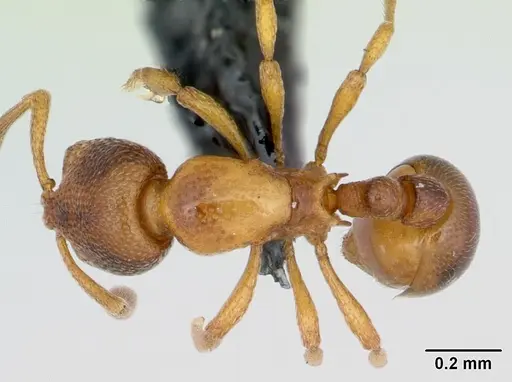
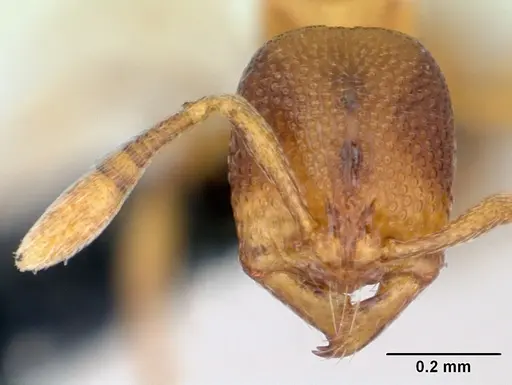
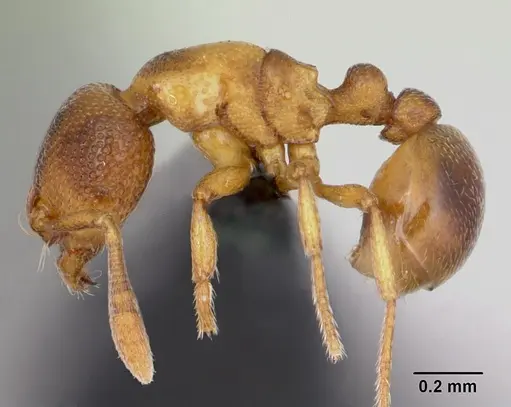
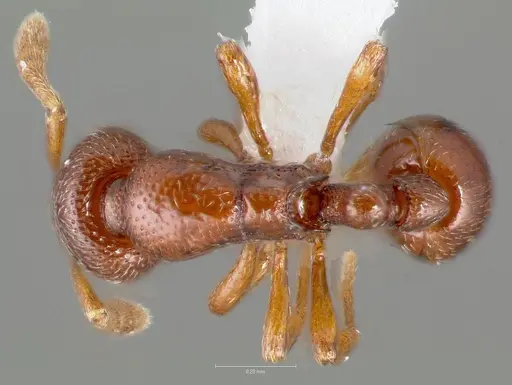
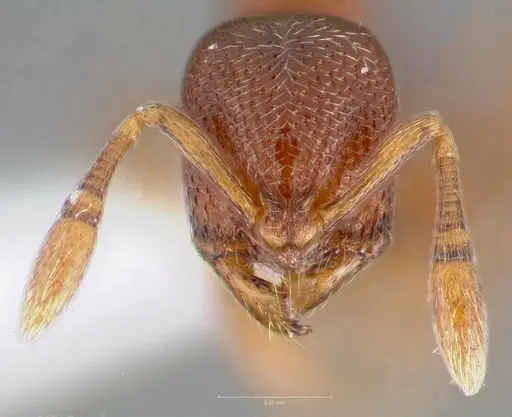
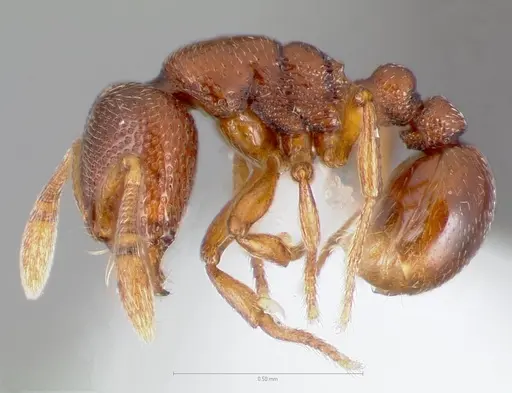
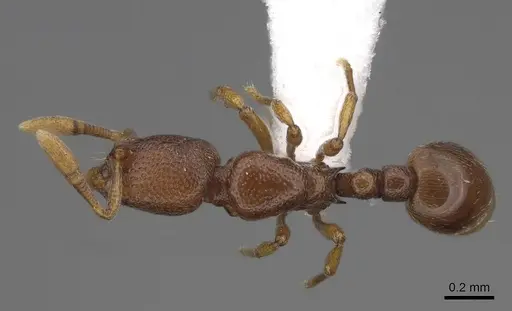
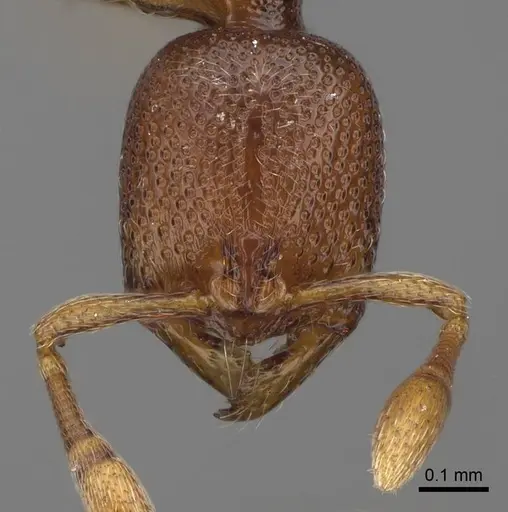
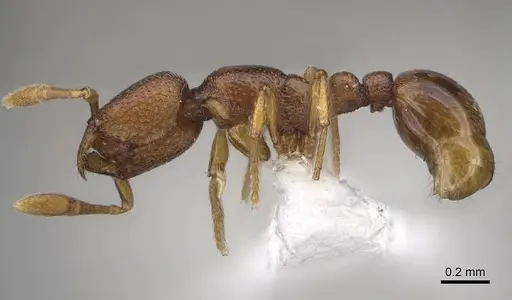
Baracidris sitra is an extraordinarily tiny ant species, with workers measuring just 2mm in total length [1]. They belong to the subfamily Myrmicinae and are found exclusively in Central African rainforests, where they live in leaf-litter on the forest floor [2]. The genus Baracidris is recognized by the clypeus (the plate covering the front of the head) being produced into a narrow truncated lobe, and the posterior margin of the head is straight or slightly convex, not concave in the middle [1]. Their body is notably smooth and lacks the conspicuous hairs seen in many related species [1].
This species is known from only a handful of specimens collected in Gabon and surrounding Central African countries, making it one of the least-studied ants in the world [3]. Nothing specific is documented about their behavior, colony structure, or captive care requirements. Given their tiny size and leaf-litter habitat, they likely function as a cryptic forest-floor species with specialized ecological needs that remain completely undocumented.
Quick Summary
- Difficulty: Expert
- Origin & Habitat: Central African rainforests (Gabon, Democratic Republic of Congo, Central African Republic, Ivory Coast). Found in leaf-litter at elevations between 110-375m in montane forest environments [2][3].
- Colony Type: Unconfirmed, colony structure has not been documented in scientific literature.
- Size & Growth:
- Queen: Unknown, no queen specimens have been described in scientific literature
- Worker: 2.0mm total length (HL 0.51mm, HW 0.44mm) [1]
- Colony: Unknown, no colony size data exists
- Growth: Unknown
- Development: Unknown, no development data exists for this species (Development timeline has not been studied. Related Solenopsidini species typically develop in 4-8 weeks at tropical temperatures, but this is purely speculative for B. sitra.)
- Antkeeping:
- Temperature: Unknown, no thermal studies exist. Based on their Central African rainforest origin, they likely prefer warm, stable conditions in the low-to-mid 20s°C range. Start around 24-26°C and observe colony activity for guidance.
- Humidity: Likely requires high humidity consistent with rainforest leaf-litter environments. Keep the nest substrate consistently moist but not waterlogged. Provide a gradient with some drier areas available.
- Diapause: Unknown, no seasonal studies exist. As a tropical species from Central Africa, they may not require a diapause period, but this is unconfirmed.
- Nesting: In nature, they are found in leaf-litter samples, suggesting they nest in damp, decaying organic material on the forest floor [2]. In captivity, a naturalistic setup with very small chambers scaled to their tiny size would be most appropriate. Y-tong nests or acrylic nests with fine passages may work, but success is entirely speculative. Given their minute size, escape prevention must be excellent, they can squeeze through the tiniest gaps.
- Behavior: Behavior is completely unstudied. As a tiny leaf-litter ant in the Solenopsidini tribe, they likely forage individually or in small groups on the forest floor, potentially preying on micro-arthropods. Their small size makes escape likely without fine mesh barriers. Temperament is unknown but they are not considered aggressive. No data exists on stinging ability.
- Common Issues: no documented care information exists, all advice is speculative, their extremely small size makes escape prevention critical, standard barriers may not contain them, lack of colony size data makes it difficult to know when to upgrade nest size, no known diet acceptance, what to feed is entirely unknown, no information on founding behavior makes it unclear how to establish a colony
Species Overview and Identification
Baracidris sitra is one of the smallest ant species in the world, with workers measuring just 2mm in total length [1]. The genus Baracidris is distinguished by having the clypeus (a plate covering the front of the head) produced into a narrow truncated lobe, and the posterior margin of the head is straight or very slightly convex, not indented or concave in the middle [1]. Their body is notably smooth and lacks the conspicuous hairs that many related ants display [1].
This species was first described by Bolton in 1981 from specimens collected in Gabon, specifically from the Plateau d'Ipassa region [1]. It is similar to the also minute Baracidris meketra but can be distinguished by its slightly larger size and the shape of the clypeal margin [1]. The species has since been recorded in several Central African countries including the Democratic Republic of Congo, Central African Republic, and Ivory Coast, though specimens remain rare in scientific collections [3].
Natural Habitat and Distribution
Baracidris sitra is found exclusively in the Afrotropical region of Central Africa, with confirmed records from Gabon, the Democratic Republic of Congo, Central African Republic, and Ivory Coast [3][4]. They inhabit lowland to montane rainforest environments, having been collected from leaf-litter samples at elevations between 110m and 375m above sea level [2].
The type locality is the Plateau d'Ipassa in Gabon, where the holotype specimen was collected from a leaf-litter sample using standardized collection methods [1]. This habitat type suggests they are cryptic ground-dwelling ants that live among decaying organic matter on the forest floor, similar to many other tiny Myrmicinae species in tropical rainforests. The leaf-litter microhabitat typically maintains high humidity and stable temperatures year-round.
Current State of Knowledge
Baracidris sitra is one of the least-studied ant species in the world. The scientific literature contains virtually no information about their biology, behavior, colony structure, or captive care requirements. What we know is limited to: worker morphology (2mm total length), distribution records from leaf-litter samples, and taxonomic identification features [1][2].
No research has been published on their colony type (single queen vs. multiple queens), founding behavior, development timeline, diet preferences, temperature/humidity requirements, or any aspect of their daily behavior. This represents a significant gap in ant-keeping knowledge. Any advice for keeping this species would be entirely speculative and based on inference from related genera in the Solenopsidini tribe rather than direct observation of B. sitra.
Speculative Care Recommendations
Given the complete lack of documented care information for Baracidris sitra, any recommendations must be treated as highly speculative. Based on their leaf-litter habitat in Central African rainforests, they likely require: high humidity (consistent with damp forest floor conditions), warm temperatures (low-to-mid 20s°C), and very small nest chambers scaled to their tiny 2mm body size.
For housing, a naturalistic setup with damp substrate or a small acrylic nest with fine passages would be most appropriate. Escape prevention is critical given their minute size, standard barriers may not contain them, and fine mesh is essential. Diet is entirely unknown, but related Solenopsidini typically prey on small invertebrates, so offering tiny live prey like springtails or fruit fly larvae would be a reasonable starting point.
The most important recommendation for anyone attempting to keep this species is to document everything carefully. Any successful colony establishment would represent the first documented captive breeding of this species and would contribute significantly to scientific knowledge.
Frequently Asked Questions
How do I keep Baracidris sitra ants?
No documented care information exists for this species. All advice would be speculative. Based on their leaf-litter habitat in Central African rainforests, they likely need high humidity, warm temperatures (around 24-26°C), and very small nest chambers. This species is not recommended for anyone except expert antkeepers willing to experiment extensively.
What do Baracidris sitra ants eat?
Diet is completely unstudied for this species. Based on their placement in the Solenopsidini tribe, they likely prey on tiny invertebrates. A reasonable starting point would be offering small live prey like springtails or fruit fly larvae, but acceptance is entirely unknown.
How big do Baracidris sitra colonies get?
Colony size is unknown, no colony data exists in scientific literature. Based on their tiny 2mm worker size and related genera, colonies are likely small, possibly under 100 workers.
What is the temperature requirement for Baracidris sitra?
No thermal studies exist for this species. As a tropical ant from Central African rainforests, they likely prefer warm, stable conditions in the low-to-mid 20s°C range. Start around 24-26°C and observe colony activity for guidance.
How long does it take for Baracidris sitra to develop from egg to worker?
Development timeline is completely unknown, no research has been published on their development. Related Solenopsidini species in tropical environments typically develop in 4-8 weeks, but this is purely speculative for B. sitra.
Are Baracidris sitra good for beginners?
No. This species is absolutely not recommended for beginners. There is no documented care information, no known diet acceptance, no colony size data, and no established breeding protocols. This is an expert-only species for antkeepers willing to document experimental care.
Can I keep multiple Baracidris sitra queens together?
Colony structure is unconfirmed, no research exists on whether they are single-queen (monogyne) or multi-queen (polygyne) colonies. Combining unrelated queens is not recommended since this has not been studied.
What is the queen size of Baracidris sitra?
Queen size is unknown, no queen specimens have been described in scientific literature. The holotype and only known specimens are workers [1].
References

This caresheet is licensed under CC BY-SA 4.0 .
Literature
Loading...Loading products...