

Azteca barbifex
- Scientific Name
- Azteca barbifex
- Tribe
- Leptomyrmecini
- Subfamily
- Dolichoderinae
- Author
- Forel, 1906
- Distribution
- Found in 1 countries
Azteca barbifex Overview
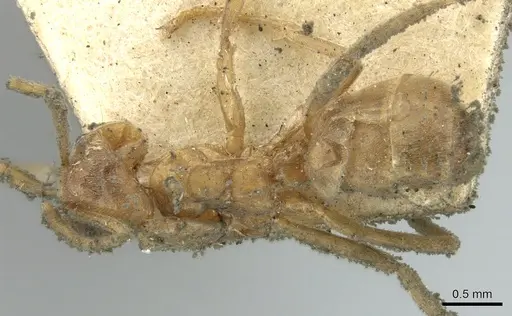
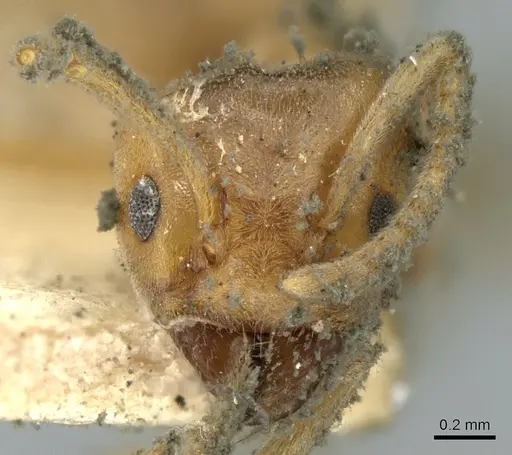
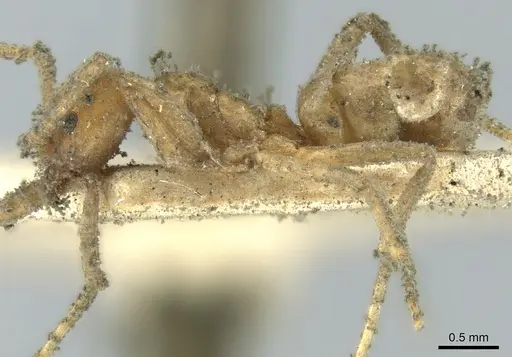
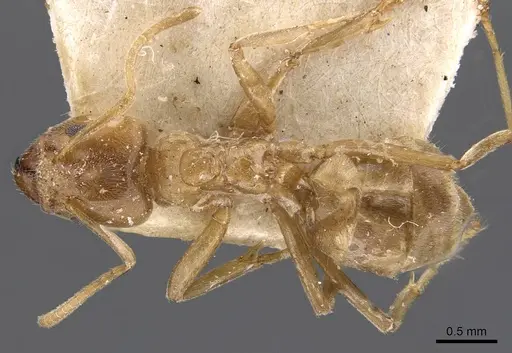
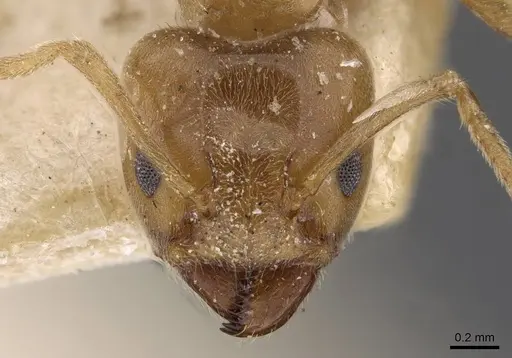
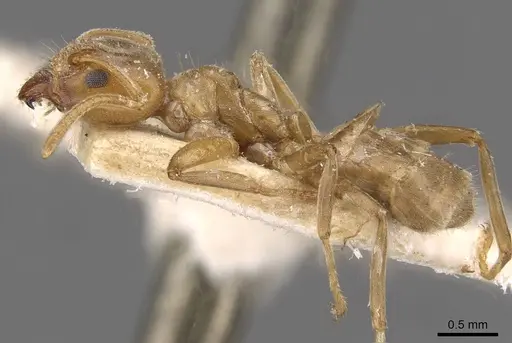
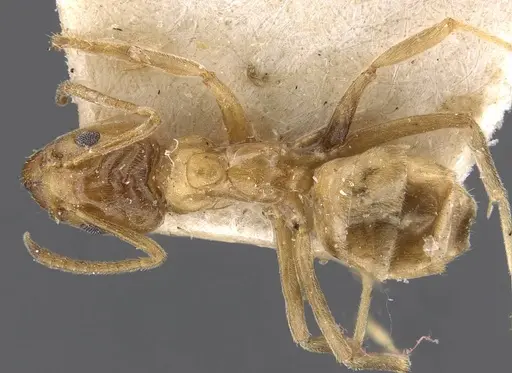
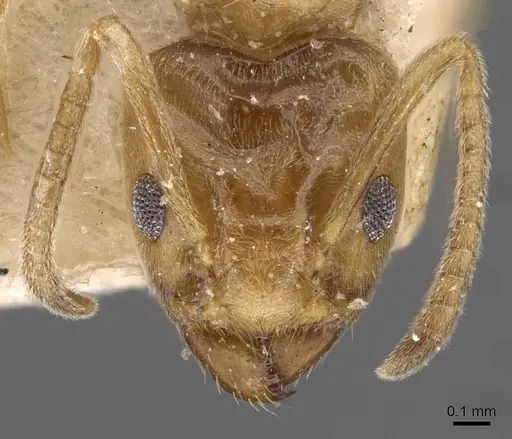
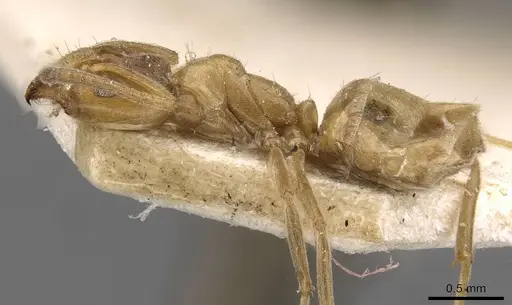
Azteca barbifex is an ant species of the genus Azteca. It is primarily documented in 1 countries , including Brazil. Detailed taxonomic data and occurrence records can be further explored via authoritative databases such as AntWeb or the Global Biodiversity Information Facility (GBIF).
Azteca barbifex
Azteca barbifex is an arboreal ant from the Amazon rainforest and Trinidad that constructs distinctive carton nests on trees [1][2]. Workers build paper-like nests from plant fibers and soil, creating structures up to 1.2 meters high that wrap around tree trunks and branches [3][1]. These ants inhabit citrus groves and native forests in Brazil (Amazonas, Pará, Roraima) and Trinidad, showing strong preference for nesting on tree trunks rather than branches or leaves [1][2].
Unlike many ants that simply excavate wood or soil, Azteca barbifex actively constructs its home by weaving together plant materials and soil into durable carton structures [1]. These nests serve as multi-species hubs, housing not just the ant colony but also mutualistic scale insects, aphids, and even mantid laceworms, while the ants maintain territorial associations with nearby wasp nests [1]. Their aggressive defense of these territories makes them significant pests in citrus farms, where they scrape bark from tender branches and protect honeydew-producing insects that damage crops [1].
Quick Summary
- Difficulty: Expert
- Origin & Habitat: Neotropical region, Brazil (Amazonas, Pará, Roraima) and Trinidad, arboreal habitats in rainforest and citrus groves [1][2]
- Colony Type: Large colonies containing thousands of workers, may be polydemic (occupying multiple nests) [1]. Queen number unconfirmed.
- Size & Growth:
- Queen: Unknown, likely 6-8mm based on Azteca genus patterns [2].
- Worker: Unknown, likely 3-4mm based on Azteca genus patterns [2].
- Colony: Up to thousands of workers [1].
- Growth: Fast, nests develop fully in 4-5 months under favorable conditions [1].
- Development: Estimated 6-10 weeks based on tropical Dolichoderinae patterns. (Tropical species likely develops continuously without seasonal slowdown, timing unconfirmed for this species.)
- Antkeeping:
- Temperature: 24-28°C based on Amazonian habitat, maintain stable warmth year-round [1].
- Humidity: High humidity 70-80%, substrate should remain moist but not waterlogged [1].
- Diapause: No, tropical species active year-round [1].
- Nesting: Arboreal vertical setup with materials for carton construction including wood fiber, plant debris, and soil [1][3].
- Behavior: Highly aggressive and territorial, kills other insects to defend territory and protect food sources [1]. Arboreal climbers that disperse through tree canopies and require excellent escape prevention [1].
- Common Issues: colonies grow to thousands of workers requiring extensive vertical space and large enclosures., carton nest building requires specific plant fibers and materials difficult to replicate in standard formicaria., highly aggressive territorial behavior makes colony management and maintenance challenging., arboreal nature and small size necessitate excellent escape prevention including tight-fitting lids and barriers.
Carton Nest Construction and Arboreal Life
In nature, Azteca barbifex builds impressive carton nests up to 1.2 meters high on tree trunks and branches [3][1]. Workers construct these paper-like structures by weaving together plant fibers, soil, and other debris, creating enclosed chambers that expand to occupy entire tree trunks over 4-5 months [1]. Colonies may be polydemic, meaning they occupy multiple connected nests across several trees, particularly when canopies overlap [1]. For captive care, this means you must provide vertical space with rough bark or wood surfaces, plus abundant plant fibers, dead leaves, and soil for nest construction. Standard acrylic or plaster nests will not satisfy their building instincts.
Feeding and Mutualistic Relationships
These ants are omnivorous with a strong preference for sugary substances [1]. In nature, they maintain complex mutualisms with scale insects, aphids, and mantid laceworms that live inside their carton nests [1]. The ants protect these insects and feed on the honeydew they produce. They also hunt other insects and show strong predatory behavior [1]. In captivity, offer sugar water or honey daily, plus protein from small insects. However, replicating their natural trophobiosis (insect tending) behavior is challenging without maintaining live scale insect colonies.
Temperature and Environmental Needs
Native to the Amazon rainforest and Trinidad, Azteca barbifex requires tropical conditions [1]. Keep colonies at 24-28°C year-round with high humidity around 70-80%. They do not require hibernation. Population growth in nature correlates with dry season conditions, with development slowing during heavy rainfall periods [1], suggesting they prefer stable, warm conditions without extreme moisture fluctuations. Provide good ventilation while maintaining humidity to prevent mold in their carton nests.
Territorial Aggression and Defense
Azteca barbifex exhibits strong territorial aggressiveness, killing other insects to defend their territory and protect their food sources [1]. They damage citrus trees by scraping bark from tender branches while tending honeydew-producing insects [1]. This aggressive nature means captive colonies require secure enclosures and careful handling. They will attack intruders and may show aggression during nest maintenance. Their arboreal nature makes them excellent climbers, so escape prevention must be absolute.
Frequently Asked Questions
Can I keep Azteca barbifex in a test tube?
No. Test tubes cannot accommodate their carton-building behavior or colony size. They need vertical arboreal setups with materials for nest construction [1][3].
How long until Azteca barbifex gets first workers?
Unknown specifically for this species. Based on tropical Dolichoderinae patterns, expect 6-10 weeks at 25-28°C, but this is estimated.
How big do Azteca barbifex colonies get?
Colonies contain thousands of workers and may occupy multiple connected nests in the wild [1].
Are Azteca barbifex good for beginners?
No. Their large colony size, specific nesting requirements, and aggressive behavior make them suitable only for expert keepers [1].
What do Azteca barbifex eat?
They are omnivorous with preference for sugary substances. In nature they tend scale insects and aphids for honeydew, and hunt other insects [1]. In captivity, offer sugar water and small live prey.
Do Azteca barbifex need hibernation?
No. They are tropical ants from the Amazon and remain active year-round [1].
Can I keep multiple Azteca barbifex queens together?
Unconfirmed. While colonies reach thousands of workers, the specific colony structure regarding queen number has not been documented. Combining unrelated queens is not recommended without evidence of polygyny.
References

This caresheet is licensed under CC BY-SA 4.0 .
Literature
Loading...Loading products...