

Axinidris murielae
- Scientific Name
- Axinidris murielae
- Tribe
- Tapinomini
- Subfamily
- Dolichoderinae
- Author
- Shattuck, 1991
- Distribution
- Found in 3 countries
Axinidris murielae Overview
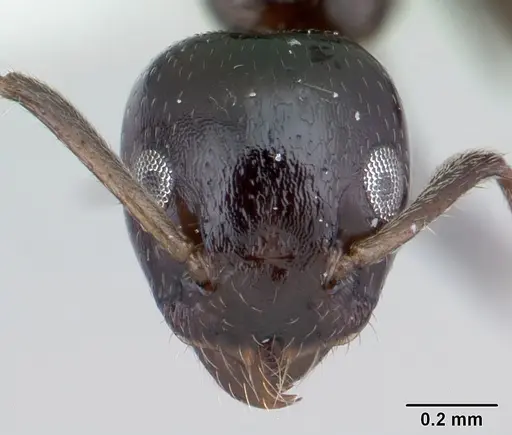
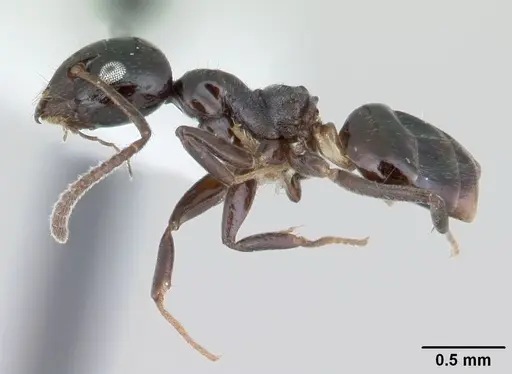
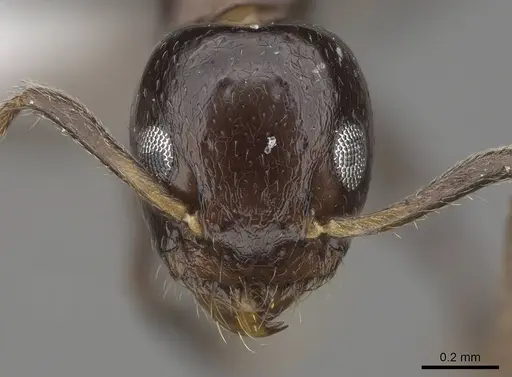
Axinidris murielae is an ant species of the genus Axinidris. It is primarily documented in 3 countries , including Central African Republic, Côte d'Ivoire, Gabon. Detailed taxonomic data and occurrence records can be further explored via authoritative databases such as AntWeb or the Global Biodiversity Information Facility (GBIF).
Axinidris murielae
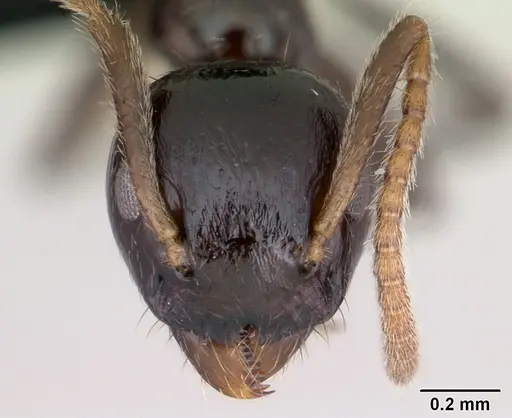
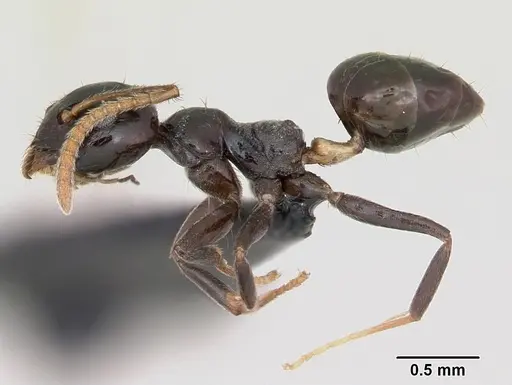
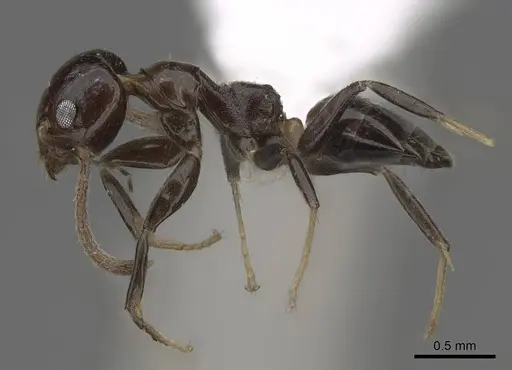
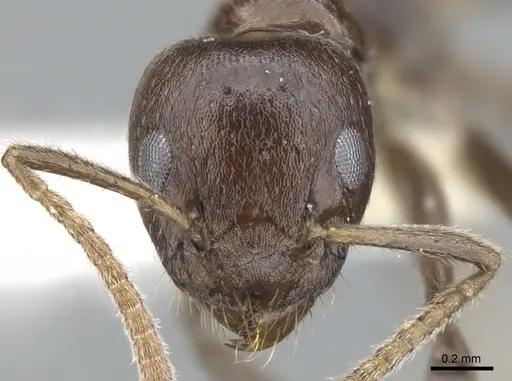
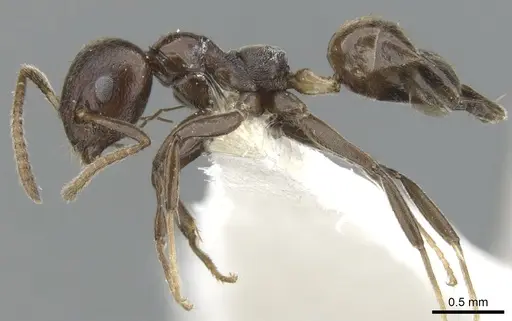
Axinidris murielae is a tiny reddish-brown ant that lives in the treetops of Central and West African forests. Workers measure just 3-4 millimeters long [1]. Scientists first discovered this species by fogging trees in Cameroon, Ghana, and Kenya, a technique that knocks insects out of the canopy [1]. These ants are strictly arboreal, meaning they nest and forage entirely in trees, rarely coming down to the ground [2]. In Cameroon plantain farms, researchers found them to be subdominant, a peaceful species that avoids conflict with more aggressive ants, and they only visit ground baits during the dry season [2].
Quick Summary
- Difficulty: Expert
- Origin & Habitat: Tropical forests of Cameroon, Ghana, and Kenya [1][3]. Strictly arboreal, nesting in tree canopies [2].
- Colony Type: Unknown, no studies have documented queen number or colony structure.
- Size & Growth:
- Queen: Unknown [1].
- Worker: 3-4 mm (head width 0.66-0.81 mm, head length 0.76-0.91 mm) [1].
- Colony: Unknown, likely small to moderate based on arboreal lifestyle.
- Growth: Unknown, estimated moderate based on tropical climate.
- Development: Unknown, estimated 6-10 weeks based on related tropical Dolichoderinae at 25-28°C. (This is an unconfirmed estimate. Development time has not been studied in this species.)
- Antkeeping:
- Temperature: 24-28°C (inferred from tropical habitat). Use a heating cable on one side of the nest to create a gentle gradient.
- Humidity: High humidity 60-80%. Keep nest material damp but not waterlogged, mimicking tropical forest canopy conditions.
- Diapause: No, tropical species active year-round, though foraging naturally decreases during the rainy season [2].
- Nesting: Arboreal, requires vertical space with branches, hollow stems, or cork tubes. Avoid flat horizontal setups.
- Behavior: Subdominant (peaceful and less aggressive) [2]. Strictly arboreal foragers that occasionally descend to ground litter [2]. High escape risk due to small size.
- Common Issues: escape prevention is critical, at 3-4mm they squeeze through the tiniest gaps in mesh and lids., arboreal species often fail to thrive in flat test tube setups without vertical climbing surfaces., colonies may stop foraging if humidity drops too low, they need tropical moisture levels., seasonal foraging patterns mean they may naturally eat less during wet season conditions.
Natural History and Distribution
Axinidris murielae inhabits the tropical forests of Central and West Africa. Researchers have collected specimens in Cameroon, Ghana, and Kenya's Kakamega Forest [1]. All collections come from tree fogging samples, specifically from Teclea nobilis and Heinsenia diervillioides trees [1]. This confirms their strictly arboreal lifestyle, they live their entire lives in the forest canopy. In Cameroon plantain agrosystems, scientists identified them as a subdominant species, meaning they are peaceful and less aggressive than dominant ant species like Anoplolepis or Oecophylla [2]. They showed strict seasonal patterns, appearing at ground baits only during the dry season and completely absent during the rainy season [2]. This suggests their activity cycles follow moisture levels rather than temperature.
Housing Arboreal Colonies
Because Axinidris murielae lives in trees, you must provide vertical space rather than horizontal floor space. Standard test tubes lying flat will not work well. Instead, use a vertical test tube setup or a custom arboreal formicarium with branches, cork tubes, or hollow stems. The nest should have tight spaces appropriate for 3-4mm ants, tunnels around 2-3mm in diameter work best. Provide plenty of climbing surfaces and anchor points. You can create a simple arboreal setup by placing test tubes vertically in a container with branches connecting them. Ensure the outworld has vertical elements too, as these ants prefer to forage up rather than across flat surfaces. Escape prevention must be excellent, use fine mesh (less than 1mm) and Fluon or talcum powder barriers on all ventilation and lid seams. [1][2]
Temperature and Humidity
As a tropical African species, Axinidris murielae needs warm, stable temperatures. Keep them around 24-28°C with a gentle gradient, place a heating cable or heat mat on one side of the nest so they can choose their preferred temperature. Avoid letting temperatures drop below 20°C for extended periods. Humidity should stay high, around 60-80%, mimicking the moist tropical forest canopy. Keep the nest material damp but not waterlogged, it should feel like a wrung-out sponge. You will likely need to mist or water the setup more frequently than you would for temperate species. Watch for condensation in the nest, if you see droplets forming, increase ventilation slightly to prevent mold while maintaining humidity. [3]
Feeding and Diet
While specific dietary studies are lacking, Axinidris murielae likely follows the typical Dolichoderine pattern, they probably collect honeydew from sap-sucking insects in the canopy and hunt small soft-bodied prey [4]. In captivity, offer sugar water or honey water constantly. For protein, provide small live insects like fruit flies, springtails, or tiny pieces of mealworm. Prey should be small enough for 3-4mm workers to handle. They may also accept dead insects if freshly killed. Because they are subdominant and peaceful, remove uneaten food quickly to prevent mold or attracting mites in their high-humidity environment.
Behavior and Seasonal Activity
These ants are subdominant, meaning they avoid conflict and lose competitions with more aggressive species [2]. In the wild, they show distinct seasonal foraging, active at ground level only in the dry season and retreating to the canopy during rains [2]. In captivity, you may notice similar patterns if you simulate seasonal changes. They are strictly arboreal foragers that prefer moving through vegetation rather than across open ground [2]. Their small size makes them quick and able to exploit tiny crevices in bark and stems. They are not known to sting, like other Dolichoderinae, they likely defend themselves with chemical sprays rather than stingers.
Colony Founding
Founding behavior in Axinidris murielae has never been documented. Scientists have not observed how new queens establish colonies or whether they are claustral (sealing themselves in to raise first workers) or semi-claustral (needing to forage). If you obtain a queen, house her in a small vertical setup with high humidity and offer both sugar water and small prey items regularly. Do not disturb her frequently. Development time from egg to first worker is unknown, but based on tropical Dolichoderinae, expect roughly 6-10 weeks at 25-28°C.
Frequently Asked Questions
Can I keep Axinidris murielae in a test tube?
Standard horizontal test tubes are not ideal for this arboreal species. They need vertical space with climbing surfaces. If you must use test tubes, place them vertically and provide branches or twigs inside for the ants to climb. Ensure the setup has excellent humidity retention.
What is the best nest type for Axinidris murielae?
An arboreal formicarium with vertical cork tubes, hollow stems, or branches works best. The nest should have small chambers and tunnels scaled to their 3-4mm size. Avoid flat, horizontal plaster nests designed for ground-dwelling species.
How long until Axinidris murielae gets their first workers?
The egg-to-worker timeline is unconfirmed for this species. Based on related tropical Dolichoderinae, expect approximately 6-10 weeks at 25-28°C, but this is only an estimate.
Do Axinidris murielae need hibernation?
No. This is a tropical species from Africa that remains active year-round. However, they naturally reduce foraging during the rainy season, so you may notice slower activity if you simulate wet season conditions.
What do Axinidris murielae eat?
They likely feed on honeydew and small insects in the canopy. In captivity, offer sugar water constantly and small live prey like fruit flies or springtails. Remove uneaten food promptly to prevent mold in their high-humidity setup.
How big do Axinidris murielae colonies get?
Colony size is unknown. Based on their arboreal lifestyle and subdominant status, they likely remain relatively small compared to ground-dwelling species, possibly under 500 workers, but this is speculative.
Are Axinidris murielae good for beginners?
No. These are expert-level ants due to their arboreal requirements, small size requiring excellent escape prevention, and lack of established captive care protocols.
Can I keep multiple Axinidris murielae queens together?
This is not recommended. Whether this species is monogyne (single queen) or polygyne (multiple queens) is unknown. Combining unrelated queens risks fighting and colony failure.
Why are my Axinidris murielae not foraging?
They may be following their natural dry-season activity pattern, or the humidity may be too low. Ensure temperatures are warm (24-28°C) and humidity is high (60-80%). They are also subdominant and may stay hidden if stressed by light or vibration.
References

This caresheet is licensed under CC BY-SA 4.0 .
CASENT0093118
View on AntWeb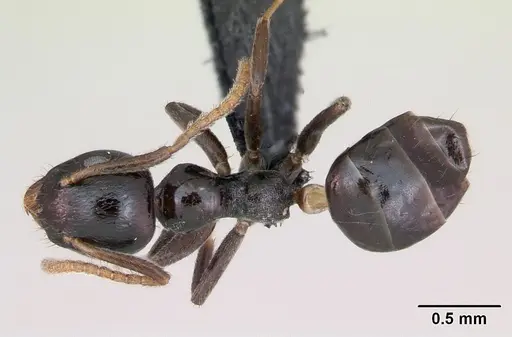
CASENT0178281
View on AntWeb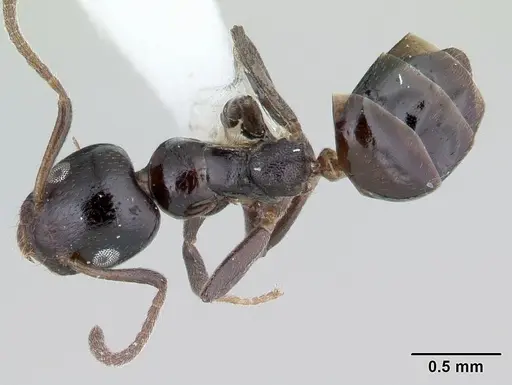
CASENT0405633
View on AntWeb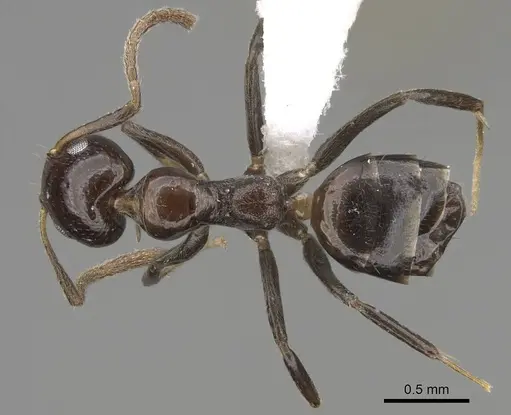
CASENT0902937
View on AntWeb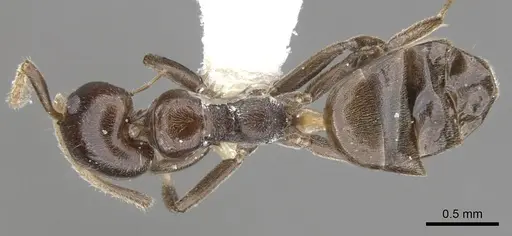
Literature
Loading...Loading products...