

Austroponera castaneicolor
- Scientific Name
- Austroponera castaneicolor
- Tribe
- Ponerini
- Subfamily
- Ponerinae
- Author
- Emery, 1893
- Distribution
- Found in 1 countries
Austroponera castaneicolor Overview
Austroponera castaneicolor is an ant species of the genus Austroponera. It is primarily documented in 1 countries , including New Zealand. Detailed taxonomic data and occurrence records can be further explored via authoritative databases such as AntWeb or the Global Biodiversity Information Facility (GBIF).
Austroponera castaneicolor
Austroponera castaneicolor is a large, endemic New Zealand ant found in native forests throughout the North Island. Unlike their sibling species A. castanea which has wingless ergatoid queens (replacement reproductives born without wings), this species produces normal winged queens [1]. They are one of the most abundant native ants in northern New Zealand forests, making up nearly 40% of ant catches in some pitfall surveys [2]. These ants hunt alone rather than in groups and remain active year-round with a peak in December [2].
As a native endemic restricted to New Zealand, this species holds special conservation status [3]. They occupy forest floor habitats, being caught in both pitfall traps and leaf litter samples across various North Island sites [2]. Little else is known about their specific biology, making them a challenging species for captivity.
Quick Summary
- Difficulty: Hard
- Origin & Habitat: New Zealand (North Island), native forests [2][3]
- Colony Type: Unconfirmed [1]
- Size & Growth:
- Queen: Unknown [1]
- Worker: Described as 'large' but specific measurements unavailable [2]
- Colony: Unknown [1]
- Growth: Unknown [1]
- Development: Unknown, no direct data available [1]. Based on typical Ponerinae patterns, estimate 8-12 weeks at 20-22°C, but treat as highly speculative. (Development timing is unstudied. Growth likely slows in winter months based on seasonal activity patterns [2].)
- Antkeeping:
- Temperature: Specific requirements unknown, based on New Zealand forest habitat, maintain moderate temperatures around 18-22°C year-round [2]
- Humidity: Forest floor species, provide damp substrate similar to leaf litter conditions, with areas ranging from moist to slightly dry [2]
- Diapause: Probably not required, active year-round in nature with winter slowdown possible [2]
- Nesting: Likely nests in soil, under stones, or in rotting wood based on forest floor capture data [2]
- Behavior: Large solitary predator that hunts alone rather than in groups [2]. Likely possesses a sting typical of ponerine ants. Escape risk unknown due to lack of size data, but use secure barriers given 'large' description.
- Common Issues: unknown founding type makes initial colony setup risky, queens may need food during founding or may not., likely requires live prey as they are described as large solitary predators [2], which complicates feeding., endemic to New Zealand, never release outside native range and ensure escape prevention is excellent., lack of development data means unpredictable timelines for first workers and colony growth., wild-caught colonies from native forests may carry mites or parasites.
Natural History and Distribution
Austroponera castaneicolor is endemic to New Zealand, meaning it occurs nowhere else in the world [3]. It is found throughout the North Island in native forest ecosystems [2]. These ants are one of the most abundant native species in northern New Zealand, contributing nearly 40% of ant biomass in some forest pitfall surveys [2].
Unlike their sibling species A. castanea which has wingless ergatoid queens, this species produces normal winged queens [1]. They occupy forest floor habitats, being caught in both pitfall traps and litter samples across sites including Shona Reserve, Oratia, Swanson, and Huapai [2].
Housing and Nest Setup
Specific nest preferences are undocumented, but forest floor capture data suggests they nest in soil, under stones, or in rotting wood [2]. In captivity, provide a naturalistic setup with forest soil, leaf litter, and flat stones or wood pieces for nesting.
Ensure the enclosure has excellent ventilation while maintaining humidity, as stagnant air promotes mold in forest soil setups. Given their 'large' size description [2], ensure escape prevention is robust, though specific measurements are unavailable, ponerine ants typically require secure lids and barriers.
Feeding and Diet
Described as a 'large solitary predator' [2], these ants likely hunt live prey rather than scavenging. Offer small live insects such as fruit flies, springtails, or pinhead crickets. They may accept pre-killed prey, but live food is more likely to trigger their predatory response.
Sugar sources like honey water may be accepted but are probably secondary to protein. Observe your colony to confirm acceptance, as individual preferences may vary.
Temperature and Seasonal Care
Specific thermal requirements are unstudied. They are active year-round in nature with a peak in December (summer) [2], suggesting they may slow down in winter but do not require full hibernation. Maintain moderate temperatures around 18-22°C year-round.
If your colony shows reduced activity in winter months, slightly cooler temperatures (15-18°C) may be acceptable, but avoid freezing conditions. Use a heating cable on one side of the nest to create a gentle gradient, allowing the ants to self-regulate.
Frequently Asked Questions
Can I keep Austroponera castaneicolor in a test tube?
Founding behavior is unconfirmed, so test tube setup success is uncertain. If attempting, provide a dark, undisturbed environment and offer food regularly in case they are semi-claustral (need to forage during founding).
How long does Austroponera castaneicolor take from egg to worker?
Development time is undocumented. Based on related ponerine ants, expect roughly 8-12 weeks at 20-22°C, but this is speculative and may vary significantly.
Do Austroponera castaneicolor need hibernation?
Probably not. They remain active year-round in nature [2], though growth likely slows in winter. Maintain stable moderate temperatures rather than providing a cold diapause.
What do Austroponera castaneicolor eat?
They are large solitary predators [2] and likely require live prey such as fruit flies, small crickets, or springtails. Offer protein regularly.
Are Austroponera castaneicolor dangerous?
As ponerine ants, they likely possess a sting. Handle with care and use forceps when working with the colony.
How big do Austroponera castaneicolor colonies get?
Colony size is unknown [1].
Can I keep multiple Austroponera castaneicolor queens together?
Not recommended. Combining unrelated queens has not been documented and ponerines are typically single-queen species.
References

This caresheet is licensed under CC BY-SA 4.0 .
CASENT0172338
View on AntWeb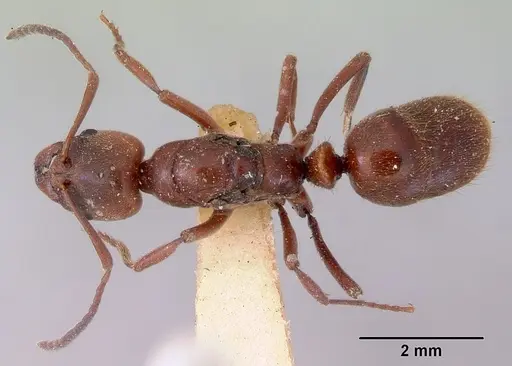
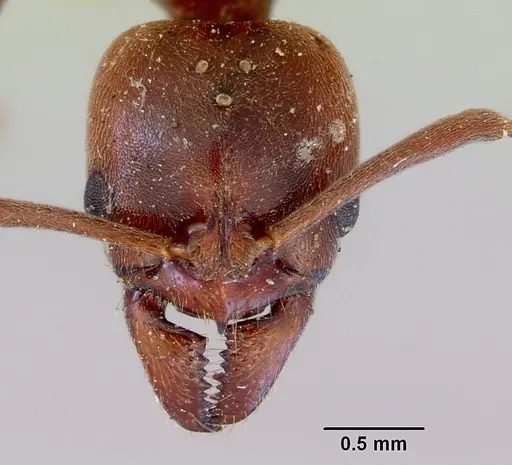
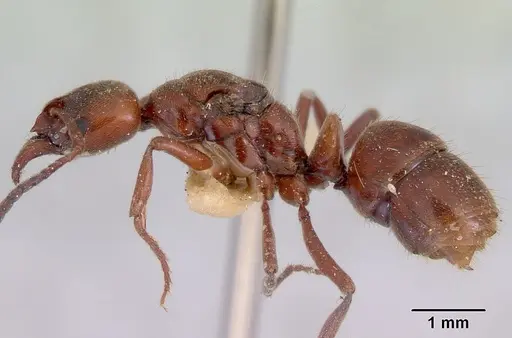
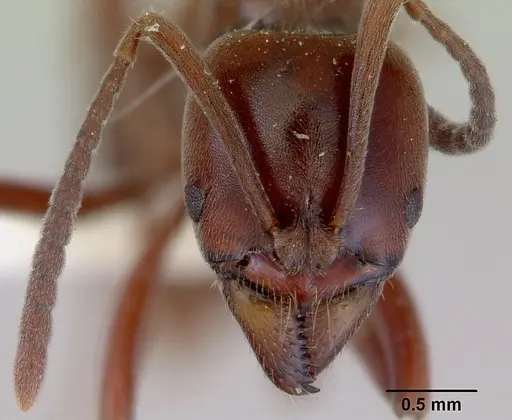
CASENT0172339
View on AntWeb

Literature
Loading...Loading products...