

Asphinctopone pilosa
- Scientific Name
- Asphinctopone pilosa
- Tribe
- Ponerini
- Subfamily
- Ponerinae
- Author
- Hawkes, 2010
- Distribution
- Found in 1 countries
Asphinctopone pilosa Overview
Asphinctopone pilosa is an ant species of the genus Asphinctopone. It is primarily documented in 1 countries , including Tanzania, United Republic of. Detailed taxonomic data and occurrence records can be further explored via authoritative databases such as AntWeb or the Global Biodiversity Information Facility (GBIF).
Asphinctopone pilosa
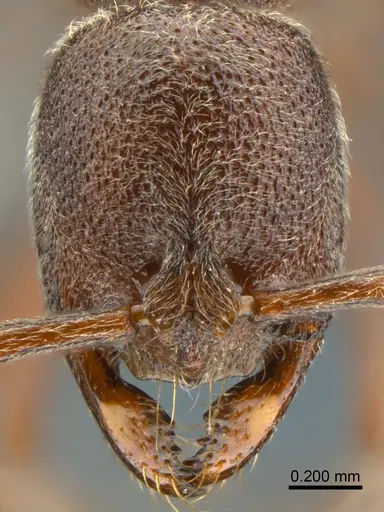
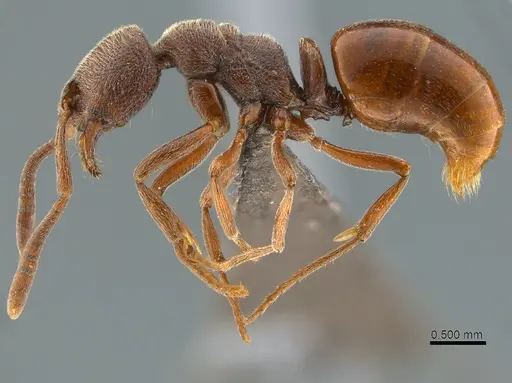
Asphinctopone pilosa holds a strange record, it is one of the few ant species known from just a single individual. This medium-sized ant stretches about 4.5 mm long and sports a dark reddish-brown head and thorax with a lighter reddish-brown gaster [1]. A dense coat of hair covers its body, giving it a fuzzy appearance that inspired its species name 'pilosa' [1]. The only specimen ever found came from Tanzania's Kilindi Forest Reserve, where it was hiding in a damp pile of leaf litter at the base of a rock outcrop [1].
Finding this ant was like finding a needle in a haystack. During the survey that discovered it, researchers collected over 67,000 ants and found exactly one Asphinctopone pilosa [1]. The genus itself is incredibly scarce, in one massive study in Ghana, researchers found only 5 individuals out of 43,824 ants collected [2]. No one has ever found a queen, seen a colony, or observed their behavior beyond this single worker wandering at night [1].
Quick Summary
- Difficulty: Expert
- Origin & Habitat: Tanzania, Eastern Arc Mountains, moist primary forest leaf litter at 1000m elevation [1]
- Colony Type: Unknown, only a single worker specimen has ever been collected [1]
- Size & Growth:
- Queen: Unknown, no queen specimens described [1]
- Worker: 4.5 mm total length [1]
- Colony: Unknown, likely under 50 workers based on genus rarity patterns [2]
- Growth: Unknown, estimated very slow
- Development: 8-12 weeks (estimated based on similar-sized tropical Ponerinae, unconfirmed) (No development data exists for this genus. Estimate assumes temperatures around 20°C.)
- Antkeeping:
- Temperature: 16-20°C based on collection site data (soil averaged 16°C at 10-15cm depth, air range 12-22.5°C) [1]
- Humidity: High (80%+) with consistently moist substrate, collected where humidity averaged 81.4% [1]
- Diapause: Unknown, tropical highland species may slow in cooler months
- Nesting: Moist leaf litter and rotting wood in nature, captive housing unconfirmed [1][2]
- Behavior: Nocturnal and cryptic, the single specimen was collected at night between 19:30-20:00,and none were found during daytime searching [1]
- Common Issues: only one specimen exists worldwide, collecting would harm scientific knowledge and likely violates conservation laws., unknown diet likely requires specialized prey not available in captivity., no queens have ever been found, colony founding methods remain unconfirmed., extreme rarity means any captive attempt would be scientifically irresponsible.
A Species of One
Asphinctopone pilosa is literally known from a single worker ant collected in Tanzania's Kilindi Forest Reserve on August 28,2005 [1]. This makes it one of the rarest animals on Earth. The specimen turned up during a biodiversity survey of the Eastern Arc Mountains, specifically in a moist accumulation of leaf litter at the base of a large sloping rock outcrop [1].
The location was a microhabitat with higher moisture and thicker leaf litter than the surrounding area, which typically had only 1-2 cm of litter cover [1]. The ant was found at night when researchers were hand-collecting samples between 19:30 and 20:00, despite extensive daytime searching using pitfall traps and litter sampling, no other individuals appeared [1]. During the entire project, researchers collected 67,208 ants and found exactly one Asphinctopone pilosa [1].
This extreme rarity means we know almost nothing about their social structure, colony size, or reproduction. The genus Asphinctopone itself is among the least known in Africa, in a massive Ghana survey of 43,824 individual ants, only 5 Asphinctopone individuals appeared (about 0.01%) [2]. Most samples of this genus contain only one or two workers, suggesting they live in very small colonies [2].
Microhabitat and Housing
Since we only know one location where this ant lives, we can infer housing needs from that specific microhabitat. The single specimen came from moist leaf litter at the base of a rock outcrop in primary forest at 1015 meters elevation [1]. The site had sandy loam soil with pH 8.0-8.5,and the collection spot was specifically wetter than the surrounding thin litter layer [1].
Temperatures at the site averaged 16°C in the soil at 10-15 cm depth, with air temperatures ranging from 12°C to 22.5°C during the collection period [1]. Humidity was high, averaging 81.4% and reaching up to 99.3% during a rainstorm [1]. The forest canopy stood about 25 meters high with 70-80% closure, creating a cool, damp environment [1].
If one were to attempt housing (which is not recommended), a naturalistic setup with deep, moist leaf litter and rotting wood would match their known habitat. The nest would need excellent humidity retention but good drainage to prevent mold. Temperatures should stay cool, around 16-20°C, avoiding the heat that many tropical ants prefer [1].
The Diet Mystery
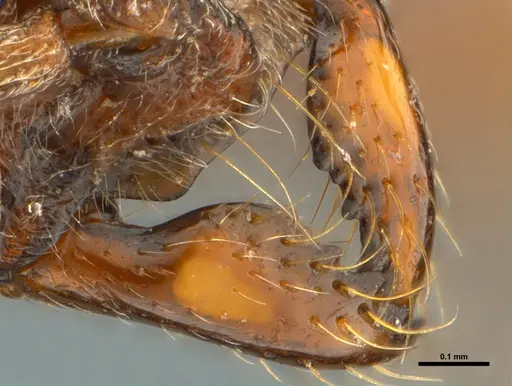
What Asphinctopone pilosa eats remains a complete mystery. Scientists have never observed them feeding, and the single specimen was not collected with food [1]. However, their specialized morphology, particularly their smooth, shining mandibles with five teeth and small eyes comprising only seven ommatidia total, suggests they hunt specific prey [1][2].
The genus Asphinctopone shows adaptations that imply prey-specific hunting, though their victims remain unknown [2]. One related species was found foraging in a fallen, abandoned termitary, hinting they might hunt termites or other insects associated with decaying wood [2]. Their stout, upcurved sting suggests they can subdue prey items that require venom [1].
In captivity, they would likely need live prey, but the specific type is impossible to predict. Small springtails, termites, or other soft-bodied insects might be accepted, but this is pure speculation. Their specialized mouthparts might mean they cannot process standard ant foods like honey water or mealworms [2].
Conservation and Legal Considerations
You should not attempt to collect or keep Asphinctopone pilosa. With only one known specimen in existence, any removal from the wild would be scientifically devastating and likely illegal. The species comes from Tanzania's Eastern Arc Mountains, a biodiversity hotspot where forest reserves receive protection [1].
The single known location, Kilindi Forest Reserve, covers 5,395 hectares of isolated forest surrounded by miombo woodland [1]. While the forest shows some evidence of past disturbance from informal gold mining, it remains a protected area [1]. Tanzanian law likely protects this species given its extreme rarity and restricted range.
Beyond legal concerns, the ethical implications are clear. This species is scientifically priceless. No queen has ever been found, meaning we do not even know what the reproductive caste looks like [1]. Removing any individuals, workers, queens, or brood, would rob science of the chance to study one of the world's least known ants. If you encounter this species, photograph it, record the location, and report it to local biodiversity authorities or ant taxonomists, but do not collect it.
Frequently Asked Questions
Can I keep Asphinctopone pilosa in a test tube?
You should not attempt to keep this species. Only one specimen exists in scientific collections, and removing any individuals from the wild would be scientifically and ethically unacceptable [1].
How long until Asphinctopone pilosa gets first workers?
Unknown. No one has ever raised this species, and no queens have been found [1]. Based on similar-sized Ponerinae, development might take 8-12 weeks, but this is purely speculative.
What do Asphinctopone pilosa eat?
Their diet is unknown. Their specialized mouthparts suggest they hunt specific prey, but scientists have never observed them feeding [2].
Can I keep multiple Asphinctopone pilosa queens together?
This question cannot be answered, no queens have ever been collected for this species [1].
Are Asphinctopone pilosa good for beginners?
No. This species is unsuitable for keeping due to extreme rarity, unknown biology, and likely legal protection [1].
Where can I buy Asphinctopone pilosa?
They are not available in the ant trade. With only one known specimen, they are scientifically priceless and protected [1].
Do Asphinctopone pilosa need hibernation?
Unknown. They come from a tropical highland climate with temperatures ranging 12-22.5°C year-round, so they likely do not need true hibernation [1].
How big do Asphinctopone pilosa colonies get?
Unknown. Based on related species in the genus, they likely form small colonies of under 50 workers [2].
What temperature do Asphinctopone pilosa need?
Based on their habitat data, they prefer cooler conditions around 16-20°C [1].
References

This caresheet is licensed under CC BY-SA 4.0 .
SAM-HYM-C020683
View on AntWeb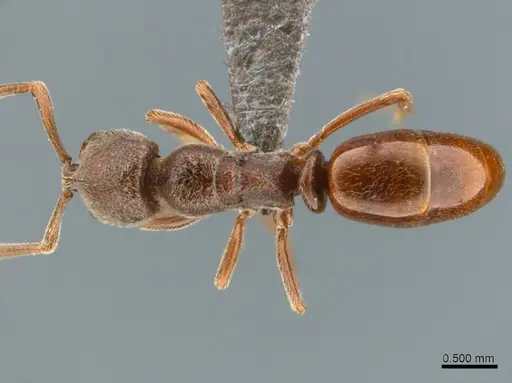
Literature
Loading...Loading products...