

Apterostigma megacephala
- Scientific Name
- Apterostigma megacephala
- Tribe
- Attini
- Subfamily
- Myrmicinae
- Author
- Lattke, 1999
- Distribution
- Found in 3 countries
Apterostigma megacephala Overview
Apterostigma megacephala is an ant species of the genus Apterostigma. It is primarily documented in 3 countries , including Brazil, Colombia, French Guiana. Detailed taxonomic data and occurrence records can be further explored via authoritative databases such as AntWeb or the Global Biodiversity Information Facility (GBIF).
Apterostigma megacephala
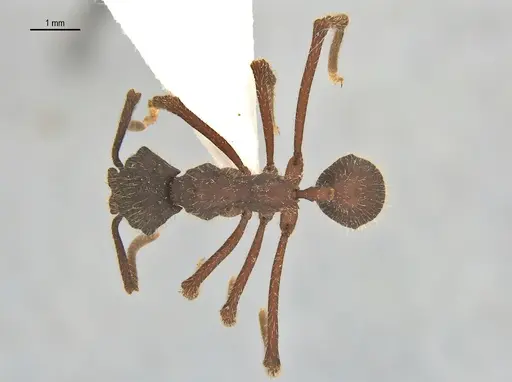
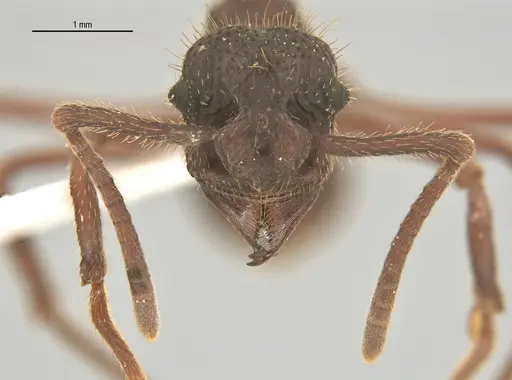
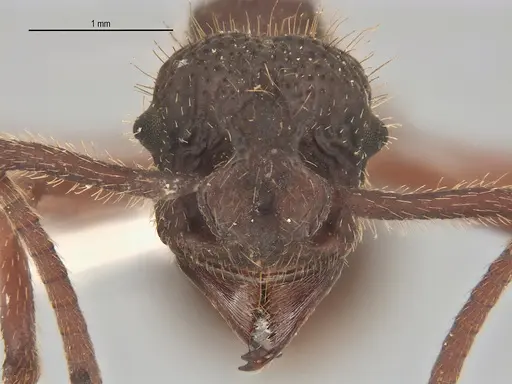
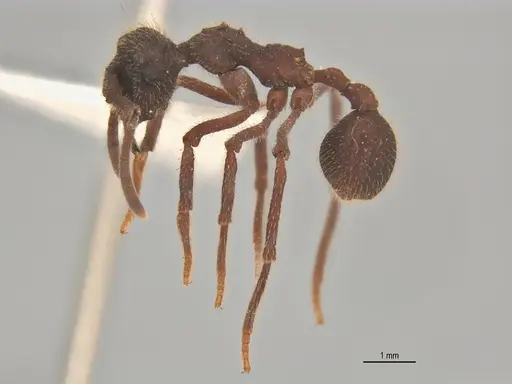
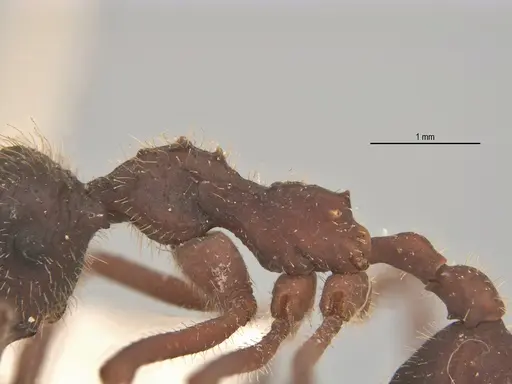
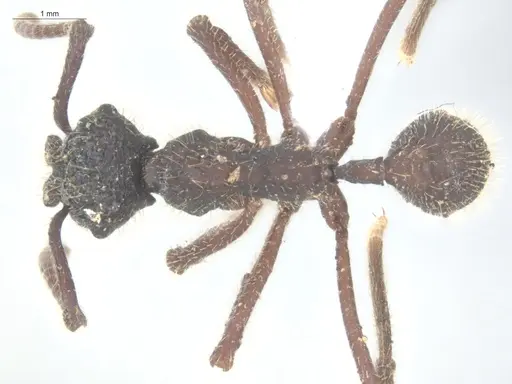
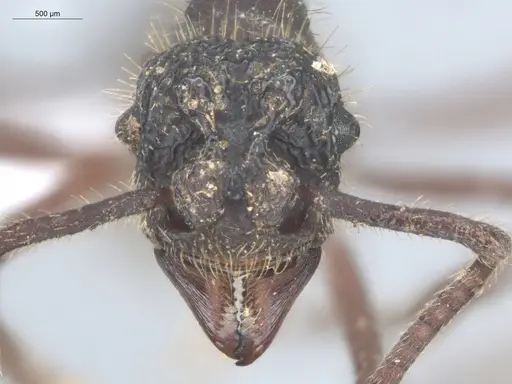
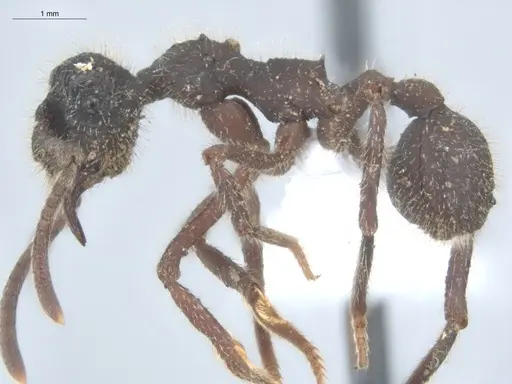
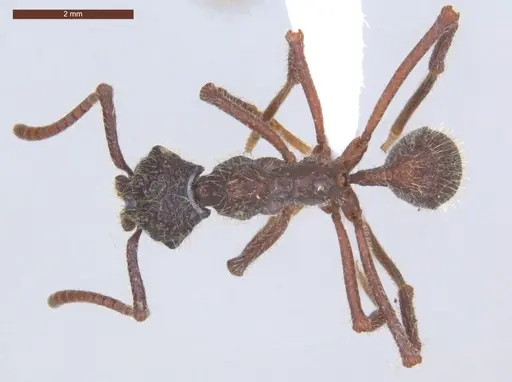
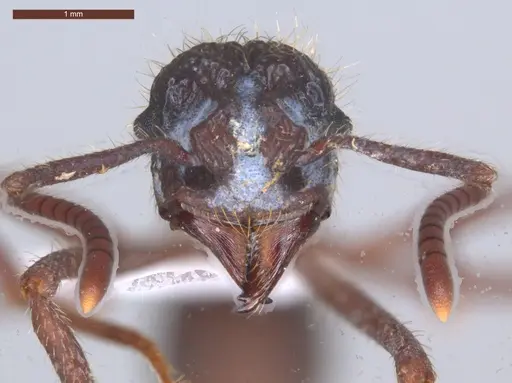
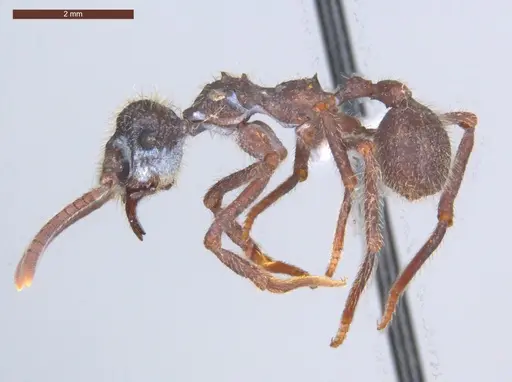
Apterostigma megacephala is a rare fungus-farming ant from the Amazon rainforests of Brazil, Colombia, and Peru. Workers are medium-sized with unusually large heads and flattened eyes that wrap around cone-shaped tubercles [1]. This species is a living fossil, it split from all other Apterostigma ants roughly 39 million years ago, making it the oldest known single-species lineage of fungus-farming ants [2][3].
What makes these ants truly unique is their fungus garden. They are the only lower-attine fungus farmer known to cultivate Leucoagaricus gongylophorus, the same highly domesticated fungus grown by leafcutter ants [4][2]. Colonies remain small, typically housing fewer than 100 workers under a single queen, and nest in shallow underground chambers lined with leaflets [2]. When disturbed, workers play dead, freezing motionless for several minutes before resuming activity [2].
Quick Summary
- Difficulty: Expert
- Origin & Habitat: Lowland mesic forests and semi-deciduous Amazonian rain forest in Brazil (Pará, Mato Grosso), Colombia, and Peru at elevations of 200-650 m [2][3].
- Colony Type: Single-queen colonies (monogynous) containing fewer than 100 workers [2].
- Colony: Monogyne
- Size & Growth:
- Queen: 9.5-10.7 mm [2]
- Worker: Approximately 4-5 mm total length (estimated from head length 1.64-1.70 mm) [1]
- Colony: Under 100 workers [2]
- Growth: Slow
- Development: Unknown, likely 8-12 weeks based on related attine ants at tropical temperatures (Development time has not been directly measured. Estimate assumes warm (25-28°C) conditions typical of their Amazonian habitat.)
- Antkeeping:
- Temperature: Warm tropical conditions around 24-28°C (estimated from Amazonian habitat data). Maintain stable temperatures year-round.
- Humidity: High humidity required, nest substrate should remain consistently moist but not waterlogged, mimicking mesic forest floor conditions [2].
- Diapause: No, this is a tropical species active year-round [2].
- Nesting: Single-chamber soil nests with fungus gardens suspended from above. In captivity, a naturalistic setup with a soil chamber and space for a suspended fungus garden is required [2][3].
- Behavior: Docile and slow-moving. Workers forage alone for substrate materials and play dead (freeze motionless) when disturbed [2]. They are solitary foragers, not aggressive defenders.
- Common Issues: fungus garden collapse due to incorrect substrate, they require insect frass and small plant debris, not leaves or sugars., extreme rarity in the trade makes obtaining healthy colonies difficult., small colony size means the colony can crash quickly if stressed or if the fungus dies., specific humidity requirements, too dry kills the fungus, too wet causes mold., cannot be kept in standard test tubes, they need space for a fungus garden immediately.
The Unique Fungus Symbiosis
Apterostigma megacephala breaks all the rules of fungus-farming ant classification. While most lower-attine ants cultivate simple, primitive fungi, and higher-attine ants like leafcutters cultivate the highly domesticated Leucoagaricus gongylophorus, A. megacephala is the only lower-attine ant known to cultivate this advanced fungus [4][2][3].
This represents a horizontal transfer event that occurred roughly 30 million years after the ant lineage diverged from other Apterostigma [3]. The fungus garden hangs suspended from rootlets or threads attached to the chamber ceiling, not sitting on the floor [2]. All examined gardens possessed gongylidia, the nutritious swollen hyphal tips that make this fungus so valuable [2].
In captivity, you must maintain this specific fungus. The ants cannot survive without it, and you cannot substitute it with other fungi or food sources.
Nest Architecture and Setup
In nature, colonies occupy a single subspherical chamber measuring 5-20 cm in diameter and 3.5-9.5 cm high, located anywhere from the surface to 16.5 cm deep [2][3]. The entrance is an irregular hole about 2 cm wide, hidden under thick leaf litter [2].
The chamber ceiling usually has rootlets from which the fungus garden hangs suspended. The floor is lined with small leaflets carried in by workers, probably from Newtonia suaveolens plants, but these are never incorporated into the fungus garden [2][3].
For captive care, you need a naturalistic setup with a single chamber large enough for the suspended garden. A standard test tube is insufficient, you need a soil-filled container or formicarium with a chamber at least 10 cm in diameter to accommodate the fungus garden as the colony grows.
Feeding and Diet
Unlike leafcutter ants that cut fresh leaves to feed their fungus, A. megacephala workers forage individually for insect frass (droppings) and small inflorescences [2]. They do not cut leaves for food, though they do collect small leaflets to line their nest floors [2][3].
The garden substrate consists largely of arthropod frass and plant debris, not leaf material [3]. In captivity, you will need to provide suitable organic material for the ants to process and add to their fungus garden. Small bits of dead insects, frass from other insects, and tiny plant parts may be accepted, but the specific requirements for maintaining the fungus garden long-term are not fully documented in captive settings.
Do not offer sugar water or honey directly, these ants feed exclusively through their fungus garden.
Behavior and Temperament
These ants are remarkably docile. When disturbed, workers exhibit thanatosis, they feign death by freezing motionless for several minutes before slowly returning to normal activity [2]. They are not aggressive defenders and lack the painful stings of some other attine ants.
Workers forage individually rather than in trails, searching the forest floor for suitable substrate materials [2]. They appear more active during afternoon hours [2]. In captivity, this means you will see individual workers wandering rather than organized foraging columns.
Reproduction and Colony Growth
Colonies are monogynous, meaning only one queen lives in each nest [2]. Colonies remain relatively small, with fewer than 100 workers even when mature [2].
Unlike temperate ants that have specific nuptial flight seasons, A. megacephala produces alate queens and males continuously throughout the year, with reproductives found in both the rainy season (December-April) and dry season (June-October) [2]. This suggests stable tropical conditions trigger reproduction rather than seasonal cues.
Three colonies were successfully maintained in laboratory conditions for 2.5 years without adverse effects, suggesting they can adapt to captivity if their fungal needs are met [3].
Frequently Asked Questions
Can I keep Apterostigma megacephala in a test tube?
No. Unlike many ants that start in test tubes, Apterostigma megacephala requires a fungus garden from the start. They need a chamber large enough to suspend their fungus garden, which test tubes cannot provide. You need a naturalistic setup with soil and space for the garden immediately.
Do Apterostigma megacephala ants cut leaves like leafcutter ants?
No. Despite cultivating the same fungus as leafcutters, they do not cut leaves for food. They collect insect frass (droppings) and small plant debris to feed their fungus. They do carry leaflets into the nest, but only to line the chamber floor, these leaflets are never fed to the fungus [2][3].
How long until Apterostigma megacephala gets their first workers?
The egg-to-worker timeline has not been documented for this species. Based on related fungus-farming ants, expect approximately 8-12 weeks at tropical temperatures (25-28°C), but this is an estimate.
Can I keep multiple Apterostigma megacephala queens together?
No. Colonies are monogynous (single-queen) in the wild, and attempting to combine queens will likely result in fighting and death [2].
Are Apterostigma megacephala good for beginners?
No. These are expert-level ants due to their specialized fungus gardening requirements, need for specific nest architecture, small colony size that makes them vulnerable to mistakes, and extreme rarity in the ant-keeping trade.
What temperature do Apterostigma megacephala need?
As a tropical Amazonian species, they need warm stable temperatures around 24-28°C year-round. They do not require hibernation [2].
How big do Apterostigma megacephala colonies get?
Colonies remain small, typically containing fewer than 100 workers even when fully mature [2].
References

This caresheet is licensed under CC BY-SA 4.0 .
Literature
Loading...Loading products...