

Apterostigma carinatum
- Scientific Name
- Apterostigma carinatum
- Tribe
- Attini
- Subfamily
- Myrmicinae
- Author
- Lattke, 1997
- Distribution
- Found in 2 countries
Apterostigma carinatum Overview
Apterostigma carinatum is an ant species of the genus Apterostigma. It is primarily documented in 2 countries , including Colombia, Ecuador. Detailed taxonomic data and occurrence records can be further explored via authoritative databases such as AntWeb or the Global Biodiversity Information Facility (GBIF).
Apterostigma carinatum
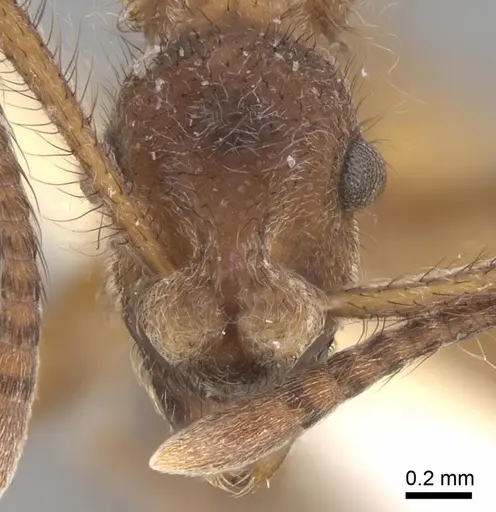
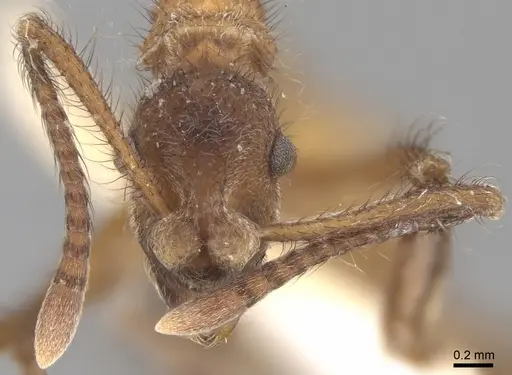
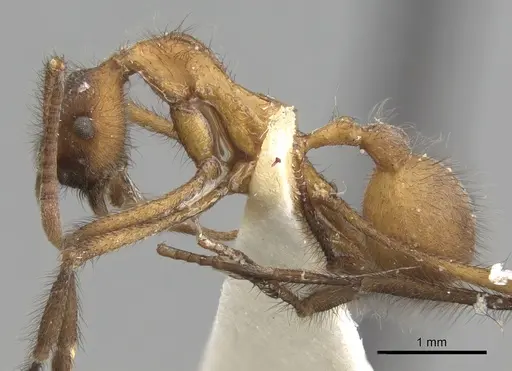
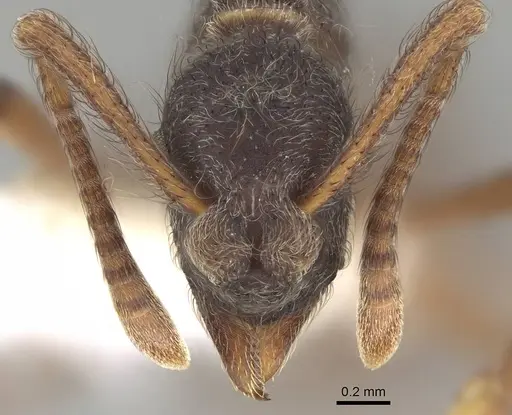
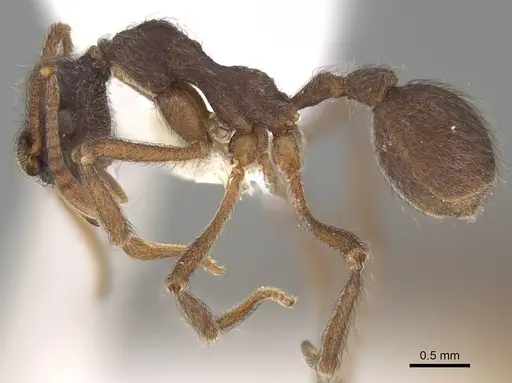
Apterostigma carinatum is a small fungus-growing ant from the tribe Attini, ants that cultivate fungus gardens for food instead of hunting directly. They live in the tropical lowlands of Colombia, Ecuador, and Brazil [1][2][3]. You can recognize workers by their elongate petiole (the narrow waist segment) and the presence of a dorsal mesosomal carina, a raised ridge running along the back [1]. They inhabit primary and secondary rainforests from sea level up to 400 meters elevation, with records from both undisturbed forest and disturbed areas including logged forest, burnt forest, and pasture [1][2].
As non-leaf-cutting fungus growers, they cultivate symbiotic fungus on insect frass and plant debris rather than cutting leaves [1]. This makes them challenging to keep in captivity compared to generalist feeders. They are cryptic ants that prefer damp, shaded microhabitats in the leaf litter and soil of tropical forests [2].
Quick Summary
- Difficulty: Hard
- Origin & Habitat: Tropical lowland rainforests of Colombia, Ecuador, and Brazil (Pará), found in primary and secondary forest, logged areas, and pasture from 50-400m elevation [1][2][4].
- Colony Type: Likely single-queen (monogyne) based on typical Apterostigma patterns, but unconfirmed for this species.
- Size & Growth:
- Queen: Unknown, likely 5-7mm based on typical Apterostigma morphology [3].
- Worker: Unknown, likely 3-4mm based on genus patterns [3].
- Colony: Unknown, Apterostigma colonies typically remain small, likely under 100 workers.
- Growth: Slow
- Development: Unknown, estimated 8-12 weeks based on related fungus-growing ants. (Fungus-growing ants typically develop slower than predatory species. First workers (nanitics) may emerge slightly faster but colonies grow slowly.)
- Antkeeping:
- Temperature: 24-28°C estimated from tropical lowland distribution. Keep stable with minimal fluctuation [1][2].
- Humidity: High humidity 70-80%. Maintain damp substrate similar to tropical forest floor conditions.
- Diapause: No, tropical species that remains active year-round [3].
- Nesting: Naturalistic setup with soil or rotting wood. They nest in soil and leaf litter in nature [2].
- Behavior: Cryptic and slow-moving with deliberate foraging behavior. Non-aggressive. Small size means escape prevention must be excellent, use fine mesh barriers and Fluon-coated surfaces.
- Common Issues: fungus garden contamination or failure is the primary cause of colony death in captive fungus-growing ants., difficulty obtaining founding queens, they are rarely collected and founding behavior is unconfirmed., sensitivity to desiccation, colonies die quickly if humidity drops below tropical forest levels., slow growth rate requires patience, colonies may take years to reach 50 workers.
Natural History and Distribution
Apterostigma carinatum inhabits the tropical lowlands of northwestern South America. In Colombia, they are found in the departments of Valle del Cauca, Nariño, Chocó, and Vaupés [1][4][5]. The species also occurs in Ecuador and has been recorded in Pará, Brazil [1][2].
Collection records show they live at elevations from 50 meters (Barbacoa, Nariño) up to 400 meters (Rio Tatabro, Valle del Cauca) [1][6]. They show flexibility in habitat use, found in undisturbed primary forest but also in logged forest, burnt forest, secondary growth, and even pasture [2]. This suggests they can tolerate some habitat disturbance, though they remain dependent on forest floor conditions with suitable nest sites and fungus-growing substrates.
Nest Preferences and Setup
In nature, these ants nest in soil and leaf litter on the forest floor [2]. They require humid, stable microhabitats that support their fungus gardens.
For captive care, use a naturalistic setup with a soil-based nest or plaster nest that can hold moisture. Include a foraging area with leaf litter and small pieces of rotting wood to mimic their natural environment. The nest must maintain high humidity, the substrate should feel damp to the touch but not waterlogged. Provide a temperature gradient by placing a heating cable on one side of the nest, keeping the warm side around 26-28°C and allowing a slight drop to 24°C on the cool side.
Fungus Cultivation and Feeding
As members of the Attini tribe (fungus-growing ants), Apterostigma carinatum cultivate symbiotic fungus on organic substrates [1]. Unlike leaf-cutter ants, they do not cut leaves but instead collect insect frass (insect droppings), dead plant material, and other debris to feed their fungus gardens.
In captivity, provide small amounts of dried leaves, flower petals, or insect frass. They also need protein sources, offer tiny pieces of insects, fish flakes, or boiled egg which the workers will process to feed the fungus. Never allow the fungus garden to dry out or become contaminated with mold. If the fungus turns gray, white, or develops black spots, the garden is failing and the colony is in danger.
Temperature and Environmental Care
Being from tropical lowland forests, they require warm stable temperatures. Aim for 24-28°C with minimal fluctuation [1][2]. Sudden temperature drops below 20°C can stress the fungus garden and kill the colony.
High humidity is critical, maintain 70-80% relative humidity. This requires damp nest material and limited ventilation. However, avoid stagnant air which promotes mold. Use small ventilation holes with fine mesh to balance humidity and air exchange. Check the fungus garden daily, it should look healthy and slightly moist, never dry or moldy.
Behavior and Temperament
These ants are cryptic and slow-moving, spending much of their time tending the fungus garden rather than foraging aggressively. They are not known to sting and show little defensive behavior.
Because of their small size (likely 3-4mm), escape prevention must be excellent. Use Fluon (a slippery barrier) on the upper walls of the foraging area and fine mesh (less than 1mm) on any ventilation. Even tiny gaps in lids or tubing will allow workers to escape. [3]
Frequently Asked Questions
Can I keep Apterostigma carinatum in a test tube?
You can house a founding queen in a test tube initially, but you must transfer the colony to a proper fungus-growing setup once workers arrive. They need space for a fungus garden and access to suitable substrate materials.
What do Apterostigma carinatum eat?
They cultivate fungus on organic material like insect frass and plant debris [1]. They do not eat the substrate directly but feed on the fungus. Provide small amounts of dried plant matter and protein sources like insect pieces or fish flakes.
How hard are Apterostigma carinatum to keep?
Hard to expert level. Fungus-growing ants require precise humidity, temperature control, and proper fungus substrate management. They are not recommended for beginners.
Do Apterostigma carinatum need hibernation?
No, they are tropical ants from Colombia, Ecuador, and Brazil and remain active year-round [1][3]. Do not cool them for hibernation.
How long until first workers for Apterostigma carinatum?
Unknown for this species, but likely 8-12 weeks based on related fungus-growing ants. Fungus-growing species typically develop slower than predatory ants.
How big do Apterostigma carinatum colonies get?
Unknown for this species, but Apterostigma colonies are typically small, likely under 100 workers. They grow slowly compared to leaf-cutter ants.
Can I keep multiple Apterostigma carinatum queens together?
Not recommended. Combining unrelated queens has not been documented for this species and would likely lead to fighting. Most fungus-growing ants are single-queen colonies.
Why are my Apterostigma carinatum dying?
The most common causes are fungus garden failure (from incorrect humidity, temperature fluctuations, or contamination), desiccation from low humidity, or starvation if the fungus dies. Check that the fungus looks healthy and moist, and that temperatures remain stable above 24°C.
Where can I find Apterostigma carinatum queens?
They are rarely available in the ant trade. You would need to collect them yourself from their native range in Colombia, Ecuador, or Brazil [1][2]. Note that importing ants across borders may be illegal, and you should never release non-native species into the wild.
References

This caresheet is licensed under CC BY-SA 4.0 .
CASENT0281774
View on AntWeb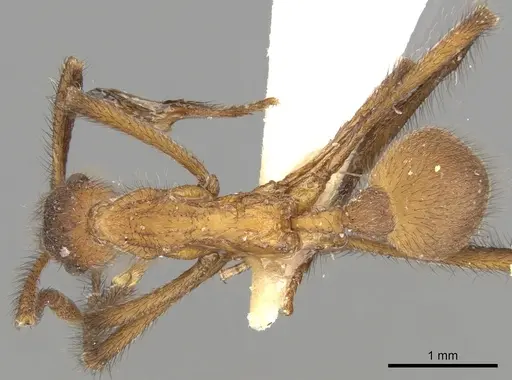
CASENT0922038
View on AntWeb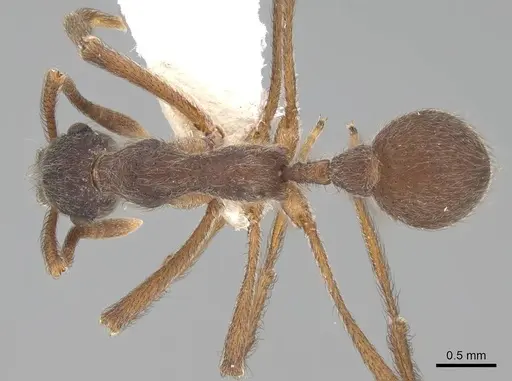
Literature
Loading...Loading products...