

Aphaenogaster strioloides
- Scientific Name
- Aphaenogaster strioloides
- Tribe
- Stenammini
- Subfamily
- Myrmicinae
- Author
- Forel, 1890
- Distribution
- Found in 1 countries
Aphaenogaster strioloides Overview
Aphaenogaster strioloides is an ant species of the genus Aphaenogaster. It is primarily documented in 1 countries , including Algeria. Detailed taxonomic data and occurrence records can be further explored via authoritative databases such as AntWeb or the Global Biodiversity Information Facility (GBIF).
Aphaenogaster strioloides
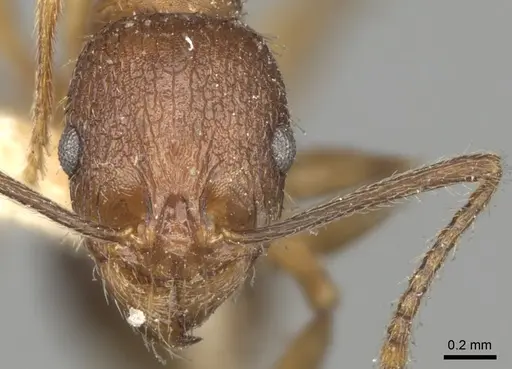
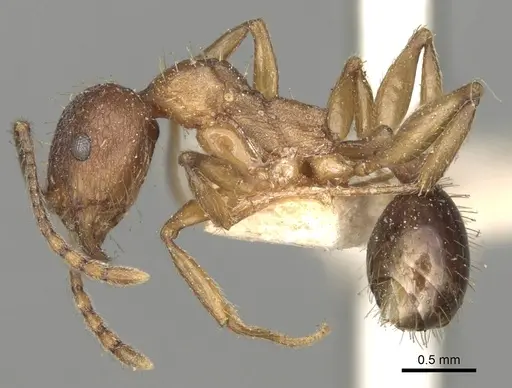
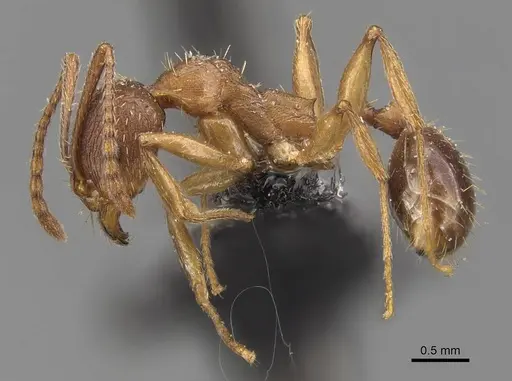
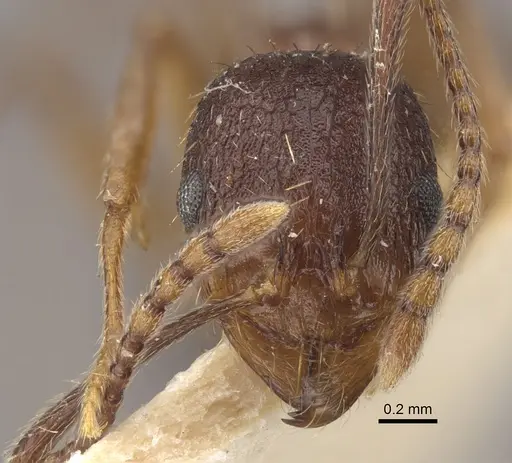
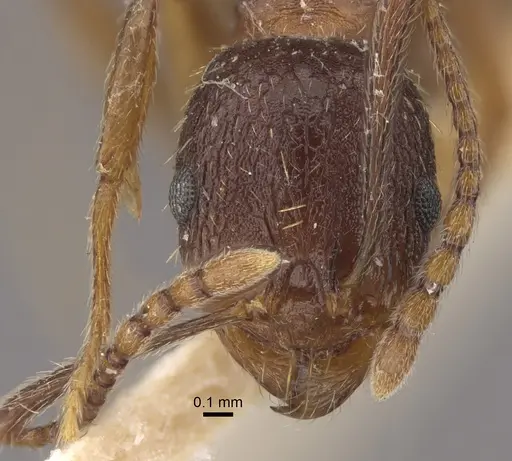
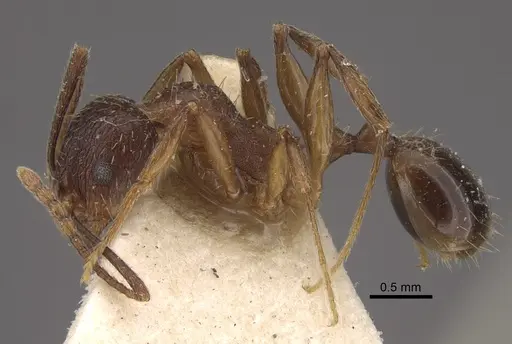
Aphaenogaster strioloides is a reddish-brown Mediterranean ant with a distinctive black gaster and strongly sculptured head bearing longitudinal striae [1]. These ants inhabit mountainous regions of North Africa and the island of Pantelleria off the coast of Sicily, typically found in forests of strawberry trees (Arbutus unedo) and low shrublands at elevations between 800 and 1300 meters [1][2]. Until recently, this species was confused with Aphaenogaster crocea and classified in the splendida group, but genetic and morphological studies placed it firmly in the crocea group alongside other Maghrebian species [1][3]. Remarkably, despite being described over 130 years ago, the queen caste remains undescribed in the scientific literature, making this one of the more mysterious European ant species for keepers to encounter [4].
Quick Summary
- Difficulty: Medium
- Origin & Habitat: Mountainous regions of Algeria and Tunisia, plus Pantelleria Island (Italy) [1][5]. Found in montane forests and shrublands, particularly under stones and in rotting wood in Arbutus unedo forests at 800-1300m elevation [1].
- Colony Type: Unknown, queens remain undescribed, though related Aphaenogaster species typically form single-queen colonies [4].
- Size & Growth:
- Queen: Unknown, queens have never been described [4].
- Worker: Approximately 4-5mm (estimated based on genus patterns) [6].
- Colony: Unknown, likely moderate (hundreds of workers) based on related crocea group species.
- Growth: Unknown, estimated moderate.
- Development: Unknown, likely 8-12 weeks based on related temperate Aphaenogaster species. (This is an estimate only. Actual development time may vary significantly with temperature.)
- Antkeeping:
- Temperature: Likely 20-25°C during activity season. As a mountain-dwelling Mediterranean species, they probably experience warm summers but require cooler winter periods [1]. Start with 22-24°C and adjust based on activity levels.
- Humidity: Moderate humidity, nest substrate should feel damp but not waterlogged, mimicking forest floor conditions [1].
- Diapause: Likely yes, temperate Mediterranean mountain species typically require a winter rest period at 10-15°C for 3-4 months.
- Nesting: In nature they nest under stones and in rotting wood [1]. In captivity, use a naturalistic setup with flat stones, or a Y-tong/plaster nest with moderate humidity and tight-fitting chambers.
- Behavior: Typical Aphaenogaster behavior expected: active, deliberate foragers that recruit to food sources. Not particularly aggressive but may defend food items. Workers are medium-small and require standard escape prevention [6].
- Common Issues: queens are undescribed so founding behavior is completely unconfirmed, you may be the first to document it., easily confused with Aphaenogaster crocea and A. sicula, verify identification using head sculpture patterns [1]., limited captive data means optimal care parameters are unknown, be prepared to experiment carefully., mountain origin suggests they may be sensitive to overheating compared to lowland species.
Taxonomic History and Identification
Aphaenogaster strioloides has undergone significant taxonomic reshuffling. Originally described by Forel in 1890 from Algeria, it was long treated as a subspecies of A. gibbosa or A. subterranea before being elevated to full species status [6]. For decades it was placed in the splendida species group, but recent phylogenetic work moved it to the crocea group alongside A. sicula and other Maghrebian species [3][7].
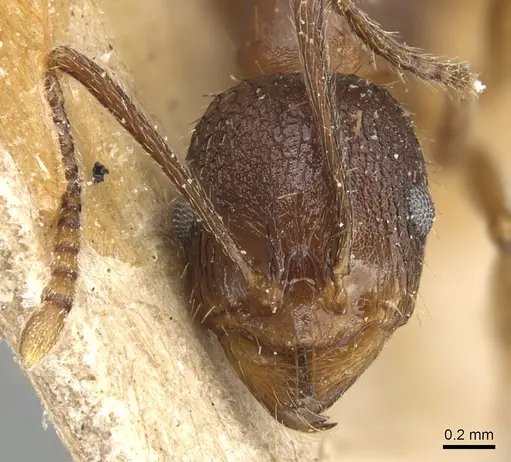
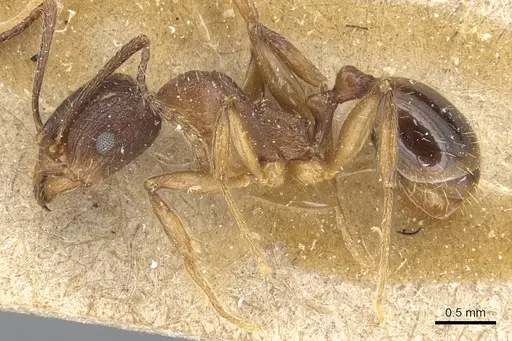
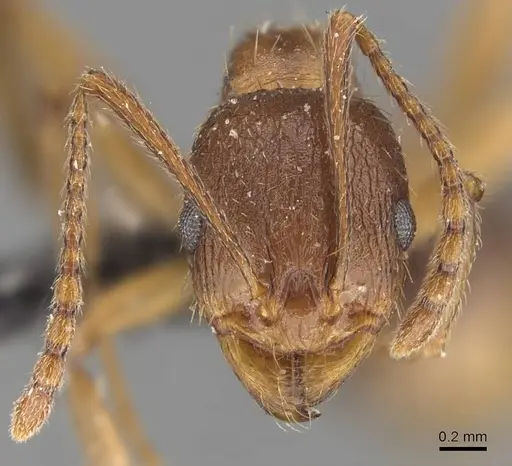
Identification requires careful examination of head sculpture. Workers show strong longitudinal striae on the head with numerous cross-connections (anastomoses) over a background of weak alveolate sculpture, while the pronotum (the upper part of the middle body section) shows much weaker sculpture [1]. In dried specimens, the head appears darker than the mesosoma, creating a bicolored look shared only with A. sicula within this group [1]. If you obtain these ants, verify they are not the more common A. crocea, which lacks this distinct head sculpture pattern.
Natural Habitat and Distribution
This species occupies a narrow range in the western Mediterranean. Confirmed records come from mountainous regions of Algeria (the type locality near Souk Ahras at 1300m), Tunisia, and Pantelleria Island off the Sicilian coast [1][5]. Records from Spain and mainland Italy were based on misidentifications [1].
On Pantelleria, workers have been collected from low shrubland up to centenary Arbutus unedo (strawberry tree) forests on Montagna Grande at 800m elevation [1]. The species appears widely distributed across the island's habitats. This mountain and island distribution suggests adaptation to Mediterranean climates with significant seasonal variation, warm dry summers and cooler wet winters.
Colony Founding and the Missing Queen
The most significant gap in our knowledge of Aphaenogaster strioloides is the complete absence of described queens [4]. No queens have been collected and described in the scientific literature, meaning founding behavior is entirely unconfirmed. Based on patterns in the crocea group and the broader genus, founding is likely claustral, meaning the queen would seal herself in a chamber and raise the first workers using stored body fat reserves. However, this remains speculation until documented.
If you are fortunate enough to collect a founding queen or observe colony founding, document everything: queen size, whether she seals herself in, development time to first workers, and nanitic worker size. This would represent the first data on this critical life history stage.
Temperature and Seasonal Care
As a mountain-dwelling species from the Mediterranean, Aphaenogaster strioloides likely experiences warm summers (20-28°C) and cool winters (5-15°C) in nature [1][2]. For captive care, maintain the nest area at 22-24°C during the active season (spring through autumn), with a gentle heat gradient if possible.
Given their elevation and latitude (38°N), they almost certainly require diapause, a winter rest period. Cool the colony to 10-15°C for 3-4 months during winter, maintaining moderate humidity to prevent desiccation. Watch for reduced activity and brood development slowing as cues to begin the cooling period.
Housing and Nest Setup
In nature, these ants nest under stones and in rotting wood in forest habitats [1]. Replicate this in captivity with a naturalistic setup featuring flat stones over a soil or sand-clay mixture, or use a Y-tong (aerated concrete) nest with moderate humidity chambers.
The nest should offer tight spaces and moderate humidity, damp but not wet. Provide a gradient from slightly drier to slightly moister areas so the colony can self-regulate. Because they are medium-small ants, standard escape barriers like Fluon or baby powder barriers work well, though ensure lids fit tightly as Aphaenogaster can be persistent explorers.
Feeding and Diet
While specific dietary studies are lacking, Aphaenogaster species are generally omnivorous scavengers. They collect seeds, tend aphids for honeydew, and prey on small insects [6]. Offer your colony a varied diet including sugar water or honeydew substitute, small live insects (fruit flies, small crickets, mealworms), and seeds such as chia or millet. Remove uneaten protein within 24-48 hours to prevent mold in the humid conditions they prefer.
Frequently Asked Questions
How do I identify Aphaenogaster strioloides versus Aphaenogaster crocea?
Aphaenogaster strioloides has strong longitudinal striae (ridges) on the head with cross-connections, while the pronotum has weak sculpture. In dried specimens, the head is darker than the mesosoma. A. crocea lacks this distinct head sculpture pattern and bicolored appearance [1].
Where does Aphaenogaster strioloides live in the wild?
They are found in mountainous regions of Algeria and Tunisia, and on Pantelleria Island off Sicily, Italy. They inhabit montane forests and shrublands from 800-1300m elevation, particularly under stones and in rotting wood [1][5].
What is the queen size of Aphaenogaster strioloides?
Queens have never been described in the scientific literature. Their size, appearance, and even founding behavior remain completely unknown [4].
Is Aphaenogaster strioloides claustral or semi-claustral?
Founding behavior is unconfirmed. Based on related species in the genus, they are likely claustral (queens seal themselves in and live off fat reserves), but this has never been documented [4].
Does Aphaenogaster strioloides need hibernation?
Likely yes. As a temperate mountain species from the Mediterranean, they probably require a winter diapause at 10-15°C for 3-4 months, though this has not been explicitly studied [1].
How big do Aphaenogaster strioloides colonies get?
Maximum colony size is unknown. Based on related species in the crocea group, they likely reach moderate sizes of a few hundred workers, but this is an estimate [6].
Are Aphaenogaster strioloides good for beginners?
They are medium difficulty. While not particularly aggressive or difficult to house, the complete lack of data on queens and founding behavior means you would be pioneering their care. Beginners might prefer better-documented Aphaenogaster species like A. subterranea.
What do Aphaenogaster strioloides eat?
Specific dietary data is lacking, but as Aphaenogaster they are likely omnivorous scavengers. Offer sugar water, small insects, and seeds, adjusting based on what the colony accepts [6].
Can I keep multiple Aphaenogaster strioloides queens together?
Combining unrelated queens is not recommended. While the natural colony structure is unknown, most Aphaenogaster are monogyne (single queen) and queens will likely fight if combined [6].
How long does Aphaenogaster strioloides take from egg to worker?
Development time is unknown. Related temperate Aphaenogaster species typically take 8-12 weeks at 25°C, but this is only an estimate for strioloides.
References

This caresheet is licensed under CC BY-SA 4.0 .
CASENT0280955
View on AntWeb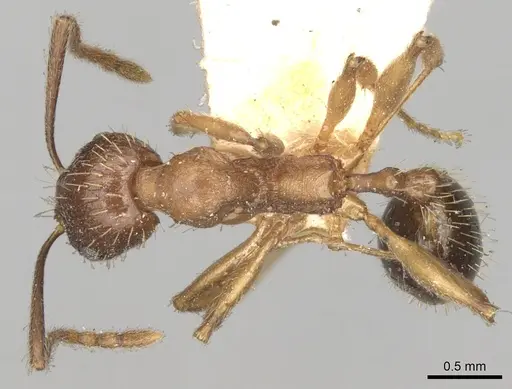
CASENT0904174
View on AntWeb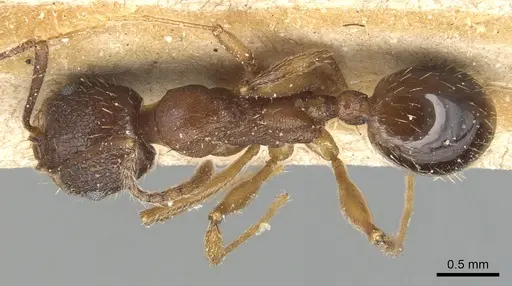
CASENT0907685
View on AntWeb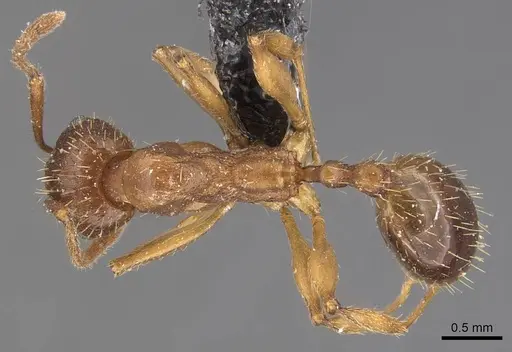
CASENT0917750
View on AntWeb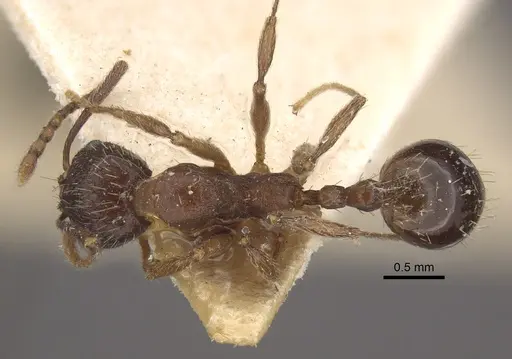
Literature
Loading...Loading products...