

Aphaenogaster schurri
- Scientific Name
- Aphaenogaster schurri
- Tribe
- Stenammini
- Subfamily
- Myrmicinae
- Author
- Forel, 1902
- Distribution
- Found in 2 countries
Aphaenogaster schurri Overview
Aphaenogaster schurri is an ant species of the genus Aphaenogaster. It is primarily documented in 2 countries , including India, Lao People's Democratic Republic. Detailed taxonomic data and occurrence records can be further explored via authoritative databases such as AntWeb or the Global Biodiversity Information Facility (GBIF).
Aphaenogaster schurri
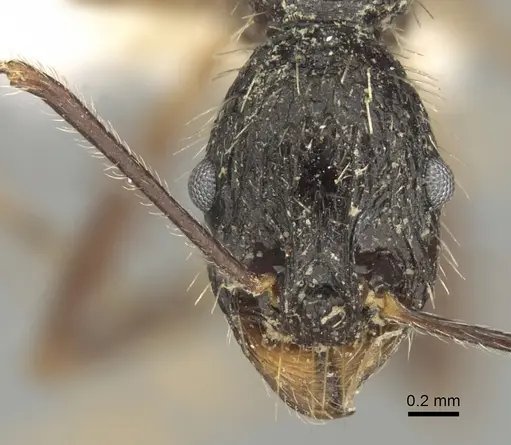
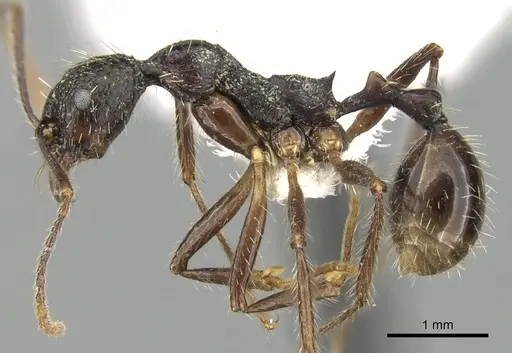
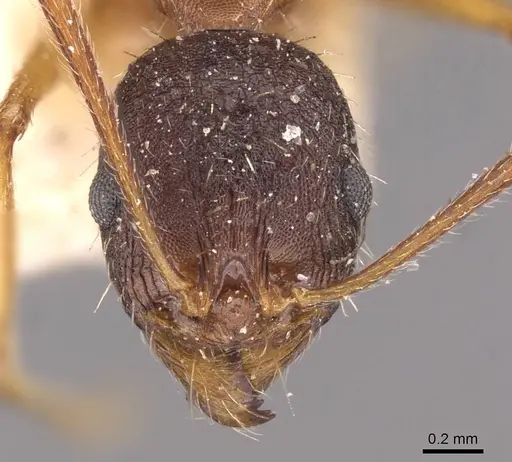
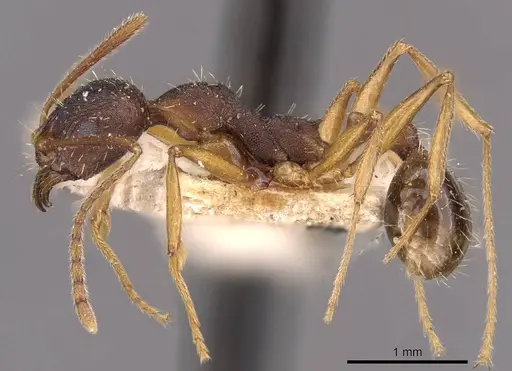
Aphaenogaster schurri is a medium-sized ant from the mountains of India and southern China. Workers measure 5.5 to 6.7 mm and have a distinctive rough texture, their heads and middle body sections show coarse longitudinal ridges, while their abdomens are smooth and shiny [1][2]. They live in montane forests at elevations between 1,030 and 1,770 meters, where they nest under stones and inside rotting wood [3].
What makes these ants stand out is their role as seed dispersers. In Chinese subtropical forests, they remove over 75% of seeds in experiments, making them major seed movers [4]. They forage at night around midnight and compete with other ants like Pheidole nodus for food resources [4]. You will find them in semi-evergreen broadleaf forests, walnut forests, and even rubber plantations across their range [3][5].
Quick Summary
- Difficulty: Medium
- Origin & Habitat: Montane forests of India (Madhya Pradesh, Maharashtra, Meghalaya, West Bengal, and other states), China (Yunnan), and Myanmar at elevations of 1,030-1,770 meters [6][7][3].
- Colony Type: Likely single-queen colonies (monogyne), though specific colony structure is unconfirmed in research. Based on typical Aphaenogaster patterns.
- Size & Growth:
- Queen: Unknown (not documented). Likely 7-9 mm based on worker size, but unconfirmed.
- Worker: 5.5-6.7 mm [1][2].
- Colony: Unknown. Related Aphaenogaster species typically reach several hundred to a few thousand workers.
- Growth: Unknown. Estimated moderate based on genus patterns.
- Development: Unknown. Estimated 8-12 weeks at 24°C based on related Aphaenogaster species, but unconfirmed for this species. (Development time is inferred from genus patterns. Montane origin suggests they may develop slower at cooler temperatures.)
- Antkeeping:
- Temperature: 20-24°C (estimated). Based on montane habitat at 1,030-1,770m elevation, they likely prefer cooler conditions than lowland tropical species [3]. Provide a gentle heat gradient.
- Humidity: Moderate to high humidity. In nature they nest in damp rotten wood and under stones in forest environments [3]. Keep nest material moist but not waterlogged.
- Diapause: Likely yes. As an extratropical montane species from regions with seasonal changes, they probably need a winter rest period at 10-15°C [8].
- Nesting: Under stones and in rotten wood in nature [3]. In captivity, use Y-tong (AAC) nests, plaster nests, or naturalistic setups with flat stones and rotting wood pieces. They need dark, tight spaces.
- Behavior: Nocturnal foragers active around midnight [4]. They are ground-dwelling seed collectors that also forage on the surface and under stones [3]. Escape risk is moderate, at 5.5-6.7 mm they can squeeze through small gaps, so use fine mesh barriers.
- Common Issues: lack of specific care data means you are working with educated guesses based on related species., montane humidity requirements can be tricky to maintain, they need damp conditions but stagnant air causes mold., nocturnal foraging means you might think they are inactive if you only check during the day., if collected from the wild, colonies may carry mites or parasites that show up in captivity.
Nest Preferences
In the wild, Aphaenogaster schurri nests in two main places: under stones and inside rotting wood [3]. They were found at frequencies of 2 under stones and 1 in rotten wood during surveys [3]. This tells you they like dark, humid hiding spots with tight spaces. For your captive colony, recreate this with a Y-tong (AAC) nest or plaster nest that has narrow chambers. You can also use a naturalistic setup with flat stones placed over a moist substrate, this mimics their natural stone-nesting behavior. Keep the nest area humid but ensure good ventilation to prevent mold, as they live in forest floor conditions where air moves but moisture stays high.
Feeding and Diet
These ants are major seed dispersers in their ecosystem. In seed-removal experiments, Aphaenogaster schurri removed 57-66 seeds (53-62% of identified removals) at one site and 19-21 seeds (35-38%) at another, totaling over 75% of all seeds removed by ants [4]. This makes them keystone seed movers. They forage around midnight, showing nocturnal behavior [4]. In captivity, offer a mix of seeds (such as chia, canary seed, or millet) and protein sources like small insects or pieces of mealworms. They likely also accept sugar water or honey water, though this is not specifically documented. Feed them at night when they are naturally active.
Temperature and Seasonal Care
Aphaenogaster schurri lives in montane forests at 1,030-1,770 meters elevation [3]. This elevation suggests they prefer cooler temperatures than lowland tropical ants. Start with temperatures around 20-24°C and observe colony activity. Because they come from extratropical montane regions with seasonal changes [8], they likely need a diapause (winter rest) period. Cool them to 10-15°C for 2-3 months in winter, keeping the nest slightly drier during this time but not completely dry. Watch for reduced activity as a sign they are ready to slow down for the season.
Behavior and Activity Patterns
These ants show distinct nocturnal foraging, with activity peaks around midnight [4]. They forage on the ground surface and under stones [3]. In nature, they share foraging areas with other ants like Pheidole nodus and may compete for resources [4]. They are not known to be aggressive escape artists, but at 5.5-6.7 mm they can fit through small gaps. Use fine mesh (metal or plastic) with small holes for ventilation, and apply Fluon or talcum powder barriers on vertical surfaces to prevent climbing escapes.
Frequently Asked Questions
Can I keep Aphaenogaster schurri in a test tube?
Yes, test tubes work well for founding colonies and small colonies. Use a standard setup with water reservoir and cotton plug. However, as they grow, move them to a Y-tong or plaster nest that mimics their natural stone and wood nesting sites.
How long until Aphaenogaster schurri get their first workers?
The exact timeline is unknown for this species. Based on related Aphaenogaster species, expect roughly 8-12 weeks from egg to first worker at 24-26°C. Montane origins suggest they may develop slower at cooler temperatures.
Do Aphaenogaster schurri need hibernation?
Likely yes. They come from montane regions at 1,000-1,700m elevation with seasonal temperature changes. Provide a diapause period at 10-15°C for 2-3 months in winter.
Can I keep multiple Aphaenogaster schurri queens together?
Not recommended. While the exact colony structure is unstudied, most Aphaenogaster species are single-queen (monogyne). Combining unrelated queens will likely result in fighting.
What do Aphaenogaster schurri eat?
They are major seed dispersers in nature, removing over 75% of seeds in experiments. Feed them various seeds (chia, millet, canary seed) plus protein from small insects. They forage at night, so place food in the evening.
Are Aphaenogaster schurri good for beginners?
They are medium difficulty. While Aphaenogaster are generally hardy, this species lacks specific care documentation and comes from specific montane habitats. Beginners might struggle with the humidity and temperature requirements.
Why are my Aphaenogaster schurri only active at night?
This is normal. Research shows they forage around midnight [4]. They are nocturnal ants, so check on them with a red light or in dim conditions to see their natural activity.
How big do Aphaenogaster schurri colonies get?
Colony size is unknown for this species. Related Aphaenogaster typically reach several hundred to a few thousand workers. They grow at a moderate pace.
References

This caresheet is licensed under CC BY-SA 4.0 .
CASENT0280947
View on AntWeb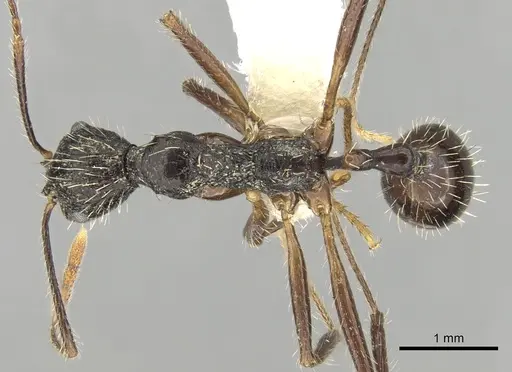
CASENT0907695
View on AntWeb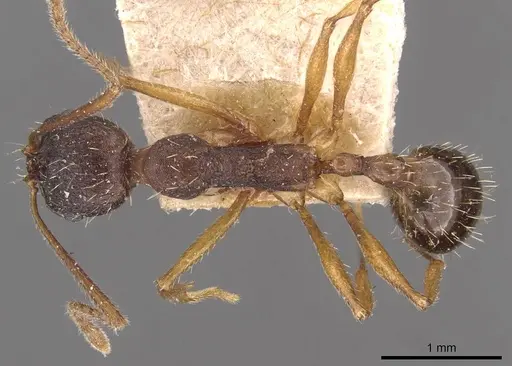
Literature
Loading...Loading products...