

Aphaenogaster pythia
- Scientific Name
- Aphaenogaster pythia
- Tribe
- Stenammini
- Subfamily
- Myrmicinae
- Author
- Forel, 1915
- Distribution
- Found in 2 countries
Aphaenogaster pythia Overview
Aphaenogaster pythia is an ant species of the genus Aphaenogaster. It is primarily documented in 2 countries , including Australia, Papua New Guinea. Detailed taxonomic data and occurrence records can be further explored via authoritative databases such as AntWeb or the Global Biodiversity Information Facility (GBIF).
Aphaenogaster pythia
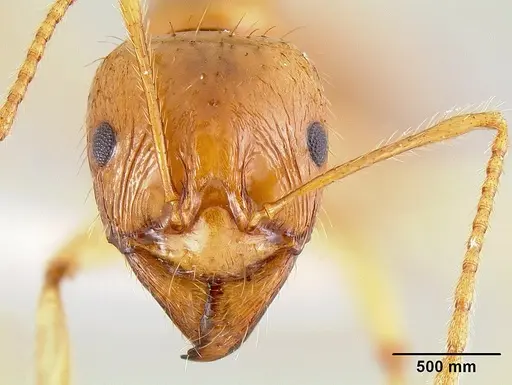
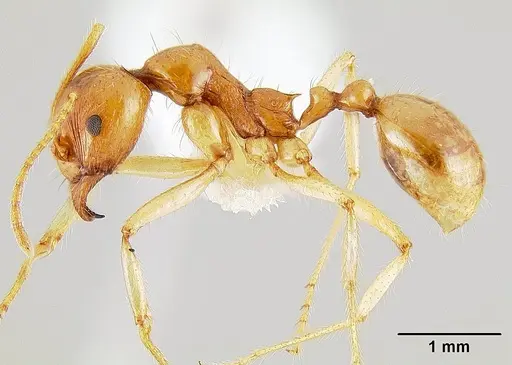
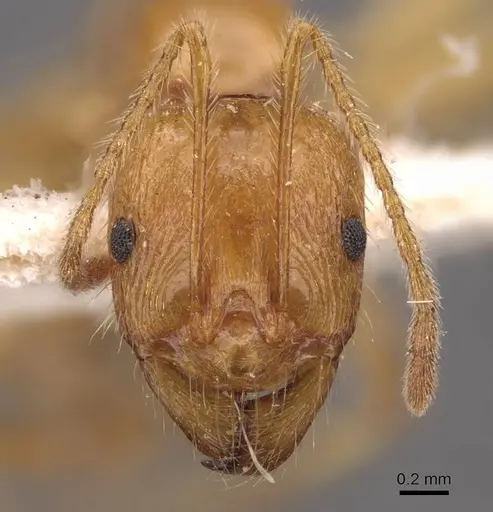
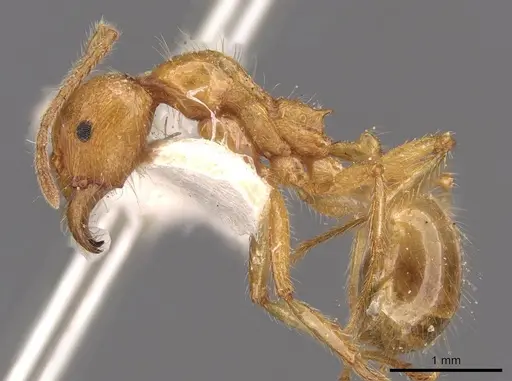
These small ants are instantly recognizable in the field by their distinctive funnel-shaped nest entrances. Workers measure roughly 3-4 mm with short antennae and a characteristic flat-backed head shape [1]. They range across coastal eastern Australia from northern New South Wales through Queensland, with a separate population in southern Papua New Guinea [1][2]. You will find them everywhere from rainforests to suburban parks, wherever the soil allows their elaborate excavations [3].
What sets Aphaenogaster pythia apart is their entirely underground lifestyle. Unlike many ants that trail across the surface, these funnel ants rarely emerge above ground, instead tending aphids on plant roots and hunting soil-dwelling prey [2]. Their nests can be engineering marvels, deep cones up to 30 cm deep with wide funnel entrances that may actually trap unsuspecting surface insects [2]. This habit brings them into conflict with humans, as their extensive tunneling can destabilize pastures, golf courses, and even unsealed airstrips [2].
Quick Summary
- Difficulty: Medium
- Origin & Habitat: Eastern Australia (Queensland, New South Wales) and Papua New Guinea, found in coastal scrub, dry forests, wet forests, rainforests, and suburban parks [1][2][3].
- Colony Type: Likely single-queen colonies based on typical Aphaenogaster patterns, though not explicitly documented for this species.
- Colony: Monogyne
- Founding: Semi-claustral
- Size & Growth:
- Queen: Approximately 5-7 mm (estimated from genus patterns, not directly measured).
- Worker: 3-4 mm (based on head measurements HL 0.97-1.39 mm) [1].
- Colony: Unknown, likely moderate to large based on extensive nest structures.
- Growth: Moderate.
- Development: 6-10 weeks. (Development time not directly studied, estimate assumes optimal temperature of 25-28°C.)
- Antkeeping:
- Temperature: 24-28°C (warmth-loving based on tropical/subtropical distribution)[1].
- Humidity: Moderate to high, substrate should be damp and workable for excavation.
- Diapause: Likely not required for tropical populations, southern colonies may benefit from 1-2 months at 15-20°C.
- Nesting: Deep substrate required, naturalistic setup with 15-20 cm of sandy soil or deep plaster nest with funnel entrance [2].
- Behavior: Docile and non-aggressive, subterranean foragers rarely seen on surface, escape risk moderate due to small size [2].
- Common Issues: tiny workers can escape through gaps in standard mesh or loose lids., subterranean foraging means little visible activity, not ideal if you want to watch your ants hunt., require deep substrate to build proper funnel nests, shallow formicaria stress them., nests prone to collapse if substrate too loose or too wet.
Nest Preferences and Substrate
In nature, Aphaenogaster pythia builds two types of nests: either open funnels in sandy soil or chambers under rocks and logs [3]. The famous funnel nests feature entrances up to 4 cm across and shafts extending 30 cm deep, with mounds of loose dirt surrounding the opening [2]. These ants need substrate they can excavate easily, think sandy loam or clay soil that holds its shape but allows digging.
In captivity, skip the test tube. These ants need space to dig. Set up a naturalistic terrarium with at least 15-20 cm of substrate depth, or use a deep plaster nest designed to accommodate their tunneling instincts. If using a naturalistic setup, provide a mix of sand and clay soil that stays damp but not waterlogged. You will know the substrate is right when the ants start constructing their characteristic funnel entrances at the surface.
Watch out for substrate collapse. If the soil is too dry, the tunnels will cave in. If too wet, the ants cannot build stable structures. Aim for damp soil that holds together when squeezed but crumbles when poked.
Feeding and Diet
These ants are opportunistic hunters with a twist. They tend aphids on the roots of plants underground, harvesting honeydew in the dark [2]. They also collect arthropod fragments found in the upper portions of nests, and their funnel entrances may act as pitfall traps for surface-crawling insects that fall in [2].
In captivity, offer small live prey like springtails, tiny crickets, or fruit flies. Place prey items near nest entrances or directly into foraging chambers, since these ants rarely wander far from home. You can also try offering sugar water or honey, though their preference for surface foraging is minimal. If you keep potted plants in the outworld, the ants may establish aphid farms on the roots, this is natural behavior.
Do not expect dramatic feeding frenzies. These ants work underground. Check for successful feeding by noting whether prey items disappear into the nest rather than expecting to see workers dragging food across the surface.
Temperature and Seasonal Care
Coming from tropical and subtropical eastern Australia, Aphaenogaster pythia prefers warmth. Keep the nest area at 24-28°C for steady brood development. A heating cable on one side of the nest creates a gradient, letting the ants choose their preferred temperature. Place the heat source on top or the side, not underneath, to avoid creating condensation problems.
For populations from southern New South Wales, you may want to provide a winter rest period. Drop temperatures to 15-20°C for one to two months during winter. Tropical Queensland and Papua New Guinea populations likely do not need this cooling period and can be kept warm year-round.
Monitor the colony for signs of temperature stress. If workers cluster tightly around the heat source, they are too cold. If they avoid the warm side entirely and hang out in the outworld, reduce the heat. [1]
Behavior and Temperament
Aphaenogaster pythia are not aggressive ants. Workers will defend their nest when disturbed, emerging in small numbers to attack intruders, but they are generally peaceful [2]. This makes them suitable for keepers who prefer to avoid aggressive species.
The trade-off is visibility. These ants are subterranean specialists. Foragers rarely appear above ground and then only in the immediate area of the nest entrance [3]. They do not create visible foraging trails across the outworld. If you want ants that parade around carrying food, look elsewhere. These ants do their hunting underground, tending root aphids and capturing soil organisms.
Escape risk exists but is manageable. At 3-4 mm, workers are small enough to squeeze through gaps, but they are not escape artists like some tiny species. Standard fine mesh barriers and well-fitting lids should contain them.
Colony Founding
Founding behavior has not been directly documented for Aphaenogaster pythia, but based on typical patterns for the genus, queens are likely semi-claustral. This means the queen does not seal herself in completely and will need to forage during the founding stage.
Set up founding queens in small containers with a starter chamber and access to a foraging area. Provide a dark, humid retreat and offer tiny prey items like springtails or sugar water. The queen will need to leave her chamber to feed until the first workers hatch.
First workers (nanitics) will be smaller than subsequent generations and will take over foraging duties once they mature. Growth is likely moderate, expect the first workers within 6-10 weeks at 25-28°C, though this timeline is estimated from related species.
Frequently Asked Questions
Can I keep Aphaenogaster pythia in a test tube?
No, test tubes are not suitable. These ants need to dig deep funnel nests and require substantial substrate depth. Use a naturalistic setup with 15-20 cm of soil or a deep plaster nest instead.
How long until first workers for Aphaenogaster pythia?
Expect 6-10 weeks from egg to first worker at 25-28°C. This is an estimate based on related tropical Aphaenogaster species, as development time has not been directly measured for this species.
Do Aphaenogaster pythia need hibernation?
Likely not if your colony comes from tropical Queensland or Papua New Guinea. Populations from southern New South Wales may benefit from a winter rest period of 1-2 months at 15-20°C, but this is optional.
Why do they build funnel-shaped nests?
The funnel-shaped entrances may act as pitfall traps, catching surface-dwelling insects that fall in. The ants also maintain extensive underground tunnel systems up to 30 cm deep, which can damage lawns and airstrips in the wild.
Can I keep multiple queens together in one nest?
Not recommended. Aphaenogaster pythia likely forms single-queen colonies based on genus patterns. Combining multiple queens usually results in fighting until only one survives.
Do Aphaenogaster pythia ants sting?
Like most Aphaenogaster, they probably possess a small sting, but they are not aggressive and their small size means they pose little threat to humans. They are considered docile.
What is the best nest type for Aphaenogaster pythia?
A deep naturalistic setup with sandy-clay soil, or a deep plaster nest that allows for extensive tunneling. The key is depth, they need space to build their characteristic vertical shafts.
Why can't I see my Aphaenogaster pythia foraging?
These are subterranean ants. They hunt underground, tend root aphids, and rarely come to the surface. If you want visible foraging activity, this is not the species for you.
Are Aphaenogaster pythia good for beginners?
They are medium difficulty. While docile and easy to handle, their small size requires good escape prevention, and their subterranean habits mean you will see little activity. They also need specialized deep nesting setups.
What do Aphaenogaster pythia eat in captivity?
Offer small live prey like springtails, fruit flies, or tiny crickets. They may also accept sugar water. Place food near nest entrances since they rarely forage across open surfaces.
References

This caresheet is licensed under CC BY-SA 4.0 .
CASENT0106131
View on AntWeb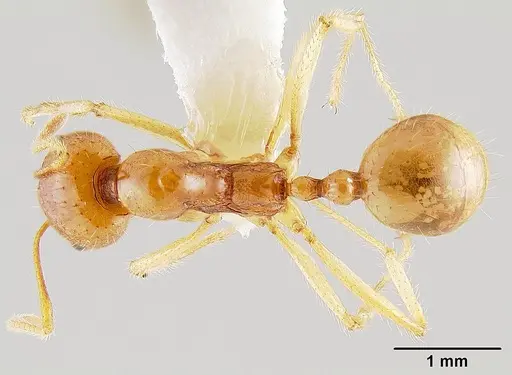
CASENT0907703
View on AntWeb
Literature
Loading...Loading products...