

Aphaenogaster praedo
- Scientific Name
- Aphaenogaster praedo
- Tribe
- Stenammini
- Subfamily
- Myrmicinae
- Author
- Emery, 1908
- Distribution
- Found in 2 countries
Aphaenogaster praedo Overview
Aphaenogaster praedo is an ant species of the genus Aphaenogaster. It is primarily documented in 2 countries , including Algeria, Morocco. Detailed taxonomic data and occurrence records can be further explored via authoritative databases such as AntWeb or the Global Biodiversity Information Facility (GBIF).
Aphaenogaster praedo
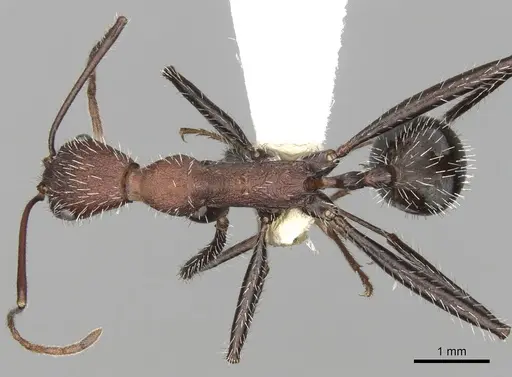
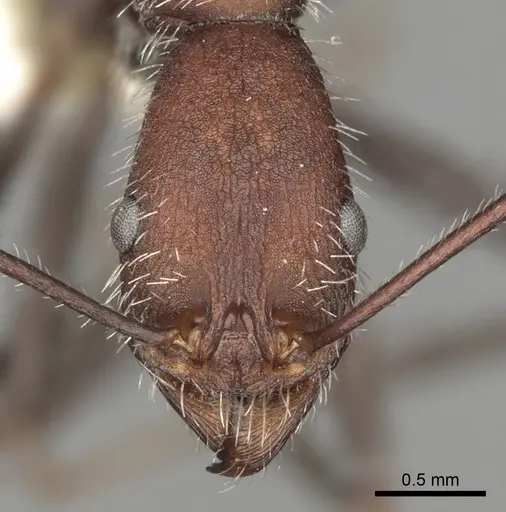
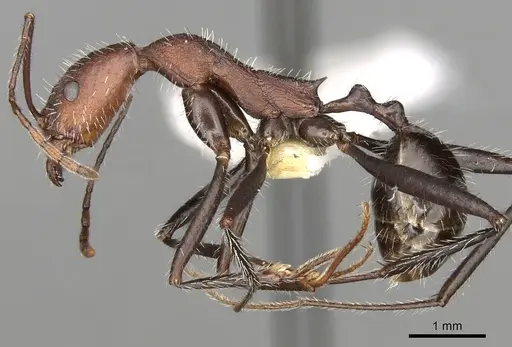
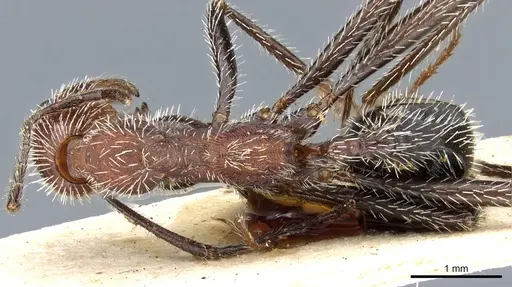
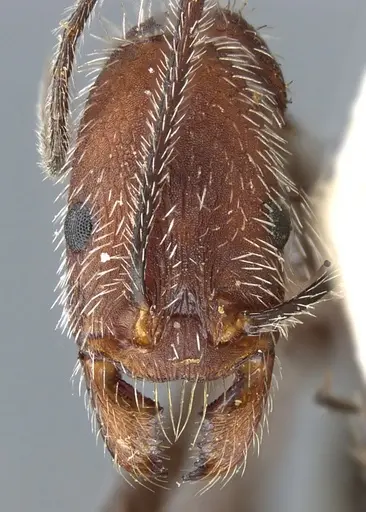
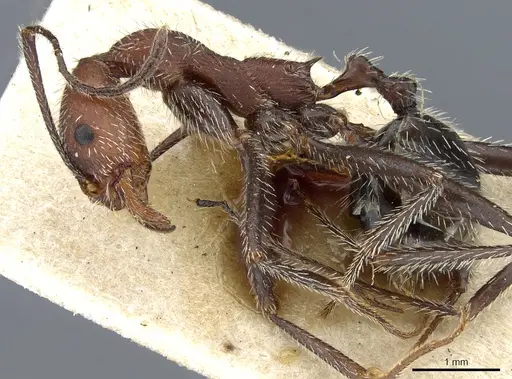
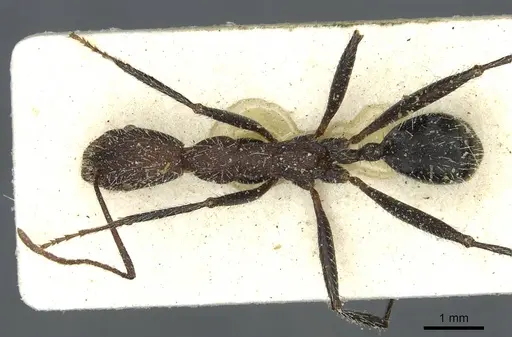
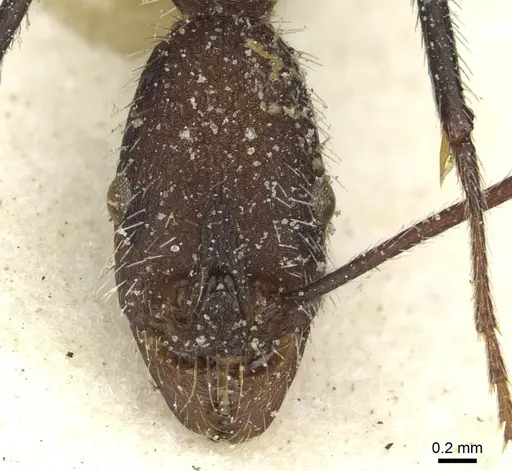
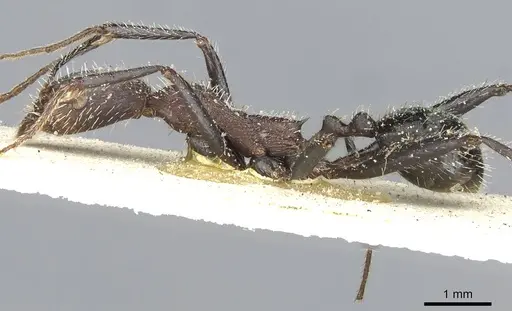
Aphaenogaster praedo is a slender, medium-sized ant found only in Morocco and Algeria [1][2]. Workers have a noticeably elongated, narrow build compared to other Aphaenogaster species, described as strangely slender and particularly associated with the Grand Atlas mountains [3]. They live in the famous Argan forests of Southwest Morocco, where they forage on the ground beneath the argan trees [4][5]. These ants are dietary generalists, observed hunting Mediterranean fruit fly larvae and collecting plant material in their native habitat [4].
The species shows distinct population structure across Morocco. Three groups exist: a northwestern coastal population stretching from Essaouira to Agadir, an eastern southern group extending toward the Anti-Atlas, and an isolated high-altitude population in the Sirwa mountains living between 1800 and 2000 meters [1]. This wide range suggests they handle diverse conditions, from warm coastal woodlands to cool mountain slopes.
Quick Summary
- Difficulty: Medium
- Origin & Habitat: Endemic to Morocco and Algeria, found in Argan forests, coastal areas, and Atlas mountain slopes up to 2000m elevation [1][2][4]
- Colony Type: Likely single-queen based on typical Aphaenogaster patterns, though direct studies are lacking
- Size & Growth:
- Queen: Approximately 6-8mm (estimated from genus morphology) [6]
- Worker: Approximately 3-5mm (estimated from genus morphology) [6]
- Colony: Unknown in detail, likely moderate sized based on related species [6]
- Growth: Moderate (estimated)
- Development: 8-12 weeks at 24-25°C (estimated based on typical Aphaenogaster development) [6] (Development speed varies with temperature, first workers may emerge slightly faster than subsequent brood)
- Antkeeping:
- Temperature: 22-26°C during active season, 10-15°C for winter rest. Coastal populations tolerate warmth, while high-altitude Sirwa populations (1800-2000m) suggest good cold tolerance [1]
- Humidity: Moderate humidity, keep nest material moist but not waterlogged, with a gradient allowing drier areas
- Diapause: Likely required, especially for colonies originating from high-altitude populations. Reduce temperature to 10-15°C for 2-3 months [1]
- Nesting: In nature they nest in soil and under rocks. In captivity, use Y-tong (AAC), plaster, or naturalistic setups with stone cover and narrow chambers [6]
- Behavior: Workers forage alone and are moderately fast. They are not highly aggressive but will bite if threatened. At an estimated 3-5mm, they require standard escape prevention such as Fluon or baby powder barriers on outworld walls [6]
- Common Issues: limited availability in the trade due to restricted range in Morocco and Algeria., founding success unconfirmed in captivity, be prepared for potential queen failure., high-altitude populations may require cooler conditions than typical room temperature., generalist diet can lead to overfeeding if prey items are left too long in the nest.
Natural History and Distribution
Aphaenogaster praedo lives only in Morocco and Algeria, making it a true North African endemic [1][2]. You will find them in the famous Argan forests of Southwest Morocco, where they forage among the argan trees [4][5]. The species occupies a remarkable range of elevations. While many colonies live in coastal and foothill Argan woodlands, isolated populations persist in the Sirwa mountains at 1800-2000 meters [1]. This means colonies from different origins may have different temperature preferences, coastal stock tolerates heat well, while mountain populations likely need cooler conditions.
Their slender build distinguishes them from other Aphaenogaster species in the region [3]. Workers appear elongated and narrow, adapted for moving through the leaf litter and soil of their forest habitat.
Nest Preferences
In the wild, Aphaenogaster praedo nests in soil and under rocks in the Argan forest ecosystem [4][5]. They prefer protected spots with some moisture retention.
For captive housing, use a nest that mimics these conditions. Y-tong (aerated concrete) blocks with carved chambers work well, as do plaster nests. Provide narrow tunnels and chambers sized to the ants, they are medium-small ants, so avoid cavernous spaces. Add a stone or flat rock on top of part of the nest to create a dark, secure retreat. Ensure the nest has a moisture gradient, with one side slightly damper than the other, allowing the ants to choose their preferred humidity.
Feeding and Diet
These ants are generalists. In their native Argane ecosystem, they prey on Mediterranean fruit fly larvae (Ceratitis capitata) and collect plant material [4]. This omnivorous diet means they accept both protein and carbohydrates in captivity.
Offer small live insects such as fruit flies, springtails, or tiny crickets. Provide sugar water or honey for carbohydrates. Because they are generalists, they are not picky, but avoid overfeeding, remove uneaten prey within 24 hours to prevent mold in the nest.
Temperature and Seasonal Care
Temperature needs depend partly on where your colony originated. The species spans from hot coastal Argan forests to cold Sirwa mountain slopes at 1800-2000 meters [1]. For most keepers, maintain 22-26°C during the active season. If your colony came from high-altitude stock, they may prefer the lower end of this range or slightly cooler.
They likely require a winter rest period (diapause), especially mountain populations. Cool the colony to 10-15°C for 2-3 months in winter. During this time, keep the nest slightly drier and stop feeding protein, though they may still accept sugar water occasionally.
Colony Founding
Founding behavior has not been directly observed in this species. Based on typical Aphaenogaster patterns, queens likely seal themselves in (claustral founding) and raise the first workers without food [6]. However, this remains unconfirmed for Aphaenogaster praedo specifically.
If you start with a lone queen, provide a standard test tube setup with a water reservoir and cotton plug. Keep her undisturbed in a dark, warm spot. If she has not raised workers within 3-4 months, the attempt may have failed.
Frequently Asked Questions
Can I keep Aphaenogaster praedo in a test tube?
Yes, test tubes work well for founding and small colonies. Use a standard setup with a water reservoir blocked by cotton, and keep the tube in a dark, quiet place. Move them to a proper nest when they have 20-50 workers.
How long until first workers for Aphaenogaster praedo?
The exact timeline is unknown. Based on related Aphaenogaster species, expect roughly 8-12 weeks at 24-25°C. First workers are often smaller than normal workers and may emerge slightly faster.
Do Aphaenogaster praedo need hibernation?
Likely yes, especially for colonies from high-altitude populations. Cool them to 10-15°C for 2-3 months in winter. Coastal populations may have reduced winter activity but still benefit from a cooling period.
What do Aphaenogaster praedo eat?
They are generalists. In nature they eat Mediterranean fruit fly larvae and plant material. In captivity, feed small live insects like fruit flies or springtails, plus sugar water or honey.
Can I keep multiple Aphaenogaster praedo queens together?
Not recommended. While the exact colony structure is unstudied, most Aphaenogaster species are single-queen. Combining unrelated queens will likely result in fighting.
Are Aphaenogaster praedo good for beginners?
They are medium difficulty. While not aggressive and accepting of generalist diets, their limited availability and unconfirmed founding behavior make them better for keepers with some experience.
How big do Aphaenogaster praedo colonies get?
Colony size is unreported in scientific studies. Based on the genus, they likely reach moderate sizes of several hundred to a few thousand workers.
Do Aphaenogaster praedo sting?
Like most Aphaenogaster, they lack a functional sting. They can bite if threatened, but are not dangerous to humans.
References

This caresheet is licensed under CC BY-SA 4.0 .
Literature
Loading...Loading products...