

Aphaenogaster phillipsi
- Scientific Name
- Aphaenogaster phillipsi
- Tribe
- Stenammini
- Subfamily
- Myrmicinae
- Author
- Wheeler & Mann, 1916
- Distribution
- Found in 1 countries
Aphaenogaster phillipsi Overview
Aphaenogaster phillipsi is an ant species of the genus Aphaenogaster. It is primarily documented in 1 countries , including Jordan. Detailed taxonomic data and occurrence records can be further explored via authoritative databases such as AntWeb or the Global Biodiversity Information Facility (GBIF).
Aphaenogaster phillipsi
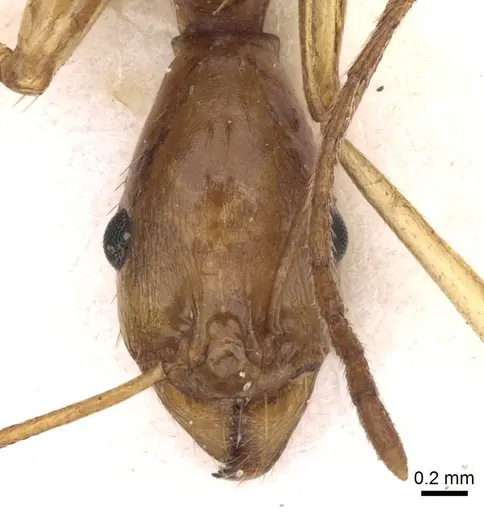
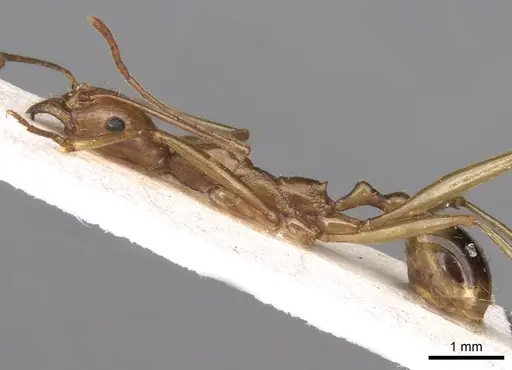
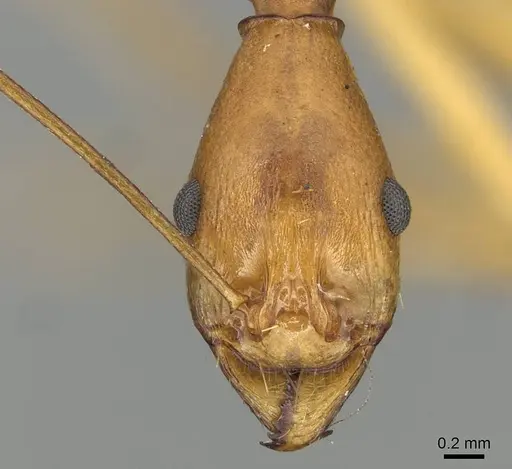
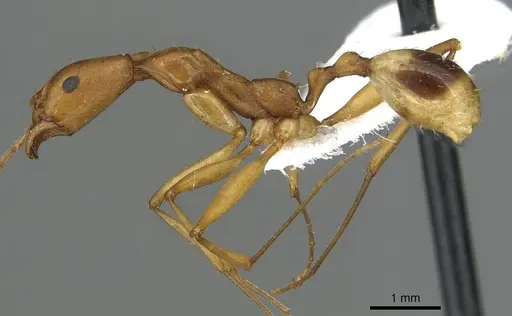
Aphaenogaster phillipsi is a visually striking ant from the rocky deserts of Jordan and Israel, instantly recognizable by workers' pale yellow bodies with a distinctive brown band across the rear of the abdomen. These ants have remarkably long legs, their hind femora are longer than their entire thorax, and a unique narrow 'neck' behind the head bordered by a sharp, high collar [1]. First described in 1916 from specimens found eating bait in small mammal traps at Petra, Jordan, this species remains one of the most poorly understood members of the genus. Researchers explicitly note that 'nothing is known about the biology of this species' [1], meaning keepers must rely on general Aphaenogaster patterns and habitat clues when caring for them. They inhabit the Judean Hills, Judean Desert, and northern Negev, arid, rocky landscapes where they likely nest under stones or in soil crevices [1][2].
Quick Summary
- Difficulty: Hard
- Origin & Habitat: Rocky desert and semi-arid hills of Jordan (Petra region) and Israel (Judean Hills, Judean Desert, northern Negev) [1][3][2].
- Colony Type: Unknown, likely single-queen based on typical Aphaenogaster patterns, but unconfirmed in the wild.
- Size & Growth:
- Queen: Undescribed, no queens have been collected and measured in scientific studies [1].
- Worker: Approximately 4.4 mm total length (based on measurements: head 1.63 mm, thorax 2.29 mm, abdomen 0.525 mm) [1].
- Colony: Unknown, no nest excavations or colony counts have been published.
- Growth: Unknown, estimated as moderate based on related temperate Aphaenogaster species.
- Development: Unknown, likely 8-12 weeks at 25°C based on typical Aphaenogaster development patterns, but this is an unconfirmed estimate. (No studies have documented development time. This estimate assumes warm conditions similar to other Mediterranean Aphaenogaster species.)
- Antkeeping:
- Temperature: Keep at 24-28°C during the active season. Based on their distribution at 30°N latitude in extratropical regions [4], they likely require a winter cooling period (diapause) at 15-18°C for 2-3 months, though this is unconfirmed.
- Humidity: Provide a humidity gradient, keep the nest area moderately damp (think wrung-out sponge moisture) while allowing the outworld to be dry. In nature they inhabit arid regions but likely seek moist microhabitats under stones.
- Diapause: Likely required but unconfirmed. As a temperate species from Jordan and Israel, expect to cool the colony during winter months (November-February) to maintain long-term health.
- Nesting: In nature they likely nest under flat stones or in rocky soil crevices. In captivity, use a Y-tong (AAC) nest, plaster nest, or naturalistic setup with flat stones and a soil/sand mix. Ensure there are narrow chambers appropriate for their small size.
- Behavior: Fast-moving and alert due to their extremely long legs [1]. They were observed scavenging mammal trap bait in the early morning, suggesting diurnal foraging and opportunistic feeding habits. They are not known to be aggressive but will likely flee quickly when disturbed. Their small size and long legs make them capable climbers, use excellent escape prevention.
- Common Issues: complete lack of captive care data means you are establishing care protocols from scratch, start with general Aphaenogaster methods and adjust based on colony response., desert-origin species may be sensitive to over-watering, ensure the nest has dry areas to prevent fungal issues while maintaining a humid section., long-legged anatomy makes them excellent climbers, standard barriers may be insufficient for these fast-moving workers., unknown founding type means queen care is unpredictable, if you acquire a queen, observe carefully to determine if she forages (semi-claustral) or seals herself in (claustral)., wild-caught colonies from Jordan/Israel may carry desert parasites or pathogens that emerge in captive conditions.
The Mystery of Aphaenogaster phillipsi
Aphaenogaster phillipsi represents a challenge for antkeepers due to the complete absence of biological studies. The species is known only from worker specimens collected at bait traps and general collecting, no one has documented their nests, observed nuptial flights, or described queen behavior [1]. This means every captive colony provides valuable data. If you keep this species, document everything: founding behavior, timing of flights, colony growth rates, and nesting preferences. The type series was collected at Petra, Jordan, in 1914 from mammal trap bait, suggesting they are opportunistic scavengers in their desert environment [1][5]. Their distribution includes the rocky, arid regions of Jordan and Israel, indicating they can tolerate heat and dry conditions, but likely require access to humid microhabitats for brood rearing.
Housing and Nest Design
Based on their habitat in rocky desert regions, Aphaenogaster phillipsi likely nests under flat stones or in soil crevices where moisture persists beneath the surface. In captivity, provide a nest that mimics these conditions: a Y-tong (AAC) block with narrow chambers, a plaster nest with tight spaces, or a naturalistic setup with a mix of sand and clay soil topped with flat stones. The nest should offer a moisture gradient, one side damp, one side dry, so the colony can self-regulate. Because they are small ants (workers ~4.4 mm), ensure tunnel diameters are appropriate, not too large or they will feel exposed. The outworld should be dry and sandy, mimicking their natural desert floor environment, with some stones or debris for cover. [1]
Temperature and Seasonal Care
As an extratropical species from 30°N latitude [4], Aphaenogaster phillipsi likely experiences seasonal temperature changes in the wild. During the active season (spring through autumn), keep them warm at 24-28°C with a gentle heat gradient. For winter care, gradually reduce temperatures to 15-18°C for 2-3 months to simulate their natural winter rest period. While diapause has not been confirmed for this specific species, related Mediterranean Aphaenogaster species typically require this cooling period to maintain proper brood cycles. Watch for reduced activity and brood production as cues to begin cooling, and increase heat gradually in spring when you observe renewed activity.
Feeding and Diet
The only direct dietary observation comes from the type specimens, which were found eating mammal trap bait in the early morning [1]. This confirms they are scavengers and generalists. Based on typical Aphaenogaster behavior, offer small pieces of fresh insects (crickets, mealworms, fruit flies), sugar water or honey water, and possibly seeds, many Aphaenogaster species collect and store seeds. Provide protein 2-3 times weekly and maintain a constant sugar source. Because they are desert foragers, they may prefer drier food items that do not mold quickly. Remove uneaten fresh food within 24 hours to prevent mold in the warm conditions they prefer.
Behavior and Temperament
These ants are built for speed. Their extremely long legs, with hind femora longer than their thorax, suggest they are fast, active foragers capable of covering ground quickly in open desert environments [1]. They are likely diurnal based on the early morning collection time of the type series. They do not show the slow, deliberate movement of some cryptic ant species. In captivity, expect them to be skittish and quick to flee when the nest is disturbed. They are not known to possess a painful sting (typical for the genus), but their primary defense is likely speed and hiding. Their climbing ability means you must use excellent escape barriers, Fluon or talcum powder barriers on all outworld walls.
Frequently Asked Questions
How long does Aphaenogaster phillipsi take from egg to worker?
The development timeline is unknown for this species. Based on related Aphaenogaster species from temperate regions, expect approximately 8-12 weeks at 25°C, but this is an unconfirmed estimate. Monitor your colony and adjust temperatures if development seems unusually slow.
Can I keep multiple Aphaenogaster phillipsi queens together?
Not recommended. While the colony structure is unconfirmed, most Aphaenogaster species are monogyne (single-queen). Combining multiple unrelated queens will likely result in fighting and mortality. If you have multiple queens, house them separately until you can confirm their founding behavior.
Do Aphaenogaster phillipsi need hibernation?
Likely yes, though unconfirmed. As a temperate species from Jordan and Israel at 30°N latitude, they probably experience seasonal changes and require a winter cooling period (diapause) at 15-18°C for 2-3 months to maintain healthy brood cycles.
What is the best nest type for Aphaenogaster phillipsi?
Use nests that mimic their rocky desert habitat: Y-tong (AAC) blocks with narrow chambers, plaster nests, or naturalistic setups with flat stones and sandy soil. Provide a moisture gradient with one side damp and one side dry, as they likely seek humid microhabitats under stones in their arid environment.
Are Aphaenogaster phillipsi good for beginners?
No. This species is poorly studied, literally nothing is known about their biology including founding type, colony size, or development time [1]. They are best suited for experienced keepers who can observe carefully and adjust care based on colony response, or those interested in documenting new information about the species.
How big do Aphaenogaster phillipsi colonies get?
Unknown. No nest excavations have been published for this species. Based on other desert Aphaenogaster, they may remain relatively small (under 500 workers), but this is speculation.
What do Aphaenogaster phillipsi eat?
They are opportunistic scavengers. The type specimens were collected eating mammal trap bait [1]. In captivity, offer small insects, sugar water, and possibly seeds. They are generalist feeders but require protein for brood development.
Do Aphaenogaster phillipsi ants sting?
Like most Aphaenogaster, they probably possess a stinger but it is too small to penetrate human skin effectively. They are not considered dangerous to humans, though individuals with allergies should exercise caution with any ant species.
Where can I buy Aphaenogaster phillipsi?
This species is extremely rare in the antkeeping trade. Most available specimens would be wild-caught from Jordan or Israel. Be aware that collecting and exporting ants from these regions may require permits, and wild-caught colonies carry risks of parasites or poor adaptation to captivity.
Why are my Aphaenogaster phillipsi workers dying?
Common issues include: over-watering (they are desert species but need humid nest chambers, not wet), escape attempts (long legs make them excellent climbers), and temperature stress (ensure they have a proper winter cooling period). Also check for mites or pathogens common in wild-caught colonies.
References

This caresheet is licensed under CC BY-SA 4.0 .
CASENT0280962
View on AntWeb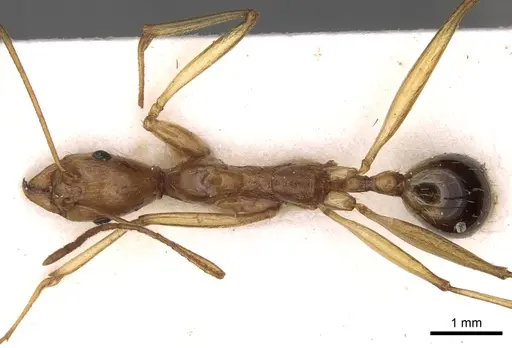
CASENT0915438
View on AntWeb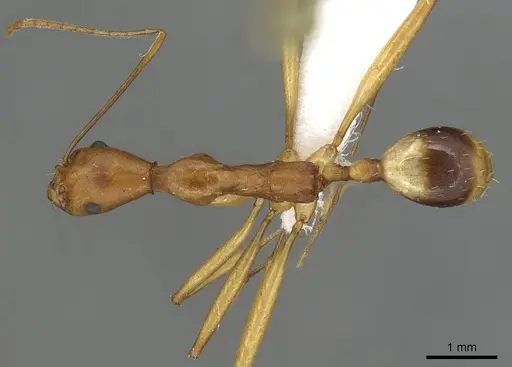
Literature
Loading...Loading products...