

Aphaenogaster phalangium
- Scientific Name
- Aphaenogaster phalangium
- Tribe
- Stenammini
- Subfamily
- Myrmicinae
- Author
- Emery, 1890
- Distribution
- Found in 2 countries
Aphaenogaster phalangium Overview
Aphaenogaster phalangium is an ant species of the genus Aphaenogaster. It is primarily documented in 2 countries , including Costa Rica, Panama. Detailed taxonomic data and occurrence records can be further explored via authoritative databases such as AntWeb or the Global Biodiversity Information Facility (GBIF).
Aphaenogaster phalangium
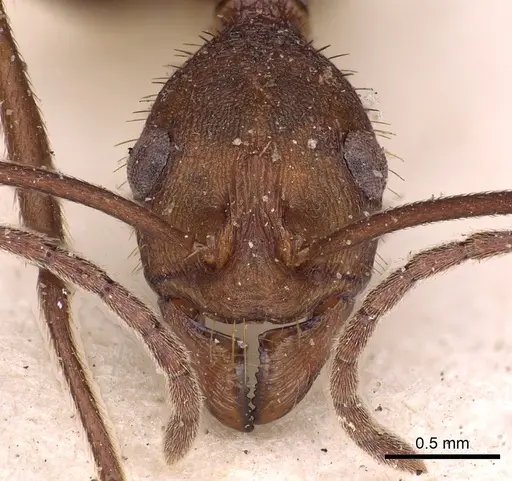
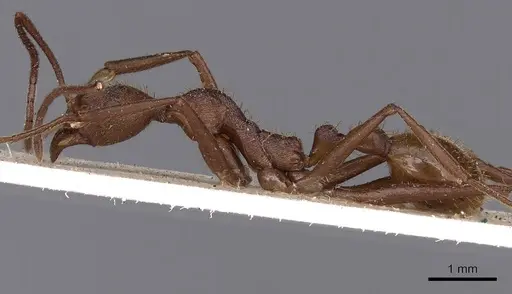
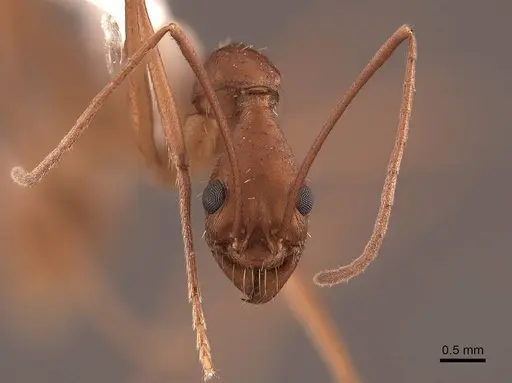
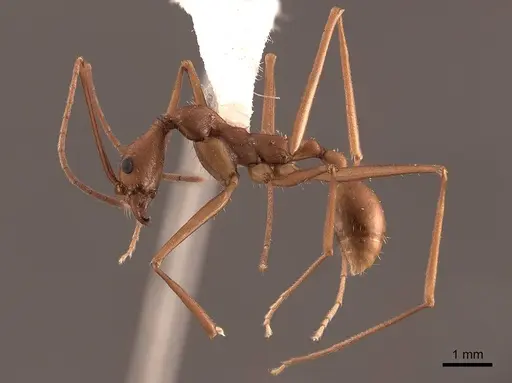
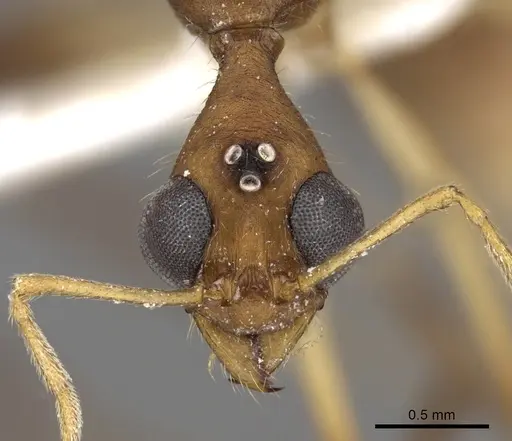
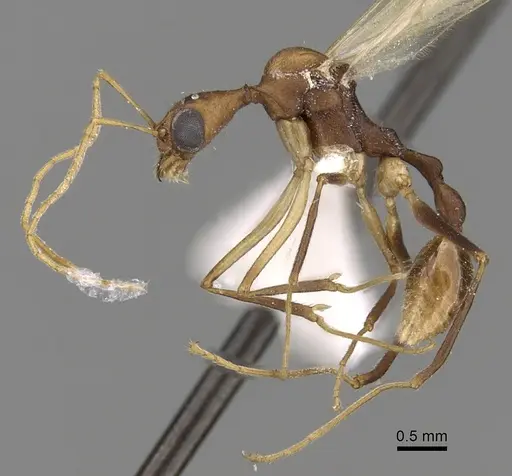
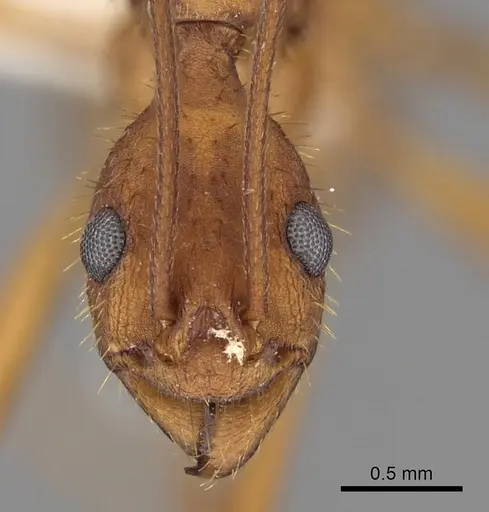
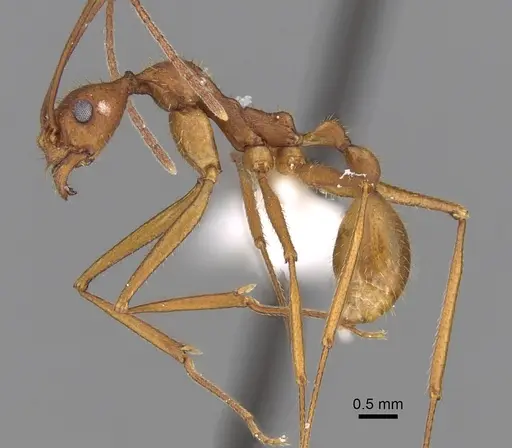
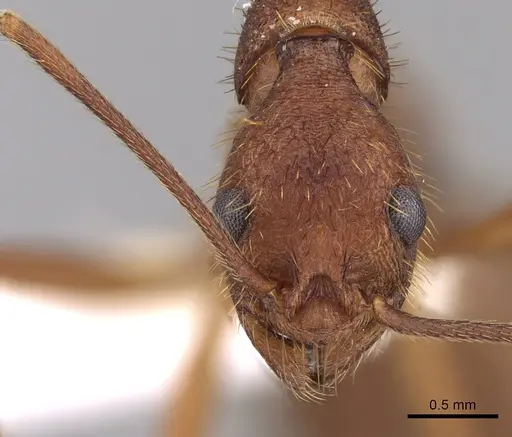
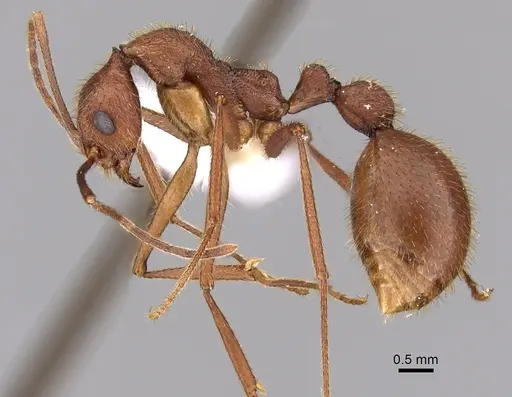
Aphaenogaster phalangium is a small Neotropical ant instantly recognizable by its bottle-shaped head, the back of the head narrows strongly behind the eyes, creating a distinct neck with rounded shoulders like a flask [1][2]. Workers have a matte, grainy texture with deep striations covering the head and body, and short stiff hairs on their legs [1][2]. They range from El Salvador through Costa Rica to northwestern Colombia, living in tropical rainforests and oak-bamboo forests where they nest in small underground chambers [1][2][3].
What makes this species unusual is their colony structure. Instead of the typical winged queen, reproductive females are ergatoid, meaning they are wingless with enlarged abdomens [1]. Wild colonies maintain multiple empty nests in the leaf litter and move between them regularly, a behavior called polydomy [1]. They are shy ants that prefer to run and hide rather than fight when disturbed, and they forage alone on the forest floor [1].
Quick Summary
- Difficulty: Medium
- Origin & Habitat: Neotropical region from El Salvador to northwestern Colombia, found in tropical rainforest and oak-bamboo forest leaf litter [1][2][3].
- Colony Type: Single-queen colonies with ergatoid (wingless) replacement reproductives documented [1]. Wild colonies are polydomous, maintaining multiple nests [1].
- Colony: Monogyne
- Size & Growth:
- Queen: Unknown (ergatoid, wingless) [1].
- Worker: Head width
- Colony: Unknown, likely small to moderate based on small chamber nesting [1].
- Growth: Moderate
- Development: Estimated 6-10 weeks at 25-27°C. (Timeline inferred from tropical Myrmicinae patterns, direct measurements unavailable. Nanitics (first workers) may emerge slightly faster.)
- Antkeeping:
- Temperature: Keep at 24-28°C with minimal fluctuation. Tropical species from low latitudes (~9.7°N) need stable warmth year-round [3][1].
- Humidity: High humidity required. Keep nest material damp like tropical forest floor leaf litter, moist but not waterlogged [1][2].
- Diapause: No. Tropical species do not require winter rest [3].
- Nesting: Small ground chambers in nature [1]. In captivity, use naturalistic setups with soil and leaf litter, or Y-tong nests with narrow passages and small chambers.
- Behavior: Timid and fast-running, they flee from any threat rather than fighting [1]. Solitary foragers hunt alone on the forest floor [1]. They possess poison and Dufour's glands that may release chemical defenses [4]. Their small size (head
- Common Issues: tiny head width (, timid nature makes colonies prone to stress from disturbance or bright light, keep them in quiet, shaded spots., maintaining tropical humidity without causing mold growth in the nest., polydomous instincts may cause workers to split the colony between multiple nest sites if given the option.
Nest Preferences and Polydomy
In nature, Aphaenogaster phalangium nests in small chambers in the ground, often in leaf litter layers [1]. What makes them unusual is their polydomous behavior, colonies maintain multiple empty nests and move among them regularly [1]. This means you should provide several small nesting options rather than one large chamber. A naturalistic setup with a soil-filled container, leaf litter, and flat stones works well. Alternatively, a Y-tong nest with multiple small chambers and narrow passages (scaled to their
Temperature and Tropical Care
Coming from tropical latitudes around 9.7°N in Costa Rica and similar regions, these ants need stable warmth [3]. Keep them at 24-28°C year-round with minimal night-time drops. They do not require and should not receive any winter cooling or diapause [3]. Use a heating cable or mat on one side of the nest to create a gentle gradient, but place it on top rather than underneath to avoid drying out the nest material. Watch the colony's response, if workers cluster near the heat source, they want more warmth, if they avoid it, reduce the temperature slightly.
Behavior and Temperament
These are timid ants that run from any threat rather than standing their ground [1]. They forage alone as solitary hunters on the forest floor [1]. When disturbed, they rely on speed and hiding rather than aggression. They do possess chemical defenses, they have well-developed poison and Dufour's glands that may release allomones (chemical signals or defensive compounds) when stressed [4]. This shy nature means they are not display ants that will sit out in the open, they prefer darkness and cover. Keep their outworld dimly lit and provide plenty of hiding spots like leaf litter or small stones.
Colony Structure and Ergatoid Queens
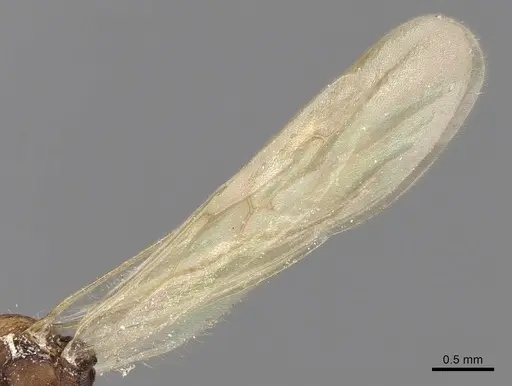
Unlike most ants that have winged queens, Aphaenogaster phalangium produces ergatoid queens, wingless reproductive females that look like large workers with allometrically enlarged abdomens [1]. These ergatoid queens lack wing scars entirely and have a more deeply impressed metanotal groove than workers [1]. In the wild, these likely serve as replacement reproductives if the primary queen dies, rather than founding new colonies. For keepers, this means your colony may naturally replace a dying queen with one of these ergatoid workers, potentially extending the colony's life. However, it also means you cannot identify queens by wings, look for the enlarged abdomen and distinct body proportions instead.
Feeding and Diet
While specific diet studies are lacking, Aphaenogaster species are generalist scavengers and predators. They likely feed on small insects, seeds (they are known seed dispersers in many habitats), and sweet liquids like honeydew in the wild. In captivity, offer small live prey like fruit flies, springtails, or tiny cricket nymphs cut to size. Provide a sugar source constantly, sugar water or honey water in a small feeder. Because they forage alone, place food items scattered around the outworld rather than in one pile, mimicking how they would encounter prey scattered on the forest floor.
Frequently Asked Questions
Can I keep multiple Aphaenogaster phalangium queens together?
Not recommended. While the species has ergatoid replacement queens, combining unrelated founding queens has not been documented and would likely result in fighting. Start with a single queen or a small established colony.
Do Aphaenogaster phalangium need hibernation or diapause?
No. They are a tropical species from Central America and should be kept warm year-round at 24-28°C. They do not require any winter cooling period [3].
How long until Aphaenogaster phalangium get their first workers?
Exact timelines are unconfirmed, but based on tropical Myrmicinae patterns, expect approximately 6-10 weeks from egg to first worker at 25-27°C. This may vary based on temperature and colony health.
What is the best nest type for Aphaenogaster phalangium?
Small chambers are key. Use a naturalistic setup with soil and leaf litter, or a Y-tong/formicarium nest with narrow passages and multiple small chambers. Because they are polydomous (maintaining multiple nests), providing several small connected chambers works better than one large open space [1].
Do Aphaenogaster phalangium ants sting?
They possess a functional sting apparatus typical of Myrmicinae ants [4], but they are timid and prefer to run away rather than sting. Any sting would be mild, similar to other small Aphaenogaster species.
Why are my Aphaenogaster phalangium always hiding?
This is normal behavior. They are naturally timid ants that flee from any threat and prefer darkness [1]. Keep their setup in a quiet, shaded location with plenty of cover like leaf litter or stones. Avoid frequent disturbances.
Are Aphaenogaster phalangium good for beginners?
They are medium difficulty. While they do not require hibernation, they need stable tropical temperatures and high humidity, and their timid nature makes them less forgiving of mistakes. Their small size also requires excellent escape prevention.
References

This caresheet is licensed under CC BY-SA 4.0 .
CASENT0900418
View on AntWeb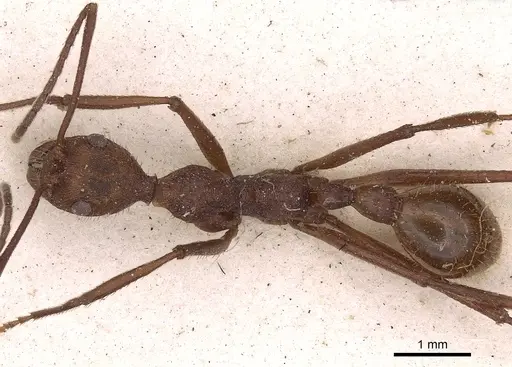
FMNHINS0000046078
View on AntWeb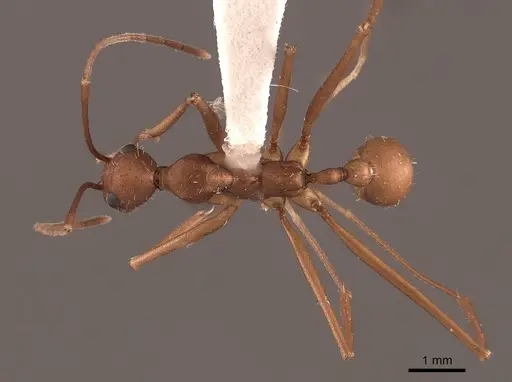
INBIOCRI001281560
View on AntWeb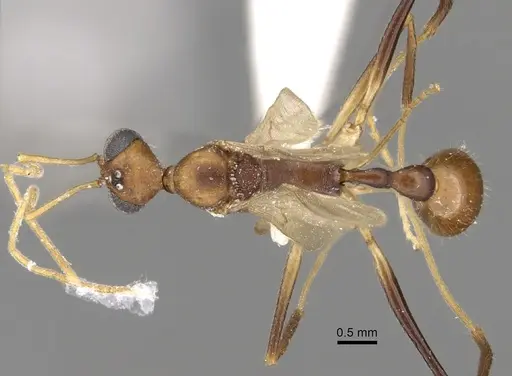
INBIOCRI001281562
View on AntWeb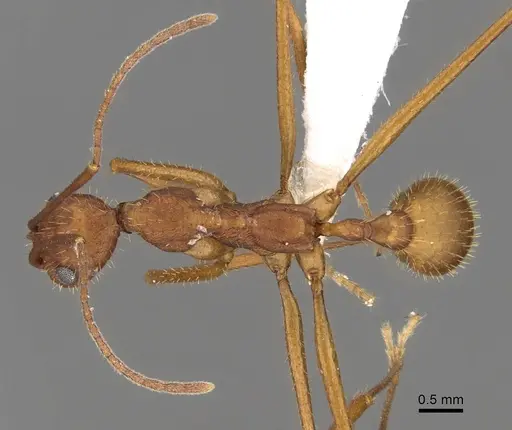
JTLC000005310
View on AntWeb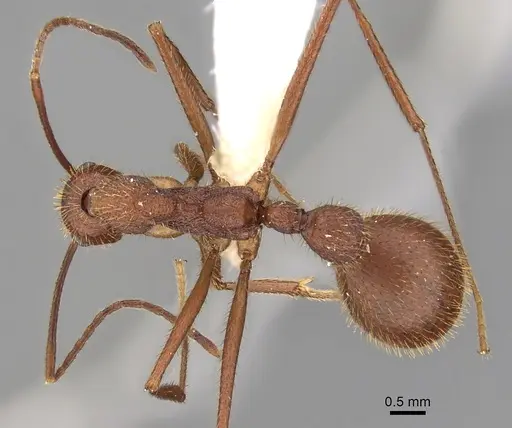
Literature
Loading...Loading products...