

Aphaenogaster olympica
- Scientific Name
- Aphaenogaster olympica
- Tribe
- Stenammini
- Subfamily
- Myrmicinae
- Author
- Borowiec & Salata, 2014
- Distribution
- Found in 1 countries
Aphaenogaster olympica Overview
Aphaenogaster olympica is an ant species of the genus Aphaenogaster. It is primarily documented in 1 countries , including Greece. Detailed taxonomic data and occurrence records can be further explored via authoritative databases such as AntWeb or the Global Biodiversity Information Facility (GBIF).
Aphaenogaster olympica
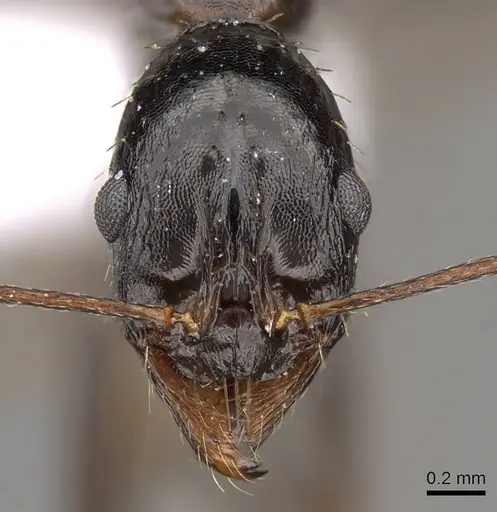
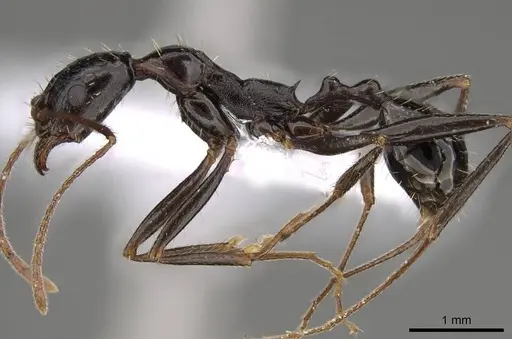
Aphaenogaster olympica is a dark brown ant with unusually long legs and a slender body, found only on Karpathos Island in Greece. Workers measure roughly 4-5mm total length with distinctive elongated heads and short, needle-like spines on their propodeum [1][2]. They are strictly endemic to this single island, living in very specific microhabitats: small caves, cracks in rock walls with northern exposure, and inside porous limestone rocks in shady, wet areas near mountain streams [1][3]. This combination of restricted range and specialized habitat preferences makes them one of the more challenging species to maintain in captivity. Their preference for cool, damp, shaded rock crevices suggests they require different conditions than typical Mediterranean ants [3].
Quick Summary
- Difficulty: Hard
- Origin & Habitat: Endemic to Karpathos Island, Greece (Dodecanese). Found in small caverns, cave entrances, rock cracks with northern exposure, and porous limestone in shady, wet mountain gorges at 67-429m elevation [1][3].
- Colony Type: Unknown, likely single-queen based on typical Aphaenogaster patterns, but unconfirmed for this species.
- Size & Growth:
- Queen: Estimated 6-8mm based on genus patterns, unconfirmed.
- Worker: Head length 1.23-1.39mm, estimated total length 4-5mm [1][2].
- Colony: Unknown, likely moderate (hundreds of workers) based on related species.
- Growth: Unknown, estimated moderate.
- Development: Estimated 8-12 weeks at 22-24°C based on temperate Aphaenogaster patterns, unconfirmed for this species. (Development time is inferred from related Mediterranean Aphaenogaster species, actual timing may vary based on temperature.)
- Antkeeping:
- Temperature: Keep cool and stable, approximately 18-24°C (64-75°F). Their preference for northern rock exposures and shady stream habitats suggests they tolerate heat poorly [1][3].
- Humidity: High humidity essential. Keep nest substrate consistently damp to wet, mimicking the moist limestone crevices and stream-side habitats they occupy [1][3].
- Diapause: Likely yes. As a temperate Mediterranean species, they probably require a winter rest period at 10-15°C, though this is unconfirmed [4].
- Nesting: Rocky crevices and tight spaces. Use naturalistic setups with flat stones, or Y-tong/plaster nests with narrow chambers and excellent moisture retention [1].
- Behavior: Behavioral data is limited. They possess long legs suggesting fast, agile movement. Aggression levels and sting capability are unconfirmed, though most Aphaenogaster are moderately defensive with mild stings [4]. Their small size requires good escape prevention.
- Common Issues: overheating is a major risk because they naturally inhabit cool, shaded rock crevices rather than open sun., desiccation kills colonies quickly, they require consistently damp conditions unlike many Mediterranean ants., founding behavior is unconfirmed, making the initial colony startup risky for keepers., endemic status means wild colonies should never be collected, only captive-bred colonies should be kept., tiny size and long legs mean they can squeeze through smaller gaps than expected.
Natural History and Microhabitat
Aphaenogaster olympica occupies a very narrow ecological niche on Karpathos Island. Workers are found exclusively in cool, damp microhabitats: small caverns, cave entrances, cracks in rock walls facing north (which receive less direct sun), and inside large porous limestone rocks in shady parts of mountain streams [1][3]. These locations stay moist and cool even during hot Mediterranean summers. The species ranges from sea level up to 429 meters elevation, but always in association with moisture and shade [3]. This suggests they are sensitive to heat and desiccation, requiring keepers to provide cooler, wetter conditions than many other Mediterranean ants. They are endemic to Karpathos, meaning they occur nowhere else in the world [2][3].
Nesting Requirements
In nature, Aphaenogaster olympica nests in rock crevices and porous limestone rather than soil [1]. For captive care, replicate this with a naturalistic setup using flat stones, slate, or limestone pieces with narrow gaps between them. Alternatively, use a Y-tong (aerated concrete) nest or plaster nest with small, tight chambers and deep water reservoirs to maintain high humidity [4]. The nest must retain moisture well, dry conditions will stress or kill this species. Provide a humidity gradient with one side damper than the other, but ensure the entire nest stays moderately humid rather than allowing large dry areas.
Temperature and Seasonal Care
Keep Aphaenogaster olympica on the cooler side for ants. Their natural preference for northern rock exposures and shady stream beds indicates they avoid heat [1][3]. Maintain temperatures between 18-24°C, with an ideal range around 20-22°C. Avoid temperatures above 26°C as they may cause stress or mortality. As a temperate Mediterranean species, they likely require hibernation (diapause) during winter months, though this is unconfirmed [4]. If implementing diapause, gradually cool the colony to 10-15°C for 2-3 months during winter, keeping the nest slightly moist but not wet.
Feeding and Diet
Specific dietary preferences for Aphaenogaster olympica are unstudied. Based on typical Aphaenogaster behavior, they are likely omnivorous scavengers that collect dead insects and possibly seeds [4]. Offer small prey items such as fruit flies, springtails, or tiny pieces of mealworms. Provide sugar water or honey water in small drops. Observe acceptance carefully since their mountain stream habitat might indicate specialized foraging preferences. Remove uneaten protein within 24 hours to prevent mold in their humid nest environment.
Colony Founding
Founding behavior in Aphaenogaster olympica has not been documented. Based on patterns from other Aphaenogaster species, queens likely found colonies claustrally (sealing themselves in a chamber and living off stored fat reserves until the first workers hatch) [4]. However, this is an inference, not confirmed fact. If attempting to found a colony, provide a small, dark, humid chamber and avoid disturbing the queen frequently. Do not offer food during the founding stage unless she shows signs of foraging, which would indicate semi-claustral behavior instead.
Conservation and Ethical Considerations
Aphaenogaster olympica is endemic to Karpathos Island, meaning the entire global population is restricted to this single location [2][3]. Wild populations should never be collected for the pet trade. Only keep this species if you obtain a captive-bred colony from ethical sources. Never release captive colonies into non-native habitats, and take extra care to prevent escapes that could introduce them to new areas within Greece where they might compete with native species.
Frequently Asked Questions
Can I keep Aphaenogaster olympica in a test tube setup?
Test tubes can work for founding if you maintain high humidity, but this species naturally lives in rocky crevices with excellent moisture retention. Standard test tubes may dry out too quickly or provide too much open space. If using a test tube, keep it in a dark place and ensure the water reservoir is large enough to maintain consistent humidity for weeks [4].
Do Aphaenogaster olympica need hibernation?
Likely yes. As a temperate Mediterranean species from Karpathos, they probably require a winter diapause at 10-15°C for 2-3 months, though this has not been confirmed through observation. Without diapause, colonies may fail to thrive or experience reduced brood production [4].
What do Aphaenogaster olympica eat?
Their specific diet is unknown, but based on the genus they likely accept dead insects and sugar sources. Offer small prey like fruit flies, springtails, or tiny mealworm pieces, plus sugar water. Remove uneaten food quickly to prevent mold in their humid nest [4].
How big do Aphaenogaster olympica colonies get?
Colony size is unconfirmed for this species. Based on related Aphaenogaster species, they likely reach several hundred workers, possibly up to 1000,but this is an estimate [4].
Are Aphaenogaster olympica good for beginners?
No. They are a hard species to keep due to their specific humidity requirements, likely need for cooler temperatures, unknown founding behavior, and endemic status which makes obtaining ethical colonies difficult [1][3].
Do Aphaenogaster olympica ants sting?
Stinging capability is unconfirmed for this species. Most Aphaenogaster possess a sting but are not aggressive and their stings are mild. Handle with care as you would any small stinging ant [4].
How long until Aphaenogaster olympica get their first workers?
Development time is unknown. Based on related temperate Aphaenogaster species, expect approximately 8-12 weeks from egg to first worker at 22-24°C, but this is an estimate [4].
Can I keep multiple Aphaenogaster olympica queens together?
Not recommended. Colony structure is unconfirmed for this species, and combining unrelated queens has not been documented. Most Aphaenogaster are monogyne (single queen), so multiple queens would likely fight [4].
Why are my Aphaenogaster olympica dying?
The most common causes are overheating (they need cool, shaded conditions) and desiccation (they require consistently damp substrate). Check that temperatures stay below 24°C and that the nest substrate never dries out completely [1][3].
References

This caresheet is licensed under CC BY-SA 4.0 .
CASENT0914405
View on AntWeb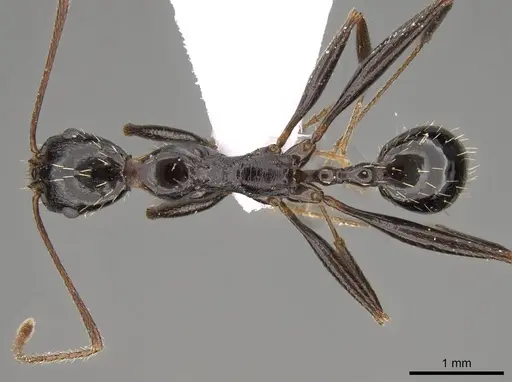
Literature
Loading...Loading products...