

Aphaenogaster mexicana
- Scientific Name
- Aphaenogaster mexicana
- Tribe
- Stenammini
- Subfamily
- Myrmicinae
- Author
- Pergande, 1896
- Distribution
- Found in 1 countries
Aphaenogaster mexicana Overview
Aphaenogaster mexicana is an ant species of the genus Aphaenogaster. It is primarily documented in 1 countries , including Mexico. Detailed taxonomic data and occurrence records can be further explored via authoritative databases such as AntWeb or the Global Biodiversity Information Facility (GBIF).
Aphaenogaster mexicana
Aphaenogaster mexicana is a small, reddish-brown ant found only in the mountains of west-central Mexico. Workers measure about 6 mm long with a distinctive narrow 'neck' behind their head and antennae that extend well past the back of the head [1]. They live in tropical mountain forests at elevations around 1,500 to 1,800 meters in the states of Nayarit and Jalisco [1][2]. This species is rarely encountered by collectors and remains poorly studied. Most records come from workers found hiding under leaf litter in disturbed and undisturbed forest habitats [1]. Their small eyes suggest they prefer dim, shaded conditions deep in the forest floor [1].
Quick Summary
- Difficulty: Expert
- Origin & Habitat: West-central Mexico (Nayarit, Jalisco, Hidalgo, Puebla states) in tropical montane forests at 1,400-1,800m elevation [1][2].
- Colony Type: Likely single-queen (monogyne) based on typical Aphaenogaster patterns, but unconfirmed for this species.
- Size & Growth:
- Queen: Unknown, estimated 7-9 mm based on related Aphaenogaster species.
- Worker: 6 mm [1].
- Colony: Unknown, likely small to moderate based on genus patterns.
- Growth: Unknown, likely moderate.
- Development: Unknown, estimated 8-12 weeks at 24°C based on typical Aphaenogaster patterns. (This is an estimate only, actual timing is unstudied.)
- Antkeeping:
- Temperature: Approximately 20-24°C (68-75°F). Being from tropical mountains at 1,500-1,800m elevation, they likely prefer moderate temperatures cooler than lowland tropics but warmer than temperate zones [1].
- Humidity: High humidity required. In nature they live under leaf litter in moist forest floor conditions [1].
- Diapause: Unknown. As a tropical species, they may not require true hibernation, but might slow down in cooler months.
- Nesting: Naturalistic setup with leaf litter, soil, and stones, they hide under debris in nature [1].
- Behavior: Slow-moving, cryptic ants that hide under litter, not aggressive, small size requires good escape prevention.
- Common Issues: rarely collected species means captive care information is largely unknown., tropical montane conditions (cool but humid) are difficult to maintain consistently., small size makes them prone to escaping through tiny gaps., wild-caught colonies may carry mites or parasites.
Identification and Appearance
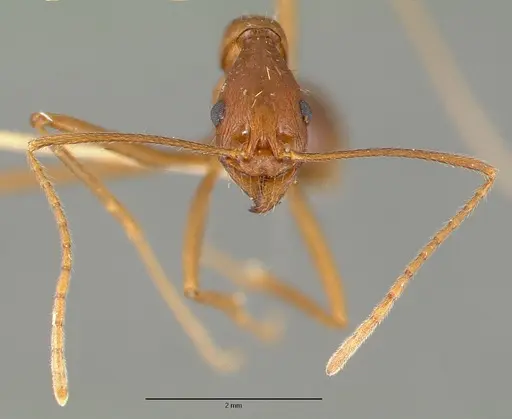
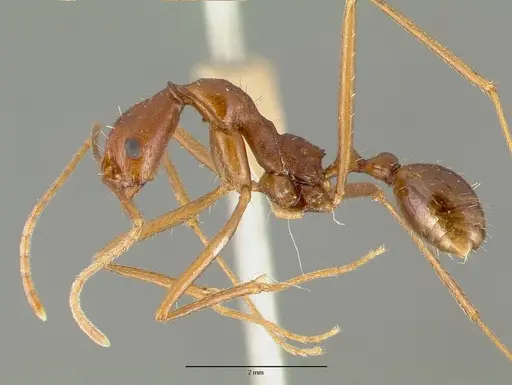
Aphaenogaster mexicana workers are small, measuring about 6 mm in total length [1]. They have a ferrugineous red (rusty red) body with a slightly darker postpetiole and gaster [1]. The most distinctive feature is the head, which narrows posteriorly into a slender neck with a flanged posterior border, this 'collar' behind the head helps distinguish them from other North American Aphaenogaster [1][3]. Their antennal scapes are long, extending well past the back of the head by about half their length [1]. They have relatively small eyes (0.28 mm diameter) compared to related species, and weakly developed propodeal spines only 0.09 mm long [1]. The head surface is finely granulated and partially smooth and glossy, while the pronotum is mostly smooth and glossy [1].
Natural Habitat and Distribution
This species is found only in central western Mexico, specifically in the states of Nayarit and Jalisco [1][2]. Records also exist from Hidalgo and Puebla [2]. They inhabit tropical montane forests at elevations between 1,400 and 1,800 meters above sea level [1]. Specimens have been collected from the Sierra de Cacoma and Sierra de Quila mountain ranges [1]. The region around their type locality of Tepic has been extensively disturbed by human activity, though the species was originally described from forested habitat in the 1890s [1]. Workers are typically found hiding under leaf litter on the forest floor [1].
Housing and Nest Setup
Based on their natural history, Aphaenogaster mexicana needs a naturalistic setup that mimics tropical montane forest floor conditions. Provide a substrate of soil mixed with leaf litter, with flat stones or rotting wood pieces for them to hide under [1]. They need high humidity but good ventilation to prevent mold. A setup with a moist lower layer and drier upper layer allows them to choose their preferred microclimate. Because they are small (6 mm), ensure any ventilation holes are covered with fine mesh to prevent escapes [1].
Temperature and Humidity
Coming from tropical mountains at 1,500-1,800 meters elevation, these ants likely prefer moderate temperatures between 20-24°C (68-75°F) [1]. This is cooler than typical lowland tropical ants but warmer than temperate species. Avoid temperatures above 28°C or below 15°C. Maintain high humidity by keeping the nest material moist but not waterlogged, as they naturally live under damp leaf litter [1].
Feeding
While specific diet studies are lacking for this species, Aphaenogaster ants are generally omnivorous. They likely feed on small insects, seeds, and possibly honeydew from aphids in the wild. In captivity, offer small live prey such as fruit flies, springtails, or tiny crickets, along with sugar water or honey water. Some Aphaenogaster species store seeds in their nests, so you might experiment with small grass seeds or millet.
Colony Founding
Founding behavior has not been documented for Aphaenogaster mexicana. Based on patterns seen in other Aphaenogaster species, queens likely found colonies alone (claustral founding), sealing themselves in a chamber and living off stored fat reserves until the first workers hatch. However, this is unconfirmed for this species.
Frequently Asked Questions
Can I keep Aphaenogaster mexicana in a test tube?
While possible for founding, a test tube may be too small long-term. They prefer naturalistic setups with leaf litter and soil similar to their forest floor habitat [1].
How long until first workers for Aphaenogaster mexicana?
The egg-to-worker timeline is unknown for this species. Based on related tropical Aphaenogaster, expect roughly 8-12 weeks at 24°C, but this is unconfirmed.
What do Aphaenogaster mexicana eat?
Specific dietary preferences are unstudied, but Aphaenogaster species are generally omnivorous. Offer small live insects, sugar water, and possibly seeds.
Do Aphaenogaster mexicana need hibernation?
It is unknown if this species requires diapause (winter rest). As a tropical montane species, they may slow down in cooler months but likely do not need true hibernation like temperate ants.
How big do Aphaenogaster mexicana colonies get?
Colony size is unknown. Based on related species, they likely remain small to moderate, possibly under 500 workers.
Are Aphaenogaster mexicana good for beginners?
No. This is a rarely collected species with little captive care information. They require specific tropical montane conditions and are best suited for experienced keepers.
Where do Aphaenogaster mexicana live in the wild?
They are found only in the mountains of west-central Mexico (Nayarit, Jalisco, Hidalgo, Puebla states) at elevations of 1,400-1,800 meters, living under leaf litter in forests [1][2].
How do I identify Aphaenogaster mexicana?
Look for the distinctive narrow 'neck' behind the head with a flanged collar, long antennae that extend well past the head, small size (6 mm), and rusty red coloration [1][3].
Do Aphaenogaster mexicana ants sting?
Like most Aphaenogaster, they likely possess a stinger but are not aggressive toward humans. Their small size means any sting would be mild.
Can I keep multiple Aphaenogaster mexicana queens together?
Combining multiple queens is not recommended. While the natural colony structure is unconfirmed, most Aphaenogaster are monogyne (single queen) and unrelated queens will likely fight.
References

This caresheet is licensed under CC BY-SA 4.0 .
CASTYPE00653
View on AntWeb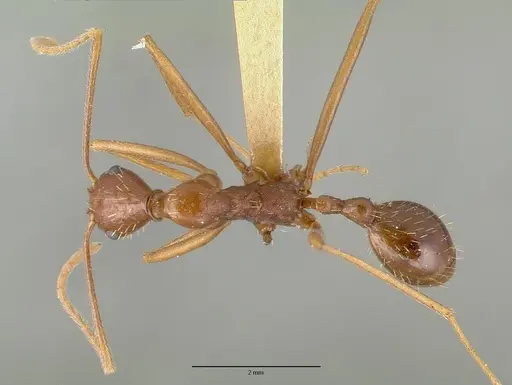
Literature
Loading...Loading products...