

Aphaenogaster mariae
- Scientific Name
- Aphaenogaster mariae
- Tribe
- Stenammini
- Subfamily
- Myrmicinae
- Author
- Forel, 1886
- Common Name
- Mary's Collared Ant
- Distribution
- Found in 1 countries
Aphaenogaster mariae Overview
Aphaenogaster mariae (commonly known as the Mary's Collared Ant) is an ant species of the genus Aphaenogaster. It is primarily documented in 1 countries , including United States of America. Detailed taxonomic data and occurrence records can be further explored via authoritative databases such as AntWeb or the Global Biodiversity Information Facility (GBIF).
Aphaenogaster mariae - "Mary's Collared Ant"
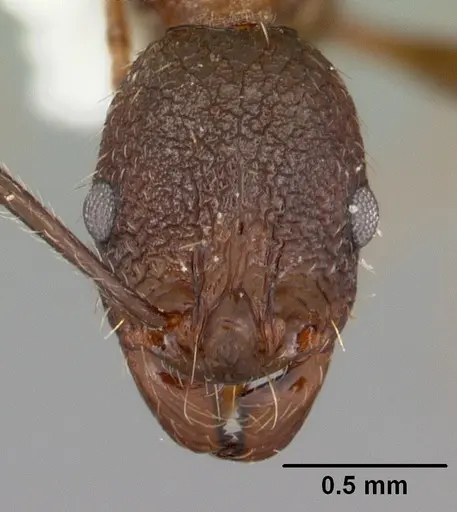
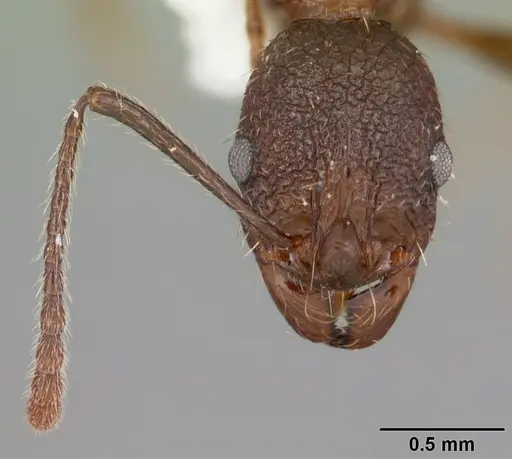
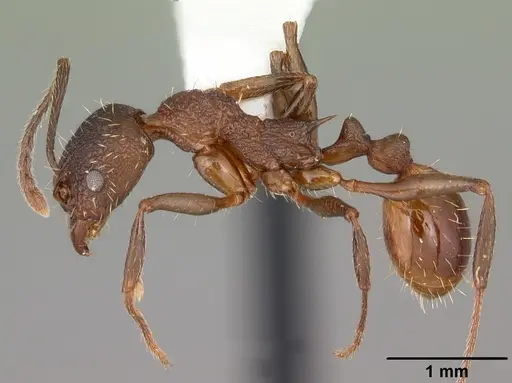
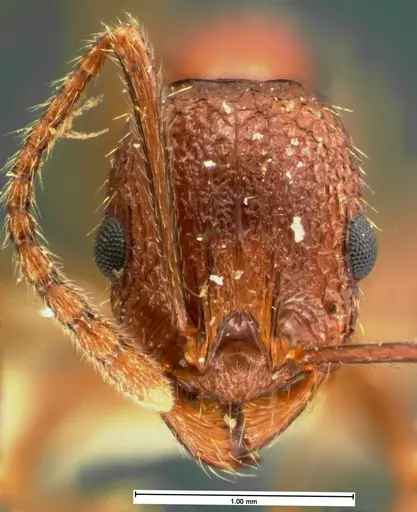
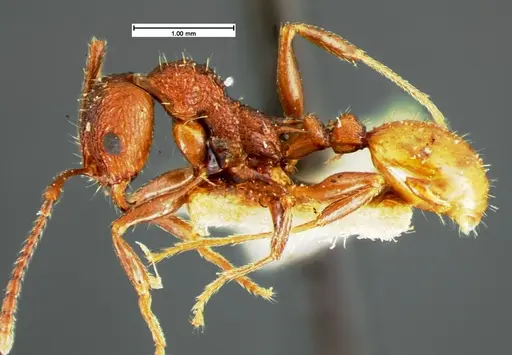
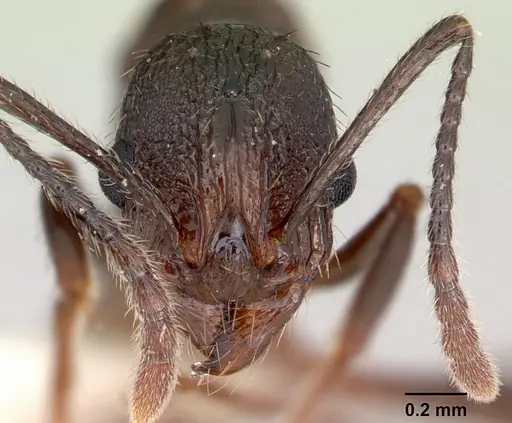
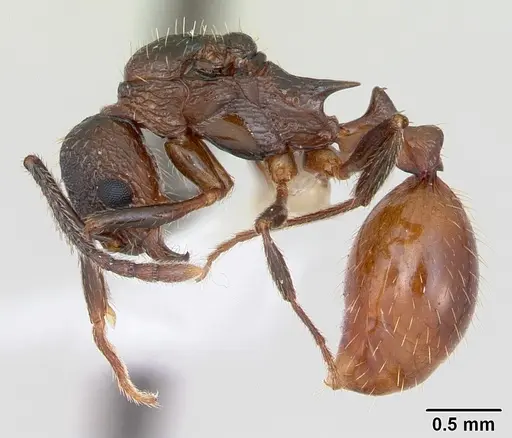
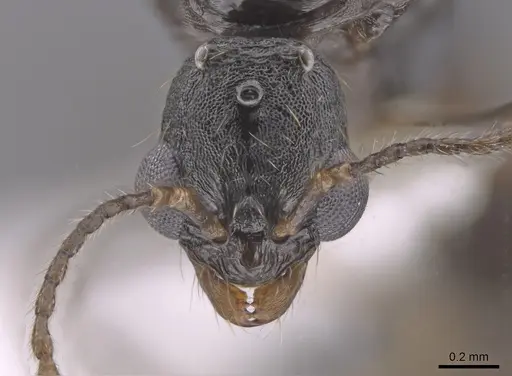
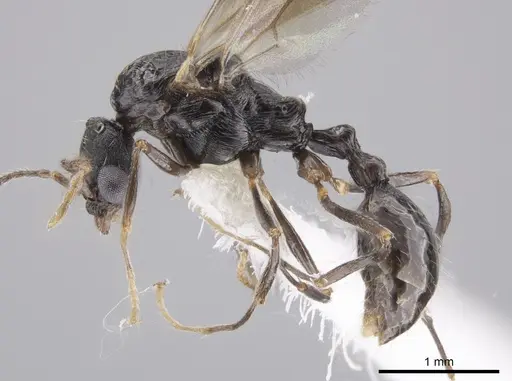
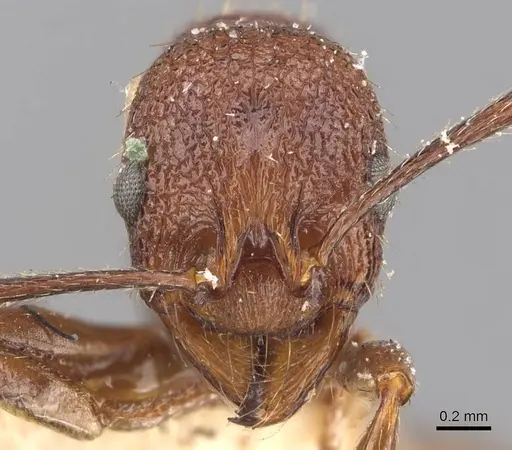
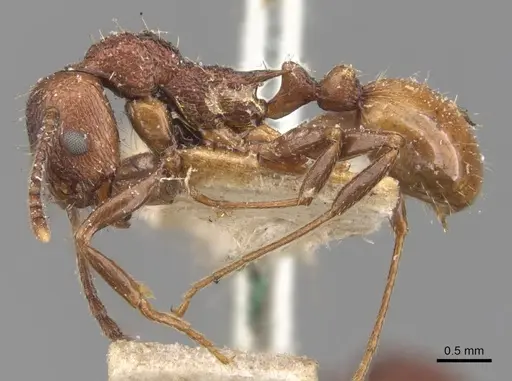
Aphaenogaster mariae is a rare, medium-sized arboreal ant with workers measuring 5.0-5.6 mm [1][2]. They display a distinctive starburst pattern of fine striae radiating from the base of the gaster, combined with coarse rugose sculpturing on the middle body section [3][1]. Their color ranges from medium to dark reddish-brown with a paler gaster base [1]. This species lives exclusively in the canopy of mature hardwood trees, particularly oaks, across the eastern United States from New York to Florida and west to Iowa and Kansas [4][1].
What makes this species exceptionally challenging for antkeepers is its reproductive strategy. Aphaenogaster mariae is a temporary social parasite of Aphaenogaster fulva, meaning new queens must invade existing host colonies to establish their own nests [5][6]. They nest in dead branches and tree holes high above ground, often 15-17 meters up in oak trees [5]. Colonies can reach over 1,000 workers, with one documented colony containing 1,048 adults and 90 immatures [5].
Quick Summary
- Difficulty: Expert
- Origin & Habitat: Eastern United States from New York to Florida, west to Iowa and Kansas [4][1]. Found in deciduous and mixed forests, particularly oak and oak-hickory woodlands [7][6]. Nests exclusively in tree canopies, dead branches, and cavities under bark of mature hardwoods, especially oaks (Quercus spp.) [5][1].
- Colony Type: Single-queen colonies (monogyne) that begin as temporary social parasites. Queens must invade host colonies (typically Aphaenogaster fulva) to establish new nests [5][6].
- Colony: Monogyne
- Queen: Temporary parasitic
- Size & Growth:
- Queen: Small, similar to worker size (exact measurements unconfirmed but noted as unusually small for the genus) [5].
- Worker: 5.0-5.6 mm [1][2].
- Colony: Up to 1,048+ workers documented [5].
- Growth: Moderate to slow, colonies are long-established before reaching large sizes [5].
- Development: Unknown, not directly studied. Based on related temperate Myrmicinae, likely 8-12 weeks at 24-26°C, but this is inferred. (Nuptial flights occur late in the season (September-November), suggesting extended development or late-season reproduction [5].)
- Antkeeping:
- Temperature: Temperate species. Keep at 20-25°C during active season. Requires winter diapause at 10-15°C for 3-4 months based on northern range and collection dates [1][5].
- Humidity: Moderate to high humidity (60-70%). Nest substrate should feel damp but not waterlogged, mimicking decaying heartwood conditions [1][3].
- Diapause: Yes, required. This is a temperate species with late-season flights, colonies need a winter rest period [1][5].
- Nesting: Arboreal setup required. Use hollow branches, cork tubes, or vertical wood cavities mounted in the outworld. They will not thrive in standard soil or plaster nests [5][1].
- Behavior: Slow, deliberate foragers that climb methodically up and down tree trunks [8]. Arboreal specialists that rarely come to ground except when founding queens seek host colonies. Non-aggressive but require excellent escape prevention due to arboreal climbing abilities and small size [5].
- Common Issues: temporary parasitism makes founding impossible without a healthy Aphaenogaster fulva host colony., arboreal requirements mean standard formicarium setups will fail, they need vertical wood cavities., extreme rarity in the wild makes collection difficult and potentially unethical, colonies are hard to replace., late nuptial flights (fall) mean new colonies must be established before winter diapause, creating a narrow window for success., high humidity in arboreal setups promotes mold if ventilation is inadequate.
The Temporary Parasite Lifecycle
You cannot found Aphaenogaster mariae colonies from a single queen in a test tube. This species is a temporary social parasite, meaning new queens must locate and invade an existing colony of Aphaenogaster fulva [5][6]. The queen enters the host nest, likely kills or dominates the host queen, and uses the host workers to raise her first brood until her own workers hatch [5]. Dealate queens have been found in soil samples and Berlese funnels containing A. fulva nests, confirming this association [6][5]. This makes captive propagation extremely difficult, you must maintain healthy A. fulva colonies as hosts. Without access to host colonies, you cannot establish new colonies of this species.
Arboreal Housing Requirements
Standard horizontal formicariums fail for this species. In nature, Aphaenogaster mariae nests in dead branches and tree holes 15-17 meters high in oak canopies [5][1]. You must provide vertical arboreal setups: hollow oak branches, cork bark tubes mounted vertically, or custom tree-trunk formicariums with upward-facing cavities [5]. The nest should mimic decaying heartwood, slightly moist but with dry pockets. They forage on vertical surfaces, so your outworld should have climbing surfaces like rough bark or mesh. Because they live in tree canopies, they are excellent climbers, use Fluon or very fine mesh barriers on all openings [5].
Finding and Collecting Wild Colonies
This is one of the rarest Aphaenogaster species in the eastern US [8][2]. You will not find them in pitfall traps or on the ground [7]. Instead, search mature oak trees (Quercus alba, Quercus pagoda, Quercus velutina) by hand-collecting in the canopy or baiting tree trunks with peanut butter [9][5]. Look for dead branches or hollows 10-20 meters up. In Mississippi, researchers found them by placing peanut butter bait on large oaks and checking for the distinctive slow, methodical climbing behavior [9][8]. Collected colonies may contain host workers (A. fulva) initially, which will eventually die off as the mariae workers mature [5].
Temperature and Seasonal Care
Keep active colonies at 20-25°C during spring through fall. This temperate species requires a winter diapause period [1]. Starting in late October, gradually cool the colony to 10-15°C for 3-4 months [1][5]. Nuptial flights occur late in the year (September-November), so alates may be present in colonies collected in August [5]. If you have a new colony with host workers, complete the diapause cycle before expecting significant brood development. Resume warming in March-April as you would for other temperate North American species.
Feeding and Foraging
Workers forage on tree trunks and likely consume both sugary exudates and small arthropods [1][3]. In captivity, offer honey water or sugar water in arboreal feeders (small tubes mounted on vertical surfaces). For protein, provide small live insects like fruit flies, springtails, or tiny crickets. They accept peanut butter bait readily in the wild, so a tiny dab of peanut butter can serve as an occasional treat [6][9]. Because they are arboreal, place food on vertical surfaces or elevated platforms rather than just the floor of the outworld.
Frequently Asked Questions
Can I keep Aphaenogaster mariae in a test tube?
No. This species requires a host colony (Aphaenogaster fulva) to establish, and needs an arboreal setup with vertical wood cavities, not test tubes [5].
Do Aphaenogaster mariae need a host species?
Yes. They are temporary social parasites that must invade colonies of Aphaenogaster fulva to reproduce. The queen uses host workers to raise her first brood [5][6].
How do I find Aphaenogaster mariae in the wild?
Look in mature oak trees. Bait tree trunks with peanut butter or hand-collect in the canopy 10-20 meters high. They are extremely rare and found only in undisturbed oak forests [9][5][8].
How big do Aphaenogaster mariae colonies get?
Documented colonies reach over 1,000 workers. One collected colony contained 1,048 adults plus 90 immatures [5].
When do Aphaenogaster mariae have nuptial flights?
Late in the year, September through November. This is later than most temperate ant species [5].
Do Aphaenogaster mariae need hibernation?
Yes. This temperate species requires a winter diapause period at 10-15°C for 3-4 months [1][5].
Are Aphaenogaster mariae good for beginners?
No. They are expert-level only due to their temporary parasitic lifestyle requiring host colonies, arboreal housing needs, and extreme rarity [5].
What do Aphaenogaster mariae eat?
They are generalists. In nature they forage on tree trunks and accept peanut butter bait. In captivity, feed sugar water and small live insects like fruit flies [6][9].
How can I identify Aphaenogaster mariae?
Look for the distinctive starburst pattern of fine striae radiating from the base of the gaster, coarse sculpturing on the body, and their slow, deliberate climbing gait on oak trees [3][1][8].
Why are my Aphaenogaster mariae dying?
Common causes include lack of proper host workers (A. fulva), incorrect arboreal housing (they need vertical wood cavities, not soil nests), missing winter diapause, or inadequate humidity mimicking decaying wood [5][1].
References

This caresheet is licensed under CC BY-SA 4.0 .
CASENT0103599
View on AntWeb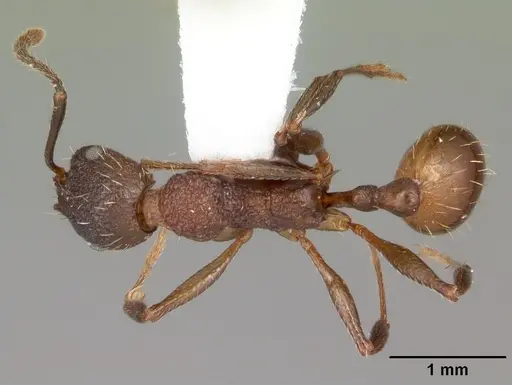
CASENT0105571
View on AntWeb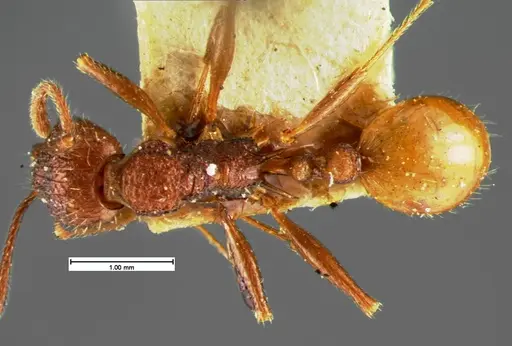
CASENT0173650
View on AntWeb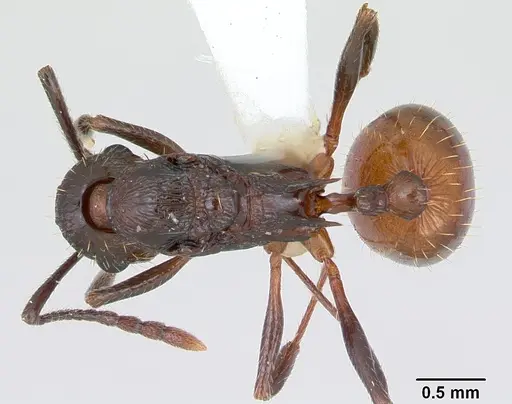
CASENT0659050
View on AntWeb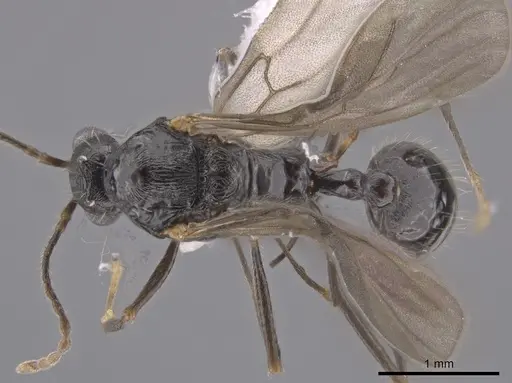
CASENT0907688
View on AntWeb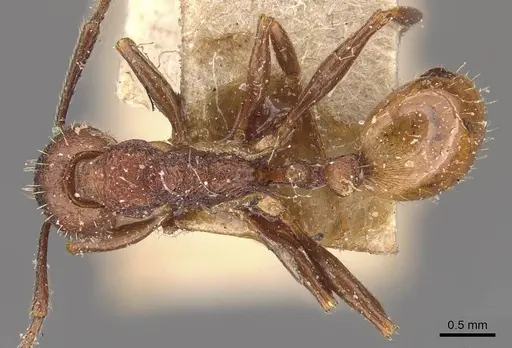
Literature
Loading...Loading products...