

Aphaenogaster hesperia
- Scientific Name
- Aphaenogaster hesperia
- Tribe
- Stenammini
- Subfamily
- Myrmicinae
- Author
- Santschi, 1911
- Distribution
- Found in 1 countries
Aphaenogaster hesperia Overview
Aphaenogaster hesperia is an ant species of the genus Aphaenogaster. It is primarily documented in 1 countries , including Spain. Detailed taxonomic data and occurrence records can be further explored via authoritative databases such as AntWeb or the Global Biodiversity Information Facility (GBIF).
Aphaenogaster hesperia
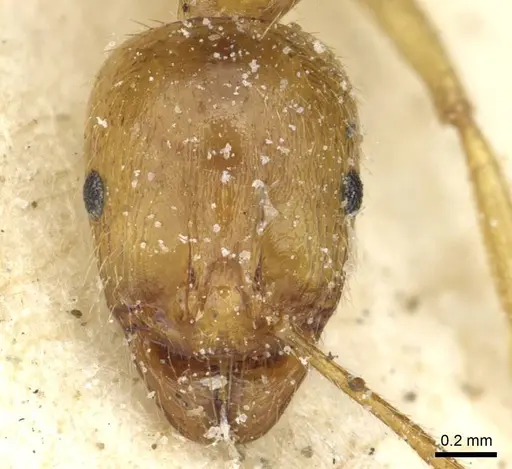
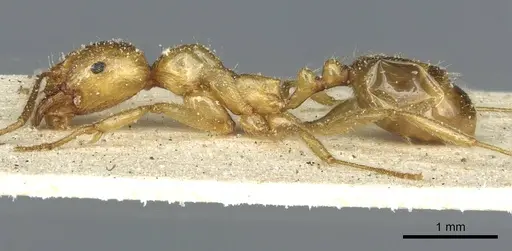
Aphaenogaster hesperia are small, pale ants found only on Tenerife in the Canary Islands. Workers measure approximately 3-4mm in total length, with heads around 1.11mm and thoraxes around 1.49mm, and show light yellowish-brown coloration [1]. First described in 1911,they remained unseen for 104 years until their rediscovery in 2023 under rocks in a humid pine forest at 950 meters elevation [1]. Their pale color suggests they forage at night, spending daylight hours hidden beneath stones with their brood attached to the rock undersides [1]. They live in the transition zone between pine and cloud forests where moisture from trade-wind clouds keeps the habitat consistently damp [1].
These ants show extremely cryptic habits. When researchers lifted rocks, workers rapidly retrieved eggs and pupae attached to the hidden rock surfaces and disappeared into narrow crevices [1]. They occur in dense aggregations in very specific microhabitats, disappearing just meters from their main nesting areas [1]. This combination of rarity, specific habitat needs, and tiny size makes them a challenging species for captivity.
Quick Summary
- Difficulty: Expert
- Origin & Habitat: Endemic to Tenerife, Canary Islands. Found in humid pine forest transition zones at 950m elevation under half-buried rocks [1][2].
- Colony Type: Likely single-queen (monogyne) colonies, unconfirmed.
- Size & Growth:
- Queen: Unknown, not measured in available research [1].
- Worker: Approximately 3-4mm total length (head length 1.11mm, mesosoma length 1.49mm) [1].
- Colony: Unknown, at least several tens of workers observed under single rocks [1].
- Growth: Unknown, likely slow to moderate based on habitat conditions.
- Development: Unknown, estimate 8-12 weeks based on related temperate Aphaenogaster species. (This is speculative, actual timing unconfirmed. Temperature-dependent.)
- Antkeeping:
- Temperature: Cool subtropical,18-24°C. Start at 20-22°C based on 950m elevation habitat [1].
- Humidity: High, consistently moist substrate required. Habitat experiences overflowing trade-wind clouds [1].
- Diapause: Likely not required (subtropical climate), though winter slowing may occur.
- Nesting: Under flat rocks with narrow chambers. Use naturalistic setup with flat stones or tight-fitting Y-tong/plaster nests [1].
- Behavior: Cryptic and likely nocturnal based on pale coloration [1]. Workers show rapid brood retrieval when disturbed [1]. Extreme escape risk due to small size.
- Common Issues: escape prevention is critical, workers are tiny and squeeze through minute gaps., desiccation kills quickly, they need consistently moist conditions from their humid forest habitat., legal and ethical concerns, this is a rare endemic species rediscovered after 104 years, collection likely prohibited., cryptic behavior means they hide constantly and may not be visible for observation.
Rediscovery and Natural History
Aphaenogaster hesperia was described in 1911 from coastal Bajamar on Tenerife, then vanished from scientific observation for 104 years [1]. Researchers rediscovered it in 2023 at Las Raíces pine forest, approximately 15km from the type locality but at 950m elevation in a completely different habitat [1].
The rediscovery site sits in a contact zone between pine and cloud forests where trade-wind clouds create constant moisture [1]. All specimens were found under half-buried rocks, with colony sizes ranging from just a few workers to several tens under a single stone [1]. Brood was always attached to the hidden undersides of rocks, and workers retrieved it rapidly when exposed to light [1].
The species shows extremely specific microhabitat requirements. Despite intensive searching at over 1,000 sampling points across the Canary Islands including 304 on Tenerife, researchers found Aphaenogaster hesperia only in this narrow aggregation zone [1]. This suggests they may have strict ecological requirements that make captive replication challenging.
Nest Preferences
In nature, Aphaenogaster hesperia nests exclusively under half-buried rocks in humid pine forest [1]. The rocks provide narrow, flat chambers where brood can attach to the stone undersides in humid, dark conditions [1].
In captivity, replicate this with a naturalistic setup using flat stones over a moist substrate, or use Y-tong or plaster nests with very tight, shallow chambers [1]. Avoid tall, open spaces, these ants prefer narrow crevices where they can press brood against surfaces [1].
The nest material must stay consistently moist but not waterlogged. Think damp forest soil, not swamp [1]. Provide small rocks or flat stones within the outworld where workers can hide and potentially attach brood.
Temperature and Humidity
Aphaenogaster hesperia lives at 950m elevation in the Canary Islands, where temperatures are cooler than lowland tropics [1]. Start with 20-22°C and observe activity levels. Avoid temperatures above 26°C, these are mountain forest ants, not tropical lowland species [1].
Humidity is critical. Their habitat experiences overflowing trade-wind clouds that keep the substrate constantly damp [1]. Keep the nest substrate moist to the touch at all times, with some slightly drier areas available for the ants to choose [1].
Use a heating cable on one side of the nest if needed, but keep it low, around 22-24°C maximum on the warm side. Never let the nest dry out completely.
Feeding and Diet
Specific diet data for Aphaenogaster hesperia is unconfirmed. Based on typical Aphaenogaster patterns, they are likely omnivorous, accepting small seeds, dead insects, and sugar sources.
Offer small seeds like chia or millet, tiny pieces of mealworm or fruit fly, and sugar water or honey water. Because they are likely nocturnal foragers based on their pale coloration, offer food in the evening [1].
Start with small amounts and remove uneaten food promptly to prevent mold in the humid conditions they require.
Behavior and Activity
Aphaenogaster hesperia shows cryptic behavior and likely forages at night [1]. Their pale coloration correlates with nocturnal activity in ants, they avoid daylight and spend nearly all their time hidden under rocks [1].
When disturbed, workers show rapid brood retrieval behavior, immediately grabbing eggs and pupae and retreating into crevices [1]. They are not aggressive and show no defensive behaviors beyond hiding.
Because of their small size (approximately 3-4mm), escape prevention must be excellent [1]. Use fine mesh barriers and tight-fitting lids. These ants can squeeze through gaps that larger species cannot.
Frequently Asked Questions
Is it legal to keep Aphaenogaster hesperia?
Probably not, and ethically questionable. This is a rare endemic species rediscovered in 2023 after 104 years without records [1]. As a Canary Islands endemic with extremely limited range, collection is likely restricted by local conservation laws. Additionally, removing specimens from such a small, vulnerable population could harm the species' survival. Do not collect from the wild.
How big are Aphaenogaster hesperia workers?
Workers measure approximately 3-4mm in total length, with head lengths around 1.11mm and thorax lengths around 1.49mm [1]. This makes them small ants requiring excellent escape prevention.
Do Aphaenogaster hesperia need hibernation?
Likely not. They come from the subtropical Canary Islands where winters are mild [1]. However, they may slow down slightly during cooler months. Keep them at stable temperatures year-round rather than providing a cold hibernation period.
What do Aphaenogaster hesperia eat?
Specific diet is unconfirmed, but based on typical Aphaenogaster patterns they are likely omnivorous. Offer small seeds, tiny insect pieces, and sugar water. They probably forage at night, so place food in the evening [1].
How long until Aphaenogaster hesperia get their first workers?
Unknown. Based on related temperate Aphaenogaster species, estimate 8-12 weeks at 22-25°C, but this is speculative and unconfirmed.
Are Aphaenogaster hesperia good for beginners?
No. They are an expert-level species due to their rarity, specific habitat requirements (high humidity, cool temperatures, narrow rock crevices), tiny size requiring excellent escape prevention, and cryptic behavior that makes them difficult to observe [1].
Why do my Aphaenogaster hesperia always hide?
This is normal behavior. They are cryptic, rock-dwelling ants that spend daylight hours hidden under stones [1]. Their pale color suggests they are adapted for nocturnal foraging, so you may only see activity at night [1].
Can I keep multiple Aphaenogaster hesperia queens together?
Not recommended. While the natural colony structure is unconfirmed, combining unrelated queens of this species has not been documented and risks fighting. Aphaenogaster are typically single-queen (monogyne) species.
References

This caresheet is licensed under CC BY-SA 4.0 .
CASENT0913115
View on AntWeb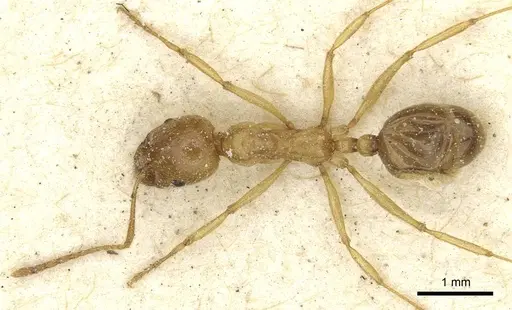
Literature
Loading...Loading products...