

Aphaenogaster flemingi
- Scientific Name
- Aphaenogaster flemingi
- Tribe
- Stenammini
- Subfamily
- Myrmicinae
- Author
- Smith, 1928
- Common Name
- Fleming's Collared Ant
- Distribution
- Found in 1 countries
Aphaenogaster flemingi Overview
Aphaenogaster flemingi (commonly known as the Fleming's Collared Ant) is an ant species of the genus Aphaenogaster. It is primarily documented in 1 countries , including United States of America. Detailed taxonomic data and occurrence records can be further explored via authoritative databases such as AntWeb or the Global Biodiversity Information Facility (GBIF).
Aphaenogaster flemingi - "Fleming's Collared Ant"
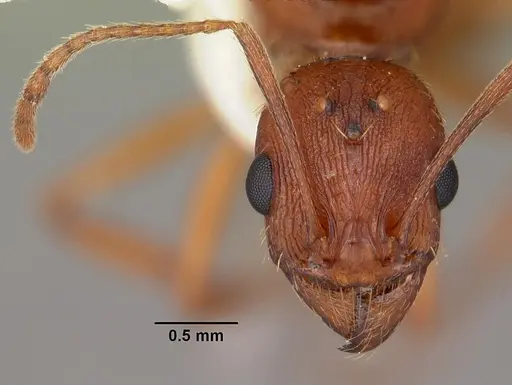
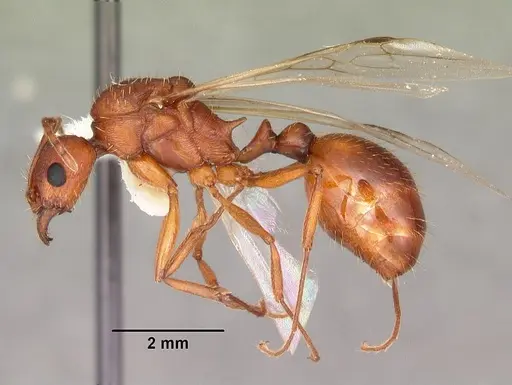
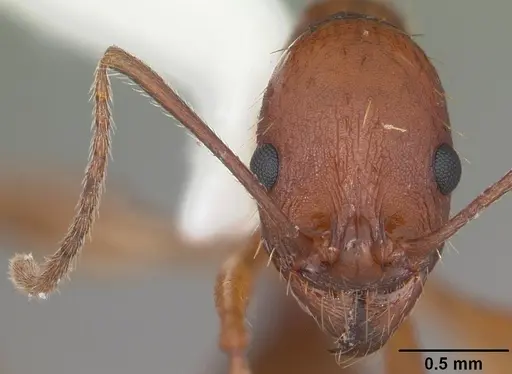
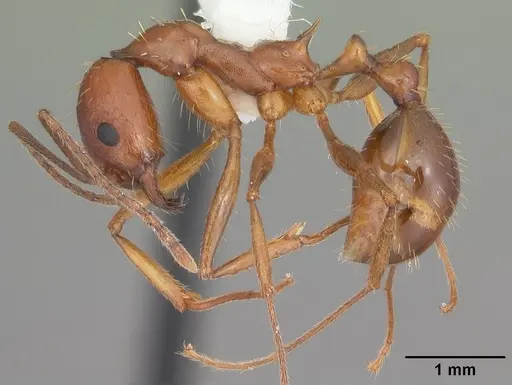
Aphaenogaster flemingi is a large, reddish-brown ant with very long, slender spines pointing upward from its rear and a shiny, polished-looking pronotum (the top section of the thorax). You can identify them in the field by their size, glossy appearance, and the arrowhead-shaped base of their antennae [1]. They live across the southeastern United States from North Carolina through Florida and west to Louisiana and Kentucky, favoring open, sandy habitats like pine flatwoods, scrub oak stands, and coastal dunes [1][2].
What makes these ants stand out is their unusual nest architecture and diet. In nature, they build deep soil nests topped with distinctive thatched turrets made of plant debris and grass bits [1]. They also have a taste for mushrooms, particularly Russula species, which they collect and feed to their brood alongside standard insect prey [1]. Adding to their uniqueness, they forage primarily at dusk and during the night, traveling in visible columns to find food [1].
Quick Summary
- Difficulty: Medium
- Origin & Habitat: Southeastern United States (North Carolina to Florida to Louisiana), open sandy pine flatwoods, scrub oak, and coastal dunes [1][2][3]
- Colony Type: Likely single-queen (monogyne) based on typical Aphaenogaster patterns, though specific colony structure has not been formally studied
- Colony: Monogyne
- Founding: Claustral
- Size & Growth:
- Queen: Approximately 6-8mm estimated [1]
- Worker: Approximately 5-6mm estimated, described as large for the genus [1]
- Colony: Up to approximately 300 workers [1]
- Growth: Moderate
- Development: Approximately 8-10 weeks at 24-25°C estimated [1] (Not directly studied, timeline inferred from related temperate Aphaenogaster species)
- Antkeeping:
- Temperature: 22-26°C (72-79°F) with a gentle gradient created by a heating cable on one side of the nest, room temperature (20-22°C) is acceptable but growth slows
- Humidity: Moderate humidity with damp but not waterlogged soil, sandy substrate that holds some moisture but drains well [1]
- Diapause: Likely needed for northern populations (North Carolina, Kentucky), southern Florida populations may remain active year-round or benefit from a brief cool period at 15-18°C
- Nesting: Deep soil nests in nature, captive colonies need naturalistic soil setups or deep Y-tong (AAC) nests that allow extensive vertical digging [1]
- Behavior: Nocturnal and crepuscular foragers that travel in visible columns at dusk and night. Generally calm and not aggressive, but climb well so require good barriers. They are opportunistic predators and scavengers with a specific interest in mushrooms [1]
- Common Issues: nocturnal activity means you may miss their foraging periods if you only check during the day., deep nesting instinct leads to extensive digging that can undermine shallow formicarium setups., small maximum colony size (300 workers) means growth plateaus faster than expected., specific mushroom dietary preference may require supplementation beyond standard ant foods.
Nest Preferences and Construction
In nature, Aphaenogaster flemingi digs deep soil nests, often exceeding 25 centimeters deep, usually at the base of grass clumps or small plants [1]. They typically create one or two entrance holes, with one entrance decorated with a distinctive thatched turret made of bits of vegetation and debris [1]. This turret probably helps regulate temperature or humidity while concealing the entrance from predators.
In captivity, you should provide a naturalistic soil setup or a deep Y-tong (AAC) nest that allows for vertical digging. Shallow plaster nests will not satisfy their instinct to excavate deep chambers. If using a soil setup, provide at least 15-20cm of substrate depth. They prefer sandy, well-draining soil similar to their native pine flatwoods, standard potting mix with added sand works well [1].
Feeding and Diet
Unlike many ants that rely heavily on honeydew, Aphaenogaster flemingi is an opportunistic predator and scavenger that brings arthropods back to the nest [1]. Remarkably, they also regularly consume mushrooms, particularly Russula species, and laboratory colonies have been maintained on mushroom pieces [1]. They are also attracted to molasses traps in the field, showing they accept sugar sources [1].
Feed your colony a varied diet of small live or dead insects (fruit flies, pinhead crickets, mealworm pieces) twice weekly. Offer a small piece of fresh mushroom (button mushroom or wild Russula if available) weekly, remove it if mold appears. Provide sugar water or honey water in a test tube or liquid feeder constantly. Because they forage at night, place food in the outworld in the evening and check for removal in the morning [1].
Temperature and Seasonal Care
Coming from the southeastern United States at approximately 30°N latitude, these ants tolerate warm conditions but experience seasonal temperature drops in the northern parts of their range [2]. Keep the nest area at 22-26°C with a heating cable on one side to create a gradient. Room temperature (20-22°C) is acceptable but growth will slow.
For colonies from northern populations (North Carolina, northern Georgia), provide a winter diapause (hibernation) period of 2-3 months at 10-15°C starting in November or December. Florida and southern Gulf Coast populations may remain active year-round at room temperature, though you can offer a cool period (15-18°C) for 6-8 weeks if activity drops naturally [1].
Behavior and Temperament
Aphaenogaster flemingi is primarily nocturnal and crepuscular, meaning workers emerge in columns at dusk or during the night to forage [1]. You may see little activity during daylight hours even in a healthy colony. They forage on the ground in open or semi-shaded areas and can travel in noticeable trails.
They are generally calm and not aggressive, but workers can climb glass and plastic well. Use a barrier like Fluon or talcum powder on the outworld rim to prevent escapes. They are not known to sting humans effectively, though like most ants they have mandibles for carrying food. Their relatively small colony size (up to 300 workers) means they never become overwhelming to house [1].
Identification and Similar Species
You can recognize Aphaenogaster flemingi by its large size, reddish-brown color, very long and slender upward-pointing propodeal spines, and a shiny pronotum that lacks heavy sculpturing [1]. The base of the antennae expands like an arrowhead. They closely resemble Aphaenogaster tennesseensis, but flemingi has more slender spines and a shinier appearance [1].
In the field, look for the combination of large size, shiny thorax, and the distinctive thatched turret at the nest entrance to distinguish them from other soil-nesting ants [1].
Frequently Asked Questions
Can I keep Aphaenogaster flemingi in a test tube?
For the founding stage, yes. The queen can start in a standard test tube setup with a water reservoir. However, move her to a soil nest or naturalistic setup once the first workers arrive, as they have strong instincts to dig deep chambers [1].
What do Aphaenogaster flemingi eat?
They eat arthropods (small insects), sugar sources like honeydew or sugar water, and notably mushrooms, particularly Russula species. In captivity, offer protein twice weekly, sugar water constantly, and try offering small pieces of fresh mushroom weekly [1].
Do Aphaenogaster flemingi need hibernation?
If your colony originates from northern parts of the range (North Carolina, Kentucky), yes, hibernate them at 10-15°C for 2-3 months. Southern Florida colonies may stay active year-round, though a brief cool period can be offered [1].
How big do Aphaenogaster flemingi colonies get?
Colonies remain relatively small, reaching approximately 300 workers at maximum [1]. They grow at a moderate pace, not exploding in numbers like some species.
Are Aphaenogaster flemingi good for beginners?
They are medium difficulty. While not aggressive and tolerant of some conditions, their nocturnal habits, need for deep nesting substrate, and specific dietary interest in mushrooms make them better for keepers with some experience than absolute beginners [1].
How long until Aphaenogaster flemingi get their first workers?
Development time is not directly studied, but based on related temperate Aphaenogaster species, expect roughly 8-10 weeks from egg to first worker at 24-25°C [1].
Do Aphaenogaster flemingi ants sting?
They possess a stinger but are not considered dangerous to humans. They are not aggressive and the sting is tiny and ineffective against human skin [1].
Why can't I see my Aphaenogaster flemingi foraging?
They are nocturnal and crepuscular, foraging at dusk and night. Check the outworld with a red light or check early morning to see their activity [1].
Can I keep multiple Aphaenogaster flemingi queens together?
Not recommended. This species is likely monogyne (single-queen), and combining unrelated queens has not been documented. They will likely fight [1].
What is the best nest type for Aphaenogaster flemingi?
Naturalistic soil setups or deep Y-tong (AAC) nests work best. They need material they can excavate deeply. Avoid shallow plaster nests [1].
References

This caresheet is licensed under CC BY-SA 4.0 .
CASENT0103575
View on AntWeb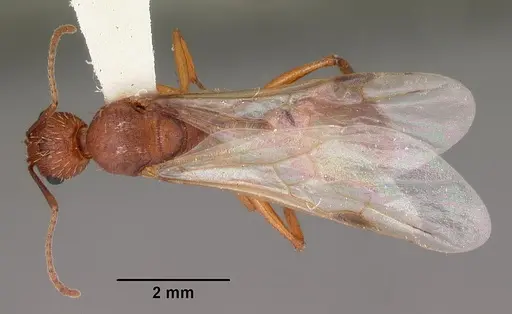
CASENT0103579
View on AntWeb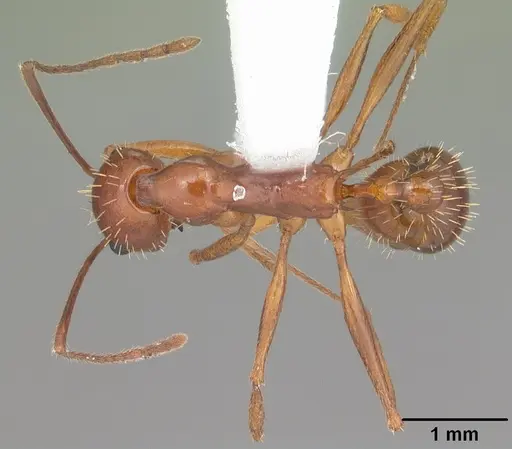
Literature
Loading...Loading products...