

Aphaenogaster charesi
- Scientific Name
- Aphaenogaster charesi
- Tribe
- Stenammini
- Subfamily
- Myrmicinae
- Author
- Salata & Borowiec, 2016
- Common Name
- Chares' Collared Ant
- Distribution
- Found in 1 countries
Aphaenogaster charesi Overview
Aphaenogaster charesi (commonly known as the Chares' Collared Ant) is an ant species of the genus Aphaenogaster. It is primarily documented in 1 countries , including Greece. Detailed taxonomic data and occurrence records can be further explored via authoritative databases such as AntWeb or the Global Biodiversity Information Facility (GBIF).
Aphaenogaster charesi - "Chares' Collared Ant"
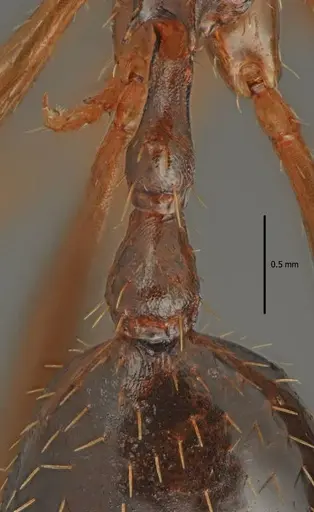
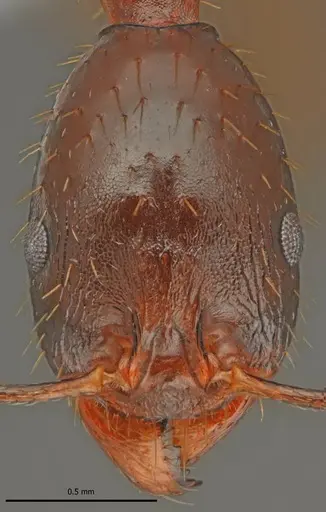
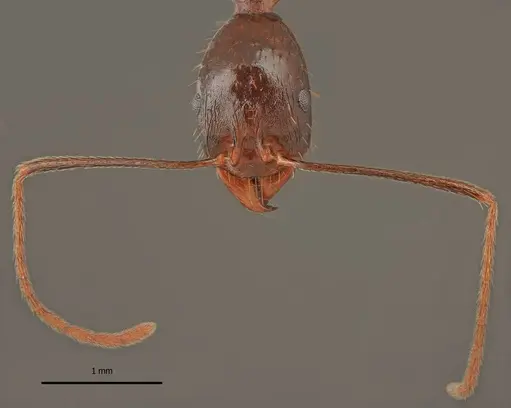
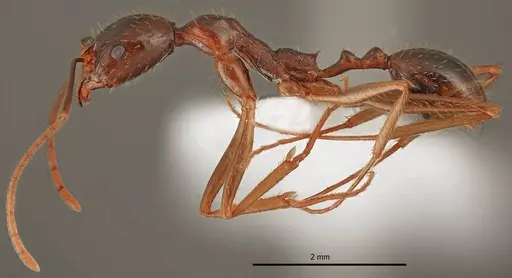
Aphaenogaster charesi is a small, pale brown ant with yellowish legs and antennae, native only to Rhodes Island in Greece [1][2]. Workers have noticeably long antennae and very small eyes compared to other ants in their group, with a finely textured head surface and short needle-like spines on the back of the thorax [1].
These ants live in extremely specific habitats: humid rock walls and cliff faces in shady spots near dripping water or springs [1][2]. All known colonies were found on wet rock walls within 2 meters of the ground, with nest entrances hidden in narrow rock crevices where water seeps down from above [1]. This makes them one of the most habitat-specialized European ants, tied completely to these damp microclimates.
Quick Summary
- Difficulty: Hard
- Origin & Habitat: Endemic to Rhodes Island, Greece (Dodecanese), specifically humid rock walls and cliff faces near water sources and springs [1][2]
- Colony Type: Unknown, no colony structure data available
- Size & Growth:
- Antkeeping:
- Temperature: Likely 20-25°C based on Mediterranean climate, but specific requirements remain unconfirmed, observe colony activity to adjust
- Humidity: Very high humidity required, nest material should feel damp to the touch, mimicking the wet rock walls where they live [1]
- Diapause: Unknown, likely requires a winter rest period given the Mediterranean distribution, but duration and temperature are unconfirmed
- Nesting: Rock crevices in humid, shaded walls, in captivity use naturalistic setups with flat stones and consistently moist substrate, or plaster nests with narrow chambers [1]
- Behavior: Slow-moving and cryptic, adapted to stable, humid microhabitats, temperament is unstudied but they are likely non-aggressive given their secluded lifestyle
- Common Issues: extremely high humidity requirements make them prone to desiccation if ventilation is too strong or watering is inconsistent, endemic to a single island with only two known localities, so wild collection raises serious ethical concerns, lack of captive breeding data means colony founding success is unpredictable, small size requires excellent escape prevention including fine mesh barriers
Natural History and Habitat
Aphaenogaster charesi is known from only two locations on Rhodes Island: Petaloudes (Valley of the Butterflies) and Epta Piges (Seven Springs) [1][2]. At Petaloudes, workers were found on a 6-meter high rock wall in a shady spot near the valley entrance, where water drips continuously from a small source above [1]. The nest entrance sat in a rock crevice about 2 meters from the bottom of the wall [1]. At Epta Piges, workers occupied a humid, cracked wall just 1 meter from the entrance to a 150-meter tunnel carved through rocky soil, near springs and woodland [1][2].
This species belongs to the cecconii group, which shows a strong preference for shadow and wet habitats across its range [2]. The ants appear to forage on these moist rock faces, likely feeding on small invertebrates and organic matter trapped in the crevices. Their extremely small eyes suggest they rely little on vision, instead using their long antennae to navigate and find food in the dim, humid cracks where they live [1].
Housing and Nest Setup
Recreating the humid rock wall habitat is essential for keeping Aphaenogaster charesi healthy. In nature they nest in narrow rock crevices that stay damp from water seepage [1]. You should provide a naturalistic setup with flat stones or slate pieces stacked to create narrow gaps and chambers, or use a plaster nest with small, tight chambers that retain moisture [1].
Keep the nest material consistently moist but not waterlogged, think damp sponge rather than wet mud. You may need to water more frequently than with other species to maintain the humidity levels they expect [1]. Provide minimal ventilation to prevent drying, but ensure some air movement to avoid mold. Keep the setup in a shaded area away from direct light, mimicking the shady rock walls they inhabit [1][2].
Temperature and Humidity
While specific temperature preferences remain unstudied, Rhodes Island has a Mediterranean climate with mild winters and warm summers. Start with temperatures around 20-25°C and adjust based on colony activity [1]. A gentle heat gradient can help them regulate their brood temperature, but avoid overheating as their humid habitats in nature stay relatively cool.
Humidity is far more critical than temperature for this species. The nest substrate must remain visibly moist at all times [1]. Check the moisture level daily, if the surface starts drying, add water immediately. You can create a humid microclimate by limiting ventilation and using water-retaining nest materials like plaster or natural stone [1]. Watch for condensation on the nest walls as a sign of adequate humidity, but ensure it does not become so wet that mold grows.
Feeding and Diet
The specific diet of Aphaenogaster charesi has not been documented, but related Aphaenogaster species are generally omnivorous [3]. They likely feed on small soft-bodied insects, springtails, and other tiny invertebrates found in the damp rock crevices, as well as honeydew and possibly seeds.
In captivity, offer small live prey such as fruit flies, springtails, or tiny pieces of mealworm. Provide sugar sources like honey water or sugar water in small drops. Observe what they accept and remove uneaten food promptly to prevent mold in the humid nest environment. Because they live in such stable, humid conditions, they may have lower metabolic rates than desert-dwelling ants, so do not overfeed.
Conservation and Collection Ethics
Aphaenogaster charesi is endemic to Rhodes Island, meaning it lives nowhere else on Earth [1][2]. All known specimens come from just two small localities, making this species extremely vulnerable to habitat disturbance or overcollection [1].
You should not collect these ants from the wild. If you acquire a colony, ensure it comes from ethical captive breeding rather than wild collection. Never release captive colonies back into the wild on Rhodes or elsewhere, as this could introduce diseases or disrupt the fragile local population [1]. Given their restricted range and specific needs, this species is best left to experienced keepers who can provide the specialized care required without depleting wild populations.
Frequently Asked Questions
Can I keep Aphaenogaster charesi in a test tube?
Test tubes may work for founding if the species proves to be claustral (queen seals herself in), but the extremely high humidity requirements make standard test tube setups risky. The cotton may dry out too quickly or become moldy. If attempting this, use very moist cotton and check daily, though a naturalistic setup with stones is preferable [1].
How long until first workers for Aphaenogaster charesi?
The development timeline from egg to worker is unknown for this species. Based on related Aphaenogaster species, it may take 6-10 weeks at suitable temperatures, but this is only an estimate [3].
Do Aphaenogaster charesi need hibernation?
It is unknown whether they require hibernation (winter rest), but given their Mediterranean distribution on Rhodes Island, they likely experience a cool, wet winter period. You may need to provide a cooling period of several months at 10-15°C, though this has not been confirmed through captive keeping [1].
What do Aphaenogaster charesi eat?
Their specific diet is unstudied, but related Aphaenogaster species eat small insects, seeds, and sugar sources like honeydew. Offer small live prey such as fruit flies or springtails, plus sugar water, and observe what they accept [3].
Are Aphaenogaster charesi good for beginners?
No. They require extremely high humidity, specific nest conditions mimicking wet rock walls, and have unknown colony founding requirements. Combined with their conservation status as an endemic species with a tiny range, they are best suited to experienced keepers [1][2].
Where do Aphaenogaster charesi live in the wild?
They are endemic to Rhodes Island, Greece, specifically at two locations: Petaloudes (Valley of the Butterflies) and Epta Piges (Seven Springs). They nest in humid rock walls and cliff faces near dripping water or springs [1][2].
How big do Aphaenogaster charesi colonies get?
Colony size is unknown. Only five worker specimens have been collected in total, so no data exists on maximum colony size or queen number [1].
Can I keep multiple Aphaenogaster charesi queens together?
Not recommended. The colony structure (whether they have one queen or multiple) is unknown. Combining unrelated queens is risky and has not been documented for this species [1].
References

This caresheet is licensed under CC BY-SA 4.0 .
LBC-GR01682-HOL
View on AntWeb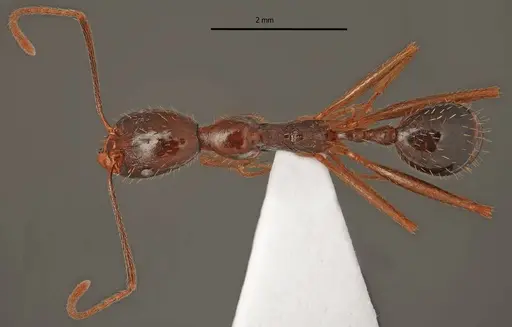
Literature
Loading...Loading products...