

Aphaenogaster aktaci
- Scientific Name
- Aphaenogaster aktaci
- Tribe
- Stenammini
- Subfamily
- Myrmicinae
- Author
- Kiran & Tezcan, 2008
- Distribution
- Found in 2 countries
Aphaenogaster aktaci Overview
Aphaenogaster aktaci is an ant species of the genus Aphaenogaster. It is primarily documented in 2 countries , including Greece, Türkiye. Detailed taxonomic data and occurrence records can be further explored via authoritative databases such as AntWeb or the Global Biodiversity Information Facility (GBIF).
Aphaenogaster aktaci
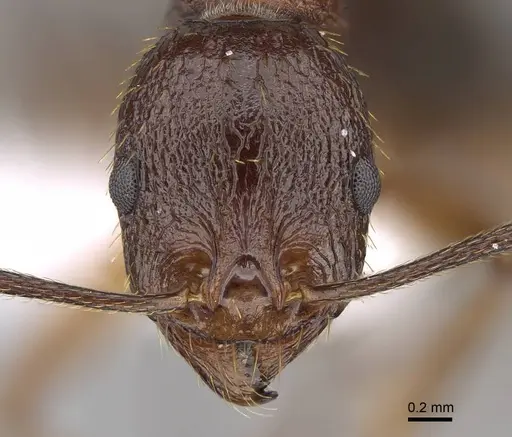
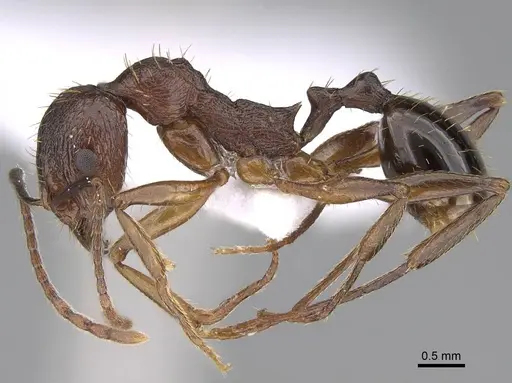
Aphaenogaster aktaci is a small to medium-sized ant with a dark reddish-brown to dark brown body and distinctive rough sculpturing across the head and thorax [1][2]. Workers range from roughly 4 to 5 mm in total length, while queens reach approximately 6 to 7 mm [3][2]. The species shows the strongest surface sculpturing and darkest coloration of the entire splendida species group, with a matte finish on the body contrasting against a smooth, shiny abdomen [2].
These ants inhabit a narrow range across western Turkey and the Greek island of Lesbos, living exclusively in mature forest ecosystems [2][3]. In Turkey, they nest under stones and occasionally under bark in old chestnut, oak, and pine forests [1][2]. Greek populations occupy similar microhabitats under large stones near streams in shaded deciduous valleys [2][4]. Their restricted distribution and specific habitat requirements make them a challenging species for captive care.
Quick Summary
- Difficulty: Hard
- Origin & Habitat: Western Turkey (Izmir and Isparta provinces) and Lesbos island, Greece [2][3]. Found in mature forests (50-70 year old chestnut, oak, and pine) at elevations between 229 and 1509 meters [1][4]. Nests occur under stones and bark in shaded, humid forest floor conditions [2].
- Colony Type: Unknown, likely single-queen based on genus patterns, but unconfirmed for this species.
- Size & Growth:
- Queen: Approximately 6-7 mm total length (head length 1.54-1.57 mm) [3][2].
- Worker: Approximately 4-5 mm total length (head length 1.13-1.57 mm) [1][2].
- Colony: Unknown, likely moderate (hundreds of workers) based on typical Aphaenogaster patterns.
- Growth: Unknown, likely moderate to slow.
- Development: Unknown, estimated 8-12 weeks at 22-25°C based on typical Aphaenogaster development patterns. (Development time is unconfirmed for this species. Nanitic workers (first generation) may emerge slightly faster but smaller.)
- Antkeeping:
- Temperature: Unknown, inferred from habitat. Start at 22-24°C with a gentle gradient. Elevation data suggests tolerance for cooler nights down to 15-18°C [4].
- Humidity: Moderate to high humidity required. Nest substrate should feel damp but not waterlogged, mimicking forest floor conditions near streams [2].
- Diapause: Unknown, likely required given temperate distribution at 38°N latitude and elevation range, but timing and duration unconfirmed [5][4].
- Nesting: Naturalistic setup with flat stones, or Y-tong/plaster nests with tight chambers. They nest under stones and bark in nature [2][4].
- Behavior: Temperament is unstudied. Small size (4-5 mm) creates escape risk requiring fine mesh barriers and tight-fitting lids [1]. Forest-dwelling habits suggest moderate activity levels and potential sensitivity to bright light.
- Common Issues: founding behavior is unconfirmed, treat as potentially claustral but be prepared to offer food if the queen appears stressed., specific humidity and temperature requirements are undocumented, you will need to observe colony response and adjust carefully., likely requires winter rest (diapause) but timing is unknown, watch for reduced activity in autumn as a cue., restricted natural range means wild-caught stock may carry parasites or pathogens from forest soil., slow growth potential combined with limited care data makes colonies vulnerable to beginner mistakes.
Natural History and Distribution
Aphaenogaster aktaci occupies a restricted range in the eastern Mediterranean, specifically western Turkey and the island of Lesbos in Greece [2][3]. In Turkey, the species occurs in Izmir and Isparta provinces, with collection records from 229 meters up to 1509 meters elevation [4].
The species shows strong habitat specificity. In Turkey, nests occur most frequently under stones in old forests of Pinus nigra, P. brutia, and various oak species [2]. Occasional nests appear under bark of dead tree trunks or in soil close to tree bases [2]. The original type series came from a 50-70 year-old chestnut forest in Izmir-Bozdag, with additional specimens from 25-35 year-old oak forests [1]. In Greece, colonies inhabit shaded areas of deciduous forests, specifically under large stones located close to streams in valleys overgrown with plane trees [2][4]. This association with mature, shaded forests and streamside microhabitats suggests requirements for stable moisture and moderate temperatures.
Nest Preferences
In nature, Aphaenogaster aktaci nests primarily under stones, using the space between the stone and soil surface [2][4]. They occasionally utilize spaces under bark on dead tree trunks [2]. Greek populations specifically select large stones near streams in shaded valleys, always avoiding direct sunlight [2].
For captive housing, replicate these conditions with a naturalistic setup featuring flat stones over a soil or plaster substrate. Alternatively, use a Y-tong (autoclaved aerated concrete) nest with tight, shallow chambers that mimic the narrow spaces under stones. Provide a humidity gradient with one side moister than the other, allowing the ants to select their preferred microclimate. The nest should offer darkness and security, these are not ants that thrive in exposed acrylic setups with bright lighting.
Colony Founding and Development
Founding behavior has not been documented for Aphaenogaster aktaci. Based on typical patterns within the genus, queens likely seal themselves in (claustral founding) and raise the first workers without food, but this remains unconfirmed for this species [6].
Development timelines are similarly unknown. Related temperate Aphaenogaster species typically require 8-12 weeks from egg to worker at temperatures around 22-25°C. First-generation workers (nanitics) are often smaller than subsequent workers and may develop slightly faster. Until specific data exists, maintain queens at approximately 22-24°C and monitor for the first worker emergence after approximately 2-3 months.
If attempting to found a colony, provide a small, dark founding chamber with minimal disturbance. Offer a small protein source (such as a tiny insect fragment) once weekly after the first month if the queen appears active, in case the species proves semi-claustral, though this is less likely given genus patterns.
Temperature and Seasonal Care
No thermal studies exist for Aphaenogaster aktaci. Their distribution at approximately 38°N latitude and elevations up to 1509 meters suggests they experience significant seasonal temperature variation [5][4]. Summer temperatures in their habitat likely range from 20-28°C during the day, dropping to 15-20°C at night.
Start captive colonies at 22-24°C with a slight gradient (warmer side 24-25°C, cooler side 20-22°C). Observe worker behavior: if they cluster on the warm side, increase heat slightly, if they avoid it, reduce temperature. Given their temperate distribution, they likely require a winter rest period (diapause) of 2-3 months at 10-15°C, though this is unconfirmed. Watch for reduced foraging and brood production in autumn as a cue to initiate cooling.
Feeding and Diet
Specific dietary preferences are unstudied for Aphaenogaster aktaci. Members of the genus Aphaenogaster are generally omnivorous, collecting seeds, scavenging dead insects, and tending honeydew-producing insects [6].
Offer a varied diet including small live insects (fruit flies, springtails, small cricket nymphs), protein sources (boiled egg, cooked chicken), and carbohydrates (honey water, sugar water). Some Aphaenogaster species store seeds in their nests, so offering small seeds (millet, chia) may be accepted. Remove uneaten protein within 24 hours to prevent mold growth in the humid conditions these ants prefer.
Behavior and Temperament
Behavioral studies are lacking for this species. Workers measure approximately 4-5 mm with relatively long legs and antennae typical of the splendida group [1][2]. Their small size means they can squeeze through surprisingly small gaps, use fine mesh (less than 1 mm) and apply barrier products like Fluon or talcum powder carefully to prevent escapes.
Their forest-floor lifestyle suggests they are sensitive to vibration and bright light. Keep the nest in a low-traffic area and provide cover or red film over observation areas. Activity patterns are unknown but likely diurnal or crepuscular given their habitat.
Frequently Asked Questions
Can I keep Aphaenogaster aktaci in a test tube?
Yes, test tubes work well for founding queens and small colonies. Use a standard 15-20 mm diameter test tube with a water reservoir blocked by cotton. Keep the tube in darkness or cover it with foil, as these forest-dwelling ants prefer dim conditions.
How long until first workers for Aphaenogaster aktaci?
Development time is unconfirmed for this species. Based on related Aphaenogaster species, expect approximately 8-12 weeks from egg to worker at 22-25°C. First workers (nanitics) may emerge slightly earlier but will be smaller than subsequent generations.
Do Aphaenogaster aktaci need hibernation?
Likely yes, but unconfirmed. Their distribution in temperate regions at elevations up to 1509 meters suggests they experience winter conditions [4]. Watch for reduced activity in autumn and provide a 2-3 month cooling period at 10-15°C if the colony slows down.
What do Aphaenogaster aktaci eat?
Specific diet is unstudied, but the genus is omnivorous. Offer small live insects, sugar water or honey water, and possibly small seeds. Remove uneaten protein quickly to prevent mold in their humid nest environment.
How big do Aphaenogaster aktaci colonies get?
Maximum colony size is unknown. Based on typical Aphaenogaster patterns, expect moderate growth to several hundred workers over several years. Growth rate is likely slow to moderate.
Are Aphaenogaster aktaci good for beginners?
No. Limited data on their specific care requirements, potential need for precise humidity and temperature conditions, and restricted natural range make them unsuitable for beginners. They are best kept by experienced antkeepers who can infer care from related species.
Do Aphaenogaster aktaci ants sting?
Stinging capability is unconfirmed for this species. Most small Aphaenogaster lack a functional sting capable of penetrating human skin, but they may bite or spray formic acid if threatened. Handle with standard precautions.
Can I keep multiple Aphaenogaster aktaci queens together?
Not recommended. Colony structure is unconfirmed, but combining unrelated queens risks fighting and mortality. Single-queen founding is the safest approach until polygyny is documented for this species.
Why are my Aphaenogaster aktaci dying?
Common causes include incorrect humidity (too dry or too wet), lack of winter rest if required, or stress from excessive light/vibration. Their specific needs are poorly documented, so careful observation and adjustment are necessary. Ensure escape prevention is excellent as small workers can desiccate quickly if they escape.
Best nest type for Aphaenogaster aktaci?
Naturalistic setups with flat stones over soil, or Y-tong (autoclaved aerated concrete) nests with tight, shallow chambers. They nest under stones in nature [2], so provide low-ceiling chambers and maintain moderate to high humidity.
Temperature requirements for Aphaenogaster aktaci?
Specific requirements are unknown. Start at 22-24°C with a gentle gradient. Their habitat at 38°N latitude and varying elevations suggests tolerance for moderate temperatures between 20-25°C, with cooler nights acceptable [5][4].
Where do Aphaenogaster aktaci come from?
They are native to western Turkey (Izmir and Isparta provinces) and the island of Lesbos in Greece [2][3]. Do not release them outside their native range.
References

This caresheet is licensed under CC BY-SA 4.0 .
CASENT0922687
View on AntWeb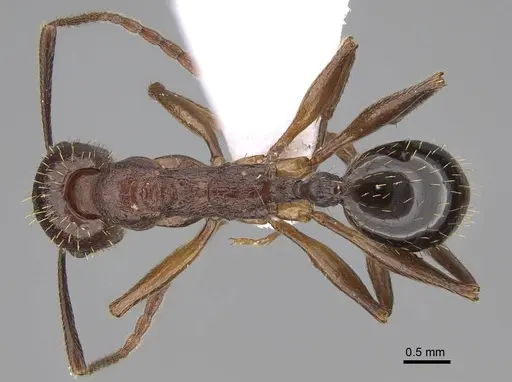
Literature
Loading...Loading products...