

Anochetus veronicae
- Scientific Name
- Anochetus veronicae
- Tribe
- Ponerini
- Subfamily
- Ponerinae
- Author
- Shattuck & Slipinska, 2012
- Distribution
- Found in 1 countries
Anochetus veronicae Overview
Anochetus veronicae is an ant species of the genus Anochetus. It is primarily documented in 1 countries , including Australia. Detailed taxonomic data and occurrence records can be further explored via authoritative databases such as AntWeb or the Global Biodiversity Information Facility (GBIF).
Anochetus veronicae
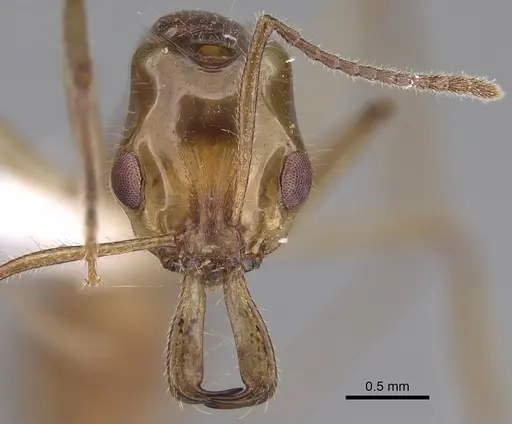
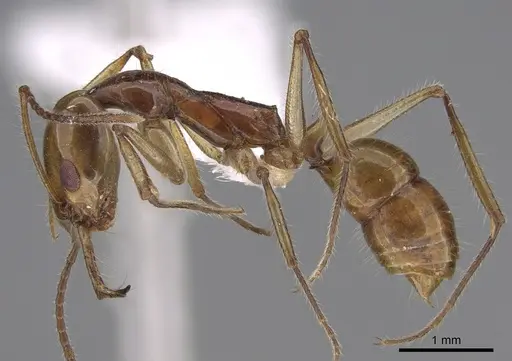
Anochetus veronicae is a tiny trap-jaw ant from the desert woodlands of northern Australia. Workers have a yellow-brown body with yellow heads and legs, measuring just 1.52-1.61mm in head length with distinctive spines on the rear thorax [1]. They are the only member of the Anochetus genus known to live in the drier desert regions of northern Australia, specifically around the Tanami Desert in the Northern Territory and Western Australia [1].
Unlike their forest-dwelling relatives, these ants survive in open woodlands despite the arid surroundings [1]. Scientists have only collected a handful of workers, so almost nothing is known about their queen size, colony structure, or founding behavior. This makes them one of the most challenging and experimental species for antkeepers.
Quick Summary
- Difficulty: Expert
- Origin & Habitat: Tanami Desert region of northern Australia (Northern Territory and Western Australia), in open woodlands [1]
- Colony Type: Likely single-queen based on typical Anochetus patterns, but unconfirmed
- Colony: Monogyne
- Size & Growth:
- Queen: Unknown, estimated 4-5mm based on worker proportions [2]
- Worker: Head length 1.52-1.61mm, head width 1.35-1.43mm [1]
- Colony: Unknown, likely under 100 workers based on genus patterns [2]
- Growth: Unknown, likely slow to moderate
- Development: Unknown, estimated 6-10 weeks based on small size and warm climate (No development studies exist, timeline is speculative)
- Antkeeping:
- Temperature: Warm and stable, roughly 24-28°C, inferred from desert woodland habitat [1]
- Humidity: Moderate humidity with well-drained nest material, avoid waterlogging despite desert origin [2]
- Diapause: Unknown, likely not required given tropical/desert location [2]
- Nesting: Unknown in nature, in captivity use small chambers with tight-fitting lids to prevent escapes
- Behavior: Trap-jaw predatory ants with spring-loaded mandibles for hunting. Likely slow-moving and cryptic. Extreme escape risk due to tiny size, can fit through gaps smaller than 1mm [1].
- Common Issues: escape prevention is critical, workers can squeeze through gaps smaller than 1mm., virtually no colony data exists, making captive care experimental and high-risk., trap-jaw hunting mechanism requires appropriate live prey to function properly., desert woodland origin means they may suffer in overly humid setups.
Nest Preferences
In nature, Anochetus veronicae lives in open woodlands within the Tanami Desert region [1]. While their exact nest sites remain undocumented, related Anochetus species typically nest in soil, rotting wood, or leaf litter. You should provide a setup that mimics woodland floor conditions, small chambers with tight spaces and secure lids. Because these ants are extremely small, any ventilation holes must be covered with fine mesh (less than 0.5mm) to prevent escapes. A plaster or Y-tong nest with narrow tunnels works better than open spaces, as trap-jaw ants often prefer tight quarters where they can ambush prey.
Feeding and Diet
As trap-jaw ants, Anochetus veronicae possess spring-loaded mandibles that snap shut at incredible speeds to capture prey. They are predators that likely hunt small soft-bodied insects and possibly termites. In captivity, offer tiny live prey such as springtails, fruit flies, or very small crickets. The movement of live prey triggers their hunting response. They may also accept sugar water or honeydew, but protein should form the bulk of their diet. Remove uneaten prey quickly to prevent mold in the nest. [2]
Temperature and Care
These ants come from the Tanami Desert in northern Australia, where temperatures regularly exceed 30°C [1]. However, they inhabit open woodlands rather than exposed sand, so they likely experience moderate microclimates. Keep your colony between 24-28°C with a gentle heat gradient. Because this is a desert-adapted species, they probably tolerate dry air better than tropical ants, but the nest material should never become bone-dry. Maintain moderate humidity by lightly moistening one side of the nest while keeping the other side drier.
Behavior and Temperament
Anochetus veronicae are trap-jaw ants, meaning they have specialized mandibles that can snap shut in milliseconds to capture prey or jump to safety. They are generally slow-moving and cryptic, preferring to hide in crevices rather than forage openly. Workers are extremely small, their heads are only about 1.4mm wide, meaning they can escape through incredibly tiny gaps [1]. You must use excellent barriers like Fluon or baby powder on vertical surfaces, and ensure all lids seal tightly.
Colony Founding
No one has documented how Anochetus veronicae queens start colonies. Based on other Anochetus species, founding is likely semi-claustral, meaning the queen might need to leave the nest to hunt during the founding stage. However, this is purely speculative. If you obtain a queen, offer her a small secure chamber with minimal disturbance and provide tiny prey items regularly. Success rates are unknown, so treat founding as experimental. [2]
Frequently Asked Questions
Can I keep Anochetus veronicae in a test tube?
Yes, but with extreme caution. Their tiny size means standard cotton plugs may not seal tightly enough. Use fine mesh or cotton packed very densely, and check for escapes daily.
How long until first workers for Anochetus veronicae?
Unknown. Based on their small size and warm habitat, estimate 6-10 weeks from egg to worker, but this is speculative.
Can I keep multiple Anochetus veronicae queens together?
Not recommended. Most Anochetus species are single-queen (monogyne), and combining queens has not been documented for this species.
Are Anochetus veronicae good for beginners?
No. They are extremely small, virtually unstudied, and require expert-level escape prevention. Only experienced keepers should attempt this species.
Do Anochetus veronicae need hibernation?
Probably not. They come from tropical desert regions where temperatures remain warm year-round.
What do Anochetus veronicae eat?
Small live insects such as springtails, fruit flies, and tiny crickets. Their trap-jaw mechanism requires moving prey to trigger properly.
How to prevent escapes with Anochetus veronicae?
Use barriers like Fluon or baby powder on all vertical surfaces. Ensure all ventilation is covered with mesh smaller than 0.5mm. Check that lids seal completely, as they can squeeze through gaps of 1mm or less.
References

This caresheet is licensed under CC BY-SA 4.0 .
CASENT0887810
View on AntWeb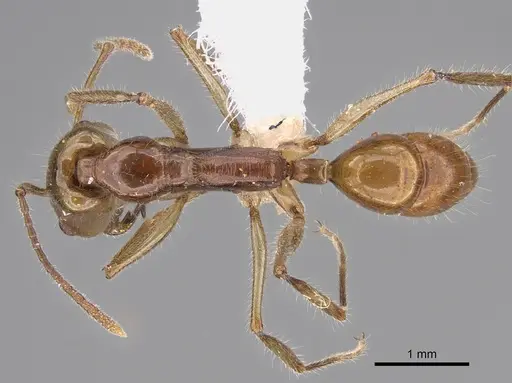
Literature
Loading...Loading products...