

Anochetus turneri
- Scientific Name
- Anochetus turneri
- Tribe
- Ponerini
- Subfamily
- Ponerinae
- Author
- Forel, 1900
- Distribution
- Found in 1 countries
Anochetus turneri Overview
Anochetus turneri is an ant species of the genus Anochetus. It is primarily documented in 1 countries , including Australia. Detailed taxonomic data and occurrence records can be further explored via authoritative databases such as AntWeb or the Global Biodiversity Information Facility (GBIF).
Anochetus turneri
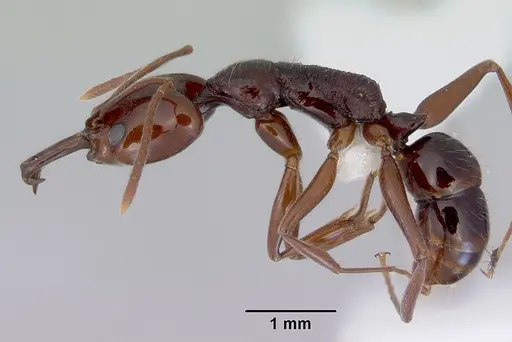
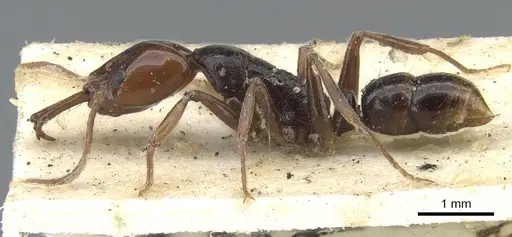
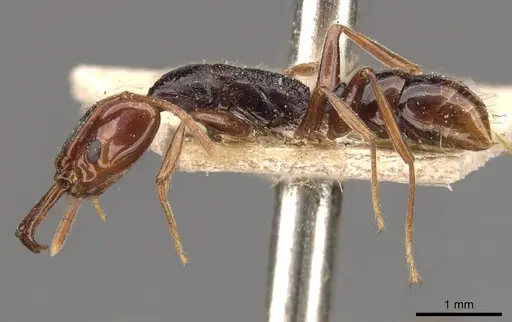
Anochetus turneri is a small trap-jaw ant native to Queensland, Australia. Workers measure roughly 3mm in total length with distinctive dark brown bodies and yellow-brown antennae [1]. You can identify them by their unique petiolar node which has a swollen base and a distinct angle near mid-height when viewed from the side, plus the transverse striations covering their mesonotum and propodeum that separate them from all other Australian Anochetus species [1].
These ants live in the leaf litter of rainforests and mangrove habitats from Cape York Peninsula south to Rockhampton [1][2]. Despite their wide distribution, they are uncommonly collected in the field, making them a rare find for antkeepers. As trap-jaw ants, they possess the characteristic spring-loaded mandibles used for hunting small prey, though they are not aggressive toward humans due to their small size.
Quick Summary
- Difficulty: Expert
- Origin & Habitat: Queensland, Australia (Cape York Peninsula to Rockhampton), found in rainforest and mangrove leaf litter [1][2]
- Colony Type: Unconfirmed, likely single-queen colonies based on typical Anochetus patterns
- Size & Growth:
- Queen: Unknown, likely 4-5mm based on similar Anochetus species
- Worker: Approximately 3mm total length (head length 1.45-1.48mm) [1]
- Colony: Unknown, likely under 100 workers based on litter-dwelling habits
- Growth: Slow
- Development: 8-12 weeks (estimated based on similar Anochetus species at 25-27°C) (Development time is unconfirmed, tropical species typically develop faster than temperate relatives but small colony size suggests slower overall growth)
- Antkeeping:
- Temperature: Keep warm and stable at 25-27°C. These tropical rainforest ants need consistent warmth without cold drops [2].
- Humidity: High humidity required, keep nest substrate damp but not waterlogged, similar to rainforest floor conditions. Aim for 70-80% relative humidity.
- Diapause: Likely not required, tropical Queensland species typically do not hibernate, though they may slow slightly in cooler months [2].
- Nesting: Naturalistic setups with leaf litter and soil work best. Small plaster or Y-tong nests with tight chambers are acceptable. Avoid large open spaces.
- Behavior: Predatory trap-jaw hunters that use their spring-loaded mandibles to catch small prey. They are not aggressive toward humans but can deliver a mild sting if handled. Their tiny size means they are escape risks despite being slow-moving [1].
- Common Issues: tiny size means they can escape through the smallest gaps in mesh or lids, use fine stainless steel mesh and barrier fluids., uncommonly collected in the wild so captive stock is extremely limited and hard to replace., likely require live prey which can be difficult to source consistently for such small ants., rainforest humidity requirements mean mold is a constant risk in captivity., slow growth means colonies remain small for long periods, requiring patience.
Identification and Appearance
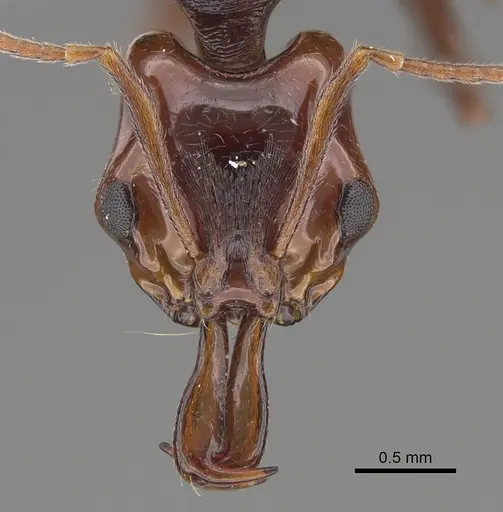
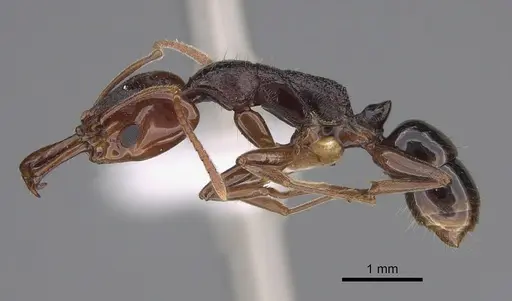
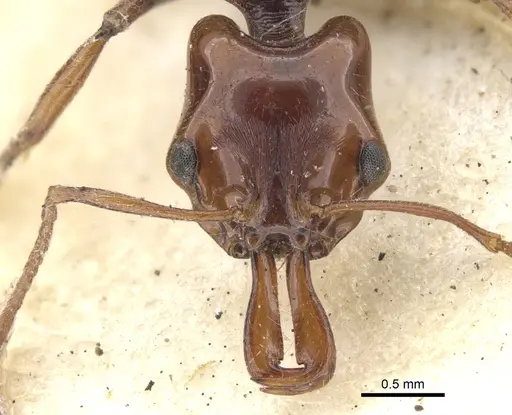
Anochetus turneri workers are small dark brown ants with several distinctive features that separate them from other Australian trap-jaw ants. The most obvious is their petiolar node, the waist segment between the thorax and abdomen, which has a swollen base and a sharp angle near mid-height when viewed from the side [1].
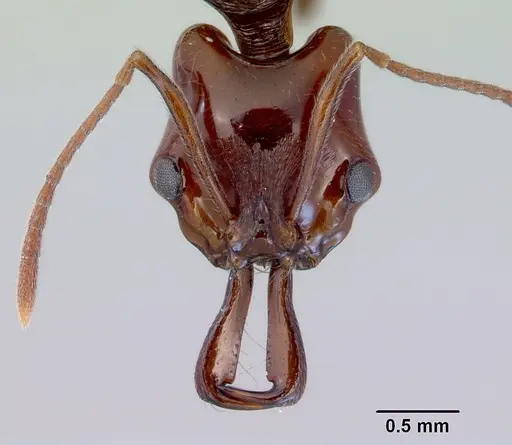
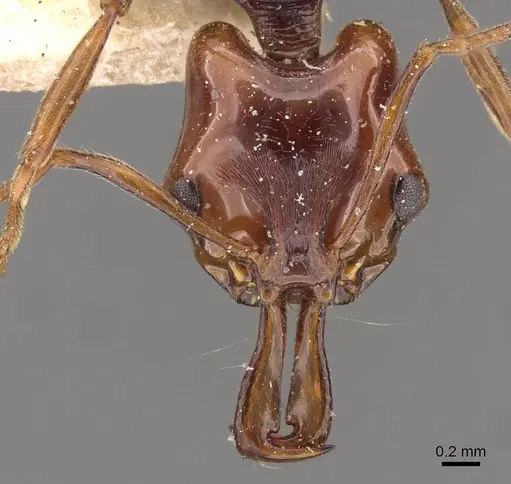
Their mesonotum (the middle section of the thorax) and propodeum (the section just before the waist) are covered in distinct horizontal striations that never appear smooth [1]. The pronotum (front part of the thorax) is smooth and shiny on top but sculptured on the sides. Their antennae are yellow-brown contrasting with the darker body, and their mandibles are relatively long at about 0.8mm [1].
When identifying your colony, look for the combination of the angled petiolar node and the striped thorax segments. No other Australian Anochetus shows this exact combination [1].
Habitat and Distribution
These ants live in the wet tropics and subtropics of Queensland, Australia, ranging from the tip of Cape York Peninsula down to approximately Rockhampton [1][2]. They are considered uncommonly collected despite this broad range, suggesting they are either genuinely rare or cryptic in their habits [1].
In the wild, they inhabit rainforest and mangrove ecosystems where they are found in leaf litter samples [1]. This tells you they are ground-dwelling ants that forage and nest in the decomposing plant matter on the forest floor. They prefer the humid, shaded conditions found under the canopy of these wet forests.
The combination of rainforest and mangrove habitats suggests they can tolerate some variation in soil salinity and moisture levels, though they consistently choose damp, protected microhabitats [1].
Housing and Nest Setup
Because Anochetus turneri are tiny ants from leaf litter habitats, you should house them in naturalistic setups that mimic their wild environment. A soil or plaster nest with a leaf litter foraging area works well. The nest chambers should be small and tight, these ants do not need large open spaces and will feel more secure in narrow tunnels.
Escape prevention is critical. At roughly 3mm in length, workers can squeeze through incredibly small gaps. Use fine stainless steel mesh (at least 300 micron) for ventilation, and apply barrier fluids like Fluon or talcum powder to the upper walls of their outworld. Check all seams and joints in your formicarium carefully.
Maintain high humidity by keeping the nest substrate damp but not soaking wet. You can achieve this by limiting ventilation and misting the foraging area occasionally. However, ensure some air circulation to prevent mold growth in the damp conditions these ants prefer. [1]
Feeding and Diet
As trap-jaw ants, Anochetus turneri are specialized predators that hunt small live prey. In captivity, you should offer tiny insects such as springtails, fruit flies (Drosophila), or newly hatched pinhead crickets. The prey should be small enough that workers can carry them back to the nest.
You can offer sugar sources like honey water or sugar water in small drops, but protein is likely their primary nutritional need. Feed small amounts frequently rather than large amounts rarely to prevent mold and ensure freshness.
Because these ants are uncommon in captivity, their exact dietary preferences are not well documented. Observe your colony to see what they accept readily. If they ignore certain prey types, remove the uneaten food within 24 hours to prevent mites or mold in the humid environment they require.
Temperature and Environmental Care
Keep your colony warm and stable. As a tropical Queensland species, Anochetus turneri likely requires temperatures between 25-27°C year-round. You can achieve this with a heating cable or heat mat placed on one side of the nest to create a gentle gradient, allowing the ants to choose their preferred temperature.
Humidity is equally important. Maintain damp substrate conditions similar to a rainforest floor, the nest material should feel moist to the touch but not drip water. You may need to water the nest weekly or biweekly depending on your local climate and ventilation setup.
These ants probably do not require a winter hibernation or diapause period since they come from tropical regions without cold winters. However, you may notice reduced activity during cooler months if your room temperature drops below 20°C. If this happens, simply maintain normal care and wait for warmer conditions. [2]
Colony Founding and Growth
The founding behavior of Anochetus turneri has not been directly documented in scientific studies. Based on patterns from other Anochetus species, queens are likely semi-claustral, meaning they must leave the nest to forage for food during the founding stage rather than sealing themselves in and living off stored fat reserves.
If you obtain a founding queen, provide her with a small starting chamber and regular access to tiny prey items. Do not assume she will survive without food like claustral founding queens (such as Camponotus or Lasius).
Colony growth is likely slow. These are small ants with small colonies that probably raise only a few workers at a time. Do not expect explosive growth like you would see in harvester ants or wood ants. Patience is essential, it may take a year or more for a colony to reach even 50 workers.
Frequently Asked Questions
How do I identify Anochetus turneri?
Look for the unique petiolar node that has a swollen base and a distinct angle near mid-height when viewed from the side, plus transverse striations (horizontal lines) on the mesonotum and propodeum. No other Australian Anochetus has this combination [1].
What size are Anochetus turneri workers?
Workers are small, with head lengths of 1.45-1.48mm and total body lengths around 3mm including their mandibles [1].
Do Anochetus turneri need hibernation?
Probably not. They come from tropical Queensland rainforests and mangroves where temperatures remain warm year-round. Keep them at 25-27°C consistently [2].
How long until Anochetus turneri get their first workers?
Development time is unconfirmed, but based on similar small trap-jaw ants, expect roughly 8-12 weeks from egg to worker at 25-27°C.
Can I keep Anochetus turneri in a test tube?
Yes, but carefully. Their small size means they can escape through tiny gaps. Use cotton plugs pulled tight and consider barrier fluids on the tube walls. Move them to a proper formicarium once you have 10-20 workers.
What do Anochetus turneri eat?
They are predatory trap-jaw ants that hunt small live prey. Feed them springtails, fruit flies, or tiny crickets. They may also accept sugar water, but protein is essential.
Are Anochetus turneri good for beginners?
No. They are uncommonly collected, require live prey, need precise humidity and temperature control, and their tiny size makes escape prevention difficult. They are best suited for experienced keepers [1].
Where do Anochetus turneri live in the wild?
They inhabit rainforest and mangrove leaf litter in Queensland, Australia, from Cape York Peninsula south to Rockhampton [1][2].
Can I keep multiple Anochetus turneri queens together?
Not recommended. While the exact colony structure is unconfirmed, most Anochetus species are monogyne (single queen). Combining unrelated queens will likely result in fighting.
References

This caresheet is licensed under CC BY-SA 4.0 .
CASENT0172372
View on AntWeb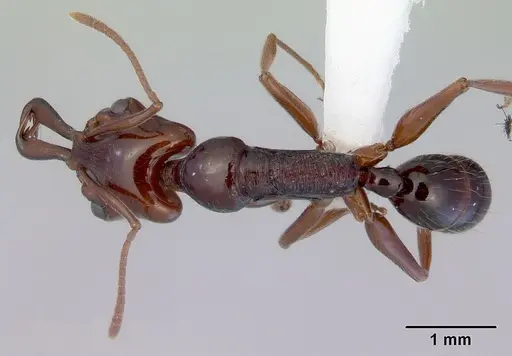
CASENT0887808
View on AntWeb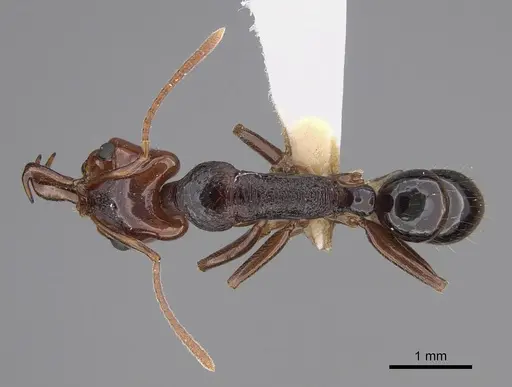
CASENT0902450
View on AntWeb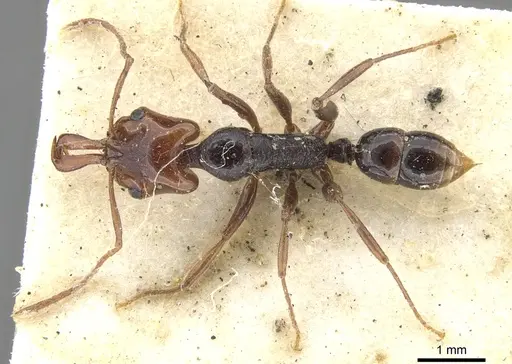
CASENT0907415
View on AntWeb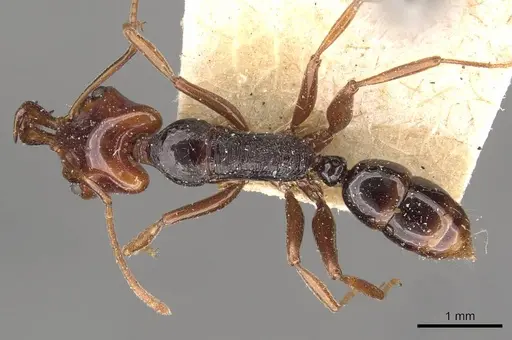
Literature
Loading...Loading products...