

Anochetus rufus
- Scientific Name
- Anochetus rufus
- Tribe
- Ponerini
- Subfamily
- Ponerinae
- Author
- Jerdon, 1851
- Distribution
- Found in 1 countries
Anochetus rufus Overview
Anochetus rufus is an ant species of the genus Anochetus. It is primarily documented in 1 countries , including India. Detailed taxonomic data and occurrence records can be further explored via authoritative databases such as AntWeb or the Global Biodiversity Information Facility (GBIF).
Anochetus rufus
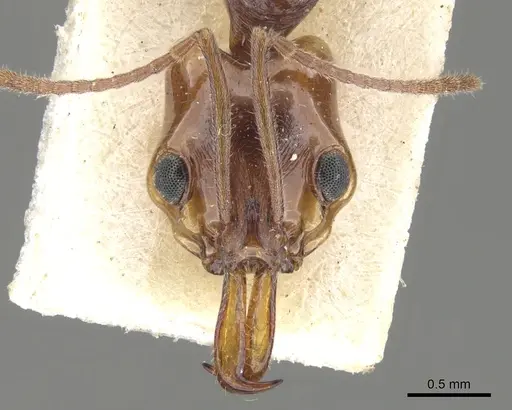
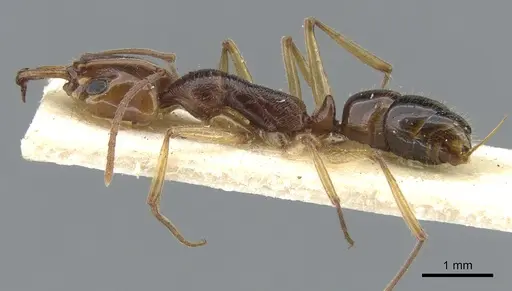
Anochetus rufus is a small trap-jaw ant endemic to India, recognizable by its reddish-brown head, thorax, and legs contrasting sharply with a dark brown abdomen [1]. Workers possess the characteristic long, linear mandibles with three sharp teeth at the tips that snap shut at remarkable speeds to capture prey [1]. Found across several Indian states including Tamil Nadu, Kerala, Karnataka, Maharashtra, Gujarat, Punjab, Rajasthan, and West Bengal, they typically nest under stones in shaded jungle habitats [2].
These ants are cryptic hunters that rely on their specialized mandibles not only for subduing small arthropods but also for defensive snapping displays. While their exact biology remains poorly documented, they share the general trap-jaw ant lifestyle of solitary foraging and small colony sizes typical of the genus.
Quick Summary
- Difficulty: Hard
- Origin & Habitat: Endemic to India, recorded from Gujarat, Karnataka, Maharashtra, Punjab, Rajasthan, Tamil Nadu, and West Bengal [2]. Found under stones in jungle and forest floor habitats [1].
- Colony Type: Likely single-queen colonies based on typical Anochetus patterns, though specific structure is unconfirmed.
- Size & Growth:
- Queen: Unknown (estimated 6-8mm based on genus patterns).
- Worker: Unknown (estimated 4-6mm based on genus patterns).
- Colony: Unknown (likely under 500 workers based on related species).
- Growth: Slow
- Development: Unknown (estimated 8-12 weeks at 25-28°C based on tropical Ponerinae patterns). (Timeline is inferred from related trap-jaw ants. Tropical temperatures likely accelerate development compared to temperate species.)
- Antkeeping:
- Temperature: 24-28°C [1]. Start at 25°C and adjust based on colony activity.
- Humidity: Moderate to high. Keep nest substrate moist but not waterlogged, similar to damp soil under stones in jungle habitats.
- Diapause: No, tropical species from India that remains active year-round.
- Nesting: Small, tight chambers under stones or in soil. A naturalistic setup with flat stones, or a small Y-tong nest with narrow passages, works well.
- Behavior: Cryptic and predatory. Workers hunt small live prey using their trap-jaw mandibles, which snap shut when trigger hairs touch prey. They are fast-moving when hunting but generally avoid confrontation with humans. Their small size and speed create significant escape risks.
- Common Issues: difficulty sourcing and maintaining appropriately small live prey such as springtails or fruit flies., slow colony growth means beginners may overfeed or disturb the nest too frequently., easily stressed by bright light, vibrations, or dry conditions., tiny size allows escape through gaps that larger ants cannot fit through.
Nest Preferences
In nature, Anochetus rufus nests under stones in jungle habitats, creating small chambers in the soil or leaf litter beneath [1]. This preference for tight, secure spaces under cover means captive colonies do well in naturalistic setups with flat stones over a soil or plaster base, or in small Y-tong nests with narrow chambers. Avoid tall, open spaces that leave them exposed. Provide darkness and security, these are not display ants that tolerate bright lights. The nest should offer humid microhabitats with some slightly drier areas so workers can regulate their moisture needs.
Feeding and Diet
As trap-jaw ants, Anochetus rufus are specialized predators that hunt small live prey. In captivity, they require appropriately sized food items such as springtails, fruit flies, or very small crickets. The prey must be small enough for the workers to handle with their mandibles but large enough to trigger their hunting response. They may accept sugar water or honeydew sources, but protein from live prey is essential for colony growth. Feed small amounts frequently rather than large boluses that could rot, as colonies remain small and cannot process excess food quickly.
Temperature and Care
Originating from tropical India, Anochetus rufus requires stable warmth year-round. Keep them at 24-28°C with minimal fluctuation [1]. A heating cable on one side of the nest creates a beneficial gradient, but ensure the nest does not dry out from the heat. They do not require hibernation and will remain active throughout the year. Maintain moderate to high humidity by keeping the substrate damp but not waterlogged, matching the moist conditions under stones in their native jungle floor habitats.
Behavior and Trap-Jaw Hunting
Anochetus rufus possesses the characteristic trap-jaw mechanism seen in the genus: long mandibles that can snap shut in milliseconds when sensory hairs on the inner surface touch prey [1]. Workers are solitary hunters that rely on stealth and speed rather than group foraging. When disturbed, they may snap their mandibles against the substrate as a defensive display or to jump away from threats. They are generally not aggressive toward humans but will defend themselves if cornered. Their behavior is cryptic, they prefer to stay hidden and hunt opportunistically rather than maintain busy foraging trails.
Colony Founding
Founding behavior is unconfirmed for this species. Based on typical Anochetus patterns, queens likely found colonies alone, but whether they seal themselves in (claustral) or forage during founding (semi-claustral) has not been documented. If attempting to found a colony, provide the queen with a small, dark chamber and offer tiny prey items regularly to see if she accepts food. Success rates for founding Anochetus in captivity are generally low without established protocols.
Frequently Asked Questions
Can I keep Anochetus rufus in a test tube?
Test tubes can work for founding queens or very small colonies, but ensure the tube is small enough to make them feel secure. Provide a dark cover and keep the water reservoir small to prevent flooding. Move them to a naturalistic setup or small formicarium once the colony grows beyond 10-20 workers.
What do Anochetus rufus eat?
They are specialized predators requiring small live prey such as springtails, fruit flies, or tiny crickets. They hunt using their trap-jaw mandibles. While they may accept sugar water, live protein is essential for colony development.
Do Anochetus rufus ants sting?
Like most trap-jaw ants in the subfamily Ponerinae, they possess a stinger and can sting if threatened, though they generally prefer to flee or snap their mandibles defensively. The sting is typically mild compared to larger stinging ants.
How long until Anochetus rufus first workers arrive?
The egg-to-worker timeline is unknown for this species. Based on related tropical trap-jaw ants, expect roughly 8-12 weeks at 25-28°C, though this is an estimate.
Do Anochetus rufus need hibernation?
No. They are a tropical species from India and remain active year-round. Do not cool them for hibernation as this can stress or kill the colony.
Can I keep multiple Anochetus rufus queens together?
Not recommended. While the exact colony structure is unconfirmed, most Anochetus species are single-queen (monogyne). Combining unrelated queens will likely result in fighting and mortality.
Are Anochetus rufus good for beginners?
No. They are challenging due to their small colony size, slow growth, need for small live prey, and poorly documented care requirements. They are better suited for experienced keepers familiar with trap-jaw ants.
How big do Anochetus rufus colonies get?
Colony size is unknown, but based on related Anochetus species, they likely remain small with fewer than 500 workers, possibly much less.
Why are my Anochetus rufus dying?
Common causes include prey that is too large, substrate that is too dry or too wet, excessive disturbance or light, or temperature fluctuations. Ensure you are offering tiny live prey and maintaining stable tropical conditions.
How do I prevent Anochetus rufus from escaping?
Their small size (estimated 4-6mm) means they can squeeze through tiny gaps. Use tight-fitting lids, fine mesh ventilation, and barrier methods like Fluon or talcum powder on vertical surfaces. Check for gaps in tubing connections.
References

This caresheet is licensed under CC BY-SA 4.0 .
CASENT0902447
View on AntWeb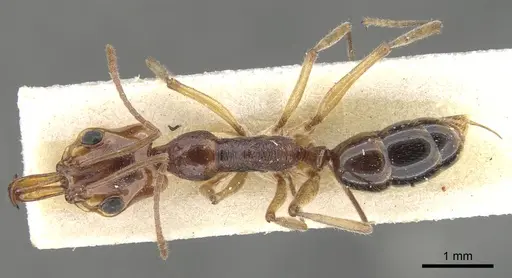
Literature
Loading...Loading products...