

Anochetus myops
- Scientific Name
- Anochetus myops
- Tribe
- Ponerini
- Subfamily
- Ponerinae
- Author
- Emery, 1893
- Distribution
- Found in 4 countries
Anochetus myops Overview
Anochetus myops is an ant species of the genus Anochetus. It is primarily documented in 4 countries , including China, Indonesia, India. Detailed taxonomic data and occurrence records can be further explored via authoritative databases such as AntWeb or the Global Biodiversity Information Facility (GBIF).
Anochetus myops
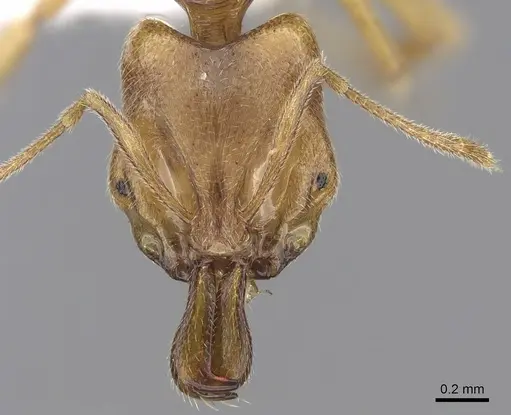
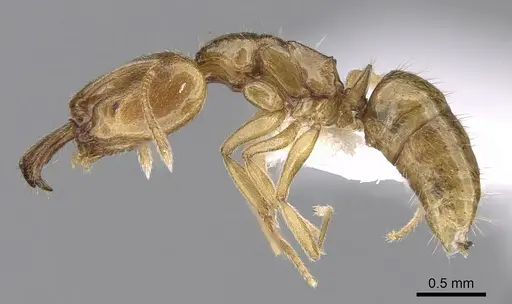
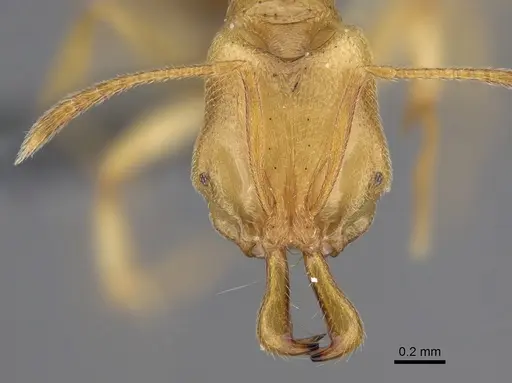
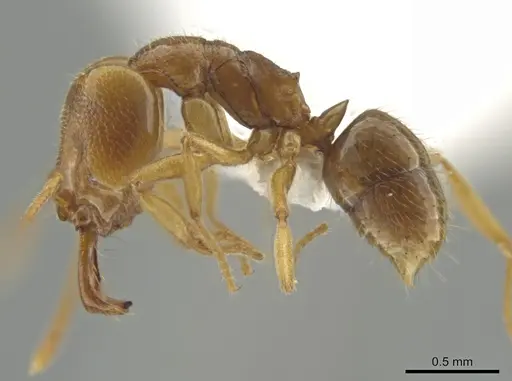
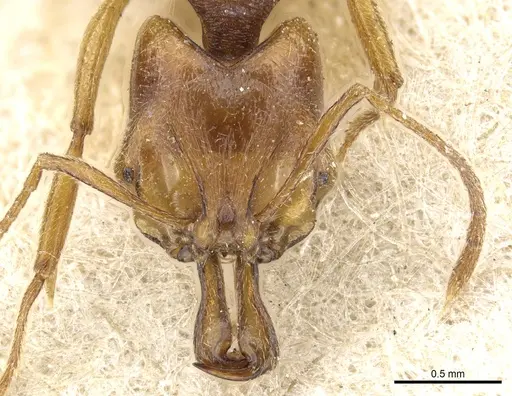
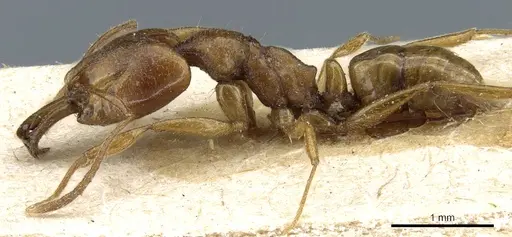
Anochetus myops is a tiny trap-jaw ant native to Southeast Asia, found from Malaysia and Thailand through India to Borneo and Myanmar [1][2][3]. Workers measure just 4.5 mm and show a brownish-yellow coloration with short, broad mandibles that end in three long, sharp teeth [2]. Their most noticeable feature is their extremely small eyes, an adaptation for life in darkness [4].
These ants are cryptobiotic, meaning they live hidden in soil and leaf litter in primary forests and limestone forests, avoiding light [4][5]. They form remarkably small colonies, averaging only 19 workers and rarely exceeding 37 individuals [6]. This combination of subterranean habits, tiny colony size, and specific humidity needs makes them a specialized species for experienced antkeepers.
Quick Summary
- Difficulty: Medium
- Origin & Habitat: Southeast Asia including Malaysia, Thailand, India (Meghalaya, Karnataka, Tamil Nadu), Borneo, and Myanmar, found in primary forest and limestone forest leaf litter [1][5][3]
- Colony Type: Likely single-queen based on tiny colony sizes, though exact structure unconfirmed
- Colony: Monogyne
- Size & Growth:
- Antkeeping:
- Temperature: 24-28°C (inferred from tropical Indomalaya distribution). Provide a gentle heat gradient with heating cable on one side.
- Humidity: High humidity required, keep substrate damp like forest leaf litter. Surface should feel moist but not waterlogged [4].
- Diapause: No, tropical species active year-round
- Nesting: Dark, humid nests with soil or leaf litter substrate, small chambers suited to their tiny size. Avoid bright light [4][5].
- Behavior: Cryptobiotic (darkness-loving) and photophobic with reduced eyes [4]. They hunt small prey using trap-jaw mandibles. Non-aggressive. Their 4.5 mm size makes escape prevention critical [2].
- Common Issues: tiny 4.5 mm workers can escape through gaps that larger ants cannot, use fine mesh and tight seals., colonies die quickly if substrate dries out, maintain damp leaf litter conditions at all times., overfeeding small colonies of under 40 workers leads to mold and stress in the humid environment., bright light harms cryptobiotic workers, keep nests dark or covered.
Cryptobiotic Lifestyle and Natural History
Anochetus myops has evolved for life in darkness. Their extremely small eyes and reduced pigmentation mark them as cryptobiotic ants that live in soil and leaf litter [4]. In nature, they inhabit primary forests and limestone forests, showing a preference for undisturbed habitats over secondary growth [5]. They were found in 11 regions of primary forest and rubber plantations but notably absent from secondary forest [5].
This means you must replicate dark, humid forest floor conditions. Keep their nest area dark, cover test tubes with foil or use opaque nest materials. Bright light stresses these ants and can cause them to remain hidden and inactive. They prefer the damp, stable conditions found under stones and rotting wood on the forest floor.
Nest Setup and Substrate
In captivity, simulate their natural leaf litter habitat. Use a setup with damp coco fiber, leaf litter, or fine soil as substrate. The nest should offer small, tight chambers appropriate for 4.5 mm ants, avoid tall open spaces where they feel exposed.
Maintain high humidity, the substrate should feel damp to the touch but not soggy. Ventilation must balance humidity retention with fresh air to prevent mold. A naturalistic setup with flat stones or bark pieces over damp substrate works well, or a small Y-tong nest kept in a dark cabinet. Because they are cryptobiotic, they will spend most of their time in the darkest portions of the nest. [4][2]
Feeding and Hunting Behavior
Like all Anochetus, they possess trap-jaw mandibles that snap shut at high speed to capture prey. Feed small live insects appropriate for their size: springtails, fruit flies, or very small crickets. The prey should be small enough for workers to handle alone given their tiny colony size.
Offer protein twice weekly. Sugar sources like honey water may be accepted but are less important than protein for these predators. Remove uneaten prey quickly to prevent mold in the humid environment. Because colonies max out at around 37 workers, they do not need large amounts of food, a few springtails per feeding is sufficient. [6]
Temperature and Year-Round Care
As a tropical species from Malaysia, Thailand and Borneo, Anochetus myops needs steady warmth. Keep them at 24-28°C with minimal fluctuation. They do not require hibernation or winter rest, maintain the same conditions year-round.
A heating cable on one side of the nest creates a gentle gradient, but ensure it doesn't dry out the substrate. Place heating elements on top or side of the nest, not underneath, to prevent water evaporation that causes condensation. Watch for condensation as a sign of humidity levels, adjust ventilation if water droplets form on walls. [1][3]
Colony Founding
Founding behavior for this specific species is unconfirmed. Most Anochetus queens are semi-claustral, meaning the queen must leave the nest to hunt during the founding stage rather than sealing herself in and living off stored fat. If this holds true for A. myops, founding queens would need access to small prey items.
However, without direct observation, start with the assumption that the queen may need food. Offer small insects weekly while ensuring she has a dark, humid chamber. Do not disturb the founding chamber frequently as these cryptobiotic queens are sensitive to light and vibration.
Frequently Asked Questions
Can I keep Anochetus myops in a test tube?
Yes, but cover the test tube with foil or place it in a dark box to block light. They are cryptobiotic ants with reduced eyes that suffer in bright conditions [4]. Ensure the cotton remains damp to maintain humidity.
Do Anochetus myops need hibernation?
No. They are tropical ants from Southeast Asia and remain active year-round at 24-28°C [3].
How big do Anochetus myops colonies get?
Very small. Colonies average 19 workers and rarely exceed 37 individuals [6]. This makes them manageable for small setups but means growth is slow.
How long until Anochetus myops get their first workers?
Unknown for this species. Based on tropical Anochetus patterns, expect roughly 8-12 weeks at 25-28°C, but this is an estimate.
What do Anochetus myops eat?
Small live prey such as springtails, fruit flies, and tiny insects. They use their trap-jaw mandibles to hunt. Offer protein twice weekly.
Are Anochetus myops good for beginners?
No. Their tiny 4.5 mm size makes escapes likely, they require high humidity and darkness, and they need live prey. They suit keepers with some experience.
Why are my Anochetus myops always hiding?
This is normal. They are cryptobiotic ants adapted to darkness with reduced eyes [4]. Bright light stresses them. Keep their nest dark and check them only with red light or briefly.
References

This caresheet is licensed under CC BY-SA 4.0 .
CASENT0281882
View on AntWeb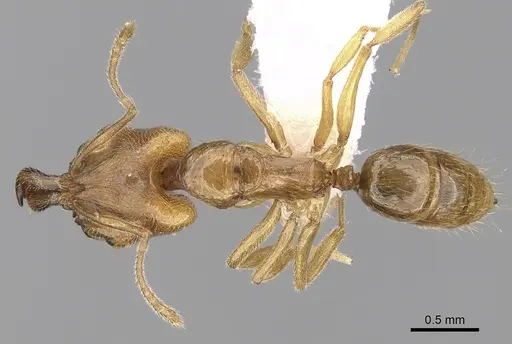
CASENT0387787
View on AntWeb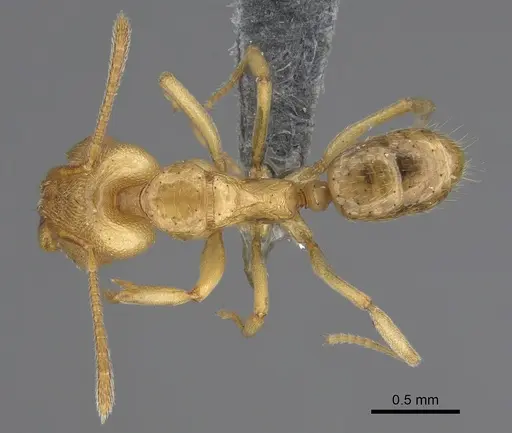
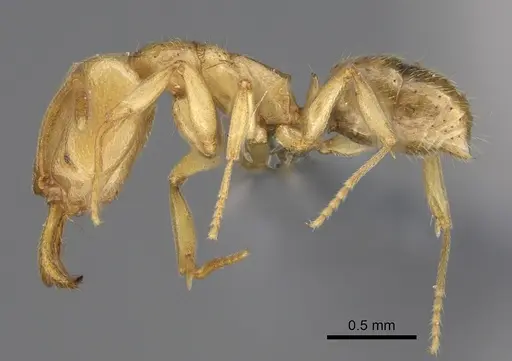
CASENT0634708
View on AntWeb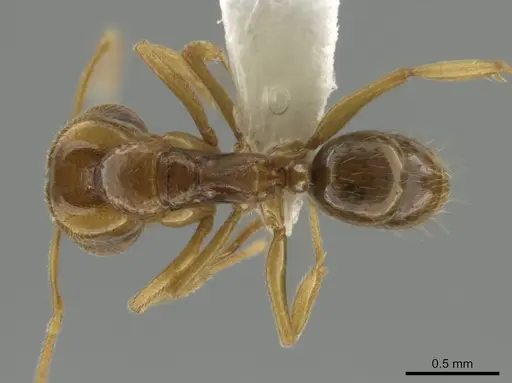
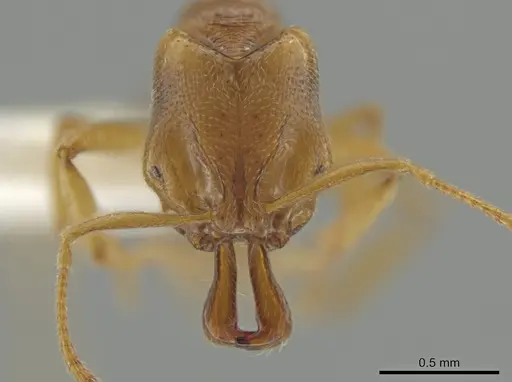
CASENT0903979
View on AntWeb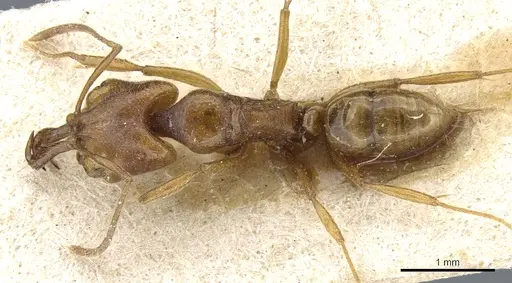
Literature
Loading...Loading products...