

Anochetus modicus
- Scientific Name
- Anochetus modicus
- Tribe
- Ponerini
- Subfamily
- Ponerinae
- Author
- Brown, 1978
- Distribution
- Found in 2 countries
Anochetus modicus Overview
Anochetus modicus is an ant species of the genus Anochetus. It is primarily documented in 2 countries , including Indonesia, Malaysia. Detailed taxonomic data and occurrence records can be further explored via authoritative databases such as AntWeb or the Global Biodiversity Information Facility (GBIF).
Anochetus modicus
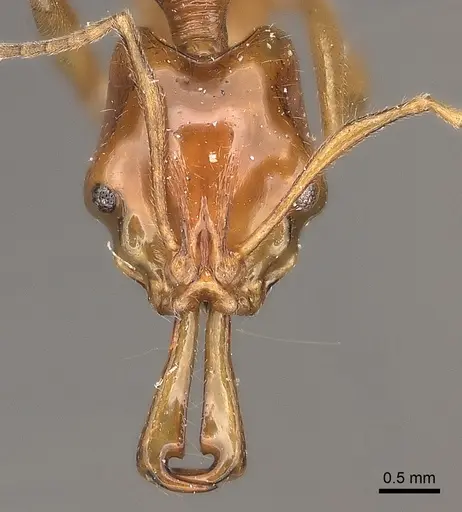
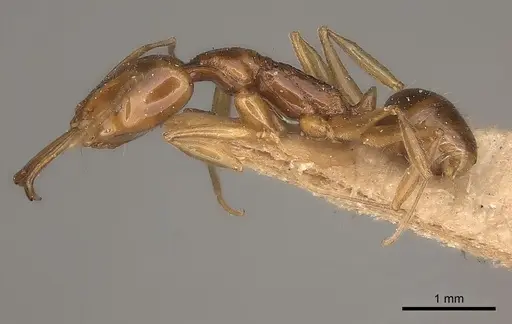
Anochetus modicus is a small trap-jaw ant from Southeast Asia, measuring 4.8-5.9 mm with rich brownish-red bodies and lighter yellowish legs and antennae [1]. They belong to the Anochetus risii group, identifiable by their short, straplike mesonotal disc and smooth, shining pronotum [2]. The species inhabits wet upland forests across Borneo, Java, the Philippines, Thailand, and Malaysia [1][3][2]. Despite being described in 1978,virtually nothing is known about their biology, ecology, or colony lifecycle, making them a challenging species for experienced keepers willing to experiment with care protocols [1].
Quick Summary
- Difficulty: Expert
- Origin & Habitat: Southeast Asia (Borneo, Java, Philippines, Thailand, Malaysia) in wet upland and montane forests at elevations ranging from lowland islands to 1400m [1][2].
- Colony Type: Likely single-queen (monogyne) based on typical Anochetus patterns, but unconfirmed
- Size & Growth:
- Queen: ~6-7 mm [1]
- Worker: 4.8-5.9 mm [1][2]
- Colony: Unknown, based on related Anochetus species, likely remains small with under 200 workers
- Growth: Slow to Moderate (estimated)
- Development: Unknown, estimate 8-12 weeks based on tropical Ponerinae patterns (Timeline is unconfirmed. Based on collection elevations (1100-1400m), development may be slower than lowland tropical species.)
- Antkeeping:
- Temperature: 22-26°C with a gentle gradient. While they are tropical, collection data from montane forests (1100-1400m elevation) suggests they prefer moderate temperatures rather than hot lowland conditions [1]. Start at 24°C and adjust based on activity levels.
- Humidity: High humidity (70-80%). Keep nest substrate consistently moist but not waterlogged, mimicking wet forest floor conditions. Provide ventilation to prevent mold.
- Diapause: No. As a tropical species, they do not require hibernation.
- Nesting: Small chambers in soil or rotting wood. Naturalistic setups with flat stones and leaf litter, or Y-tong nests with narrow passages scaled to their 5mm size work best.
- Behavior: Trap-jaw ants use their spring-loaded mandibles for hunting and defense. They are likely shy, nocturnal foragers that hunt small soil arthropods. At 5-6mm, they pose a moderate escape risk requiring tight-fitting lids and fine mesh barriers.
- Common Issues: virtually no biological data exists, making captive care experimental and high-risk., trap-jaw ants require small live prey like springtails, colonies may fail without appropriate food size., montane humidity requirements increase mold risk without careful ventilation management., slow growth rates and unknown founding biology test keeper patience and expertise.
Natural History and Data Limitations
Anochetus modicus remains one of the least understood trap-jaw ants. Described by Brown in 1978 from specimens collected on Moaratoa Island (Borneo), Java (1400m elevation), and the Philippines (1100-1220m), the species has never been the subject of behavioral or ecological study [1]. The type series suggests they prefer wet upland forests, with some populations living at significant elevation in montane conditions [1][2]. This elevation data is crucial for keepers, these are not lowland jungle ants, but likely prefer the cooler, stable conditions of cloud forests. Without field observations of nesting behavior, colony size, or founding strategies, captive care requires careful inference from related species in the risii group and close attention to the microhabitat data we do have.
Trap-Jaw Mechanics and Hunting
Like all Anochetus, A. modicus possesses trap-jaw mandibles, spring-loaded weapons that snap shut when trigger hairs contact prey. These jaws are used both for hunting small arthropods like springtails and for defense, including the 'escape jump' where the ant strikes the ground to launch itself backward. In captivity, they require small, soft-bodied live prey. Fruit flies (Drosophila), springtails (Collembola), and tiny termites are appropriate sizes. Prey should be smaller than the ant's head to prevent injury during hunting. Dead insects are usually ignored unless the colony is very large and starving. [1]
Housing and Nest Design
Given their small size (under 6mm) and likely soil-nesting habits, A. modicus requires secure housing with fine barriers. A naturalistic setup with a soil/peat mix, flat stones, and leaf litter mimics their wet forest floor habitat. Alternatively, a Y-tong (AAC) nest with small chambers (5-8mm diameter) and narrow passages works well. Because they need high humidity but are prone to drowning, provide a water gradient, one moist side and one slightly drier side, so workers can choose their preferred microclimate. Use tight-fitting lids with fine mesh (under 1mm) or Fluon barriers, as 5mm ants can squeeze through surprisingly small gaps. [1]
Temperature and Seasonal Care
Temperature management requires balancing their tropical distribution against their montane collection sites. While they come from Southeast Asia, specimens were collected at 1100-1400m elevation in Java and the Philippines, suggesting they experience cooler, stable conditions than lowland rainforests [1]. Keep them at 22-26°C with a gentle heat gradient (warmer on one side). Avoid temperatures above 28°C, which may stress montane-adapted populations. They do not require diapause or seasonal cooling, but a slight temperature drop of 2-3°C in winter months may simulate natural cloud forest cycles and encourage brood production in spring.
Feeding and Diet
As predatory trap-jaw ants, A. modicus requires live prey. In nature, they likely hunt springtails, small mites, and other microarthropods in leaf litter. In captivity, feed small fruit flies (Drosophila melanogaster or hydei), springtails, or newly hatched pinhead crickets. Prey should be live and smaller than the worker's head. Offer sugar sources like honey water or sugar water in small drops (1:4 ratio), but protein is essential for brood development. Feed 2-3 times weekly, removing uneaten prey within 24 hours to prevent mold in the humid nest environment. [1]
Colony Founding
Founding behavior is completely unconfirmed for A. modicus. Based on the Anochetus genus, queens are likely semi-claustral (requiring food during founding) or possibly fully claustral. If attempting to found a colony, house the queen in a small test tube or founding chamber with moist substrate and offer small prey items weekly. Do not disturb the queen frequently, as trap-jaw ants are sensitive to vibration. If she does not forage, she may be claustral and should be left undisturbed until workers emerge. First workers (nanitics) will likely be smaller than typical workers and require especially tiny prey. [1]
Frequently Asked Questions
How long does Anochetus modicus take from egg to worker?
The development timeline is unknown. Based on related tropical Ponerinae, estimate 8-12 weeks at 24-25°C, but this could vary significantly. Monitor brood piles and adjust temperature if development seems stalled.
Can I keep multiple Anochetus modicus queens together?
Not recommended. While the natural colony structure is unknown, most Anochetus are monogyne (single queen). Combining unrelated queens risks fighting and death. Only attempt if you have excess queens and can monitor for aggression.
Do Anochetus modicus ants sting?
Yes. As members of the subfamily Ponerinae, they possess a functional sting and will use it if threatened. However, at 5-6mm, the sting is mild comparable to a bee sting or less, primarily used for subduing small prey.
Are Anochetus modicus good for beginners?
No. They are suitable for expert keepers only due to the complete lack of biological data, specific humidity and temperature requirements from montane habitats, need for small live prey, and trap-jaw care challenges.
What do Anochetus modicus eat?
Small live arthropods. Feed fruit flies (Drosophila), springtails, or tiny termites. Prey must be live and smaller than the worker's head. Offer sugar water as a carbohydrate source but prioritize protein for brood development.
Do Anochetus modicus need hibernation?
No. They are tropical ants from Southeast Asia and do not require diapause. However, you can simulate the slight seasonal cooling of their montane cloud forest habitat by reducing temperature 2-3°C in winter months.
Can I keep Anochetus modicus in a test tube?
Yes, for founding colonies or small colonies. Use a small test tube (10-12mm) with a water reservoir blocked by cotton. Ensure the tube is darkened, as these are likely shy, cryptic ants. Move to a formicarium when the colony reaches 20-30 workers.
Why are my Anochetus modicus dying?
Common causes include incorrect temperature (too hot for montane populations), lack of appropriate small live prey, drowning in water reservoirs, or mold from excessive humidity without ventilation. Also check for mites on wild-caught queens.
References

This caresheet is licensed under CC BY-SA 4.0 .
CASENT0217508
View on AntWeb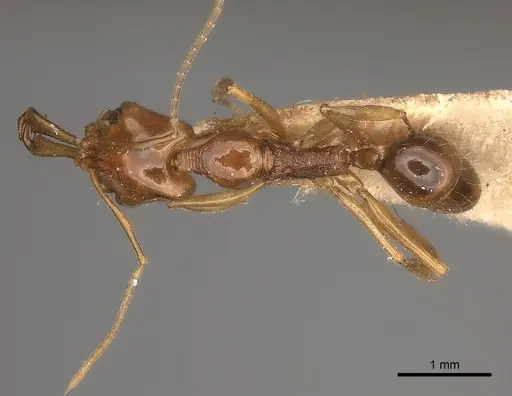
Literature
Loading...Loading products...