

Anochetus elegans
- Scientific Name
- Anochetus elegans
- Tribe
- Ponerini
- Subfamily
- Ponerinae
- Author
- Lattke, 1987
- Distribution
- Found in 1 countries
Anochetus elegans Overview
Anochetus elegans is an ant species of the genus Anochetus. It is primarily documented in 1 countries , including Colombia. Detailed taxonomic data and occurrence records can be further explored via authoritative databases such as AntWeb or the Global Biodiversity Information Facility (GBIF).
Anochetus elegans
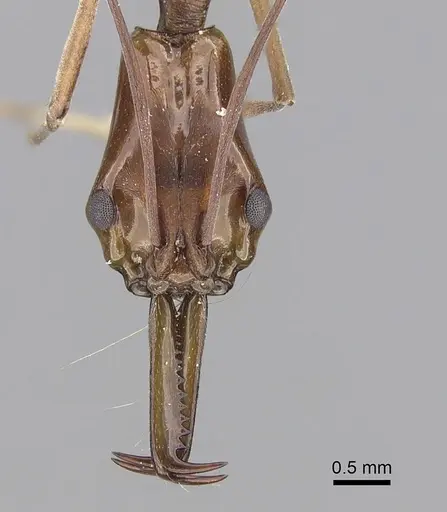
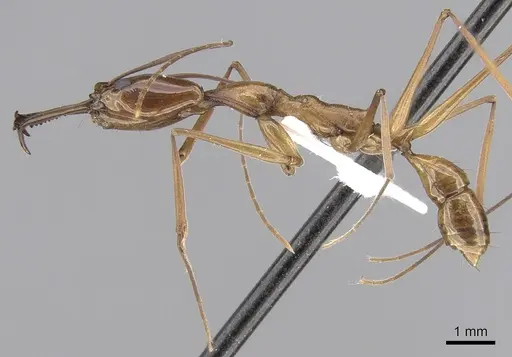
Anochetus elegans is a trap-jaw ant from the mountains of Colombia and the largest species in its genus [1]. Only three worker ants have ever been collected, the holotype and two paratypes from 1300 meters elevation in Valle del Cauca [2][3]. No queens, males, or nests have ever been found or described [2]. These ants come from mountain forests near the junction of the San Juan and Digua Rivers, an area with distinct wet and dry seasons [1].
As a member of the trap-jaw genus Anochetus, they likely possess spring-loaded mandibles for hunting prey [2]. However, virtually nothing is known about their colony structure, behavior, or biology beyond the original type specimens collected in 1975 [1][3]. This extreme rarity makes them unavailable to antkeepers through normal channels.
Quick Summary
- Difficulty: Expert
- Origin & Habitat: Colombia (Valle del Cauca and Nariño), mountain forests at 1300m elevation [1][4]
- Colony Type: Unknown, only individual workers have been collected, queen morphology and colony structure remain undescribed [2]
- Size & Growth:
- Queen: Unknown, queens never collected or described [2]
- Worker: Largest in the genus Anochetus, exact measurements not provided in type description [1]
- Colony: Unknown
- Growth: Unknown
- Development: Unknown, estimated 8-12 weeks based on typical Anochetus patterns if kept around 22-24°C (This is a rough estimate only, no development data exists for this species)
- Antkeeping:
- Temperature: Likely 20-24°C based on 1300m elevation, cooler than lowland tropics but warmer than temperate [1]
- Humidity: Moderate to high, mountain forest habitat suggests consistently damp conditions [1]
- Diapause: Unknown
- Nesting: Unknown, likely soil or leaf litter based on typical Anochetus patterns
- Behavior: Trap-jaw hunting mechanics typical of the genus, extremely rare in collections with no behavioral observations published [1]
- Common Issues: only workers are known, you cannot start a colony from a queen because queens have never been collected or described., extreme rarity means no established care protocols exist for this species., 1300m elevation suggests specific temperature needs different from lowland tropical species., trap-jaw mandibles require specialized live prey, making feeding challenging in captivity.
Rarity and Availability
You cannot currently keep Anochetus elegans in a standard ant farm setup because queens have never been collected [2]. The species is known only from three worker specimens collected in 1975 near Queremal, Colombia at 1300 meters elevation [1][3]. No subsequent collections have been reported despite surveys in the region [5].
Without queens, you cannot establish a colony. Wild nests have never been located and described, so even collecting an established colony is not currently an option for antkeepers. This species exists in scientific collections only as a rare type specimen.
Trap-Jaw Biology
Anochetus elegans belongs to the trap-jaw ant genus, which means they likely possess mandibles that open 180 degrees and snap shut at high speed when trigger hairs detect prey [2]. The workers show the genus-typical features of a low petiole with an anterior face forming approximately a 30-degree angle with the body axis, plus well-developed propodeal spines and long, divergent, acute petiolar teeth [1][6].
As the largest Anochetus species, they likely hunt larger prey items than their smaller relatives, though specific prey preferences are unknown. Trap-jaw ants typically hunt small arthropods and cannot process liquid foods effectively without solid prey to trigger their mandibles.
Temperature and Microhabitat
The type locality at 1300 meters elevation in the Colombian Andes suggests these ants experience cooler conditions than lowland tropical species [1]. Daytime temperatures likely range between 20-26°C year-round, with cooler nights.
If you somehow obtained a colony, you should start with temperatures around 22-24°C and observe activity levels. The mountain forest habitat suggests they need moderate to high humidity, but not tropical rainforest conditions [1]. Provide a moisture gradient in the nest so the ants can choose their preferred humidity level.
Feeding Requirements
Based on typical Anochetus biology, these ants likely require live prey to trigger their trap-jaw mechanism. Small crickets, fruit flies, and springtails would be appropriate sizes for workers, though exact prey preferences are unknown.
Sugar water or honey may not be accepted since trap-jaw ants often cannot process liquids without solid food to stimulate their mandibles. You would need to experiment with prey types if you ever maintained a colony. [2]
Frequently Asked Questions
Can I keep Anochetus elegans in a test tube setup?
No, you cannot keep this species because queens have never been collected or described [2]. Only three worker specimens exist in museum collections [3]. Without a queen, you cannot start or maintain a colony.
How big do Anochetus elegans colonies get?
Nobody knows. No nests have ever been found or described [2]. Based on other Anochetus species, colonies likely remain small with under 100 workers, but this is speculation.
Where do Anochetus elegans ants live?
They live in mountain forests of Colombia, specifically in the Valle del Cauca and Nariño departments at around 1300 meters elevation [1][4]. The type specimens came from near the junction of the San Juan and Digua Rivers [2].
What do Anochetus elegans eat?
Specific diet is unknown, but as trap-jaw ants they likely hunt small live arthropods [2]. They probably cannot survive on sugar water alone and need prey to trigger their mandible snap mechanism.
Do Anochetus elegans need heating?
Probably moderate heating around 22-24°C based on their 1300m elevation origin [1]. They likely need cooler conditions than lowland tropical ants but warmer than temperate species.
How long until Anochetus elegans get their first workers?
Unknown. No one has ever raised a colony from a queen. Based on related Anochetus species, development might take 8-12 weeks at 22-24°C, but this is only an estimate.
Can I keep multiple Anochetus elegans queens together?
Unknown. Queens have never been collected, so their tolerance for other queens is unstudied. Most Anochetus are monogyne (single queen), but this is not confirmed for this species.
Are Anochetus elegans good for beginners?
No. They are unsuitable for beginners because they are unavailable in the antkeeping trade, have no established care guidelines, and have never been kept in captivity [2].
Why are Anochetus elegans so rare?
They are known only from the type series collected in 1975 [3]. Either they are genuinely rare in nature, live in inaccessible microhabitats, or collectors have not targeted their specific mountain forest habitat since the original discovery [5].
References

This caresheet is licensed under CC BY-SA 4.0 .
CASENT0281876
View on AntWeb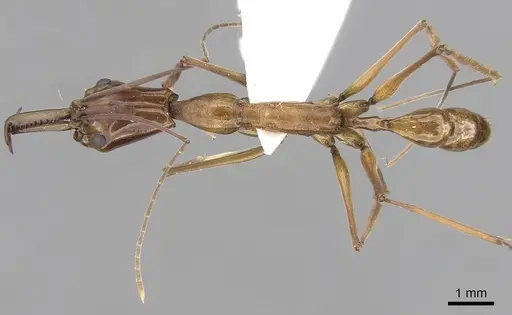
Literature
Loading...Loading products...