

Anochetus daedalus
- Scientific Name
- Anochetus daedalus
- Tribe
- Ponerini
- Subfamily
- Ponerinae
- Author
- Marathe & Priyadarsanan, 2016
- Distribution
- Found in 1 countries
Anochetus daedalus Overview
Anochetus daedalus is an ant species of the genus Anochetus. It is primarily documented in 1 countries , including India. Detailed taxonomic data and occurrence records can be further explored via authoritative databases such as AntWeb or the Global Biodiversity Information Facility (GBIF).
Anochetus daedalus
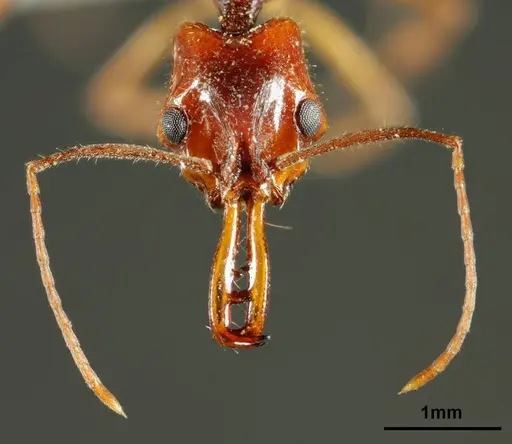
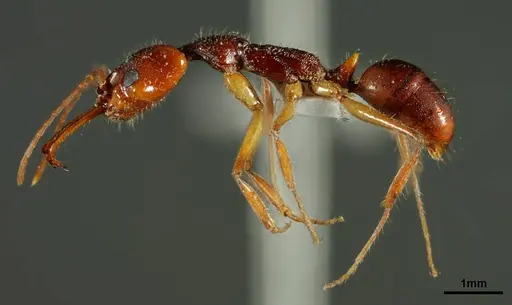
Anochetus daedalus is a striking trap-jaw ant from the Western Ghats of India, where workers reach 7.7-8.35 mm with dark red bodies, paler heads, and yellow legs [1]. First described in 2016 from tropical evergreen forests and shade coffee plantations in Karnataka, this species remains rare in scientific collections and captivity [1][2]. What makes them unique among their relatives is their elaborate nest architecture, they construct labyrinthine mud fortifications at the entrance that resemble the work of the master craftsman Daedalus from Greek mythology, giving them their name [1]. These structures, built on small vertical surfaces from excavated clay with a single downward-pointing entrance, are the only known example of such construction in the subfamily Ponerinae and may help prevent flooding or predator attacks [1].
Quick Summary
- Difficulty: Expert
- Origin & Habitat: Western Ghats, India (Karnataka), tropical evergreen forest, semi-evergreen forest, and shade coffee plantations [1][2].
- Colony Type: Unknown, likely single-queen based on typical Anochetus patterns, but unconfirmed in this species.
- Size & Growth:
- Queen: Unknown, likely 9-11 mm based on typical Anochetus patterns.
- Worker: 7.7-8.35 mm [1].
- Colony: Unknown, likely small (under 100 workers) based on genus patterns.
- Growth: Unknown, likely slow to moderate.
- Development: Unknown, estimated 8-12 weeks based on related tropical trap-jaw ants. (Timeline is unconfirmed, tropical species typically develop faster at stable warm temperatures.)
- Antkeeping:
- Temperature: 24-28°C (stable tropical warmth), inferred from Western Ghats habitat [1]. Avoid fluctuations below 20°C.
- Humidity: High humidity with moist substrate, keep nest soil damp but not waterlogged to allow natural digging behavior [1].
- Diapause: No, tropical species that remains active year-round [1].
- Nesting: Requires excavatable substrate (clay/soil mix) to build their characteristic mud fortifications, standard acrylic nests may not allow expression of natural behavior [1].
- Behavior: Trap-jaw hunters that likely forage alone, workers use their spring-loaded mandibles to catch small prey. The 8 mm size means they can climb smooth surfaces if not treated with escape barriers [1].
- Common Issues: lack of captive care data means husbandry is largely untested and failure rates may be high., substrate that is too dry prevents construction of natural mud fortifications and may stress the colony., inadequate prey size, they need small live insects appropriate for 8 mm predators, not large crickets., standard test tube setups may be unsuitable if they require semi-claustral founding or specific substrate conditions.
Nest Preferences and Unique Architecture
In the wild, Anochetus daedalus constructs elaborate labyrinthine fortifications at their nest entrance using excavated mud or clay [1]. The entrance sits on a small near-vertical plane with a single large opening pointing downward, surrounded by channels built from soil particles [1]. This is the only species in the subfamily Ponerinae known to build such structures, which may prevent surface water from entering the nest or block predator attacks [1]. In captivity, you should provide a naturalistic setup with a clay or loamy soil mix that holds its shape when damp, rather than a standard acrylic or plaster nest. The substrate must remain moist enough for the ants to excavate and mold, or they cannot express this natural behavior. Place the nest container against a vertical surface or provide a small clay panel to encourage fortification building.
Feeding and Diet
As trap-jaw ants, Anochetus daedalus are specialized predators that hunt small live prey using their spring-loaded mandibles. While specific dietary preferences are unstudied, related Anochetus species thrive on small soft-bodied insects like fruit flies, springtails, and tiny crickets or roach nymphs. Prey should be small enough for 8 mm workers to handle safely. Offer prey 2-3 times per week, removing uneaten items within 24 hours to prevent mold. Sugar sources like honey water or sugar water may be accepted, but protein is essential for colony growth. [1][2]
Temperature and Environmental Care
Coming from the tropical Western Ghats, these ants need stable warm temperatures between 24-28°C year-round [1]. They do not require hibernation. Use a heating cable or mat on one side of the nest to create a gentle gradient, allowing the ants to thermoregulate by moving brood to preferred zones. Avoid temperatures below 20°C, which may slow development or cause stress. Humidity should remain high, the nest substrate should feel damp to the touch but not muddy. Provide adequate ventilation to prevent mold while maintaining moisture, as stagnant air combined with wet substrate quickly leads to fungal problems.
Behavior and Temperament
Anochetus daedalus workers are solitary hunters that likely forage alone rather than in trails [1]. Their large eyes suggest they are visual hunters, and their trap-jaw mandibles allow them to strike prey with incredible speed. Workers are not typically aggressive toward humans but can bite and likely possess a functional sting typical of the genus. At 8 mm, they are large enough to climb glass and plastic if surfaces are not treated with an escape barrier like Fluon or talcum powder. They are not known for explosive escape attempts but will explore any gap in the outworld.
Colony Founding and Development
Founding behavior for Anochetus daedalus has not been documented in the research literature. Most Anochetus species are semi-claustral, meaning founding queens leave the nest to forage for food rather than sealing themselves in, but this remains unconfirmed for A. daedalus. If attempting to found a colony, provide a small founding chamber with access to a foraging area and offer small prey items regularly. Development timelines from egg to worker are unknown, based on related tropical Ponerinae, expect roughly 8-12 weeks at 25-28°C, but this is an estimate. [1]
Frequently Asked Questions
Can I keep Anochetus daedalus in a test tube?
Test tubes are likely unsuitable. These ants build elaborate mud fortifications at their nest entrance in nature, requiring excavatable substrate like clay or soil [1]. Additionally, if they prove to be semi-claustral (unconfirmed but typical for the genus), founding queens would need access to a foraging area. A naturalistic setup with a soil/clay mix is strongly recommended over standard test tubes.
What do Anochetus daedalus eat?
They are trap-jaw predators that hunt small live prey. Offer fruit flies, springtails, tiny cricket nymphs, or small roaches. Prey should be appropriate for 8 mm workers. While they may accept sugar water, protein is essential for colony development.
How long until Anochetus daedalus gets their first workers?
The egg-to-worker timeline is unconfirmed for this species. Based on related tropical trap-jaw ants, expect approximately 8-12 weeks at stable temperatures around 25-28°C, but this is an estimate.
Do Anochetus daedalus need hibernation?
No. They come from tropical India and remain active year-round. Keep them at stable warm temperatures (24-28°C) without any cold period [1].
Why do Anochetus daedalus build mud forts at their nest entrance?
The exact function is unknown, but researchers speculate the labyrinthine mud channels may prevent surface water from running into the nest during heavy rains, or they may serve as defensive barriers against predators [1]. This behavior is unique among Ponerinae ants.
How big do Anochetus daedalus colonies get?
Colony size is unknown. Based on patterns from other Anochetus species, they likely remain small, possibly under 100 workers, but this is speculative.
Can I keep multiple Anochetus daedalus queens together?
Not recommended. While colony structure is unconfirmed for this species, combining multiple unrelated queens is risky and has not been documented. Most Anochetus are single-queen colonies.
Are Anochetus daedalus good for beginners?
No. They are an expert-level species due to extremely limited captive breeding data, specific nesting requirements involving mud construction, and their rarity in the hobby. Beginners should start with well-documented species like Lasius or Camponotus.
Where can I buy Anochetus daedalus?
This species is extremely rare in the antkeeping trade. They were only described scientifically in 2016 from a few specimens in India [1]. Captive colonies are likely unavailable, importing wild colonies from India would require permits and is not recommended due to biosecurity risks.
References

This caresheet is licensed under CC BY-SA 4.0 .
ZSI-WGRS-IR-INV-3286
View on AntWeb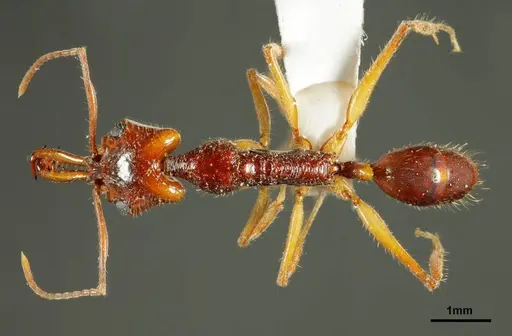
Literature
Loading...Loading products...