

Anochetus cryptus
- Scientific Name
- Anochetus cryptus
- Tribe
- Ponerini
- Subfamily
- Ponerinae
- Author
- Bharti & Wachkoo, 2013
- Distribution
- Found in 1 countries
Anochetus cryptus Overview
Anochetus cryptus is an ant species of the genus Anochetus. It is primarily documented in 1 countries , including India. Detailed taxonomic data and occurrence records can be further explored via authoritative databases such as AntWeb or the Global Biodiversity Information Facility (GBIF).
Anochetus cryptus
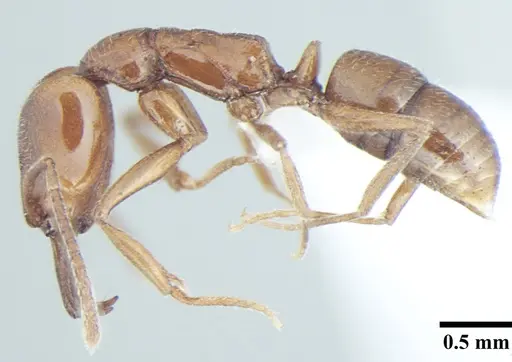
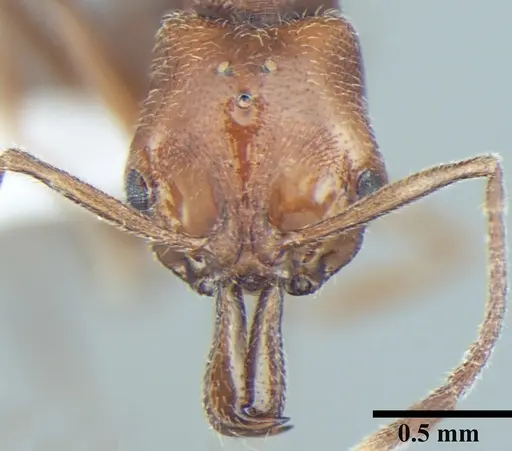
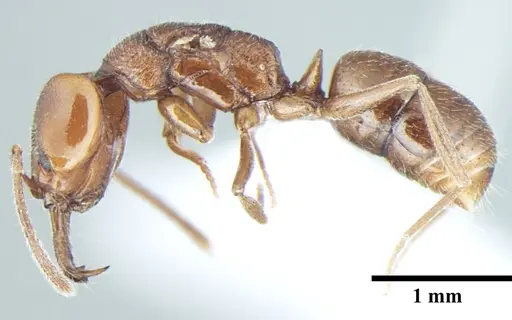
Anochetus cryptus is a small trap-jaw ant from the Shivalik range of Northwest India. Workers measure just 3.7-4.7 mm and show a yellow-orange coloration with brownish shading on the abdomen [1]. They live a hidden lifestyle under large stones in dry, non-forested areas, and their eyes are extremely small with only 3-4 lenses (ommatidia), telling us they rely on touch and chemical signals rather than sight to navigate in darkness [1][2]. First described in 2013,this rare species remains poorly known in captivity, making it a challenging choice for experienced keepers [1]. Like other Anochetus, they possess lightning-fast trap-jaw mandibles that snap shut to capture prey [1].
Quick Summary
- Difficulty: Expert
- Origin & Habitat: Endemic to Northwest Himalaya, India (Himachal Pradesh and Jammu & Kashmir), found under large stones in dry, non-forested areas at 500-840m elevation [1][3][2].
- Colony Type: Unknown, likely single queen based on genus patterns, but unconfirmed.
- Size & Growth:
- Queen: ~4.9 mm (total length) [1].
- Worker: 3.7-4.7 mm (total length) [1].
- Colony: Likely under 200 workers, estimated from typical Anochetus patterns.
- Growth: Slow
- Development: 8-12 weeks at 25°C, estimated from related trap-jaw ants. (No direct measurements exist. Development likely slows at cooler temperatures given the high-altitude origin.)
- Antkeeping:
- Temperature: 20-25°C with a gentle gradient, start here and adjust based on activity levels. Their Himalayan origin suggests tolerance for cooler nights down to 15-18°C.
- Humidity: Moderate humidity with damp (not wet) substrate. In nature they live under stones that retain moisture while the surface stays dry [1].
- Diapause: Unknown, likely not required for captive colonies kept at stable room temperature, though wild colonies may slow in winter.
- Nesting: Hypogaeic (underground), requires dark, tight spaces with flat stones or narrow chambers. They suffer in exposed, bright setups.
- Behavior: Cryptobiotic and shy, they hide constantly and avoid light. Trap-jaw mandibles allow extremely fast prey capture. Poor eyesight means they rely on substrate contact and chemical trails. Likely capable of stinging (typical for the genus) but small size may limit penetration. Their tiny size makes escape prevention critical [1].
- Common Issues: extreme rarity and limited scientific data make captive care experimental, losses are hard to replace., tiny size (under 5mm) means they escape through gaps that larger ants cannot, use fine mesh and Fluon barriers., hypogaeic nature causes stress in exposed or brightly lit setups, they need constant cover., unknown founding biology makes starting colonies from queens risky and unpredictable., likely slow growth leads to overfeeding and mold outbreaks if you add too much prey at once.
Natural History and Habitat
Anochetus cryptus comes from the Shivalik range of the Northwest Himalaya in India, specifically the states of Himachal Pradesh and Jammu & Kashmir [1][3]. They inhabit dry, non-forested areas between 500-840 meters elevation, where they live hidden under large stones [1][2]. This lifestyle is called hypogaeic, meaning they stay underground or under cover rather than foraging openly on the surface.
Their eyes are extremely reduced, with workers having only 3-4 lenses (ommatidia) across the eye's greatest diameter [1]. This tells us they live in near-total darkness beneath stones, relying on touch and chemical senses rather than vision. The species name 'cryptus' refers to this cryptobiotic (hidden) lifestyle [1].
The type specimens were collected in June, July, and August, suggesting summer activity, though specific nuptial flight timing remains unknown [1].
Housing and Nest Design
Because Anochetus cryptus lives under stones in nature, you must recreate this dark, confined environment in captivity. Standard open formicariums with tall chambers will stress these ants. Instead, use a naturalistic setup with flat stones or slate pieces creating narrow gaps, or a Y-tong (AAC) nest with very tight, shallow chambers.
Provide complete darkness for the nest area, they will not thrive in transparent setups exposed to light. If using a test tube for founding, wrap it in foil or place it inside a dark box, and provide a small stone or piece of wood for the queen to hide under.
The outworld should offer similar cover, flat stones, bark pieces, or leaf litter where they can forage while feeling protected. Keep the outworld dimly lit, bright lights will keep them hidden in the nest.
Given their tiny size (under 5mm), escape prevention must be exceptional. Use fine stainless steel mesh (under 1mm holes) for ventilation, and apply Fluon or PTFE barrier to the upper walls of any open areas. [1][2]
Temperature and Seasonal Care
Coming from the Himalayan foothills, Anochetus cryptus likely experiences moderate temperatures with warm days and cooler nights. In captivity, maintain a temperature gradient between 20-25°C, with one side slightly warmer than the other so the colony can choose their preferred spot.
You can create this gradient using a heating cable or mat placed on top of one side of the nest (not underneath, to avoid flooding the chambers with condensation). Watch the colony's behavior, if they cluster on the warm side, increase heat slightly, if they avoid it, reduce the temperature.
Their collection in summer months (June-August) suggests peak activity during warmer periods, but being from 500-840m elevation, they likely tolerate cooler conditions than lowland tropical species. Room temperature (20-22°C) may suffice if stable.
Diapause (winter rest) requirements are unknown. Given their altitude, wild colonies likely slow down in winter, but captive colonies kept at stable room temperature may continue slow activity year-round without a full hibernation period. [1]
Feeding and Trap-Jaw Hunting
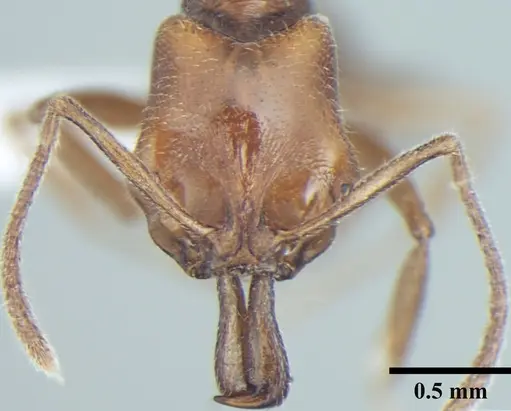
Like all Anochetus, A. cryptus possesses trap-jaw mandibles, long, slender jaws that can snap shut with incredible speed to capture prey [1]. These mandibles have a distinctive shape: slender but broadened in the outer half, with teeth along the inner edge [1].
In nature they likely prey on small soil arthropods such as springtails, mites, and other tiny invertebrates found in the leaf litter and soil under stones. In captivity, offer small live prey appropriate to their size: springtails, fruit flies, very small crickets, or pinhead crickets. The prey should be small enough that workers can handle it with their trap jaws.
You can offer sugar sources like honey water or sugar water, but given their cryptobiotic nature and reduced eyesight, they may rely more heavily on protein prey than on liquid sugars. Place food directly near their hiding spots under stones rather than in open areas.
Feed small amounts frequently rather than large amounts rarely, their slow growth means uneaten prey will mold quickly in their humid nest environment.
Colony Founding
The founding biology of Anochetus cryptus has not been documented. We do not know if queens seal themselves in and raise the first workers alone (claustral founding), or if they must leave the nest to hunt (semi-claustral founding). Most Anochetus species are semi-claustral, meaning founding queens need to forage, but the cryptobiotic nature and tiny eyes of this species suggest the queen may stay hidden.
If you obtain a queen, provide her with a small, dark chamber with damp substrate and a hiding place under a stone or wood piece. Offer small prey items regularly (every few days) in case she needs to forage. Remove uneaten food promptly to prevent mold.
Because their founding type is unconfirmed, starting colonies from queens is experimental. Success rates may be low. Consider keeping the queen in a small test tube or container with minimal disturbance, checking only weekly for food removal or mold. [1]
Conservation and Legal Status
Anochetus cryptus is endemic to India, meaning it occurs nowhere else in the world [3]. It appears to be rare even within its limited range, known from only a handful of specimens collected in the Shivalik region [1].
If you keep this species outside India, ensure your specimens were obtained legally through proper export and import permits. Never release captive colonies into the wild outside their native range. While they are not known to be invasive, any non-native ant species can potentially disrupt local ecosystems.
Given their rarity and limited data, consider whether captive breeding is appropriate, or whether the few available specimens should remain in their natural habitat. If you do keep them, prioritize successful captive propagation to reduce pressure on wild populations.
Frequently Asked Questions
Can I keep Anochetus cryptus in a test tube?
Yes, but you must modify it for their cryptobiotic needs. Wrap the test tube in foil or place it in a dark box to provide total darkness. Add a small piece of stone or wood inside the tube for the queen to hide under, as they naturally live under stones and suffer stress in exposed spaces [1][2].
How long does Anochetus cryptus take from egg to worker?
The exact timeline is unknown. Based on related trap-jaw ants in the genus Anochetus, expect roughly 8-12 weeks at 25°C, possibly longer at cooler temperatures. Development likely slows given their high-altitude Himalayan origin [1].
Do Anochetus cryptus need hibernation?
Their diapause requirements are unknown. They were collected in summer at 500-840m elevation in the Himalayas, suggesting they may slow in winter, but captive colonies kept at stable room temperature (20-22°C) likely do not require a full hibernation period [1].
What do Anochetus cryptus eat?
They are predators with trap-jaw mandibles used to capture small prey [1]. Feed them small live insects such as springtails, fruit flies, and tiny crickets. Place food near their hiding spots under stones or in dark crevices rather than in open areas.
Are Anochetus cryptus good for beginners?
No. This is an expert-level species due to their rarity, tiny size, specific hypogaeic (hidden lifestyle) needs, and unknown founding biology. They require careful humidity management, excellent escape prevention, and patience with slow growth [1].
Do Anochetus cryptus ants sting?
Likely yes, as they belong to the subfamily Ponerinae which typically possess stingers. However, at only 3.7-4.7 mm in length, they are probably too small to penetrate human skin effectively. Handle with care regardless [1].
How big do Anochetus cryptus colonies get?
Maximum colony size is unknown. Based on patterns in the Anochetus genus, they likely remain small, possibly under 200 workers. They are not mass-colony builders like some other ant species [1].
Can I keep multiple Anochetus cryptus queens together?
Not recommended. The colony structure is unknown, and combining unrelated queens has not been documented for this species. Most Anochetus are single-queen colonies, and introducing multiple queens risks fighting and mortality [1].
Why are my Anochetus cryptus always hiding?
This is normal behavior. They are cryptobiotic ants that naturally live under stones in dark spaces [1][2]. They have extremely small eyes (only 3-4 lenses) and rely on touch and chemical signals rather than sight, so they avoid light and exposed areas. Provide plenty of cover and darkness [1].
Is Anochetus cryptus invasive?
No. They are endemic to India (found only in Himachal Pradesh and Jammu & Kashmir) and are not known to be established anywhere else [3]. Never release them outside their native range.
References

This caresheet is licensed under CC BY-SA 4.0 .
ANTWEB1008021
View on AntWeb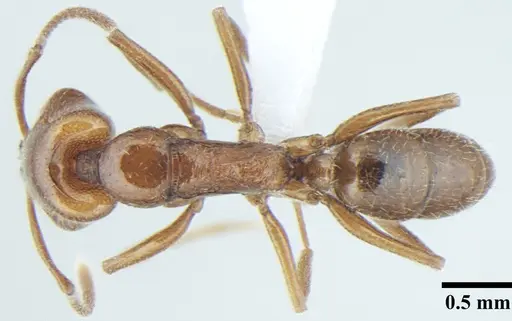
ANTWEB1008022
View on AntWeb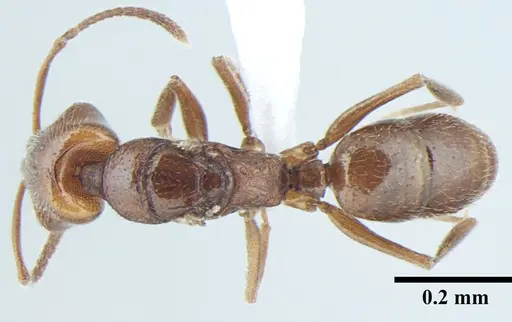
Literature
Loading...Loading products...