

Anochetus chirichinii
- Scientific Name
- Anochetus chirichinii
- Tribe
- Ponerini
- Subfamily
- Ponerinae
- Author
- Emery, 1897
- Distribution
- Found in 1 countries
Anochetus chirichinii Overview
Anochetus chirichinii is an ant species of the genus Anochetus. It is primarily documented in 1 countries , including Papua New Guinea. Detailed taxonomic data and occurrence records can be further explored via authoritative databases such as AntWeb or the Global Biodiversity Information Facility (GBIF).
Anochetus chirichinii
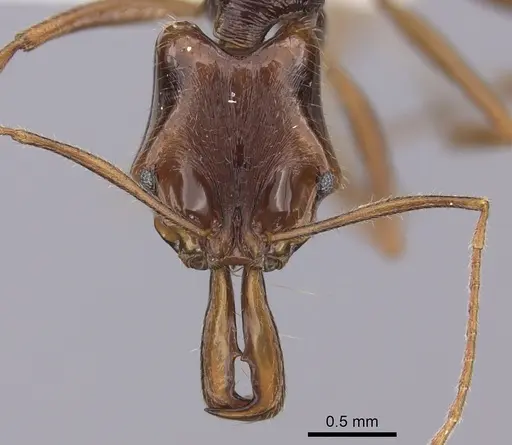
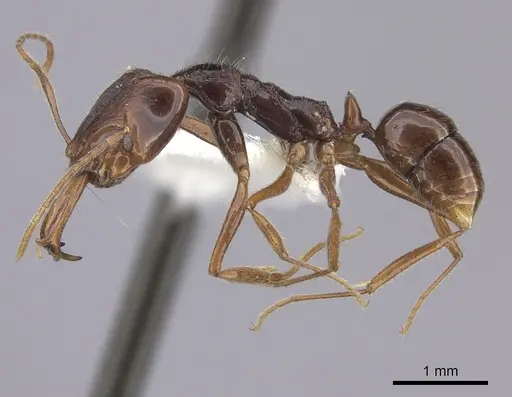
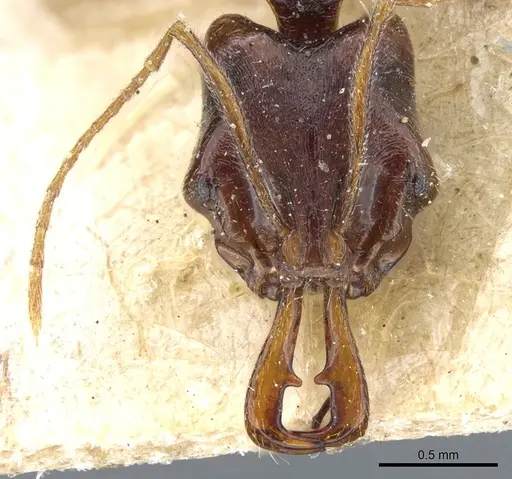
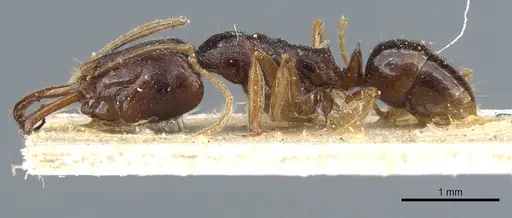
Anochetus chirichinii is a small trap-jaw ant from the chirichinii species group [1]. These ants have spring-loaded mandibles that snap shut with incredible speed to capture prey. Specific details about their exact size, coloration, and native range remain unconfirmed in available research.
Quick Summary
- Difficulty: Expert
- Origin & Habitat: Exact native range unknown, Anochetus species typically inhabit tropical and subtropical regions [1].
- Colony Type: Likely single-queen (monogyne) based on typical Anochetus patterns, though unconfirmed for this species [1].
- Colony: Monogyne
- Founding: Semi-claustral
- Size & Growth:
- Queen: Unknown, estimated 4-6mm based on similar Anochetus species [1].
- Worker: Unknown, estimated 3-5mm based on similar Anochetus species [1].
- Colony: Likely small, possibly under 100 workers [1].
- Growth: Slow to moderate [1].
- Development: Unknown, estimated 8-12 weeks at 25-28°C [1]. (This is a rough estimate based on related tropical trap-jaw ants. Nanitics (first workers) may emerge slightly faster.)
- Antkeeping:
- Behavior: Trap-jaw predators that hunt small live prey. Their small size means they can escape through the tiniest gaps [1].
- Common Issues: tiny size means escapes are likely without fine mesh barriers and Fluon., founding behavior is unconfirmed, making initial colony setup risky if the queen requires food., lack of specific care data means you must adjust conditions based on careful observation.
Trap-Jaw Mechanics and Hunting
Anochetus chirichinii possesses the classic trap-jaw mechanism seen in all Anochetus ants [1]. They open their mandibles wide and hold them with a latch mechanism. When prey touches sensitive trigger hairs, the mandibles snap shut in a fraction of a second. This stuns or kills small prey like springtails or tiny insects. You will need to provide small live prey that fits their hunting style. Dead insects or large prey items will not trigger their hunting response properly.
Colony Founding
Founding behavior is unconfirmed for this species. Most Anochetus queens are semi-claustral, meaning the queen must leave her nest to hunt for food while raising her first workers [1]. If this holds true for A. chirichinii, you will need to feed your founding queen regularly with small insects. However, since this is not confirmed, start with a standard test tube setup but offer food immediately if the queen appears active or leaves her chamber. Watch carefully to see if she accepts prey.
Housing and Escape Prevention
These ants are tiny, so escape prevention is critical [1]. Use fine mesh smaller than 0.5mm on all ventilation holes. Apply Fluon or baby powder barriers to the outworld walls to stop climbing. For the nest, provide small chambers in soil or plaster that mimic their natural leaf litter or soil nesting habits. Avoid large open spaces that stress small ants. They need tight, secure spaces to feel safe.
Temperature and Humidity
Without specific data, start with conditions suitable for tropical ants [1]. Keep the nest area between 24-28°C using a heating cable on one side to create a gradient. Place the heat source on top of the nest, not underneath, to avoid condensation problems. Provide a humidity gradient with one side of the nest slightly damp and one side dry so the colony can choose their preferred spot. Do not let the nest material dry out completely.
Frequently Asked Questions
How long until first workers for Anochetus chirichinii?
Unknown. Expect roughly 8-12 weeks at warm temperatures based on similar tropical trap-jaw ants [1].
What do Anochetus chirichinii eat?
They are predators. Feed small live prey like springtails, fruit flies, or tiny crickets [1]. They may accept sugar water, but protein is essential.
Are Anochetus chirichinii good for beginners?
No. They are poorly studied, likely require live prey, and may have semi-claustral founding which is harder to manage than claustral species [1].
Do Anochetus chirichinii need hibernation?
Likely not. They appear to be tropical and need stable warm temperatures year-round [1].
Can I keep multiple Anochetus chirichinii queens together?
No. Anochetus are typically monogyne (single-queen) and queens will fight if combined [1].
How big do Anochetus chirichinii colonies get?
Likely small, possibly under 100 workers based on typical Anochetus patterns [1].
Why are my Anochetus chirichinii dying?
Common causes include incorrect humidity, failure to feed founding queens (if semi-claustral), or escapes leading to desiccation [1]. Check that your barriers are secure and the nest is not too dry.
References

This caresheet is licensed under CC BY-SA 4.0 .
CASENT0260491
View on AntWeb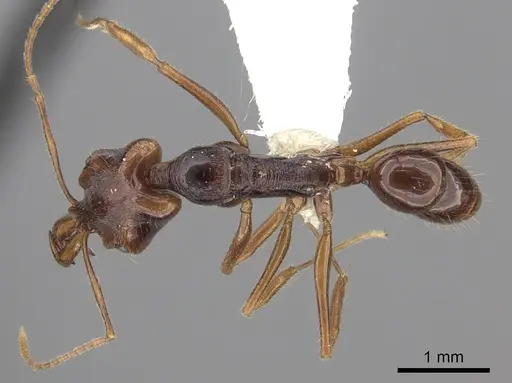
CASENT0903981
View on AntWeb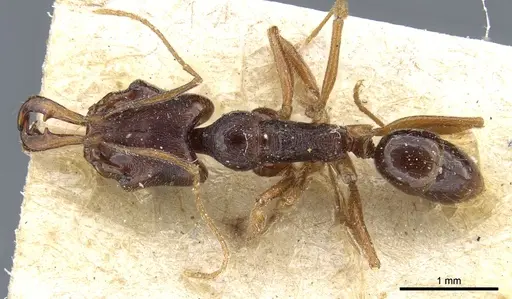
Literature
Loading...Loading products...