

Anochetus agilis
- Scientific Name
- Anochetus agilis
- Tribe
- Ponerini
- Subfamily
- Ponerinae
- Author
- Emery, 1901
- Distribution
- Found in 1 countries
Anochetus agilis Overview
Anochetus agilis is an ant species of the genus Anochetus. It is primarily documented in 1 countries , including Malaysia. Detailed taxonomic data and occurrence records can be further explored via authoritative databases such as AntWeb or the Global Biodiversity Information Facility (GBIF).
Anochetus agilis
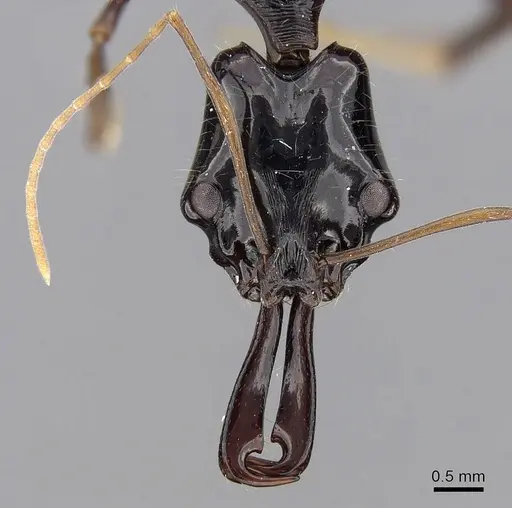
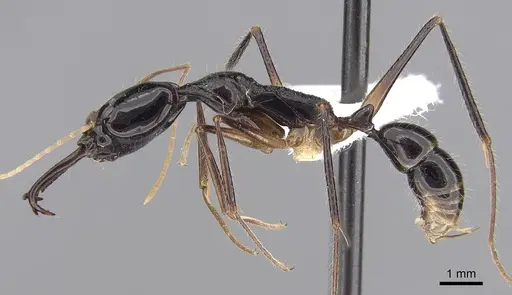
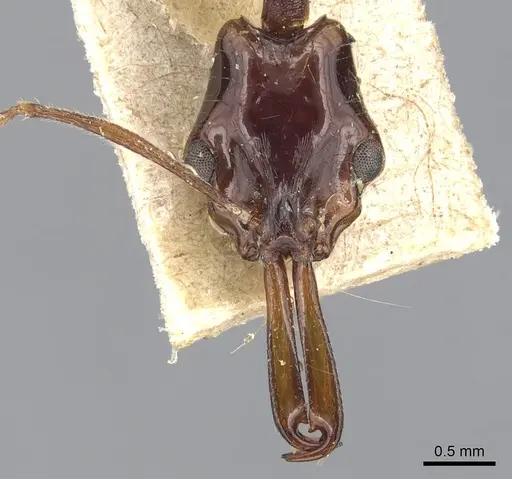
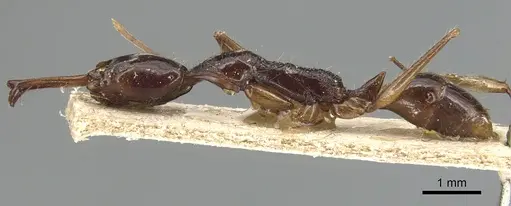
Anochetus agilis is a small trap-jaw ant from the rainforests of Borneo and surrounding regions. Workers have noticeably slender, stretched-out bodies with heads that are longer than they are wide, giving them a Cephalic Index (ratio of head width to length) below 83 [1]. The upper part of their thorax, the pronotum, is smooth and shiny across most of its surface [1]. Like all Anochetus, they possess the famous trap-jaw mandibles that snap shut when triggered, though these are smaller than those of their Odontomachus cousins. The species belongs to the risii group, a collection of Anochetus species described as very slender and elongate [1][2].
These ants are not just deep forest specialists, historical records from the early 1900s show single workers turning up in Singapore gardens, suggesting they can tolerate disturbed habitats and human-altered environments [3][4]. As part of the risii group, they likely inhabit the leaf litter layer and soil of tropical forests, where their slender bodies help them navigate tight spaces while hunting small prey.
Quick Summary
- Difficulty: Hard
- Origin & Habitat: Tropical Southeast Asia, specifically Borneo (Malaysian Sabah and Sarawak, Indonesian Kalimantan), peninsular Malaysia, and Singapore [5][1][2]. Found in tropical forests and occasionally gardens [3][4].
- Colony Type: Likely single-queen (monogyne) based on typical Anochetus patterns, but unconfirmed for this species specifically.
- Size & Growth:
- Queen: Unknown (not measured in available research).
- Worker: Unknown specifically, based on risii group characteristics likely small, approximately 2-3mm (estimated).
- Colony: Unknown, likely small (under 100 workers) based on typical Anochetus patterns (inferred).
- Growth: Unknown, likely slow to moderate based on genus patterns (inferred).
- Development: Unknown, based on related tropical Anochetus patterns, likely 6-10 weeks at 25-27°C (estimated). (Development time is unconfirmed, provide stable warm temperatures and observe weekly for brood changes.)
- Antkeeping:
- Temperature: 24-28°C (inferred from tropical distribution). Use a heating cable on one side of the nest to create a gentle gradient.
- Humidity: High humidity required, keep the nest soil damp but not waterlogged. The surface should feel moist to the touch, similar to a tropical forest floor.
- Diapause: No, this is a tropical species that remains active year-round [5].
- Nesting: Likely nests in soil, leaf litter, or rotting wood in nature. In captivity, use small, dark chambers with tight spaces, a test tube setup works for founding, while a small naturalistic setup with leaf litter and flat stones suits mature colonies.
- Behavior: Cryptic trap-jaw predators that likely spend most of their time hidden in substrate. Workers are probably solitary hunters rather than mass recruiters, using their snapping mandibles to strike small prey. Not typically aggressive toward humans but can likely sting (typical for the genus). Their tiny size makes escape prevention critical, use fine mesh and excellent barriers [5].
- Common Issues: tiny size means escapes are likely without fine mesh barriers and tight-fitting lids., poorly studied species with unknown care requirements and no documented captive breeding guides., likely requires live prey such as springtails or fruit flies, which can be difficult to maintain consistently., colonies probably grow slowly, requiring patience and risking overfeeding by anxious keepers., high humidity needs combined with tropical heat can cause mold if ventilation is inadequate.
Identification and Appearance
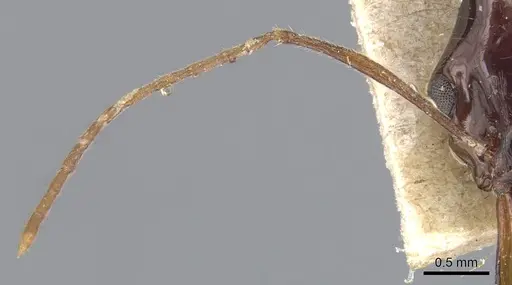
Anochetus agilis workers are instantly recognizable by their slender, stretched-out bodies. Their heads are noticeably long and narrow compared to other ants, with a Cephalic Index (head width relative to length) below 83 [1]. The pronotum, the upper part of the thorax, is smooth and shiny across at least the large central part of its surface [1]. Like all Anochetus, they possess the famous trap-jaw mandibles that snap shut when triggered, though these are smaller than those of their Odontomachus cousins. The species belongs to the risii group, a collection of Anochetus species described as very slender and elongate [1][2].
Natural History and Distribution
These ants hail from the tropical forests of Southeast Asia. You'll find them on Borneo (in both the Malaysian states of Sabah and Sarawak, and Indonesian Kalimantan), throughout peninsular Malaysia, and in Singapore [5][1][2]. They're not just deep forest specialists, historical records show single workers turning up in Singapore gardens, suggesting they can tolerate disturbed habitats and human-altered environments [3][4]. As part of the risii group, they likely inhabit the leaf litter layer and soil of tropical forests, where their slender bodies help them navigate tight spaces.
Housing and Nest Requirements
Because specific nesting habits aren't documented, base your setup on typical Anochetus needs. These small ants require secure enclosures with excellent escape prevention, use fine mesh and Fluon barriers. Provide small, tight-fitting chambers rather than open spaces. A test tube setup with darkening works for founding, while a small naturalistic setup with leaf litter, soil, and flat stones mimics their forest floor habitat. Maintain high humidity by keeping the nest soil damp but not waterlogged, and ensure good ventilation to prevent mold while retaining moisture. [5]
Feeding and Diet
As trap-jaw ants, Anochetus agilis are specialized predators. In captivity, they'll likely need small live prey such as springtails, fruit flies, or tiny crickets. The trap-jaw mechanism is an active hunting adaptation, so they require prey that triggers their snapping response. Sugar sources like honey or sugar water may be accepted, but protein from live insects is probably essential for colony growth. Feed small amounts frequently rather than large dumps of prey. [5]
Temperature and Environmental Care
Coming from tropical Borneo and Singapore, these ants need warmth year-round. Keep them at approximately 24-28°C with a gentle gradient. They do not require hibernation, maintaining stable tropical temperatures keeps them active. Use a heating cable on one side of the nest (placed on top to avoid drying out the water reservoir) to create a warm zone. Monitor for condensation as excessive moisture combined with heat can cause fungal issues. [5]
Colony Founding and Development
Founding behavior hasn't been directly observed in this species. Based on typical Anochetus patterns, queens likely seal themselves in (claustral founding) and raise the first generation alone on stored body fat. However, this is unconfirmed, some Ponerinae are semi-claustral and require feeding during founding. If attempting to found a colony, offer the queen a dark, humid test tube and provide small prey items weekly to test if she forages. Development time from egg to worker is unknown, related tropical Anochetus typically take 6-10 weeks at 25-27°C. [5]
Behavior and Temperament
Anochetus agilis are likely cryptic and shy, spending most of their time hidden in soil or under cover. When hunting, they use their trap-jaws to strike prey with incredible speed. They're not typically aggressive toward humans, but like most Anochetus, they can sting if threatened. Workers are solitary hunters rather than mass recruiters, so don't expect to see long foraging trails. Their small size and cryptic nature make them challenging to observe, requiring patience and good lighting to spot their subtle movements. [5]
Frequently Asked Questions
Can I keep Anochetus agilis in a test tube?
Yes, test tubes work well for founding colonies and small colonies. Use a standard water tube setup with cotton, and keep it darkened as these ants prefer dim conditions. Because they're small, ensure the cotton is packed tightly to prevent escapes.
How long until Anochetus agilis gets its first workers?
The timeline is unconfirmed for this species. Based on related tropical Anochetus, expect roughly 6-10 weeks from egg to first worker at 25-27°C, though this could vary significantly.
What do Anochetus agilis eat?
They are predatory trap-jaw ants that likely require small live prey such as springtails, fruit flies, or tiny crickets. They may accept sugar water, but protein from live insects is probably essential.
Do Anochetus agilis need hibernation?
No, they come from tropical Southeast Asia and remain active year-round. Keep them at stable warm temperatures (24-28°C) without any cooling period.
How big do Anochetus agilis colonies get?
Colony size is unknown for this species. Most Anochetus species maintain small colonies, likely under 100 workers, though this is inferred from genus patterns rather than direct observation.
Are Anochetus agilis good for beginners?
No, they are not recommended for beginners. Their small size makes escapes likely, their specific predatory diet requires live prey cultures, and the lack of captive care documentation makes them challenging even for experienced keepers.
Can I keep multiple Anochetus agilis queens together?
This is not recommended. While colony structure is unconfirmed for this species, most Anochetus are single-queen species. Combining multiple queens risks fighting and colony failure.
References

This caresheet is licensed under CC BY-SA 4.0 .
CASENT0281878
View on AntWeb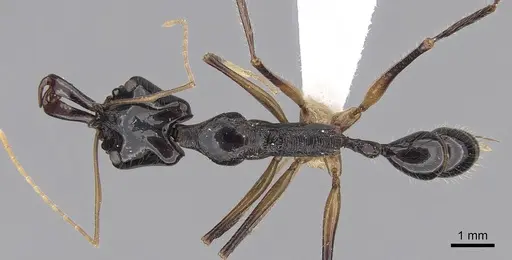
CASENT0903984
View on AntWeb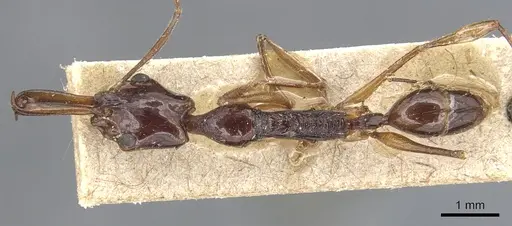
Literature
Loading...Loading products...