

Ankylomyrma coronacantha
- Scientific Name
- Ankylomyrma coronacantha
- Tribe
- Ankylomyrmini
- Subfamily
- Agroecomyrmecinae
- Author
- Bolton, 1973
- Distribution
- Found in 2 countries
Ankylomyrma coronacantha Overview
Ankylomyrma coronacantha is an ant species of the genus Ankylomyrma. It is primarily documented in 2 countries , including Central African Republic, Gabon. Detailed taxonomic data and occurrence records can be further explored via authoritative databases such as AntWeb or the Global Biodiversity Information Facility (GBIF).
Ankylomyrma coronacantha
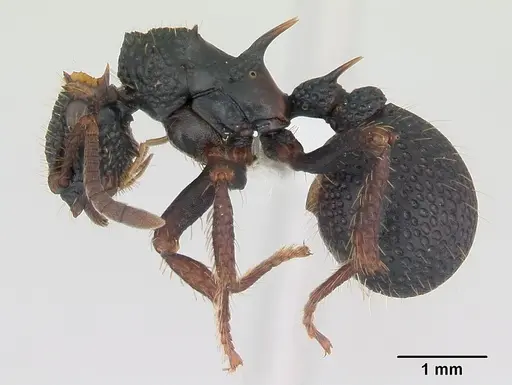
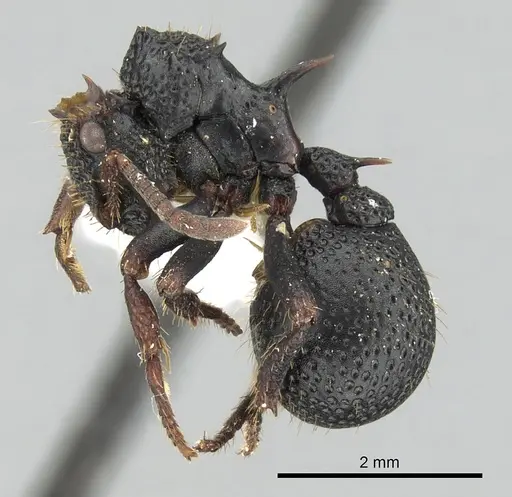
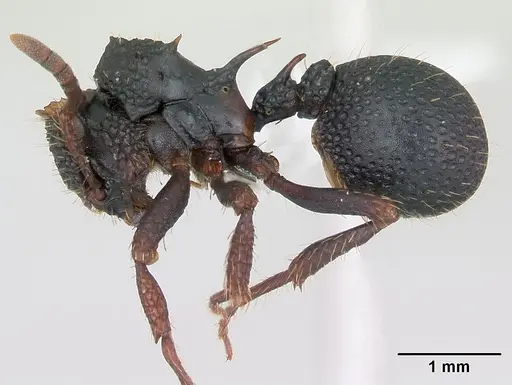
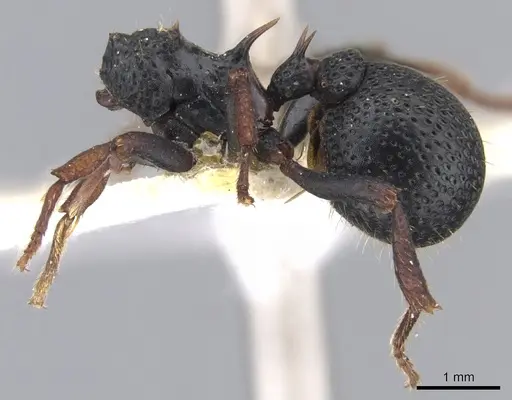
Ankylomyrma coronacantha workers measure about 4.6mm and look like tiny armored tanks covered in spines [1]. They live in the rainforest canopies of West Africa, including Ghana, Cameroon, Gabon, and the Central African Republic [1][2].
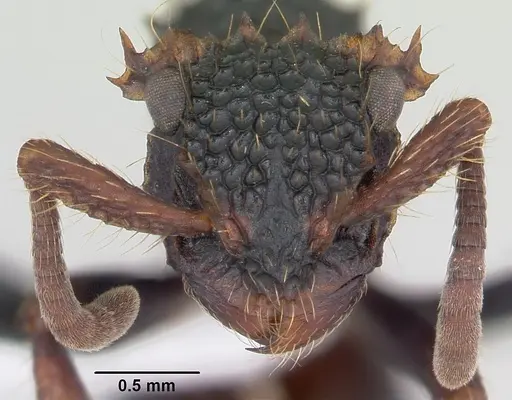
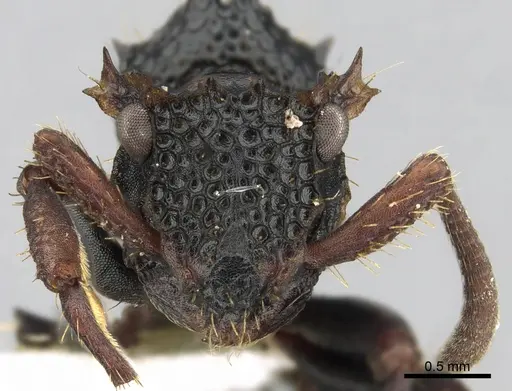
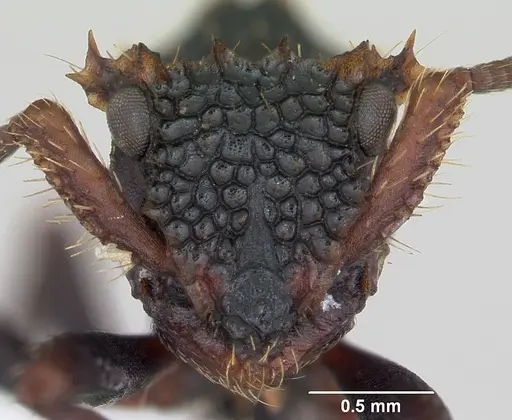
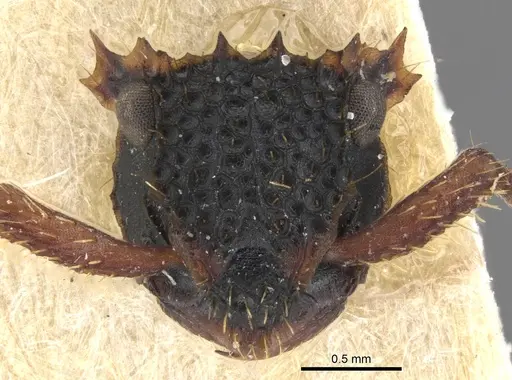
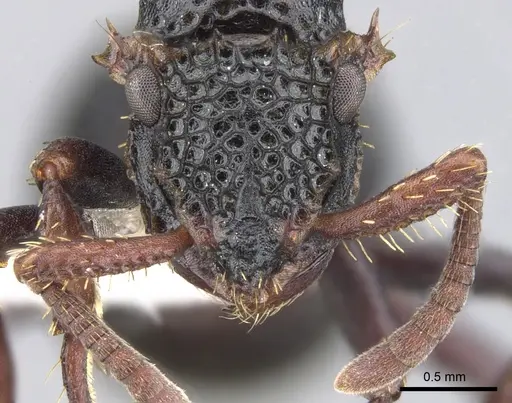
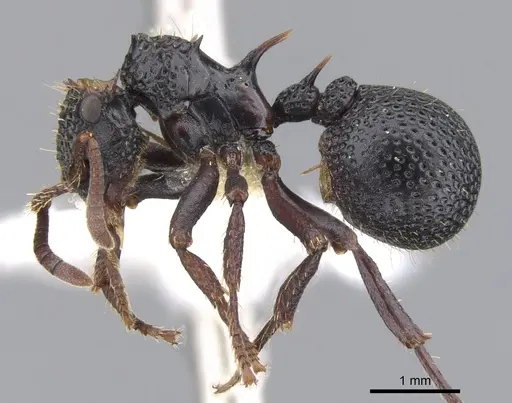
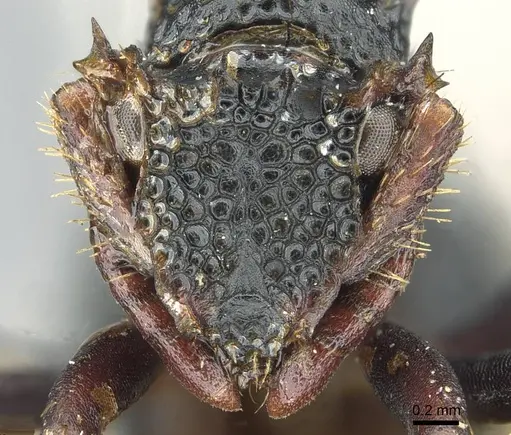
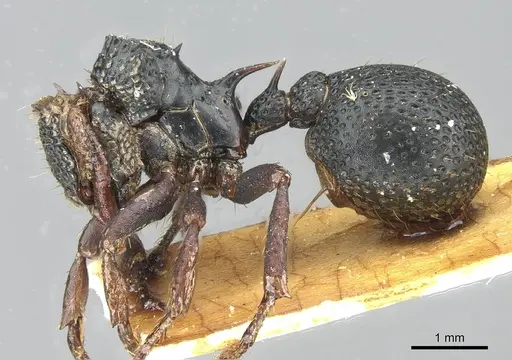
These ants defend themselves by curling into a ball. Their abdomen (gaster) consists almost entirely of a massively enlarged first segment that forms a sphere, allowing them to roll up and protect their vulnerable parts [3]. A crown of spines on the head gives them their name 'coronacantha' meaning 'crown-thorn' [3]. Scientists have only ever found workers, no queens have been collected despite decades of searching [1][2].
Quick Summary
- Difficulty: Expert (currently impossible to establish)
- Origin & Habitat: West African primary rainforest (Ghana, Cameroon, Gabon, Central African Republic) [1][2]
- Colony Type: Unknown, only the worker caste has ever been documented [1]
- Size & Growth:
- Antkeeping:
- Temperature: Unknown, based on their West African rainforest habitat, they likely need warm stable temperatures roughly in the mid-20s°C, but this is unconfirmed [1]
- Humidity: Unknown, likely requires high humidity and damp conditions consistent with rainforest canopy habitats [1]
- Diapause: No, this is a tropical species [1]
- Nesting: Arboreal, likely nests in vegetation or tree cavities, but the specific nesting site remains unknown [1][3]
- Behavior: Workers curl into a defensive ball when threatened [3]. They are arboreal, living in rainforest canopies [2]. Escape risk is unknown, but workers are small enough to require secure barriers [1].
- Common Issues: no queens have ever been collected, making colony founding impossible., extreme rarity means specimens are unavailable to hobbyists and exist only in scientific collections., dietary requirements are completely unknown., arboreal nesting habits are poorly understood, making captive housing speculative.
The Mystery of the Missing Queens
Scientists have never collected a queen of Ankylomyrma coronacantha. Every specimen in museum collections is a worker [1][2]. This means we know nothing about how colonies reproduce or how they start. The species might have normal queens that are simply extremely rare or cryptic (well-hidden). Alternatively, they might reproduce through gamergates, workers that can lay eggs and take over queen duties, though this has never been observed [1]. Without a queen or established colony, you cannot start a captive colony. This makes the species effectively impossible to keep using current antkeeping methods.
Morphology and Ball-Rolling Defense
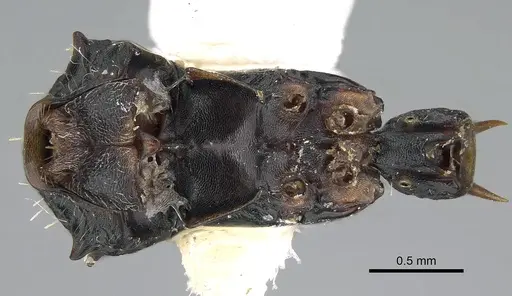
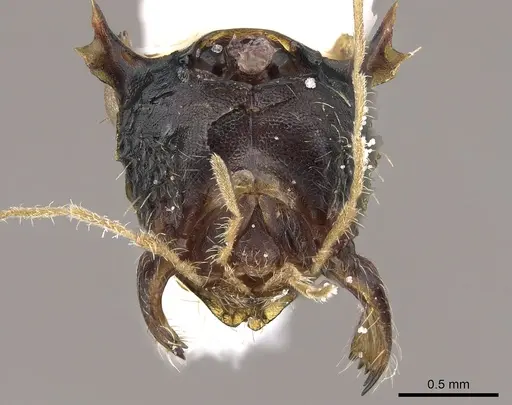
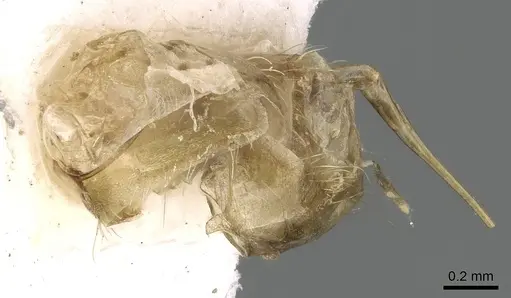
These ants possess one of the most unusual body plans in the ant world. The gaster (the rear body section) consists almost entirely of an enormously enlarged first segment that forms a subspherical ball [3]. The remaining abdominal segments telescope inside this ball, and the first sternite (the underside plate) is reduced to just a narrow rim [3]. When threatened, the worker can curl up completely, presenting only spines and armor to any predator [3]. The head carries a crown of spines along the back margin (the occipital lamella), and the body bears spines on the pronotum, mesonotum, and propodeum [3]. They also possess a well-developed sting that points forward rather than backward [3].
Collection History and Habitat
The first specimen came from Mount Atewa in Ghana in 1969,collected by fogging a tree canopy with insecticide [1]. Since then, only a few additional workers have turned up from Cameroon, Gabon, and the Central African Republic, mostly through canopy fogging or vegetation beating [1][2]. All collections come from primary (undisturbed) rainforest [1]. This arboreal lifestyle means they live entirely in the trees, not on the forest floor [3][2]. The specific nest site, whether they build in twig forks, under bark, or within plant cavities, remains unknown [1].
Phylogenetic Context
Ankylomyrma coronacantha belongs to the subfamily Agroecomyrmecinae, one of the rarest ant subfamilies [4]. It is the only living species in its genus and is sister to Tatuidris (the armadillo ants of Central and South America) [4][5]. Together, these two genera represent a relict lineage that split from other ants approximately 45 million years ago [6]. This ancient lineage explains their unusual morphology and potentially cryptic biology.
Frequently Asked Questions
Can I keep Ankylomyrma coronacantha in captivity?
No. Only worker ants have ever been collected, and no queens are known. Without a queen, you cannot establish a breeding colony [1].
Why are there no queens of Ankylomyrma coronacantha?
Scientists do not know. Queens might be extremely rare, cryptic (hidden), or the species might reproduce through a different mechanism such as gamergates (workers that can lay eggs), though this has not been observed [1].
How big do Ankylomyrma coronacantha colonies get?
Unknown. Since only a few individual workers have ever been found, we have no information on colony size or structure [1][2].
What do Ankylomyrma coronacantha eat?
Unknown. Their diet has never been observed. They possess a well-developed sting that projects forward, suggesting they might be predators, but this is speculation [3].
Do Ankylomyrma coronacantha ants sting?
They possess a well-developed sting, but whether they use it for defense or hunting is unknown [3].
Where do Ankylomyrma coronacantha nest?
They are arboreal, meaning they live in trees. The holotype was collected from the canopy of a tree in Ghana, but the specific nest site (whether in twigs, leaves, or bark crevices) remains unknown [1][3].
Are Ankylomyrma coronacantha good for beginners?
No. This species is not available to hobbyists and cannot be kept with current knowledge. They exist only in scientific collections [1].
How rare are Ankylomyrma coronacantha?
Extremely rare. Only a handful of specimens exist in museums worldwide, collected from just a few locations in West Africa [1][2].
References

This caresheet is licensed under CC BY-SA 4.0 .
CASENT0005904
View on AntWeb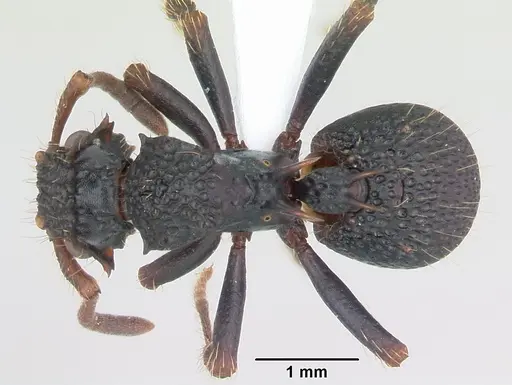
CASENT0175478
View on AntWeb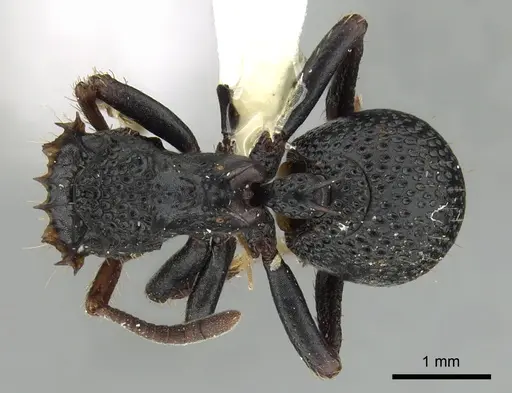
CASENT0406734
View on AntWeb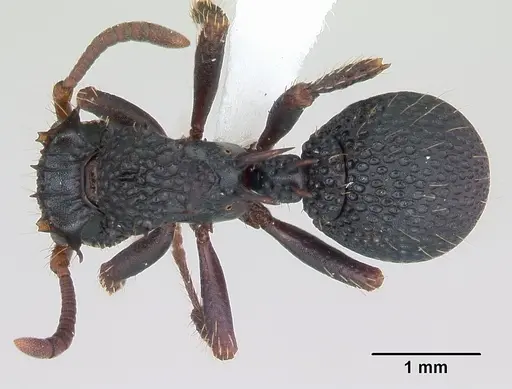
CASENT0902013
View on AntWeb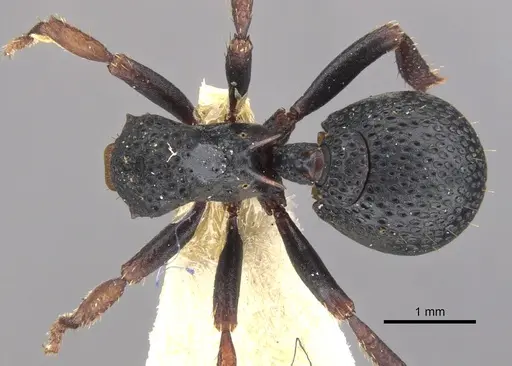
CASENT0902014
View on AntWeb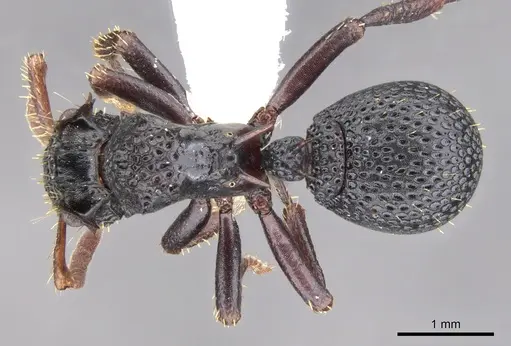
CASENT0902015
View on AntWeb
CASENT0912871
View on AntWeb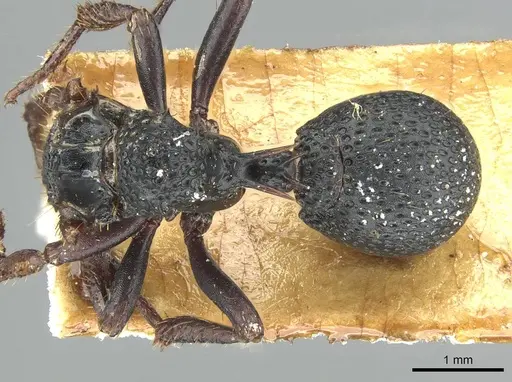
Literature
Loading...Loading products...