

Amoimyrmex silvestrii
- Scientific Name
- Amoimyrmex silvestrii
- Tribe
- Attini
- Subfamily
- Myrmicinae
- Author
- Emery, 1905
- Distribution
- Found in 1 countries
Amoimyrmex silvestrii Overview
Amoimyrmex silvestrii is an ant species of the genus Amoimyrmex. It is primarily documented in 1 countries , including Argentina. Detailed taxonomic data and occurrence records can be further explored via authoritative databases such as AntWeb or the Global Biodiversity Information Facility (GBIF).
Amoimyrmex silvestrii
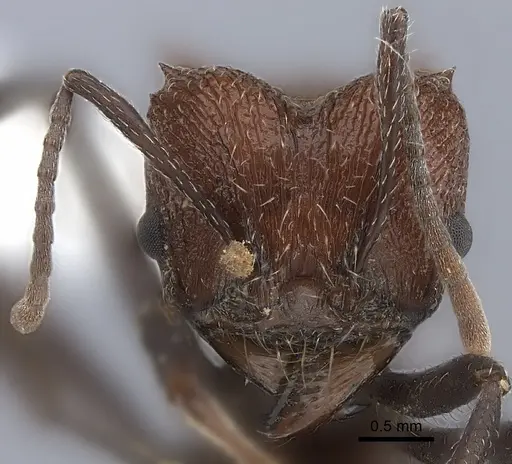
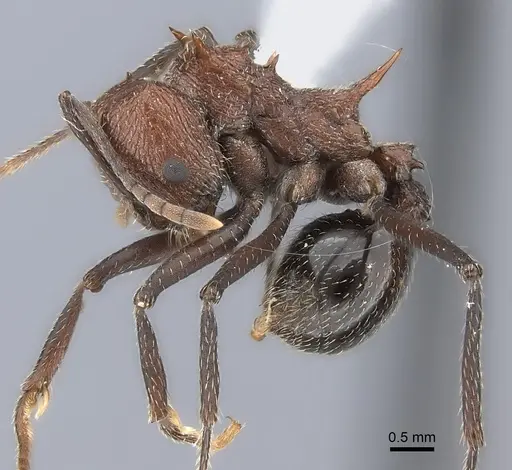
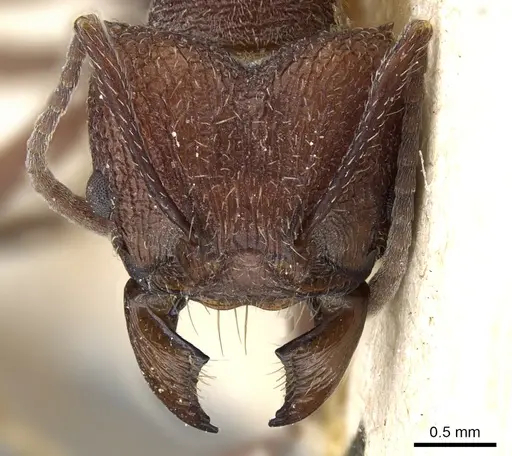
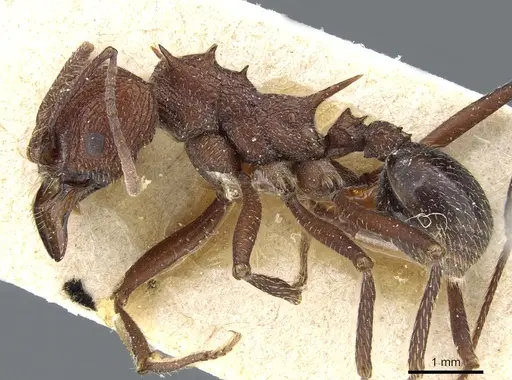
Amoimyrmex silvestrii is a small to medium-sized leaf-cutting ant native to the grasslands of South America. Workers measure between 4.02 and 8.71 mm in length and display a reddish-brown to dark brown coloration with a darker brown abdomen [1]. They inhabit the dry Chaco and Pampas regions of Argentina, Uruguay, and Paraguay, where they favor open, dry habitats over forested areas [1][2][3].
Unlike many leaf-cutting ants that construct conspicuous nest mounds, Amoimyrmex silvestrii creates inconspicuous underground nests marked only by simple holes in the soil surrounded by cleared vegetation [1]. These ants are generalist foragers, collecting both grasses and broad-leaved plants to cultivate their underground fungus gardens [1][4]. Their nests contain multiple subterranean chambers connected by tunnels, with fungus gardens suspended from the ceilings of deeper chambers while brood occupies upper levels [1].
Quick Summary
- Difficulty: Expert
- Origin & Habitat: Chaco and Pampas regions of Argentina, Uruguay, and Paraguay, open dry grasslands and agricultural edges [1][2][3][5]
- Colony Type: Unconfirmed, likely single-queen based on patterns in related leaf-cutting ants, but not directly documented
- Size & Growth:
- Queen: 9.50-10.70 mm [1]
- Worker: 4.02-8.71 mm [1]
- Colony: Unknown, likely reaches moderate to large size based on related Amoimyrmex species
- Growth: Moderate (estimated)
- Development: 8-12 weeks at 25-28°C (estimated based on related Amoimyrmex species) (Development time not directly measured, estimate assumes warm stable conditions typical of their native range)
- Antkeeping:
- Temperature: Warm and stable, approximately 24-28°C (inferred from Chaco/Pampas climate). Avoid fluctuations that could harm the fungus garden.
- Humidity: Moderate to high humidity required for fungus cultivation, nest material should feel damp but not waterlogged. Surface chambers may be drier.
- Diapause: Likely not required, tropical to subtropical species that remains active year-round, though cooler winter temperatures around 15-20°C may reduce activity
- Nesting: Subterranean soil nests with multiple chambers, requires specialized fungus garden setup in captivity with deep chambers for fungus and upper areas for brood
- Behavior: Active diurnal foragers with strong mandibles for cutting vegetation. Workers show size variation with majors reaching 8.71 mm. Moderate aggression focused on territory defense. Small worker size down to 4.02 mm requires excellent escape prevention.
- Common Issues: fungus garden contamination or collapse from incorrect humidity or temperature., workers escaping through tiny gaps due to small size down to 4 mm., pesticide poisoning from collected plant material that was treated., difficulty maintaining consistent fungus garden conditions in dry climates.
Nest Preferences and Fungus Garden Setup
In nature, Amoimyrmex silvestrii builds subterranean nests with simple surface entrances that never form mounds or craters [1]. The entrance is just a bare hole surrounded by cleared vegetation. Underground, several chambers connect by tunnels, with fungus gardens hanging from the ceilings of deeper chambers while brood stays in upper chambers [1].
In captivity, you must recreate this vertical arrangement. Use a deep formicarium or tub setup with at least 15-20 cm of depth. The lower portion needs high humidity for the fungus garden, while upper chambers can be slightly drier for brood rearing. Provide a substrate that holds moisture but drains well, such as a mix of soil and plaster. The fungus garden needs darkness and stable conditions, so avoid clear containers for the nest portion.
Feeding and Diet
These ants are generalist foragers, cutting both monocots like grasses and dicots like broad-leaved plants [1][4]. They do not eat the plant material directly, instead, they chew it into a pulp to cultivate their symbiotic fungus, which serves as their primary food source.
In captivity, offer fresh, pesticide-free plant material daily. Suitable options include grasses, rose petals, bramble leaves, and small amounts of fruit. Always wash plants thoroughly to remove pesticides. You will see workers cutting fragments and carrying them to the nest. Remove old plant material before it molds. They also host tiny Attaphila cockroaches in their nests in the wild [4], but these myrmecophiles are not required for captive colony health.
Temperature and Environmental Control
Coming from the warm Chaco and Pampas grasslands, these ants need warm stable conditions [2]. Keep the nest area at 24-28°C year-round. Sudden temperature drops can shock the fungus garden and kill the colony.
If you must cool them during winter, do so gradually and never below 15°C. Use a heating cable on one side of the nest to create a gentle gradient, but place it at the top to avoid driving moisture down into the fungus garden. Monitor humidity closely, the fungus needs moist conditions but will rot if waterlogged. Ventilation must prevent stagnant air without drying the nest too quickly.
Behavior and Foraging
Workers are active during the day and forage by cutting pieces from available vegetation. They clear all vegetation from around their nest entrance, creating bare soil circles [1]. Workers vary in size, with the largest majors reaching nearly 9 mm and handling tougher cutting tasks while smaller workers manage the fungus garden.
They navigate using visual cues and pheromone trails. In captivity, provide a large outworld with substrate for foraging. They will defend their territory against intruders but are not typically aggressive toward keepers unless disturbed. Their small size means they can squeeze through surprisingly small gaps, so use fine mesh and tight-fitting lids.
Colony Founding
Founding behavior is unconfirmed for Amoimyrmex silvestrii. Based on typical patterns in related leaf-cutting ants, queens likely seal themselves underground (claustral founding) and raise the first workers using stored body fat, but this has not been directly observed. Keepers attempting to found colonies should provide a small, dark, humid chamber and avoid disturbing the queen.
Frequently Asked Questions
Can I keep Amoimyrmex silvestrii in a test tube?
No. These ants require a fungus garden and specialized subterranean nesting space. Test tubes cannot accommodate their biological needs or support fungus cultivation.
How long until first workers for Amoimyrmex silvestrii?
The timeline is unconfirmed. Based on related leaf-cutting ants, expect approximately 8-12 weeks at 25-28°C, though this varies with temperature and fungus health.
What do Amoimyrmex silvestrii eat?
They cultivate fungus on fresh plant material. Offer pesticide-free grasses, leaves, and flowers. They do not eat the plants directly but feed on the fungus they grow.
Do Amoimyrmex silvestrii need a fungus garden?
Yes, they are obligate fungus-growers. The colony cannot survive without a healthy fungus garden to feed the larvae and queen.
Are Amoimyrmex silvestrii good for beginners?
No, they are expert-level ants. Fungus garden maintenance requires precise humidity and temperature control, sterile plant material, and specialized housing.
How big do Amoimyrmex silvestrii colonies get?
Exact maximum size is unknown. Based on related Amoimyrmex species, colonies likely reach several thousand workers over multiple years.
Do Amoimyrmex silvestrii need hibernation?
Likely not. They come from warm grassland regions and remain active year-round, though you may reduce temperatures to 15-20°C in winter to slow growth.
Why is my Amoimyrmex silvestrii fungus garden dying?
Check for contamination, incorrect humidity, or temperature swings. Ensure all plant material is pesticide-free. The garden may also fail if too dry or too wet.
Can I keep multiple Amoimyrmex silvestrii queens together?
Not recommended. Combining unrelated queens has not been documented for this species and likely results in fighting.
References

This caresheet is licensed under CC BY-SA 4.0 .
CASENT0217815
View on AntWeb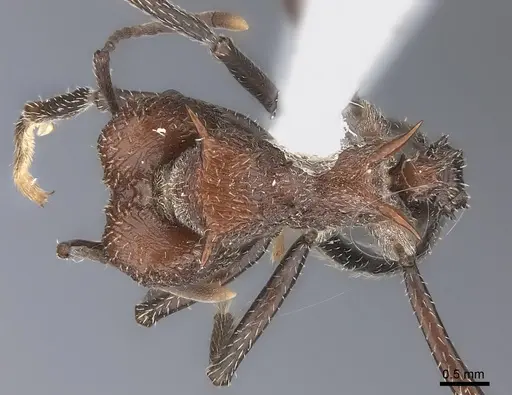
CASENT0905007
View on AntWeb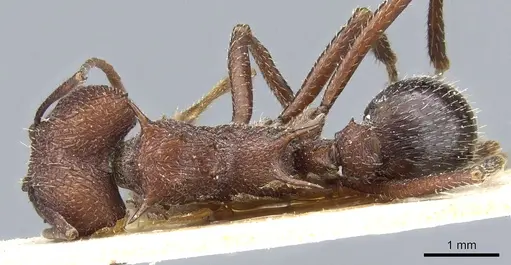
Literature
Loading...Loading products...