

Allomerus vogeli
- Scientific Name
- Allomerus vogeli
- Tribe
- Attini
- Subfamily
- Myrmicinae
- Author
- Kempf, 1975
- Distribution
- Found in 1 countries
Allomerus vogeli Overview
Allomerus vogeli is an ant species of the genus Allomerus. It is primarily documented in 1 countries , including Brazil. Detailed taxonomic data and occurrence records can be further explored via authoritative databases such as AntWeb or the Global Biodiversity Information Facility (GBIF).
Allomerus vogeli
Allomerus vogeli are tiny ants from the Amazon rainforest that spend their entire lives inside the hollow stems and specialized structures of the ant-plant Myrmidone macrosperma [1][2]. First described from the Rio Negro region of Brazil, these ants have since been found in Venezuela, always closely tied to their specific host plant [1]. Workers have a distinctive spine on their propodeum, the rear section of their middle body, and antennae with 9 segments that sometimes appear to have 10 due to partial division [1]. Unlike the leafcutter ants in their tribe, Allomerus vogeli do not grow fungus, instead, they form a specialized partnership with their host plant, living within its tissues and likely defending it from herbivores in exchange for shelter and food resources [3].
Quick Summary
- Difficulty: Expert
- Origin & Habitat: Amazon rainforest of Brazil (Amazonas state, Rio Negro basin) and Venezuela, specifically within the hollow tissues (domatia) of the ant-plant Myrmidone macrosperma [1][2].
- Colony Type: Unknown, likely single-queen colonies based on patterns seen in other plant-specialist ants, but this remains unconfirmed for this species.
- Size & Growth:
- Queen: Unknown (likely 3-4mm based on typical Allomerus genus patterns).
- Worker: Unknown (likely 2-3mm based on genus patterns).
- Colony: Unknown, likely small, possibly under 100 workers, constrained by the size of plant cavities available [4].
- Growth: Unknown
- Development: Unknown, likely 6-10 weeks at 25-28°C based on similar small tropical Myrmicinae, but unconfirmed for this species. (Development timing has not been studied. Estimate assumes tropical temperatures and small worker size.)
- Antkeeping:
- Temperature: 24-28°C (estimated from tropical Amazon habitat), maintain stable warmth without fluctuations.
- Humidity: High humidity required, nest substrate should remain consistently moist, mimicking tropical rainforest floor conditions.
- Diapause: No, this is a tropical species that remains active year-round with no winter rest period required [4].
- Nesting: Requires living Myrmidone macrosperma plant or highly specialized artificial domatia (plant cavity mimicry), standard test tubes, Y-tong, or plaster nests will not suffice.
- Behavior: Unknown specifically for this species, but likely territorial and defensive of their host plant. Their very small size means escape prevention must be excellent, use fine mesh barriers and perfect sealing.
- Common Issues: requires specific host plant Myrmidone macrosperma, cannot survive in standard ant nests or test tubes., no confirmed captive breeding success has been documented in antkeeping literature., extremely small size means they can escape through the tiniest gaps in standard setups., tropical conditions require consistent heating and humidity control, fluctuations will stress the colony., wild-caught colonies may carry parasites specific to the host plant that could cause colony collapse in captivity.
The Myrmidone macrosperma Mutualism
Allomerus vogeli are obligate plant-ants, meaning they must live inside the hollow structures (called domatia) of their host plant Myrmidone macrosperma to survive [1][2]. In the wild, colonies inhabit the swollen stems or leaf stalks of this Amazonian plant, which provides both shelter and likely food in the form of extrafloral nectar or specialized food bodies [3]. The ants, in turn, presumably defend the plant against leaf-eating insects and other herbivores, though the exact details of this exchange have not been fully documented for this specific species. This tight relationship means you cannot simply place these ants in a standard nest, they need their specific plant host or a complex artificial environment that mimics plant tissues.
Housing and Captive Feasibility
Keeping Allomerus vogeli presents extreme challenges because standard antkeeping equipment does not meet their biological needs. Test tubes, Y-tong nests, and plaster formicaria lack the specific microenvironment found inside Myrmidone macrosperma stems. To attempt keeping these ants, you would need either a living Myrmidone macrosperma plant (which is itself a rare tropical species requiring greenhouse conditions) or an artificial setup that precisely mimics plant cavities with appropriate humidity, gas exchange, and surface textures. Because of these requirements, this species is effectively impossible for most antkeepers and should be considered a research-grade species only. If you encounter these ants, observation in their natural habitat is far more practical than attempted captivity. [1][4]
Climate and Environment
These ants come from the hot, humid Amazon rainforest around the Rio Negro [1]. They need stable tropical conditions year-round, roughly 24-28°C with high humidity and no seasonal cooling. Unlike temperate ants, they do not enter hibernation (diapause) and remain active throughout the year [4]. Any attempt to keep them would require maintaining consistent tropical heat and moisture without the dry periods that many other ant species tolerate. Sudden temperature drops or dry conditions will likely kill the colony quickly.
Identification and Similar Species
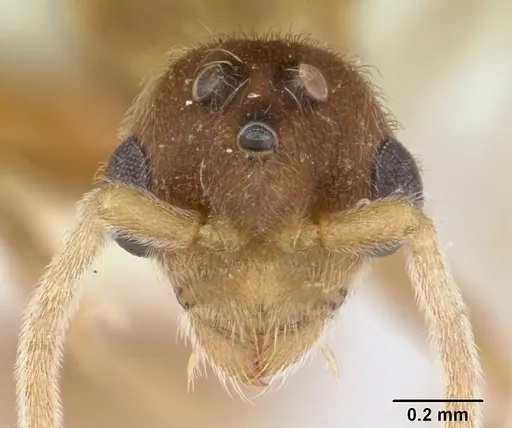
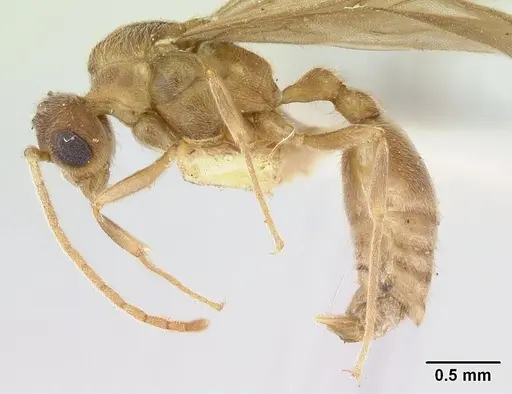
Allomerus vogeli workers have 9 antenna segments (sometimes appearing as 10), a propodeal spine, and several long hairs on the thorax and head [1]. They are most similar to Allomerus dentatus, but you can tell them apart by the position of the propodeal spiracle (the breathing hole), in A. vogeli it opens to the side and sits farther from the propodeal spine, while in A. dentatus it opens toward the back and sits closer to the spine [1]. Both species share the trait of living in Myrmidone macrosperma, so finding ants in this plant in the Rio Negro region likely means you have either A. vogeli or A. dentatus.
Frequently Asked Questions
Can I keep Allomerus vogeli in a test tube or standard formicarium?
No. These ants are obligate plant-dwellers that must live inside the hollow tissues of their specific host plant Myrmidone macrosperma. They cannot survive in test tubes, Y-tong nests, or standard formicaria.
What plant do Allomerus vogeli need to survive?
They require Myrmidone macrosperma, a specific Amazonian ant-plant that provides hollow structures (domatia) for the colony to inhabit. Without this plant, the ants cannot establish a nest.
Are Allomerus vogeli good for beginners?
No. This is an expert-level species due to their specialized plant requirements, tropical climate needs, and extremely small size. They are not suitable for anyone without specialized equipment and experience with tropical plant-ant mutualisms.
How long until Allomerus vogeli get their first workers?
The egg-to-worker timeline is unknown for this species. Based on similar small tropical ants, it might take 6-10 weeks at 25-28°C, but this is purely an estimate.
Do Allomerus vogeli need hibernation?
No. As a tropical Amazonian species, they remain active year-round and do not require a winter rest period (diapause).
Can I keep multiple Allomerus vogeli queens together?
This is unknown and not recommended. Combining unrelated queens has not been documented for this species, and attempting it risks fighting and colony failure.
Where do Allomerus vogeli live in the wild?
They live in the Amazon rainforest of Brazil (specifically the Rio Negro region of Amazonas state) and Venezuela, always associated with their host plant Myrmidone macrosperma.
What do Allomerus vogeli eat?
Their exact diet is unconfirmed, but they likely eat small insects, plant nectar, and possibly specialized food provided by their host plant. They do not grow fungus like leafcutter ants despite being in the same tribe.
References

This caresheet is licensed under CC BY-SA 4.0 .
CASENT0178479
View on AntWeb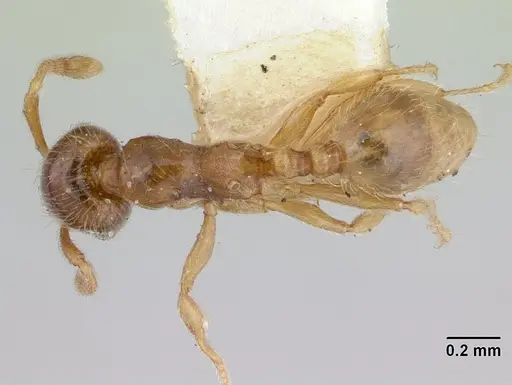
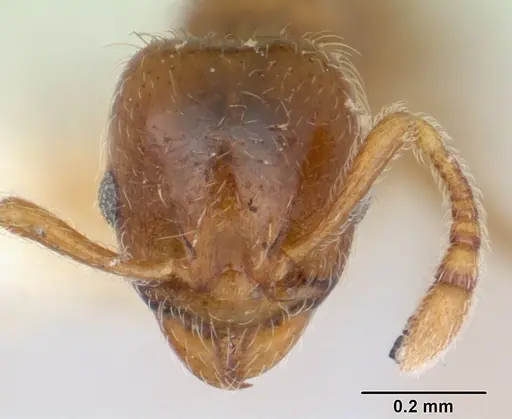
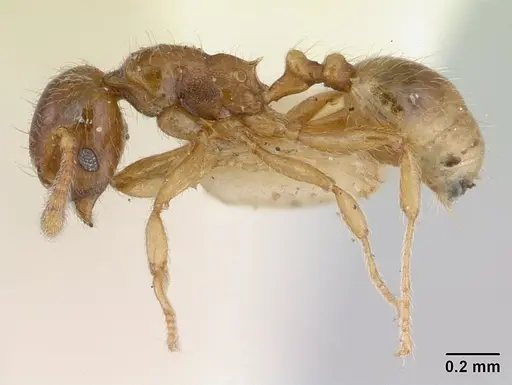
CASENT0178480
View on AntWeb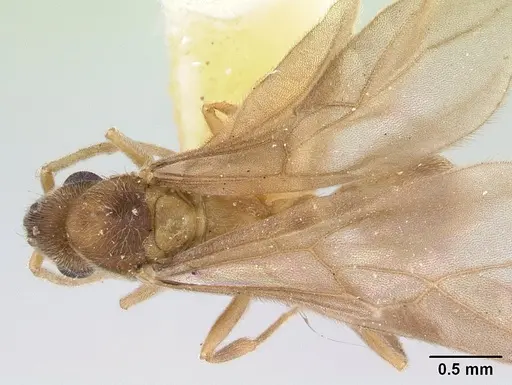
Literature
Loading...Loading products...