

Aenictus philiporum
- Scientific Name
- Aenictus philiporum
- Subfamily
- Dorylinae
- Author
- Wilson, 1964
- Distribution
- Found in 2 countries
Aenictus philiporum Overview
Aenictus philiporum is an ant species of the genus Aenictus. It is primarily documented in 2 countries , including Australia, Papua New Guinea. Detailed taxonomic data and occurrence records can be further explored via authoritative databases such as AntWeb or the Global Biodiversity Information Facility (GBIF).
Aenictus philiporum
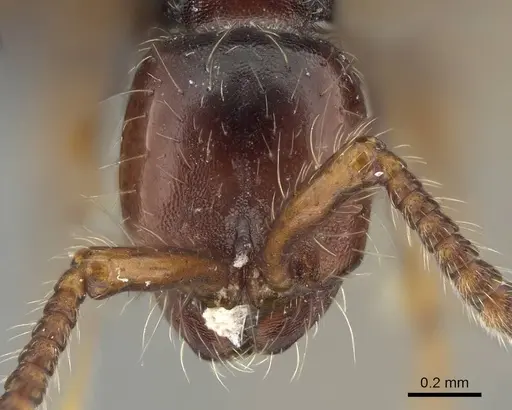
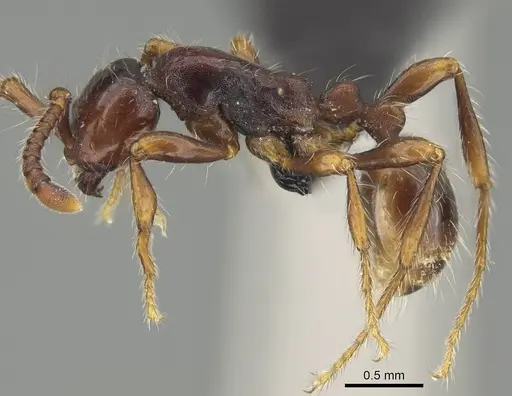
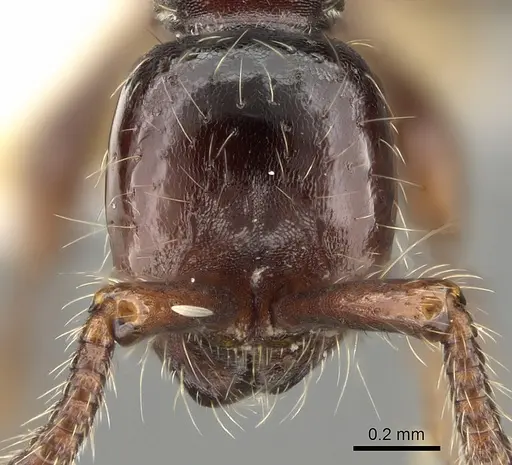
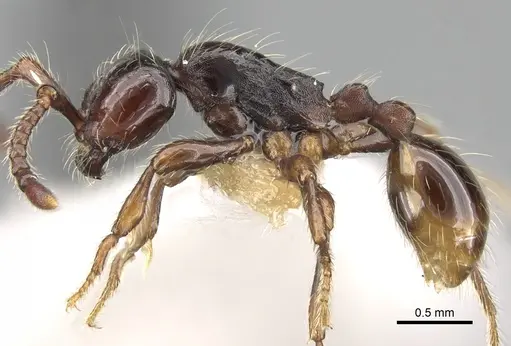
Aenictus philiporum is a small reddish-brown army ant with workers measuring roughly 3-4mm in length [1]. They have distinctive smooth, shiny patches on their pronotum and a lighter yellow-red head and legs [1]. This extremely rare species has only been found a few times on Cape York Peninsula in Queensland, Australia, and in eastern Papua New Guinea [1][2]. In the wild, they behave like classic army ants: a colony observed in Bandong was seen running in single file during the late afternoon through midmountain rainforest, carrying half-grown larvae in their mandibles. This showed they were in their nomadic phase, moving their temporary nest [2]. These same workers were carrying three Pheidole soldiers, confirming they hunt and kill other ant species [2]. Like other Aenictus, they likely alternate between nomadic phases where they form temporary bivouacs above ground and stationary phases with semi-permanent underground nests [3].
Quick Summary
- Difficulty: Expert (Not Recommended)
- Origin & Habitat: Tropical rainforests of Cape York Peninsula, Queensland and eastern Papua New Guinea [2][1]
- Colony Type: Unknown, only the worker caste has ever been collected [4]
- Size & Growth:
- Queen: Unknown, no queens ever observed [4]
- Worker: Approximately 3-4mm (mesosoma length 0.96-1.06mm) [1]
- Colony: Unknown, army ants typically maintain colonies of thousands [3]
- Growth: Unknown
- Development: Unknown (Development timing is unconfirmed for this species. Army ants typically have rapid development, but specific data is unavailable.)
- Antkeeping:
- Temperature: Unknown, based on tropical rainforest habitat, likely requires warm stable temperatures around 24-28°C
- Humidity: Unknown, likely requires high humidity and damp substrate based on rainforest habitat
- Diapause: No, tropical species do not hibernate
- Nesting: Forms temporary bivouacs, does not build permanent nests [3]
- Behavior: Highly nomadic army ants that forage in files and raid other ant nests [3][2]. They are specialist predators of other ants, including Pheidole soldiers [2]. Workers are small but army ants are extremely active and require vast foraging areas [3].
- Common Issues: cannot be housed in standard formicaria due to nomadic lifestyle and need to move bivouacs frequently., require massive amounts of live prey (entire ant colonies) that cannot be provided in captivity., no queens have ever been collected, making colony founding impossible with current knowledge., extremely rare in collections and wild populations should not be disturbed for pet trade.
Natural History and Army Ant Biology
Aenictus philiporum belongs to the true army ants, which live a nomadic lifestyle unlike most ants that stay in one nest [3]. These ants alternate between two phases: a stationary phase where they occupy semi-permanent underground nests, and a nomadic phase where they form temporary bivouacs in sheltered places above ground [3]. During the nomadic phase, the entire colony moves regularly, sometimes more than once a day when the larvae require large amounts of food [3]. The colony observed by Wilson in Bandong was clearly in this nomadic phase, moving through the rainforest in the late afternoon with workers carrying brood [2].
Army ants conduct raids using large numbers of workers, attacking other ants, social wasps, and termites [3]. During these raids, numerous workers assault a single nest or small area, with several ants coordinating to carry large prey items back to the bivouac [3]. The Pheidole soldiers found in the mandibles of A. philiporum workers confirm they prey on other ant species, likely overwhelming them with superior numbers [2]. This hunting style requires huge territories and massive amounts of prey that cannot be replicated in captivity.
Why This Species Is Not Suitable for Captivity
You cannot keep Aenictus philiporum in a standard ant farm or formicarium. First, only worker ants have ever been collected for this species, no queens have ever been found, meaning you cannot start a colony even if you acquire workers [4]. Second, army ants do not found colonies in the traditional way where a single queen starts alone. Instead, they reproduce by colony fission, where a mature colony splits into two parts [3]. This requires an established colony with thousands of workers and multiple queens (in army ant species where queens are known).
Third, their nomadic lifestyle means they constantly move their nest. In captivity, they would stress themselves trying to escape any fixed enclosure to relocate their bivouac [3]. Finally, they are specialist predators that require entire colonies of other ants as food [2]. A single pet colony would need constant supplies of live Pheidole or other ants, making husbandry practically impossible for hobbyists.
Field Identification and Observation
If you are lucky enough to encounter Aenictus philiporum in the wild, you will see workers running in single file columns through the leaf litter or across the forest floor. Workers are small (around 3-4mm) with a reddish-brown body and lighter yellow-red head and legs [1]. Look for the distinctive smooth, shiny areas on the pronotum and the weakly punctured head surface [1]. They are most active during the day and at night, and in the late afternoon you might catch them moving their brood to a new bivouac location [2]. If you observe a raid, you may see them attacking Pheidole colonies or other ant nests. Please photograph and document any sightings for science, but do not collect them for the pet trade as they are extremely rare and their biology is poorly understood [1].
Frequently Asked Questions
Can I keep Aenictus philiporum in a test tube?
No. This species cannot be kept in test tubes or standard formicaria. They are nomadic army ants that require huge spaces to forage and frequently move their entire colony. They also need massive amounts of live prey (other ant colonies) that cannot be provided in captivity.
What do Aenictus philiporum eat?
They are specialist predators of other ants. Workers have been observed carrying Pheidole soldiers, and like other Aenictus, they likely attack social wasps and termites as well. They require live prey and do not accept sugar water or standard ant keeping foods.
How big do Aenictus philiporum colonies get?
The exact colony size is unknown. Army ants typically maintain colonies with thousands of workers, but specific data for this rare species has never been documented.
Are Aenictus philiporum good for beginners?
Absolutely not. This is one of the most challenging ant species to keep, requiring specialized facilities, massive amounts of live prey, and knowledge of army ant biology. Additionally, no queens have ever been collected, making captive colonies impossible to establish.
Do Aenictus philiporum need hibernation?
No. They come from tropical rainforests in Queensland and Papua New Guinea and do not experience cold winters. They remain active year-round.
Can I start a colony with just Aenictus philiporum workers?
No. Unlike some ants where workers can form viable colonies, army ants require their queen (or queens) to reproduce. Since no queens have ever been observed for this species, you cannot start a colony from workers alone.
Why are there no queens in collections?
Army ant queens are rare and difficult to find. They typically stay deep in the nest or bivouac and only leave during colony fission. Aenictus philiporum is extremely rare overall, having been collected only a handful of times, so researchers have not yet encountered a queen.
References

This caresheet is licensed under CC BY-SA 4.0 .
CASENT0217380
View on AntWeb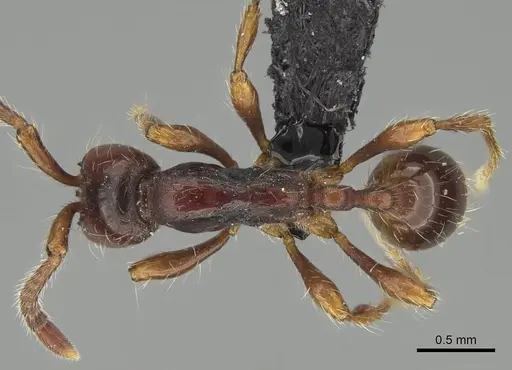
CASENT0281954
View on AntWeb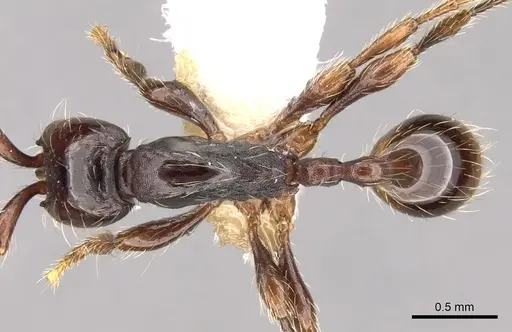
Literature
Loading...Loading products...