

Aenictus peguensis
- Scientific Name
- Aenictus peguensis
- Subfamily
- Dorylinae
- Author
- Emery, 1895
- Distribution
- Found in 3 countries
Aenictus peguensis Overview
Aenictus peguensis is an ant species of the genus Aenictus. It is primarily documented in 3 countries , including India, Myanmar, Thailand. Detailed taxonomic data and occurrence records can be further explored via authoritative databases such as AntWeb or the Global Biodiversity Information Facility (GBIF).
Aenictus peguensis
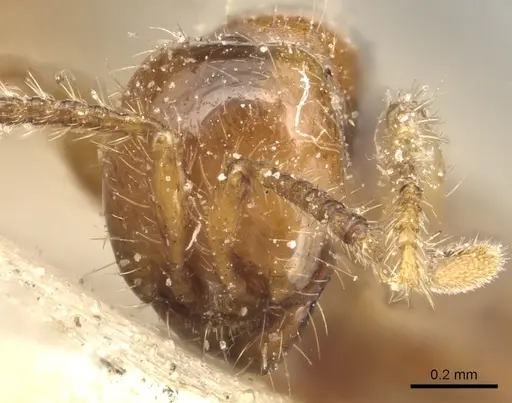
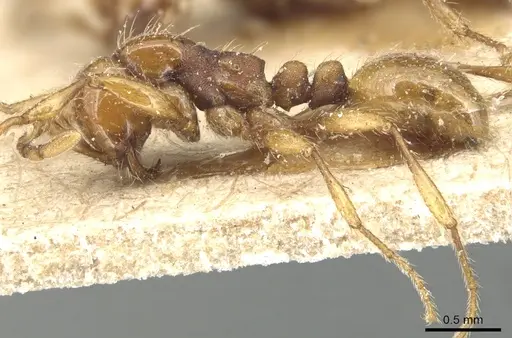
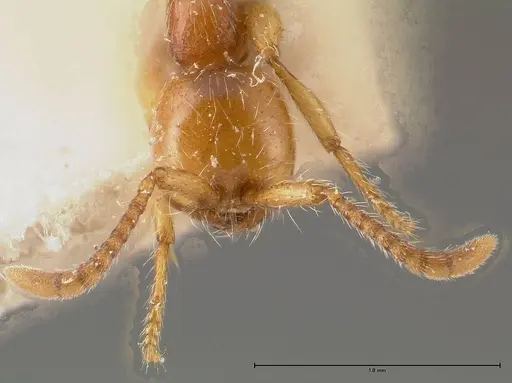
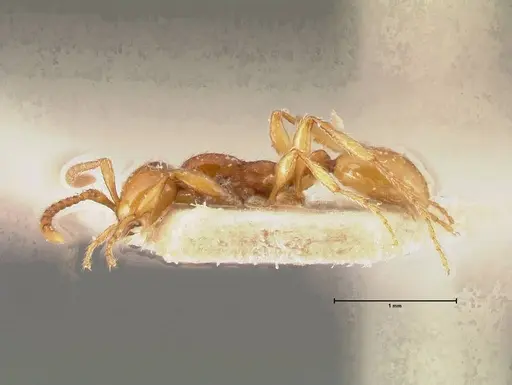
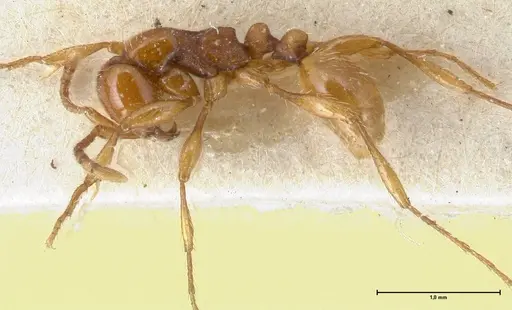
Aenictus peguensis is a tiny army ant from the lowland forests of Southeast Asia. Workers measure just 2.95 to 3.25 millimeters in length and show a yellowish-brown coloration with darker reddish-brown waists and thoraxes [1]. Queens remain undescribed, only workers are known to science [2]. They belong to the minutulus species group within the army ant subfamily Dorylinae, sporting distinctive mandibles with five to six small denticles between the larger teeth [1][3]. The species inhabits lowland areas across Myanmar and Vietnam, with additional records from India and Thailand [1][4][5].
Quick Summary
- Difficulty: Expert, effectively impossible with standard methods
- Origin & Habitat: Lowland tropical forests of Myanmar, Vietnam, Thailand, and India [1][4][5]
- Colony Type: Army ant, only worker caste documented. No queens described. Reproduction likely occurs through colony fission typical of the genus, but unconfirmed for this species.
- Size & Growth:
- Queen: Unknown, queens undescribed
- Worker: 2.95-3.25 mm total length [1]
- Colony: Unknown, likely large given army ant biology
- Growth: Unknown
- Development: Unknown, no reproductive observations published (Army ants do not follow standard founding timelines. Reproduction likely involves fission of mature colonies rather than single queen founding.)
- Antkeeping:
- Temperature: Unconfirmed, tropical lowland origin suggests warm conditions around 25-28°C [1]
- Humidity: Likely high humidity based on tropical lowland habitat [1]
- Diapause: Unknown, tropical distribution suggests no winter rest required
- Nesting: Army ants are nomadic and do not build permanent nests. They form temporary bivouacs using their bodies. Standard nest types are unsuitable.
- Behavior: Nomadic army ant behavior. These are specialized predators that hunt in coordinated groups. Workers are small (under 3mm) and could escape through minute gaps, but their primary barrier to captivity is their army ant lifestyle requiring massive space and food [1].
- Common Issues: no queens are known to science, making traditional colony founding impossible., army ants require enormous spaces and quantities of live prey impractical for home keeping., nomadic behavior means they do not remain in one location, requiring specialized rotating enclosures., only worker caste documented, colony reproduction biology is unconfirmed.
Why this species is not suitable for standard ant keeping
Aenictus peguensis presents insurmountable challenges for captive keeping. First, queens remain undescribed, only workers have ever been collected and documented, meaning you cannot acquire a foundress to start a colony [2]. Second, as members of the army ant subfamily Dorylinae, they likely show the nomadic lifestyle typical of the group, constantly moving their bivouac rather than occupying a permanent nest [2]. This requires specialized enclosure designs that allow for continuous movement. Third, army ants require massive quantities of live prey, often other ants or social insects, delivered daily in amounts that are impractical for hobbyists. Finally, even if you obtained a colony fragment, maintaining the complex social structure of army ants requires expertise and resources beyond standard ant keeping.
Natural history and identification
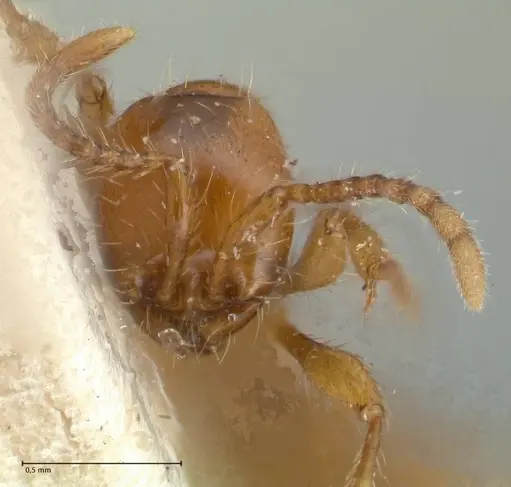
In the wild, Aenictus peguensis inhabits lowland tropical forests across Myanmar and Vietnam [1]. Workers are distinctive within the minutulus group due to their larger size compared to similar species like Aenictus subterraneus. At 2.95 to 3.25 millimeters in length, they are noticeably bigger than their 2.10 millimeter relatives [1]. They possess a right-angled propodeal junction and a convex posterior head margin, distinguishing them from similar species with concave margins [1][4]. The head and pronotum are smooth and shiny yellowish-brown, while the mesothorax, propodeum, and waist segments are darker and often slightly reddish [1]. Their mandibles bear a distinctive pattern with a large apical tooth, medium subapical and basal teeth, and five to six small denticles between them [1][3].
Theoretical captive requirements
If one were to attempt keeping this species, you would need an enormous enclosure, likely a room-sized habitat, to accommodate their nomadic ranging behavior. The setup would require a rotating system or extremely large foraging area to allow for bivouac movement. Temperature should likely be maintained around 25-28°C based on their tropical lowland origins, with high humidity [1]. You would need to provide substantial quantities of live prey daily, likely including other ant species or small insects. However, given that no queens are known and colony reproduction methods are unconfirmed, establishing a sustainable captive population is currently impossible.
Frequently Asked Questions
Can I keep Aenictus peguensis in a test tube?
No. This species is not suitable for test tube setups. They are army ants that require massive spaces and do not have described queens available for founding [2].
Where can I buy a queen Aenictus peguensis?
You cannot. Queens of this species have never been described by scientists, meaning they are not available in the ant-keeping trade [2].
What do Aenictus peguensis eat?
Specific dietary observations are unpublished, but as army ants (Dorylinae), they are likely specialized predators of other ants and social insects. They would require substantial quantities of live prey daily.
How big do Aenictus peguensis colonies get?
Colony size is unknown for this species, but army ants typically maintain large colonies. However, without queen observations, we cannot confirm reproductive capacity or typical colony dimensions.
Are Aenictus peguensis dangerous?
They are small ants (under 3mm) with mandibles suited for hunting small prey [1]. While they can bite, they are not known to possess stingers. However, their army ant nature means they move in groups and require handling with extreme caution regarding escapes.
Do Aenictus peguensis need hibernation?
Unconfirmed. Their tropical lowland distribution suggests they remain active year-round without winter rest [1].
Can I start a colony with just workers?
No. Workers cannot found colonies alone. Army ants reproduce through colony fission (splitting), which requires an established colony fragment with brood and multiple workers, not just a handful of workers [2].
What makes Aenictus peguensis different from other army ants?
They belong to the minutulus species group, characterized by their small size (under 3.5mm) and specific mandible dentition patterns. They are distinguished from similar species like Aenictus subterraneus by their larger size and right-angled propodeal junction [1][4].
References

This caresheet is licensed under CC BY-SA 4.0 .
CASENT0281968
View on AntWeb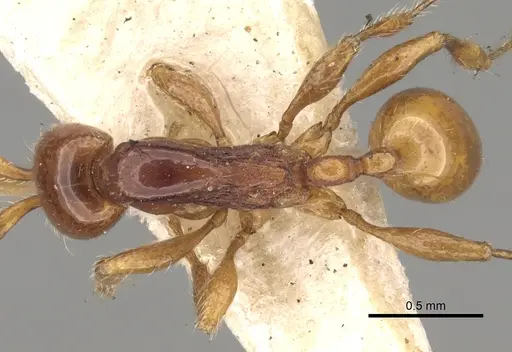
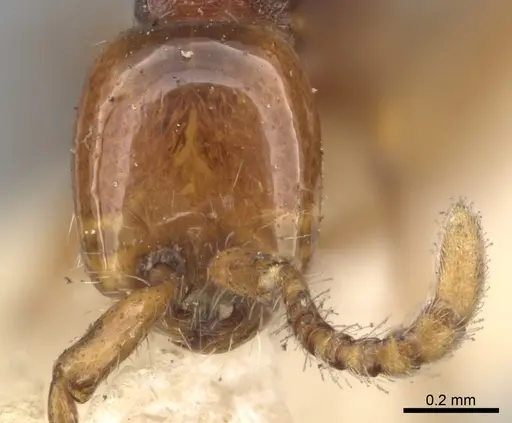
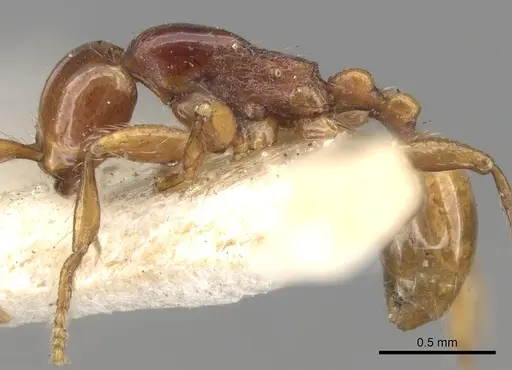
CASENT0903749
View on AntWeb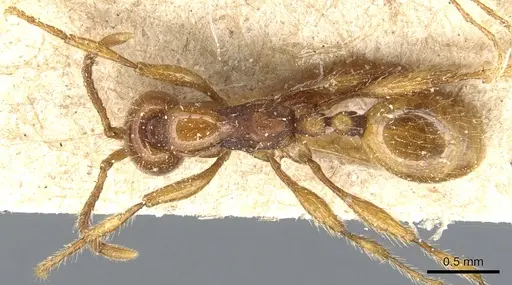
FOCOL0383
View on AntWeb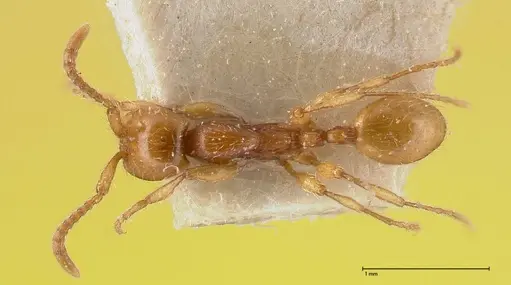
FOCOL1146
View on AntWeb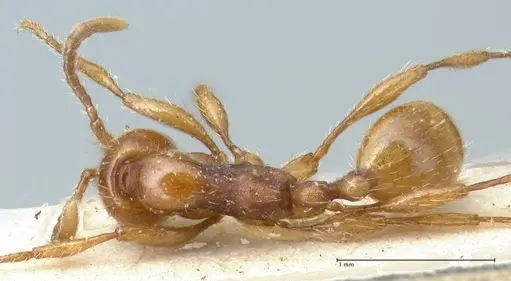
Literature
Loading...Loading products...